Troubleshooting Your Jewelry Septum Piercing: Bumps, Sizing & Care
Solve common jewelry septum piercing issues like irritation bumps, sizing errors, and flipping problems with our expert troubleshooting guide.

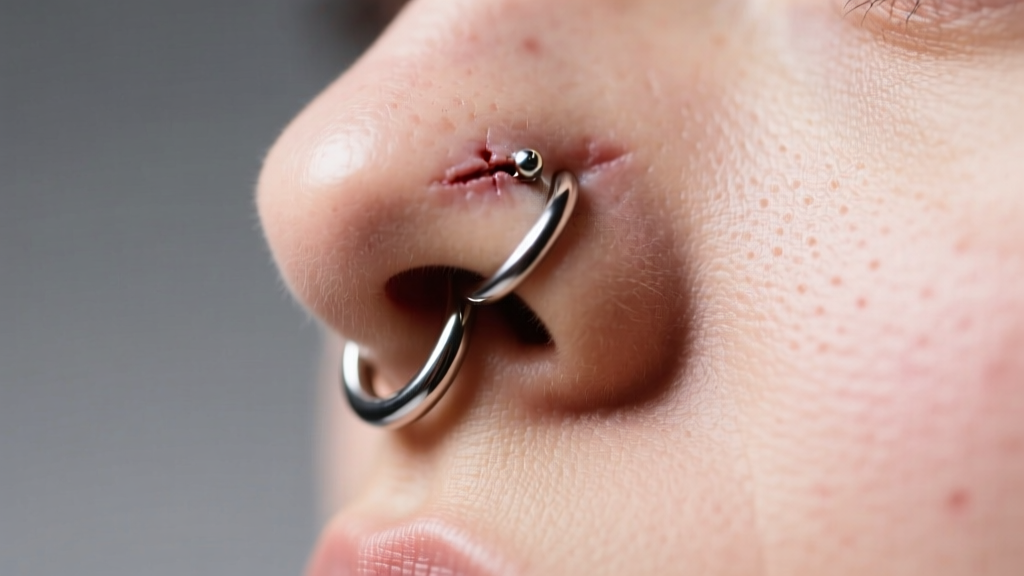
The Anatomy of a Septum Irritation Bump
Getting a septum piercing is a thrilling style milestone, but the healing journey is rarely a straight line. One of the most frequent complaints we see in 2026 involves the sudden appearance of irritation bumps. Unlike keloids, which are genetic and relatively rare, hypertrophic scarring (irritation bumps) is almost always a mechanical or chemical reaction to your jewelry septum piercing setup. These localized, fleshy bumps typically form directly adjacent to the fistula (the piercing hole) and are your body's way of signaling that something in your aftercare or jewelry choice is causing micro-trauma.
The primary culprit is usually moisture buildup or improper jewelry angles. When you trap moisture against the healing wound—often by applying thick ointments, using tea tree oil, or over-cleaning with harsh soaps—you disrupt the delicate cellular matrix trying to rebuild the tissue. The modern gold standard for wound care, heavily endorsed by the Association of Professional Piercers (APP), is the LITHA method (Leave It The Hell Alone) combined with sterile 0.9% sodium chloride wound wash. If you are currently battling a bump, immediately cease all DIY home remedies and switch to a sterile saline spray twice daily.
Material Sensitivities: Implant-Grade vs. Mystery Metals
If your bump persists despite perfect aftercare, your jewelry material is likely the hidden saboteur. Many commercial jewelry brands use the vague term 'surgical steel,' which is a massive red flag for healing piercings. 316L surgical steel contains up to 14% nickel, a known contact allergen that can cause chronic inflammation, weeping, and bump formation in a fresh jewelry septum piercing.
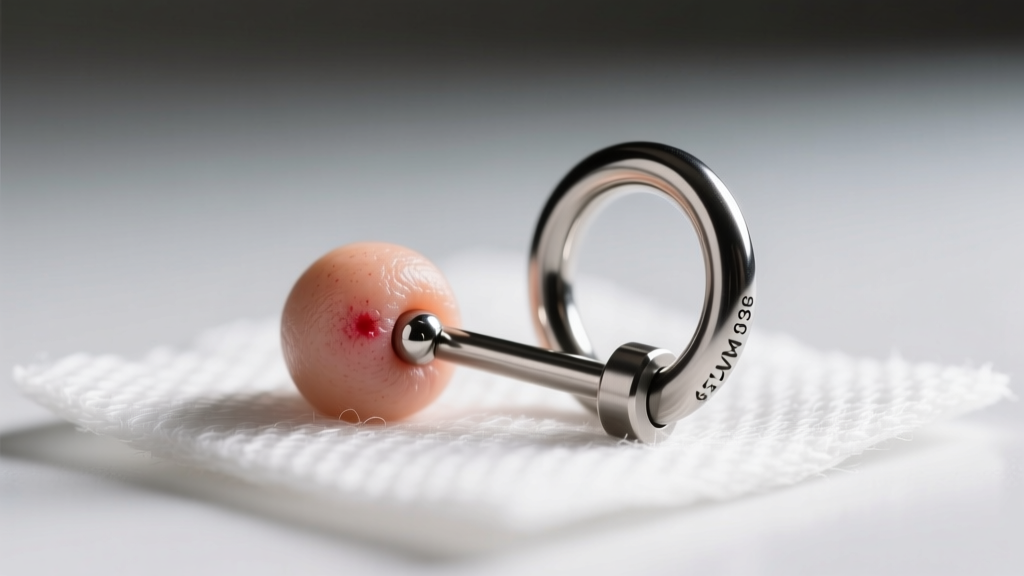
| Material Grade | Nickel Content | Best Use Case | Price Range (Standard Clicker) |
|---|---|---|---|
| ASTM F-136 Titanium | 0% | Fresh piercings, highly sensitive skin | $35 - $85 |
| Niobium | 0% | Fresh piercings, custom-dyed jewelry | $30 - $70 |
| 14k/18k Solid Gold | Varies (Alloy dependent) | Healed piercings, premium aesthetics | $150 - $450+ |
| 316L Surgical Steel | 8% - 14% | Healed piercings only (if no allergy) | $15 - $40 |
For a trouble-free heal, always demand ASTM F-136 implant-grade titanium or F-562 niobium. Brands like NeoMetal, BVLA, and Industrial Strength offer threadless or internally threaded options in these materials, ensuring no microscopic threading tears the fistula during insertion.
Sizing Disasters: Why Your Septum Ring Won't Sit Right
A perfectly placed septum piercing can look entirely wrong if the jewelry dimensions are mismatched to your unique anatomy. The septum's 'sweet spot'—the thin, flexible membranous tissue located between the columella and the alar cartilage—varies in thickness and placement from person to person. When you buy generic, one-size-fits-all jewelry septum piercing options online, you are gambling with both aesthetics and tissue health.
Decoding Inner Diameter and Gauge
The two most critical measurements for septum rings are gauge (the thickness of the wire) and inner diameter (the width of the circle). The standard initial piercing gauge is usually 16g (1.2mm) or 14g (1.6mm). However, the inner diameter is where most troubleshooting is required.
- Too Tight (e.g., 6mm / 1/4"): A ring with an inner diameter that is too small will press against the bottom of the piercing channel. In a fresh piercing, this causes the dreaded 'cheese-cutter effect,' where the tension slowly migrates the jewelry downward through the tissue.
- Standard (8mm / 5/16"): This is the most common starting diameter for average anatomy, allowing enough room for initial swelling and natural movement.
- Too Large (10mm / 3/8" or 12mm / 1/2"): While great for a bold, drooping aesthetic in a fully healed piercing, a large diameter in a fresh wound will swing excessively, introducing bacteria into the fistula and causing mechanical irritation bumps.
If your ring rests awkwardly on your upper lip or feels like it's pulling downward, you need to visit a professional piercer to be measured with digital calipers. Downsizing or upsizing your inner diameter by just 1-2 millimeters can completely resolve chronic irritation.
The 'Flipping' Problem: Training Your Septum Jewelry
One of the main appeals of the septum piercing is the ability to hide it by flipping the jewelry up into the nasal cavity. However, this feature is also the leading cause of delayed healing. A common mistake is flipping the jewelry up and down daily to check it or to accommodate different social situations.
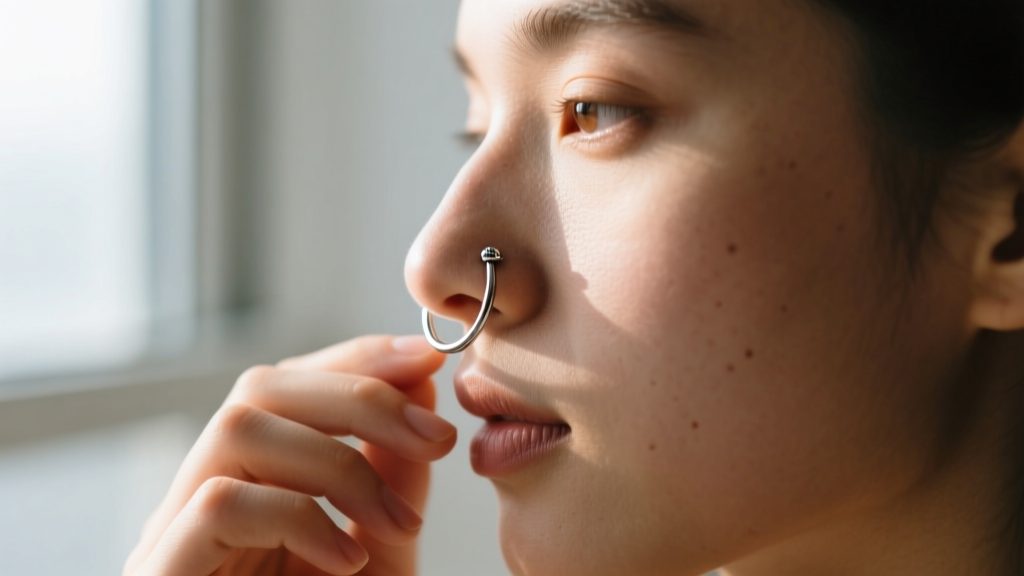
Every time you flip a horseshoe barbell or a continuous ring, the jewelry rotates through the fistula, dragging dried lymphatic fluid, bacteria, and microscopic debris back into the healing wound. This repetitive motion acts like sandpaper on the delicate new skin cells. If you must keep your jewelry septum piercing hidden for work or school, have your piercer install a seamless segment ring or a specialized septum retainer, flip it up once while the tissue is still pliable, and leave it strictly alone for the entire 3 to 6-month healing period.
Expert Rule of Thumb: Never flip dry. Always spray the jewelry and the piercing with sterile saline to lubricate the channel before making any adjustments to the jewelry's position.
Step-by-Step Troubleshooting Protocol
When your piercing acts up, panic and product-hopping will only make it worse. Follow this systematic protocol to identify and resolve the issue:
- Audit Your Cleaning Routine: Throw away any tea tree oil, aspirin pastes, hydrogen peroxide, or antibacterial soaps. Purchase a sterile 0.9% saline wound wash (check the label: the only ingredients should be water and sodium chloride).
- Inspect the Jewelry Ends: If you are wearing a circular barbell, ensure the balls are not overtightened, which can cause the threading to protrude and scratch the tissue. If using a clicker, ensure the hinge is fully snapped shut.
- Evaluate Snag Hazards: Are you catching your jewelry on towels, makeup sponges, or face masks? Switch to air-drying your face or using disposable paper towels.
- Check Your Sleep Position: Sleeping on your face puts uneven pressure on the septum, forcing the jewelry to sit at an angle. Try using a U-shaped travel pillow to keep your face elevated and pressure-free.
- Consult a Professional: If the bump is accompanied by excessive heat, dark red/purple discoloration, or thick, foul-smelling discharge, bypass the internet and see a doctor or an APP-certified piercer immediately to rule out infection.
When to See a Professional Piercer
While minor irritation bumps and sizing quirks can often be managed at home with strict aftercare, some issues require professional intervention. If your piercing was placed through the thick alar cartilage rather than the sweet spot, it will likely experience chronic pain, prolonged swelling, and potential rejection. Cartilage piercings in the nose have significantly less blood flow, making them notoriously difficult to heal with standard rings.
Furthermore, if you suspect a metal allergy despite wearing 'titanium' jewelry purchased from an unverified online marketplace, your jewelry may be counterfeit. Reputable piercers source from verified manufacturers like APP-verified jewelry brands, ensuring the metallurgical composition is safe for long-term implantation. Investing in high-quality, properly sized jewelry from a professional studio is always cheaper than treating months of avoidable complications.


