Maintenance Tips for All Nostril Piercing Jewelry Types
Discover expert cleaning and maintenance tips for all nostril piercing jewelry types. Learn how to care for screws, hoops, and flat-backs safely.

The Golden Rule of Nostril Aftercare
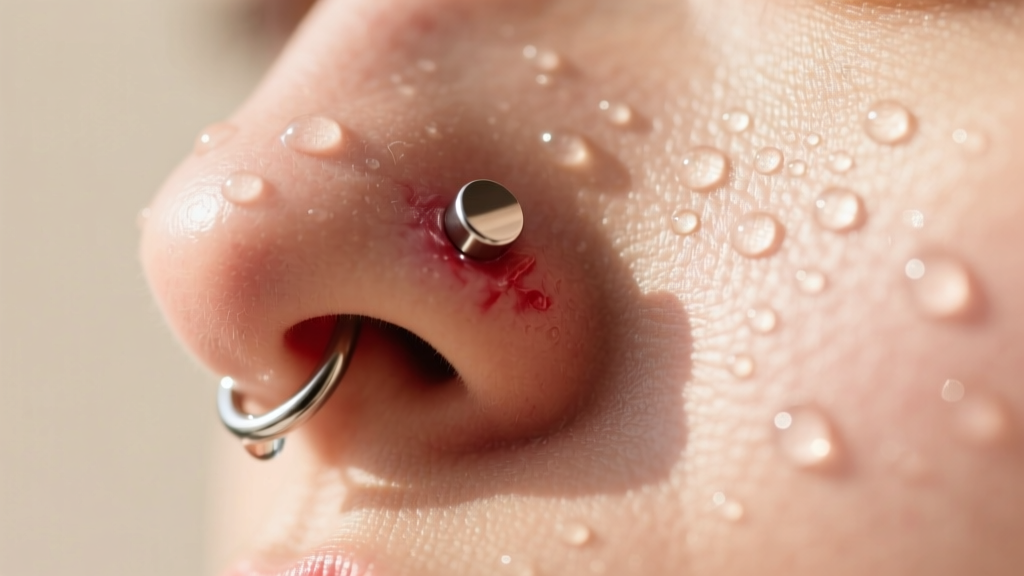
Proper maintenance of your nostril piercing begins with understanding the biology of the fistula—the tube of newly forming skin that creates your piercing channel. Full epithelialization of a nostril piercing takes anywhere from 4 to 12 months. During this fragile window, the wrong cleaning agents or improper handling of specific nostril piercing jewelry types can destroy newly formed fibroblasts, effectively resetting your healing clock and causing hypertrophic scarring.
The undisputed gold standard for aftercare, as outlined by the Association of Professional Piercers (APP), is sterile 0.9% sodium chloride wound wash. You must avoid generic first-aid antiseptics containing benzalkonium chloride, hydrogen peroxide, or rubbing alcohol. These harsh chemicals are cytotoxic to healing tissue. Furthermore, avoid DIY sea salt soaks; improper ratios create hypertonic solutions that dehydrate the cells and trigger irritation bumps. Your saline must contain exactly two ingredients: 0.9% sodium chloride and purified water. Apply it twice daily using a sterile, non-woven gauze pad or a direct spray, allowing it to sit for 30 to 60 seconds to soften any lymphatic crusties before gently wiping them away.
Cleaning Protocols by Nostril Piercing Jewelry Types
The anatomy of your jewelry dictates your cleaning methodology. The physical shape of the metal creates unique micro-environments where sebum, dead skin cells, and lymphatic fluid can accumulate. Here is how to maintain specific nostril piercing jewelry types without causing micro-tears or trapping bacteria.
Nostril Screws and L-Bends
Traditional nostril screws and L-bars are typically crafted from 18-gauge (1.0mm) or 20-gauge (0.8mm) wire. While they are a classic choice, the spiral hook or the sharp 90-degree angle of the L-bend creates a physical trap for debris inside the nasal cavity. To clean a nostril screw, you cannot simply spray the outside. You must soak a medical-grade cotton swab or a small piece of non-woven gauze in sterile saline and gently trace the interior curve of the hook. Never use standard cosmetic cotton swabs, as they shed microscopic fibers that can become entangled in the spiral and cause severe granulomas. If you experience frequent buildup on the hook, it is a strong indicator that the wire gauge is too thin for your anatomy, and you should consult your piercer about upgrading to a thicker 16-gauge custom bend.
Threadless and Internally Threaded Flat-Backs
Flat-back labrets (usually 16-gauge or 18-gauge) are the premier choice for initial nostril piercings because the flat disc sits flush against the nasal mucosa, eliminating the snag risk of a hook. However, the disc creates a sheltered pocket where a thick, cheese-like substance composed of sebum and keratin naturally accumulates. To clean behind the disc without removing the jewelry, professional piercers recommend the 'flossing technique.' Take a piece of clean, unwaxed dental floss, thread it gently behind the flat disc, and pull it back and forth in a shoeshine motion. This safely scrapes away the buildup without applying lateral pressure to the healing fistula.
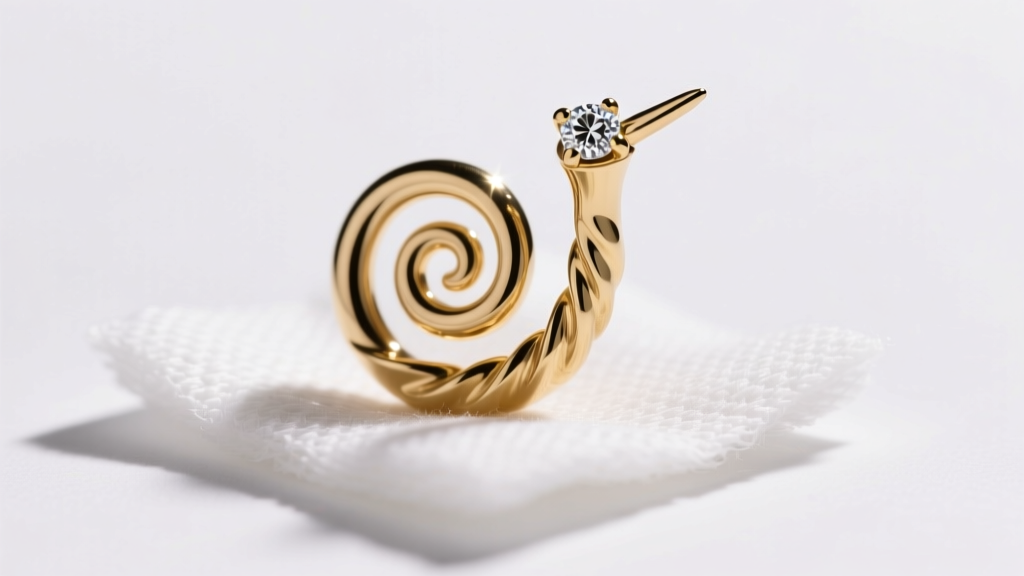
When maintaining threadless flat-backs, you must also understand the tension mechanism. The pin requires a slight bend—typically between 15 and 30 degrees—before insertion to create the friction lock. If you remove the decorative top to clean it and fail to re-bend the pin, you risk losing the gemstone. Always use a clean, dedicated jewelry towel over a sink with a closed drain when swapping or cleaning tops.
Captive Bead Rings and Seamless Hoops
Hoops introduce a completely different set of maintenance challenges. The continuous curve of the ring means that any movement of the jewelry pulls the unhealed portion of the fistula through the piercing channel, introducing surface bacteria into the wound. The APP explicitly warns against rotating healing jewelry. When cleaning a captive bead ring (CBR) or a clicker segment ring, spray the saline generously around the entry and exit points, and use a dampened gauze pad to clean the exposed bead and the seam. Do not attempt to spin the ring to clean the hidden portion; simply allow the saline to flow through the channel and air dry.
Material Matters: What You Can and Cannot Sterilize at Home
The metallurgical composition of your jewelry determines how it reacts to your body's chemistry and your cleaning agents. According to the APP guidelines for initial jewelry, only specific, highly polished, implant-grade materials should be worn. Below is a breakdown of how different materials interact with maintenance routines.
| Material Grade | Common Use | Home Sterilization Safe? | Maintenance Notes |
|---|---|---|---|
| ASTM F-136 Titanium | Initial flat-backs, clickers | Yes (Boiling/Autoclave) | Highly biocompatible. Resists all saline and mild soaps. The mirror finish prevents bacterial adhesion. |
| 14k/18k Solid Gold | Decorative ends, custom bends | No (Boiling can damage gems) | Must be nickel-free (palladium alloyed). Avoid harsh chemicals that can dull the polish. Clean with warm water and mild castile soap. |
| Niobium | Healing hoops, CBRs | Yes (Boiling) | Hypoallergenic elemental metal. Anodized colors can fade if exposed to alcohols or abrasive polishing cloths. |
| 316L 'Surgical' Steel | Fashion jewelry, mall kiosks | No | Contains up to 14% nickel. Highly discouraged for healing. Saline will not prevent nickel leaching into the fistula. |
Troubleshooting Common Maintenance Failures
Even with meticulous care, environmental factors and sleep habits can cause complications. The most common maintenance failure is the development of an irritation bump (hypertrophic scarring) adjacent to the jewelry. This is rarely an infection; it is a localized immune response to friction, pressure, or moisture.
- Moisture Trapping: Leaving the nostril damp after showering or cleaning macerates the skin. Always dry the area using the cool setting on a hair dryer or by gently patting with non-woven gauze.
- Sleep Pressure: Sleeping on a healing nostril creates uneven pressure, forcing the jewelry to sit at an angle. This cuts off localized blood flow and causes the body to produce excess collagen, forming a bump. Use a travel neck pillow and sleep with your ear in the center hole to prevent side-sleeping pressure.
- Product Migration: Facial cleansers, retinols, and chemical exfoliants (AHAs/BHAs) must never touch the piercing site. These products degrade the delicate mucosal lining and cause contact dermatitis, which mimics an infection.
When to See Your Piercer for a Downsize or Swap
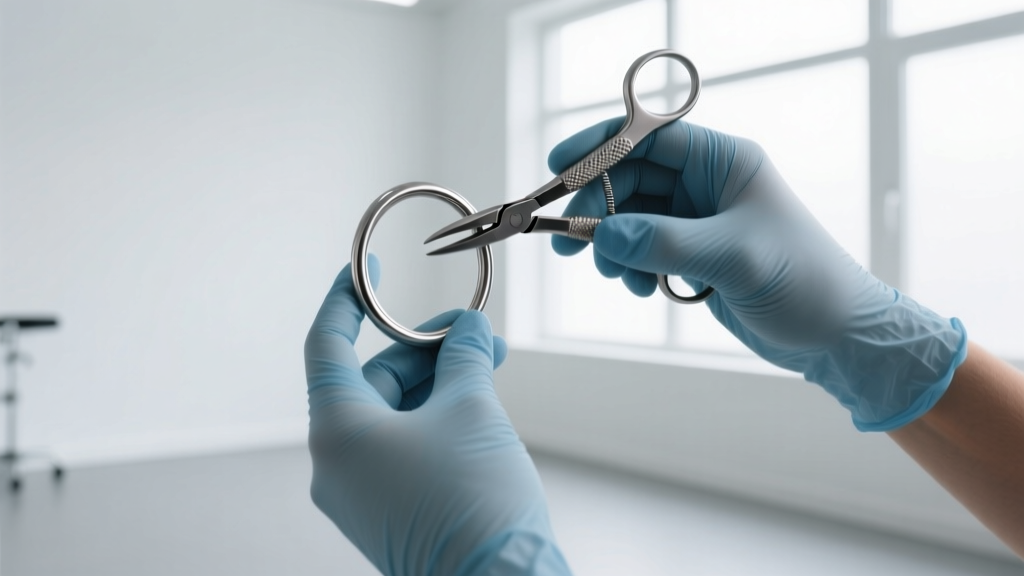
Maintenance is not just about cleaning; it is about adapting the jewelry to your changing anatomy. When you receive an initial flat-back stud, the post length is typically 5/16-inch (8mm) or 1/4-inch (6mm) to accommodate the massive swelling that occurs in the first 72 hours. Once the swelling subsides—usually between weeks 3 and 6—that extra post length becomes a liability. The long post acts as a lever; if you catch it on a towel or a pillowcase, the leverage multiplies the force inside the piercing channel, tearing the fragile new skin.
You must return to your professional piercer for a 'downsize' to a 3/16-inch (5mm) or 5/32-inch (4mm) post. This ensures the disc sits flush, eliminating the snag hazard and drastically reducing the risk of irritation bumps. Attempting to swap the jewelry yourself before the 6-month mark risks collapsing the unhealed fistula. By combining precise, anatomy-specific cleaning techniques with high-quality, implant-grade materials and timely downsizing, you guarantee a smooth, healthy healing process for any of the nostril piercing jewelry types you choose to wear.


