Nose Piercing Without Jewelry: Fistula Closure Times & Tissue Data
Discover what happens to a nose piercing without jewelry. Expert data on fistula closure times, tissue contraction, and safe retention methods.

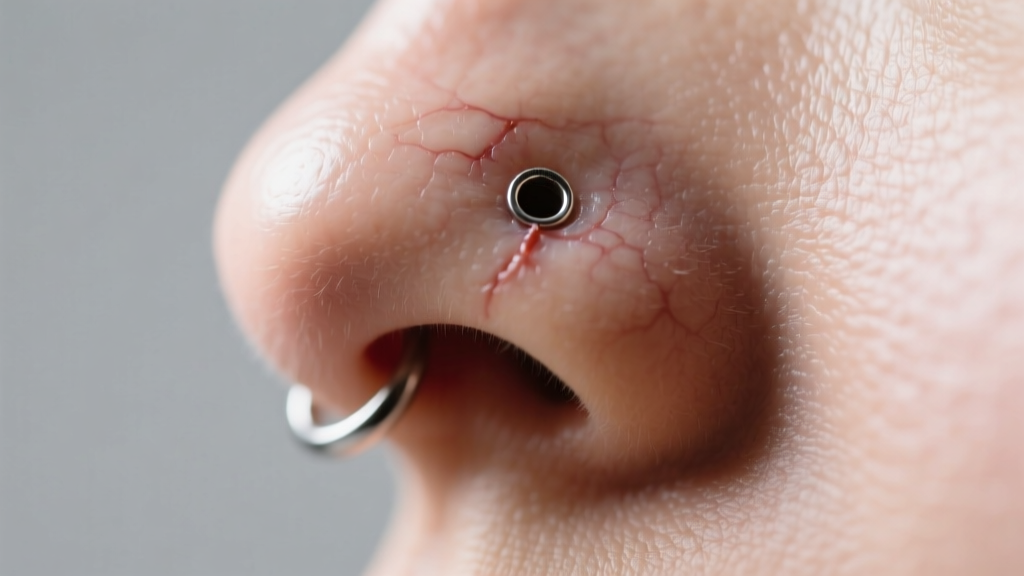
The Cellular Biology of the Fistula Tract
When individuals search for information regarding a nose piercing without jewelry, they are typically navigating a high-stakes scenario: mandatory removal for an MRI, an upcoming surgical procedure, strict workplace dress codes, or the accidental loss of a nostril stud. To understand how the body reacts to an empty piercing, we must examine the cellular biology of the fistula. A fistula is not merely a hole; it is a meticulously engineered tunnel of scar tissue lined with epithelial cells. When a professional piercer uses a sterile, beveled 18-gauge (1.0mm) or 16-gauge (1.2mm) needle to create a nostril piercing, the body immediately initiates a four-phase wound healing cascade: hemostasis, inflammation, proliferation, and remodeling.
During the remodeling phase, which can last anywhere from six months to over a year, keratinocytes migrate across the wound bed, effectively turning the inside of the tunnel into a continuous layer of skin. According to clinical data on wound healing published by the National Center for Biotechnology Information (NCBI), this epithelial lining is what prevents the body from treating a mature piercing as an open wound. However, the moment you leave a nose piercing without jewelry, the mechanical tension holding the fistula open is removed. Myofibroblasts—specialized cells responsible for wound contraction—detect the loss of structural support and begin pulling the collagen matrix inward. This biological drawstring effect is why an empty nostril hole can shrink dramatically within hours, driven by the body’s innate desire to close any perceived breach in the dermal barrier.
Closure Timelines: Fresh vs. Healed Piercings
The rate at which a nose piercing closes without jewelry is entirely dependent on the maturity of the fistula tract and the vascular density of the surrounding nasal cartilage and soft tissue. Below is a clinical framework detailing estimated closure timelines based on the age of the piercing. Note that these metrics assume a standard 18G or 16G nostril piercing; larger gauge septum piercings (14G or 12G) will exhibit slightly different contraction rates due to the increased volume of disrupted tissue.
| Piercing Age | Fistula Maturity Status | Estimated Closure Time Without Jewelry | Tissue Behavior & Shrinkage |
|---|---|---|---|
| 1 to 4 Weeks | Open Wound (No Epithelium) | 10 to 60 Minutes | Rapid clotting and swelling seal the tract almost immediately. |
| 1 to 6 Months | Partial Epithelialization | 2 to 12 Hours | Lining is fragile; myofibroblasts rapidly contract the 1.2mm hole to under 0.8mm. |
| 1 to 3 Years | Fully Mature, Elastic | 1 to 7 Days | Hole shrinks to pinpoint size; outer dermis may close while inner tract remains. |
| 5+ Years | Dense Collagen Ring | May Never Fully Close | Permanent fistula tube remains, though diameter shrinks to accommodate only a 22G wire. |
As documented by the Association of Professional Piercers (APP), a piercing that has been fully healed for over five years will often leave a visible, permanent dimple or tunnel even after decades without jewelry. However, the functional diameter of that tunnel will shrink significantly, making the reinsertion of standard 16G jewelry impossible without professional tapering.
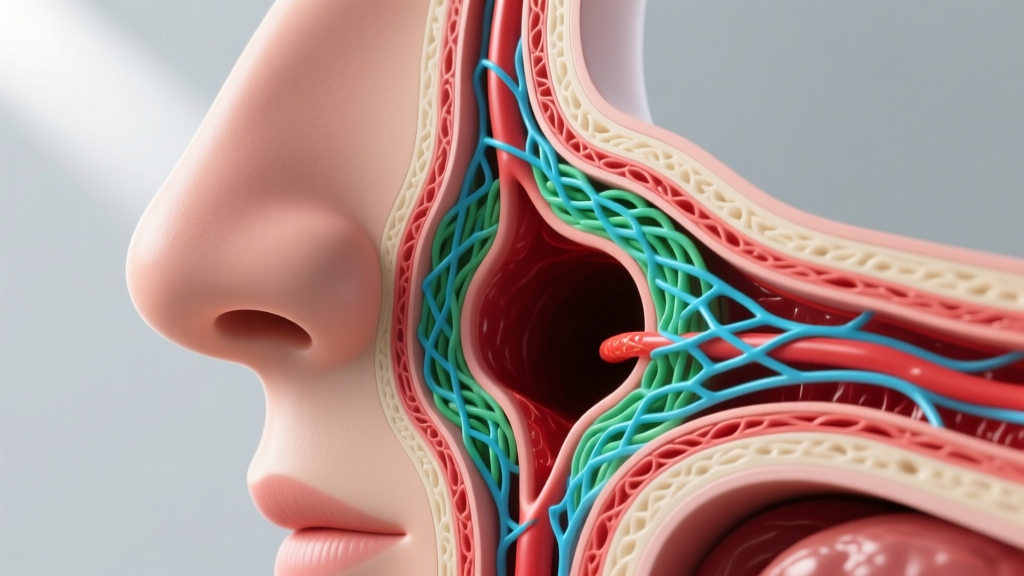
The Clinical Dangers of an Empty Tract
Leaving a fresh or semi-healed nose piercing without jewelry introduces severe clinical risks that extend far beyond mere cosmetic closure. The most dangerous phenomenon is the formation of an epithelial pearl or a localized abscess. When a piercing is less than three months old, the outer layers of the dermis heal significantly faster than the deep tissue tract. If the jewelry is removed, the surface skin can seal over the hole within hours, trapping dead cells, sebum, and anaerobic bacteria inside the unhealed inner fistula.
This creates a closed-loop environment ripe for infection. The trapped bacteria multiply, leading to a localized cyst that presents as a hard, painful nodule on the side of the nostril. In severe cases, this requires medical lancing and a course of oral antibiotics. Furthermore, attempting to blindly force a blunt-ended nose stud back into a partially closed, swollen tract can cause micro-tears in the fragile new epithelium. These micro-tears trigger a fresh inflammatory response, leading to the formation of hypertrophic scarring or piercing bumps (granulomas) on the exterior of the nostril.
Material Science: Safe Alternatives to Going Bare
If you must maintain a nose piercing without traditional metal jewelry due to medical imaging (MRI) or surgical cauterization protocols, going completely bare is rarely the optimal choice. Instead, domain experts recommend utilizing specialized retainers. However, not all retainers are created equal, and understanding material science is critical for preventing tissue rejection and infection.
- Borosilicate Glass (Fused Quartz): This is the gold standard for medical retainers. Borosilicate glass is entirely non-magnetic, 100% MRI-safe, and non-porous. Its ultra-smooth surface prevents bacterial biofilm adhesion, making it ideal for long-term wear during surgical recovery periods. It can be sterilized in an autoclave at 121°C (250°F) without degrading.
- PTFE (Polytetrafluoroethylene): Often sold as Bioplast or Teflon, PTFE is flexible and MRI-safe. However, on a microscopic level, PTFE is slightly porous. Over periods longer than three months, it can harbor bacteria and absorb sebum, leading to odor and localized irritation. It is best reserved for short-term emergencies.
- Silicone: Never use silicone retainers in a nose piercing. Silicone is highly porous, traps moisture, and can cause severe contact dermatitis or toxic shock syndrome in the confined, warm environment of a nasal fistula.
Tapering and Reinsertion Protocols
If your nose piercing has been without jewelry long enough to shrink, forcing your original jewelry back in will result in tissue blowout. Reopening a shrunken fistula requires a methodical, biologically supportive approach focused on vasodilation and gradual tissue stretching.
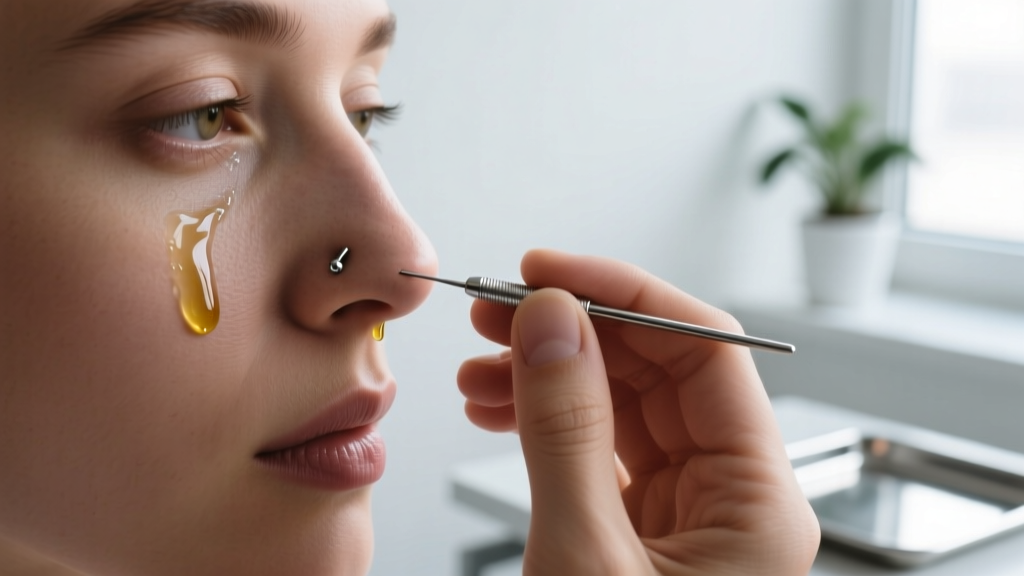
Begin by applying a warm, sterile saline compress to the nostril for five minutes. The heat induces localized vasodilation, increasing blood flow and making the collagen fibers in the fistula more pliable and elastic. Next, apply a single drop of pure, cold-pressed jojoba oil or vitamin E oil to the exterior of the hole and to a sterile, surgical-grade stainless steel insertion taper. Never use petroleum jelly or antibiotic ointments, as these block the fistula's ability to breathe and trap anaerobic bacteria.
Using an 18G or 16G taper (matching your original piercing gauge), gently locate the opening. The taper should glide through the tract with mild resistance but zero sharp pain. If you encounter a hard 'wall' of tissue, stop immediately; this indicates the inner tract has fully fused, and you are pushing against solid dermis. Forcing the taper will create a false passage—a new, jagged wound channel adjacent to the original fistula, resulting in severe scarring. If the taper passes through successfully, immediately follow it with your sterilized jewelry, ensuring the threads or clicker mechanism are securely fastened to prevent the jewelry from slipping out while the tissue is in a compromised, stretched state.
When to Seek Professional Repiercing
If a mature piercing has been without jewelry for several years and has shrunk to a pinpoint, the inner lining may have entirely collapsed and fused. In these scenarios, the dense collagen ring cannot be safely stretched at home. A professional piercer must use a sterilized scalpel to excise the micro-scar tissue or repierce the exact channel using a hollow needle, effectively resetting the healing clock for that specific tract.


