Expert Guide to Jewelry for Nose Piercing: Alloys & Gauges
Discover technical specs for jewelry for nose piercing. Master implant-grade titanium, threadless mechanisms, and gauge tolerances for optimal healing.

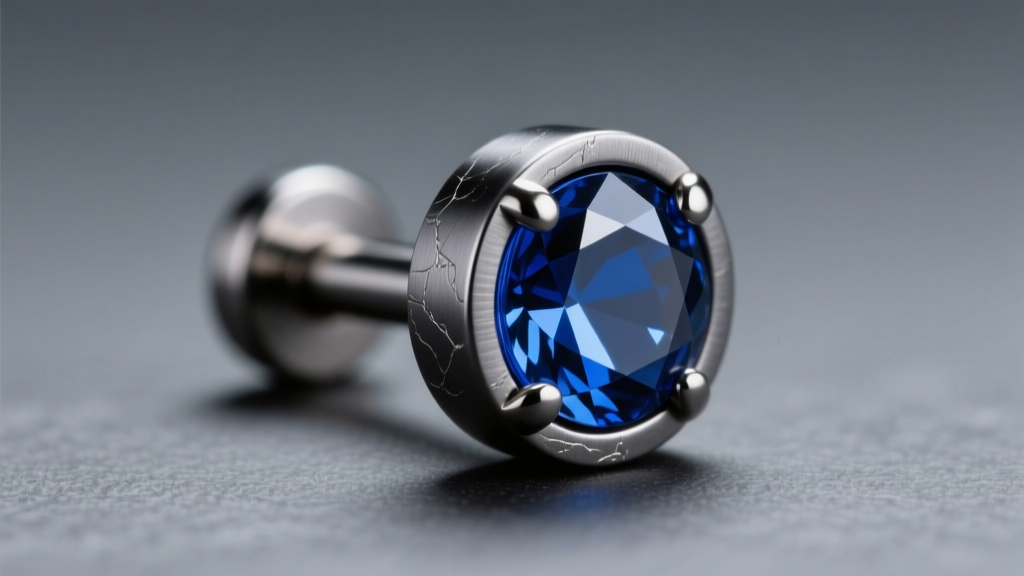
The Metallurgy of Implant-Grade Alloys: Beyond Surgical Steel
When evaluating high-end jewelry for nose piercing, the conversation must begin at the molecular level. The nasal cavity is a highly vascular, moisture-rich environment lined with delicate mucous membranes. Introducing substandard alloys or poorly machined components into this ecosystem inevitably leads to contact dermatitis, fistula hypertrophy, or outright rejection. As a domain expert, I look past aesthetic trends and focus on the metallurgical certifications, gauge tolerances, and connection mechanisms that dictate long-term tissue health. This deep dive dissects the technical specifications you must demand when sourcing premium body jewelry.
ASTM F136 vs. ASTM F67 Titanium
ASTM F136 (Ti-6Al-4V ELI) is the undisputed gold standard for initial and healed piercings. The 'ELI' stands for Extra Low Interstitial, meaning the alloy has been rigorously purified to minimize oxygen, nitrogen, carbon, and iron. This purification dramatically increases fracture toughness and biocompatibility, ensuring the metal will not degrade in the saline environment of the human body. Conversely, ASTM F67 is commercially pure titanium. While highly biocompatible, it lacks the tensile strength of F136, making it less ideal for thin, high-stress components like 18-gauge nostril screws that require structural rigidity to prevent bending during sleep.
The 316LVM Surgical Steel Caveat
The term 'surgical steel' is largely a marketing fabrication rather than a regulated metallurgical standard. 316LVM (Low Carbon, Vacuum Melted) steel is frequently marketed as hypoallergenic. However, it inherently contains 10-14% nickel. While the vacuum melting process traps some nickel within the crystal lattice, the high-salinity environment of the nasal mucosa can eventually break down the passive chromium oxide layer, leading to ion leaching. According to the Mayo Clinic's guidelines on contact dermatitis, prolonged exposure to even trace nickel can trigger severe localized eczema and hyperpigmentation. For this reason, the Association of Professional Piercers (APP) strictly recommends implant-grade titanium over steel for any long-term wear in mucosal-adjacent tissue.
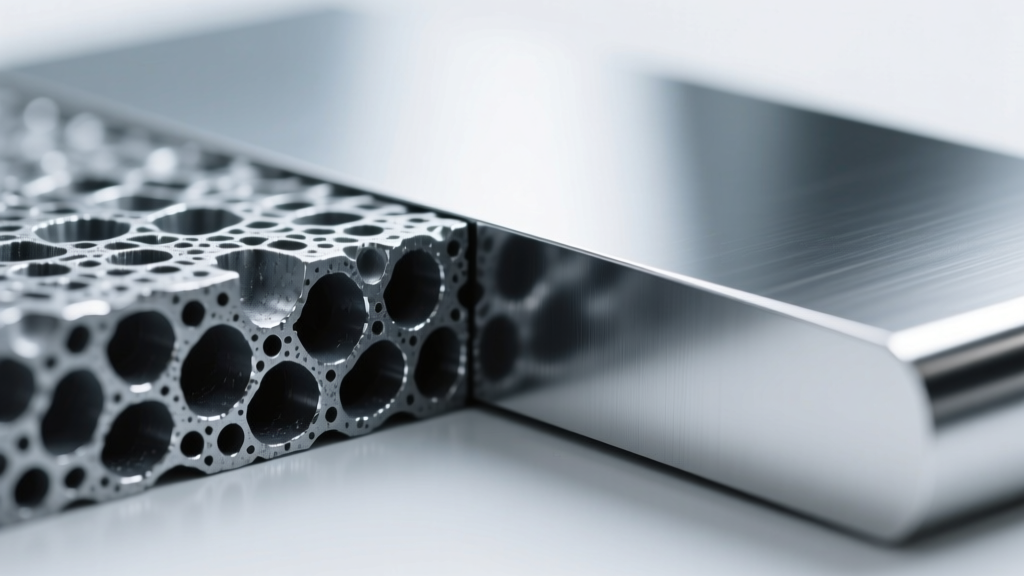
Gauge Tolerances and the Physics of Migration
Gauge selection is not merely a matter of aesthetic preference; it is a strict calculation of tensile strength and force distribution. The infamous 'cheese-cutter effect' occurs when a wire with a small surface area exerts excessive localized pressure on the fistula during accidental trauma. This pressure causes the tissue to necrose and the jewelry to slowly migrate through the skin.
A 20-gauge (0.81mm) wire has roughly 60% less surface area than a 16-gauge (1.29mm) wire. When subjected to the same kinetic force (e.g., catching a hoop on a towel or sleeping on the piercing), the 20G wire concentrates that force into a microscopic vector, slicing through the collagen matrix of the healing fistula. Therefore, while 20G may be appropriate for delicate, fully healed standard nostrils, 18G or 16G is vastly superior for structural integrity and long-term stability.
| Gauge (AWG) | Diameter (mm) | Migration Risk | Optimal Placement |
|---|---|---|---|
| 20G | 0.81mm | High | Standard Nostril (Fully Healed Only) |
| 18G | 1.02mm | Moderate | Nostril / High Nostril / Septum |
| 16G | 1.29mm | Low | Septum / Thick Nostril / Bridge |
| 14G | 1.63mm | Minimal | Septum / Heavy Gauge Nostril |
Connection Mechanisms: Threadless Tension vs. Internal Threading
The junction between the decorative end and the post is a critical failure point in nose jewelry. External threading—where the screw is located on the post itself—is universally condemned by professionals. The sharp, machined threads act like a microscopic file, shredding the delicate epithelial lining of the fistula upon every insertion and removal.
Threadless (Press-Fit) Mechanics
Threadless systems rely on precise spring tension rather than screws. A straight titanium pin is manually bent to a 10 to 15-degree angle, approximately one-third of the way from the tip. When pushed into the hollow shaft, the pin attempts to straighten, creating immense outward radial force against the inner wall. This mechanism requires exact manufacturing tolerances; a variance of just 0.05mm in the shaft's inner diameter will result in either a loose fit (leading to lost ends) or an overly tight fit (bending the post during removal).
Internally Threaded Tolerances
For internally threaded jewelry, the screw is located on the decorative end, while the post features a smooth, machined internal tap. High-end manufacturers use precision CNC lathes to cut these threads, typically utilizing a 1.2mm tap for 16G and 14G shafts, and a 0.9mm tap for 18G shafts. The threads must be perfectly deburred to prevent microscopic tissue avulsion. Always ensure the post enters the piercing first, followed by the threaded end, to guarantee a smooth transit through the fistula.
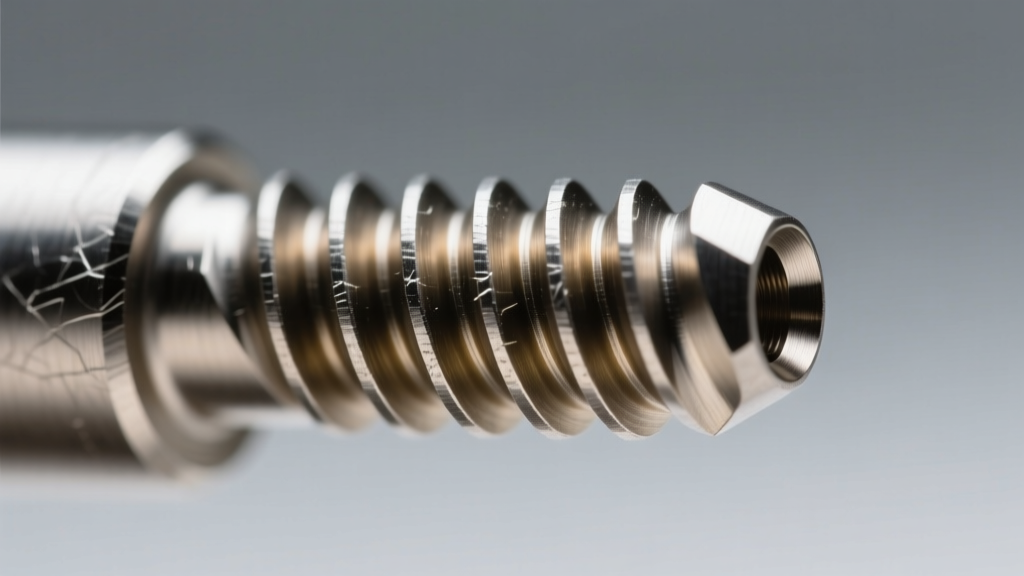
Surface Roughness and Electropolishing Standards
The physical topography of the metal dictates how the body interacts with it on a cellular level. Surface roughness is measured in Ra (Roughness average). A standard mechanical polish might leave an Ra of 0.4 to 0.8 µm, which feels perfectly smooth to the human touch but resembles a jagged mountain range under a scanning electron microscope. These microscopic valleys harbor bacteria and dead cellular debris, triggering chronic inflammation and delayed healing.
Premium jewelry for nose piercing undergoes electropolishing, an advanced electrochemical process that removes the disturbed Beilby layer (the smeared metal layer left by mechanical polishing). This leaves a pristine, passive oxide layer with an Ra of less than 0.2 µm—a true mirror finish that allows tissue to glide over the jewelry without microscopic friction.
Expert Insight: Always request a mirror finish with an Ra value of less than 0.2 µm. Matte or sandblasted finishes, while aesthetically pleasing for healed lobes, harbor microscopic biofilms that can severely delay fistula maturation in fresh nasal piercings.
The Technical Purchasing Checklist
To ensure you are acquiring genuine, implant-grade jewelry for nose piercing, use this strict verification framework before making a purchase:
- Verify the Alloy: Demand ASTM F136 (Ti-6Al-4V ELI) titanium. Reject generic 'surgical steel' or unmarked 'titanium' claims.
- Inspect the Polish: The surface must be a flawless mirror finish. Run a cotton swab over the metal; if it snags, the Ra value is too high.
- Check the Connection: Ensure the jewelry is either threadless (press-fit) or internally threaded. Never purchase externally threaded nose screws.
- Confirm the Gauge: Match the gauge to the piercing's structural needs. Default to 18G or 16G for septums and high-stress nostrils to prevent the cheese-cutter effect.
- Request Mill Certificates: Reputable manufacturers (e.g., Neometal, BVLA, Anatometal) can provide material traceability and mill certificates proving their alloy composition.


