How to Wear Nose Ring Earrings: Sizing and Styling Guide
Learn how to safely wear nose ring earrings by matching ear hoop gauges to nostril piercings, plus step-by-step styling for ear-to-nose chains.


The 'Nose Ring Earrings' Dilemma: Can You Swap Them?
In the evolving landscape of 2026 body jewelry trends, the line between ear and nose adornments has beautifully blurred. When enthusiasts search for 'nose ring earrings,' they are typically looking for one of two things: repurposing small cartilage or tragus hoop earrings for nostril piercings, or styling hybrid ear-to-nose chain jewelry. While the aesthetic crossover is undeniable, the anatomical and structural differences between ear and nose piercings require a precise, calculated approach to avoid tissue damage and irritation bumps.
The most common mistake jewelry lovers make is assuming that a small 6mm or 8mm ear hoop will seamlessly transition into a nostril piercing. However, ear cartilage and nostril tissue heal differently, and the jewelry manufactured for them often varies in wire thickness (gauge), closure mechanisms, and alloy compositions. This comprehensive guide will walk you through the exact measurements, material grades, and step-by-step styling techniques required to safely wear nose ring earrings without compromising your piercing's health.
Step-by-Step: Sizing Ear Hoops for Your Nostril
Before you insert a cartilage hoop into your nostril, you must verify three critical dimensions: the gauge (wire thickness), the inner diameter (ID), and the closure type. Forcing mismatched jewelry can lead to the dreaded 'cheese cutter effect,' where a heavy or thick wire slowly migrates through the delicate nostril tissue.
Step 1: Verify the Gauge with Digital Calipers
Most standard nostril piercings are done at 20-gauge (0.81mm) or 18-gauge (1.02mm). Conversely, many modern ear cartilage piercings (like the helix or tragus) are pierced at 16-gauge (1.29mm) or 18-gauge. If your ear earring is 16-gauge and your nose piercing is 20-gauge, do not force it. Stretching a healed nostril fistula to accommodate a thicker ear wire can cause micro-tears, leading to hypertrophic scarring.
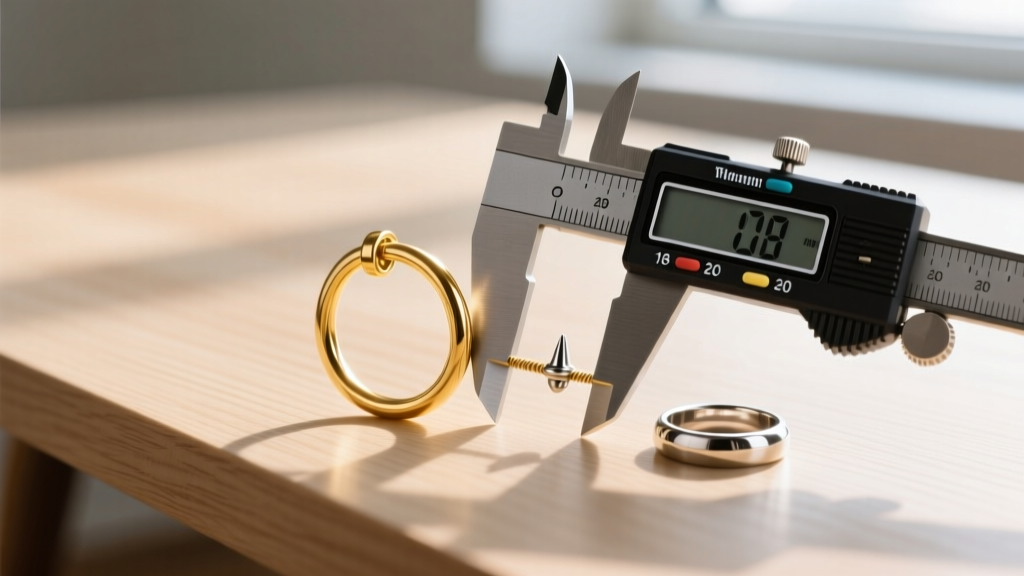
Step 2: Measure the Inner Diameter (ID)
The curvature of the nostril requires a specific ID to sit flush against the skin. A hoop that is too tight will cause pressure necrosis, while one that is too loose will snag on clothing. Use a digital caliper to measure the inner space of the earring hoop.
| Piercing Location | Standard Gauge | Average Inner Diameter (ID) | Best Closure Type |
|---|---|---|---|
| Nostril (Standard) | 20G (0.8mm) / 18G (1.0mm) | 7mm - 9mm | Seamless / Clicker |
| Tragus / Helix | 16G (1.2mm) / 18G (1.0mm) | 6mm - 8mm | Captive Bead / Clicker |
| Conch | 14G (1.6mm) / 16G (1.2mm) | 10mm - 14mm | Clicker / Segment Ring |
Step 3: Evaluate the Closure Mechanism
Captive bead rings (CBRs) designed for ears often have high tension to prevent the bead from falling out during sleep. Opening a high-tension CBR with your fingers is nearly impossible and requires ring-opening pliers. For the nose, the Association of Professional Piercers (APP) recommends hinged clickers or continuous seamless rings, as they are easier to manipulate in the small, sensitive area of the nasal ala.
Material Safety: When Ear Jewelry Causes Nasal Irritation
Not all 'gold' or 'silver' earrings are created equal. Fashion earrings designed for healed earlobes often contain nickel alloys or silver plating that oxidizes rapidly in the moist environment of the nasal mucosa. The nostril is highly prone to irritation bumps when exposed to porous metals or nickel.
- Implant-Grade Titanium (ASTM F136): The gold standard for both ear and nose jewelry. It is completely nickel-free and highly biocompatible.
- Niobium: A safe, hypoallergenic alternative that can be anodized to various colors, though less common in mainstream earring manufacturing.
- 14k or 18k Solid Gold: Safe for long-term wear, provided it is alloyed for biocompatibility (avoid white gold, which often contains nickel).
- Surgical Stainless Steel (316L): Contains trace amounts of nickel. While fine for many ear piercings, it can trigger contact dermatitis in sensitive nostril tissue.
'The mucosal tissue inside the nostril is significantly more reactive than the skin behind the earlobe. Introducing a porous silver earring or a nickel-heavy fashion hoop into a nostril piercing is a primary catalyst for the development of granulomas and localized infections.' — Professional Piercing & Aftercare Guidelines, 2025 Edition.
If you are repurposing an earring for your nose, ensure it is stamped or certified as solid 14k+ gold or implant-grade titanium. For more information on identifying piercing bumps caused by improper metals, consult Healthline's dermatological guide to piercing irritation.
How to Style Ear-to-Nose Chain Jewelry (The True Hybrid)
If your goal is to literally connect your ear and nose jewelry, the 'ear-to-nose chain' (or nose-ring earring chain) is a staple of the 2026 maximalist styling movement. This setup involves a delicate chain linking a nostril stud or hoop to a cartilage or lobe earring. Here is how to wear it safely without creating dangerous tension points.
Step 1: Anchor the Heaviest Point First
Always insert and secure the ear jewelry first. The ear cartilage or lobe can support slightly more weight than the nostril. Use a secure flat-back labret stud or a snug clicker hoop in the ear to act as a stable anchor.
Step 2: Measure the Chain Slack
The chain must have enough slack to accommodate facial movements—smiling, chewing, and talking. If the chain pulls taut when you open your mouth, it will exert constant outward pressure on the nostril piercing, leading to migration. A standard ear-to-nose chain should measure between 12cm and 15cm, depending on the distance from your helix to your nostril.

Step 3: Secure the Nasal Connection
For the nose end, avoid using heavy hoops that the chain can pull downward. Instead, use an L-shaped nose screw or a flat-back nose stud with a secure loop or jump ring attachment. This ensures the chain pulls parallel to the skin rather than yanking the jewelry out of the fistula.
Troubleshooting Common Fit and Snag Issues
Even with perfect measurements, transitioning ear jewelry to the nose or wearing hybrid chains comes with unique mechanical challenges. Here is how to troubleshoot the most frequent issues:
The Hoop Sticks Out at an Angle
The Cause: The inner diameter is too small, or the piercing angle is steep. Ear hoops are designed for the relatively flat plane of the ear cartilage. If your nostril was pierced at a steep 45-degree angle, a standard 7mm ear hoop will flare outward. The Fix: Size up to an 8.5mm or 9mm ID hoop, or switch to a 'nose-specific' hoop which features a slightly oval shape to accommodate the curvature of the nasal ala.
The Clicker Hinge Pinches or Opens Randomly
The Cause: Debris buildup in the hinge mechanism, or the gauge is slightly too thin, allowing the hinge to flex. The Fix: Soak the earring in warm saline and use a soft-bristled brush to clean the hinge. If the 18-gauge ear clicker feels loose in a 20-gauge nose hole, the micro-movements will eventually pop the clasp open. Switch to a proper 20-gauge seamless ring or a internally threaded screw.
The Ear-Nose Chain Snags on Hair
The Cause: Using a chain with large, open links or a lobster clasp facing outward. The Fix: Opt for a micro-cable chain or a snake chain, which have smooth, flush surfaces. Ensure the jump rings connecting the chain to the jewelry are soldered shut or twisted tightly closed with jewelry pliers to prevent hair threads from catching and tearing the piercing.
Final Thoughts on Curated Styling
Wearing nose ring earrings is a brilliant way to maximize your jewelry collection and achieve a cohesive, curated facial aesthetic. However, the golden rule of body modification always applies: respect the anatomy. By meticulously checking your gauges with calipers, prioritizing implant-grade titanium or solid gold, and ensuring proper chain slack, you can safely bridge the gap between ear and nose styling. Whether you are slipping a delicate 20-gauge titanium tragus hoop into your nostril or draping a silver chain from your helix to your nose screw, precision and material safety will ensure your piercings remain as healthy as they are stylish.


