Trending Types of Septum Jewelry: 2026 Style Guide
Explore the top types of septum jewelry trending in 2026. Compare clickers, hoops, and tusks by material, gauge, and styling for your unique aesthetic.

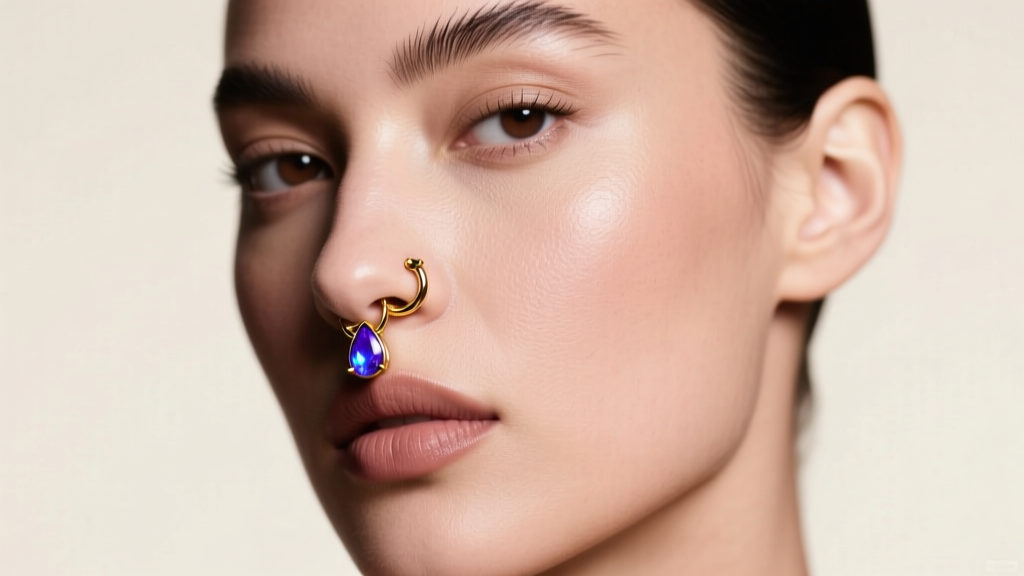
The Evolution of the Septum Piercing: From Subculture to High Fashion
The septum piercing has undergone a radical transformation over the last decade. What was once strictly associated with punk subcultures and 2010s indie aesthetics has firmly cemented itself in the realm of high fashion and refined personal styling. As we navigate the style landscape of 2026, the focus has shifted dramatically toward hyper-personalization, sustainable materials, and architectural designs. Understanding the various types of septum jewelry is no longer just about picking a metal hoop; it is about curating a focal point that complements your facial structure, lifestyle, and ethical values.
Today’s collectors and enthusiasts are moving away from mass-produced, low-grade surgical steel in favor of implant-grade titanium, ethically sourced organics, and solid gold. Whether you are stepping into a piercing studio for the first time or looking to curate a complex, layered look, knowing the mechanical and aesthetic differences between jewelry types is critical. Below, we break down the definitive styles dominating the 2026 trend cycle, complete with technical specifications and styling frameworks.
Breakdown: The Most Popular Types of Septum Jewelry
1. The Ornate Septum Clicker
The septum clicker remains the undisputed king of convenience and style. Featuring a hinged segment that snaps securely into place with a satisfying ‘click’, this design eliminates the frustration of threading tiny beads or bending seamless rings. In 2026, the trend has moved heavily toward ornate, Art Deco-inspired clickers featuring intricate filigree, gemstone clusters, and textured metalwork.
From a technical standpoint, high-quality clickers utilize internal threading or a precision-machined hinge to ensure the closure is completely flush, preventing irritation to the delicate fistula (the piercing channel). Standard inner diameters for clickers range from 3/8 inch (10mm) for a snug fit to 1/2 inch (12mm) for a more pronounced drop. Prices for implant-grade titanium clickers typically range from $35 to $80, while 14k or 18k solid gold options from boutique brands can easily command $250 to $600.
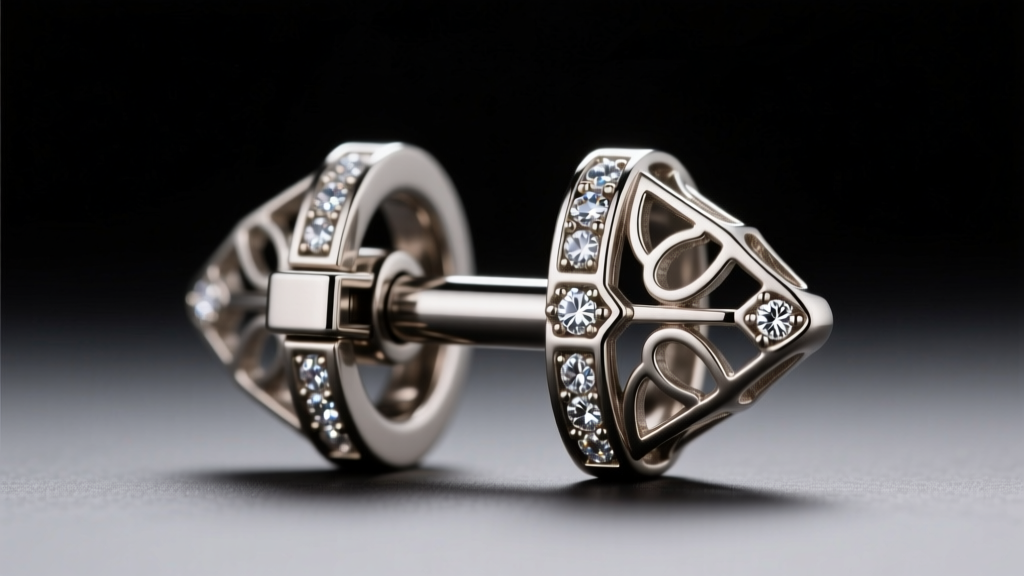
2. Hammered and Textured Seamless Hoops
For those who subscribe to the ‘quiet luxury’ or textured minimalism movements, the seamless continuous ring is the ultimate staple. Unlike Captive Bead Rings (CBRs) that rely on tension to hold a ball in place, seamless hoops feature a subtle bevel where the two ends meet, twisting past one another to form a continuous circle.
The 2026 iteration of this classic style heavily features hammered, brushed, or sandblasted finishes. These textures catch the light in unpredictable ways, adding visual weight without the need for gemstones. Because seamless rings require a slight twist to open and close, they are best suited for fully healed piercings. Attempting to force a seamless ring through a healing septum can cause micro-tears in the tissue. We recommend 16-gauge (1.2mm) or 14-gauge (1.6mm) wire thickness for optimal structural integrity, as thinner 18-gauge wires can warp easily during the twisting motion.
3. Ethical Tusks and Matte Spikes
Tusks and spikes offer an edgy, architectural silhouette that disrupts the traditional circular geometry of septum jewelry. Historically crafted from carved bone or wood, the 2026 market has seen a massive surge in demand for ethical, sustainable alternatives. Bio-compatible resins, lab-grown amber, and ethically harvested woods like ebony and rosewood are now the standard.
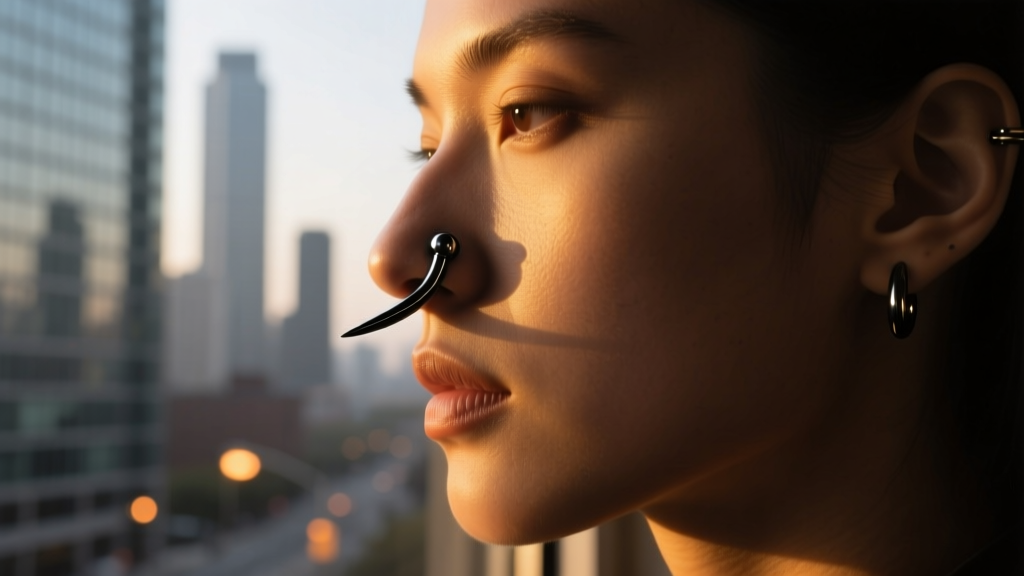
For a more industrial or cyberpunk aesthetic, matte black niobium and anodized titanium spikes are trending heavily. Niobium is highly hypoallergenic and can be anodized to create a permanent, flake-free black finish. When wearing tusks, the gauge size often remains a standard 16G or 14G at the piercing point, but the decorative ends can flare out to 5mm or 10mm in width. It is crucial to ensure the barbell is internally threaded; external threads on decorative ends can act like a cheese grater on your healing tissue.
4. Maximalist Septum Chains and Drapes
Maximalism is thriving, and the septum chain (or drape) is the ultimate expression of this trend. This style involves a primary septum piece—usually a clicker or a CBR—attached to a delicate chain that drapes across the cheek or connects to a coordinated nostril stud. In 2026, we are seeing asymmetrical drapes, layered micro-chains, and integration with ear cuffs via ultra-fine jewelry chains.
When styling chains, weight distribution is your primary concern. A heavy chain pulling on a 16G septum ring can cause migration or the ‘cheese-cutter effect,’ where the jewelry slowly migrates downward through the tissue. Always anchor chains to a sturdy 14G septum base and ensure the chain itself is lightweight, preferably crafted from 14k gold-filled wire or solid sterling silver.
Material and Gauge Matrix: What You Actually Need
Choosing the right material is just as important as the style. The Association of Professional Piercers (APP) strictly recommends specific materials to avoid allergic contact dermatitis and tissue rejection. Here is a technical breakdown of what to look for when shopping for the various types of septum jewelry.
| Material | Grade / Standard | Recommended Gauge | Est. Price Range | Best For |
|---|---|---|---|---|
| Titanium | ASTM F-136 Implant Grade | 16G or 14G | $25 - $90 | Healing piercings, sensitive skin, everyday wear |
| Solid Gold | 14k or 18k (Nickel-Free) | 16G or 14G | $120 - $600+ | Fully healed piercings, luxury styling, heirloom pieces |
| Niobium | Commercially Pure (99.9%) | 16G or 14G | $30 - $75 | Colored anodized jewelry, metal allergy sufferers |
| Glass | Borosilicate / Fused Quartz | 14G to 8G | $10 - $30 | Stretching, MRI safety, invisible retainers |
| Surgical Steel | 316L (Avoid for healing) | 16G or 14G | $5 - $20 | Fully healed piercings on a strict budget (nickel risk) |
Note: Never use plated jewelry (gold-plated or rose-gold-plated over brass or steel) for a septum piercing. The plating will inevitably wear off, exposing the base metal to the mucous membrane and causing severe reactions.
Styling Framework: Matching Jewelry to Face Shapes
The septum sits at the exact vertical center of the face, making it a powerful tool for balancing facial proportions. Here is a practical framework for selecting the right silhouette based on your bone structure:
- Round Faces: Opt for elongated shapes. Teardrop clickers, vertical spikes, or septum tusks draw the eye downward, creating the illusion of a longer, more oval facial structure. Avoid perfectly round, oversized hoops that mimic and exaggerate the roundness of the cheeks.
- Oval Faces: The most versatile canvas. Almost all types of septum jewelry work beautifully. To highlight the natural balance, try a medium-sized hammered seamless hoop or a delicate geometric clicker.
- Square Faces: Soften strong jawlines and angular features with curved, organic shapes. Circular captive bead rings, draped chains, and clickers with rounded gemstone clusters help to break up harsh lines.
- Heart-Shaped Faces: Balance a wider forehead and narrower chin with bottom-heavy jewelry. A 7/16 inch (11mm) drop clicker or a wide, sweeping septum chain will add visual weight to the lower half of the face.
Maintenance and Failure Modes to Avoid
Even the most expensive jewelry will fail if the mechanics are ignored. According to Healthline’s comprehensive piercing aftercare guides, the septum heals relatively quickly (typically 2 to 3 months for the initial fistula, up to 8 months for full maturation), but improper jewelry mechanics can cause chronic irritation.
‘The most common mechanical failure in septum jewelry is the hinge degradation on low-quality clickers. Over time, cheap pot-metal hinges accumulate sebum and debris, causing the clasp to loosen and eventually snap open, leading to lost jewelry and potential tissue trauma.’ — Senior Piercer, Jewel Style Radar Advisory Board
To prevent failure modes, avoid sleeping in seamless rings, as the pressure of a pillow can warp the metal, preventing the ends from meeting flush. For clickers, clean the hinge weekly with a soft brush and warm saline to prevent buildup. If you are active or play contact sports, swap your metal jewelry for a flexible PTFE or borosilicate glass retainer to prevent impact injuries that could tear the septum tissue.
Final Verdict on 2026 Septum Trends
The landscape of septum jewelry has matured into a sophisticated intersection of body modification and fine jewelry. The trending types of septum jewelry in 2026 demand a higher standard of material integrity and design intention. Whether you are investing in a custom 14k gold ornate clicker or embracing the raw, tactile feel of a hammered niobium seamless hoop, prioritize implant-grade metals, precise gauge sizing, and ergonomic mechanics. Your septum piercing is a permanent architectural addition to your face; dress it with the precision and respect it deserves.


