Indian Jewelry Nose Piercings: A Technical Guide to Nath & Phuli
Explore the technical anatomy of Indian jewelry nose pieces. We break down Nath gauge sizes, 22k gold metallurgy, and modern piercing adaptations.

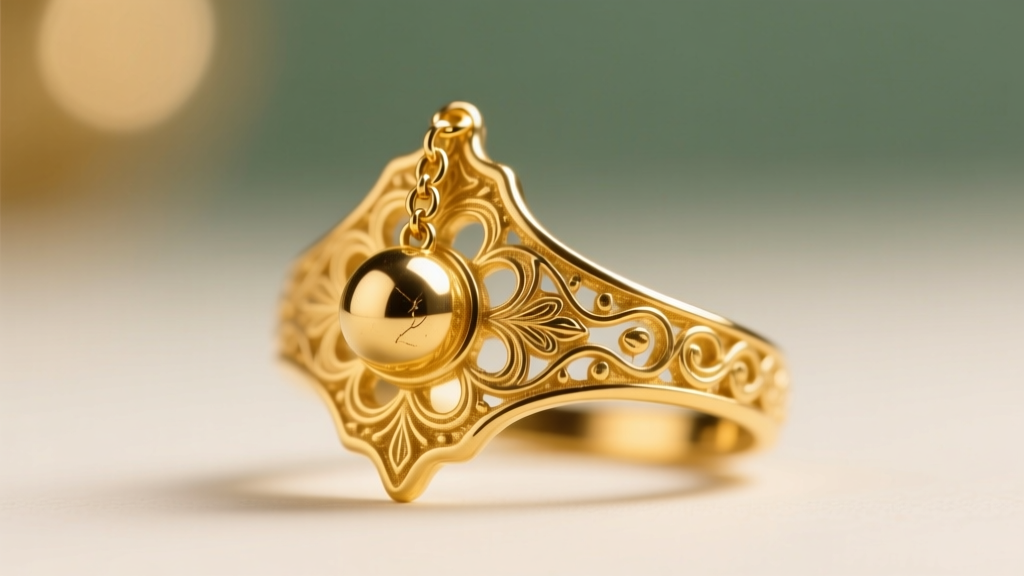
The Metallurgical Reality of Traditional Indian Nose Jewelry
When discussing indian jewelry nose adornments, the conversation is often dominated by cultural significance and aesthetic beauty. However, from a professional piercing and metallurgical standpoint, heritage pieces like the Nath (large hoop), Phuli (small hoop), and Laung (clove-shaped stud) present unique structural and biological challenges. The core of this challenge lies in the gold purity. Traditional Indian jewelry is predominantly crafted in 22-karat gold, which consists of 91.6% pure gold and 8.4% alloy metals—typically a mix of copper, silver, and zinc.
While 22k gold is prized for its rich, warm luster and cultural authenticity, it is fundamentally a soft metal. On the Vickers hardness scale, 22k gold is significantly softer than the 14k or 18k gold typically used in Western body jewelry. This softness means that thin wire posts or delicate tension rings can easily warp under the mechanical stress of daily wear or accidental snags. Furthermore, the copper content in the alloy can oxidize when exposed to the saline environment of a healing fistula, sebum, and sweat, occasionally leading to localized skin discoloration or contact dermatitis in individuals with specific metal sensitivities. According to the Association of Professional Piercers (APP), high-karat gold is generally not recommended for initial piercings due to its softness and alloy variables, making implant-grade titanium (ASTM F-136) the undisputed standard for healing tissue.
Anatomy of the Nath: Gauge, Weight, and the 'Cheese-Cutter' Effect
The most striking piece of indian jewelry nose regalia is the bridal Nath. These pieces are often heavily embellished with Kundan, Polki diamonds, or enamel work, and can weigh anywhere from 10 to over 40 grams. When a piece of jewelry exceeds the structural support capacity of the tissue it rests in, it triggers a biological response known as the 'cheese-cutter effect.' The constant downward vector force of gravity, compounded by the lateral tension of the supporting hair chain, causes the jewelry to slowly migrate through the tissue, leaving a slit-like scar.
To safely wear heavy heritage pieces, the initial piercing gauge must be substantially thicker than the Western standard of 20-gauge (0.81mm) or 18-gauge (1.02mm). A professional piercer will typically recommend a 14-gauge (1.63mm) or even 12-gauge (2.05mm) puncture for clients intending to wear heavy bridal Naths. This increased surface area distributes the mechanical load across a wider fistula, drastically reducing migration risks.
| Gauge (AWG) | Thickness (mm) | Max Safe Static Weight | Recommended Use Case |
|---|---|---|---|
| 20g | 0.81mm | 1.5 grams | Standard lightweight Laung or stud |
| 18g | 1.02mm | 3.0 grams | Standard Phuli or small everyday Nath |
| 16g | 1.29mm | 8.0 grams | Medium decorative Nath with light chain |
| 14g | 1.63mm | 15.0 grams | Heavy Bridal Nath with full chain support |
| 12g | 2.05mm | 25.0+ grams | Massive heritage pieces (requires stretching) |
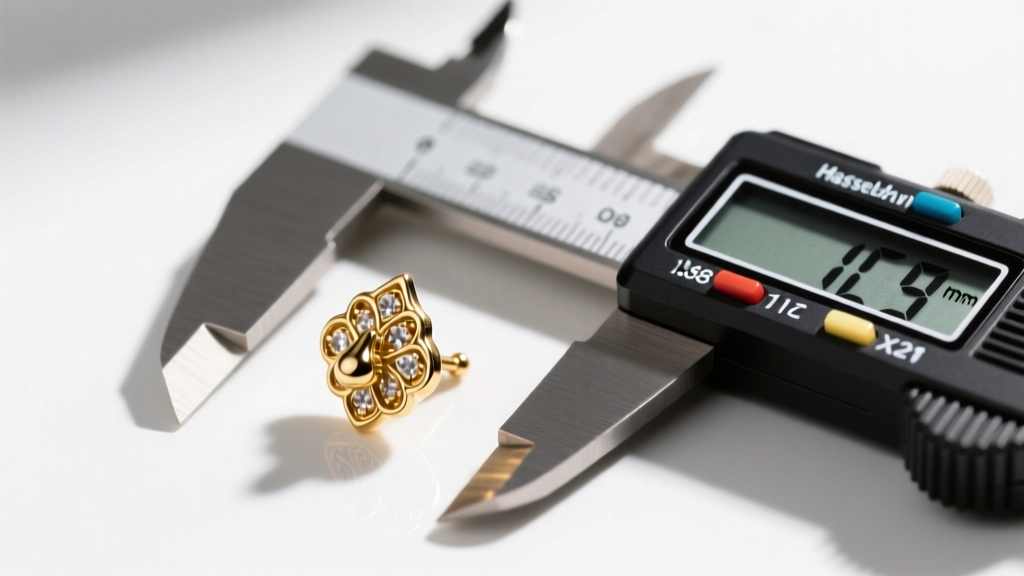
The Phuli and Laung: Tension Settings and Thread Mechanics
Unlike modern Western jewelry that relies on standardized internal or external threading (such as M1.2 or M1.6 threads), traditional Indian nose jewelry utilizes distinct mechanical retention systems. The Laung (named for its resemblance to a clove) typically features a straight or slightly curved post that terminates in a friction-fit backing or a traditional screw mechanism. The failure mode of vintage Laung screws is high; the threads are often hand-cut and shallow, leading to cross-threading or spontaneous unspooling, which poses an aspiration risk if the jewelry falls out during sleep.
The Phuli, a small, continuous hoop, relies on tension. The wire is inserted into a hollow tube on the opposite end of the hoop, held in place purely by the spring tension of the metal. In 22k gold, this tension degrades over time as the metal undergoes work hardening and subsequent annealing from body heat and handling. Modern adaptations of the Phuli now incorporate a microscopic 'clicker' hinge or a segment ring design with a machined O-ring, preserving the traditional aesthetic while utilizing aerospace-grade retention mechanics.
Hallmarking and Sourcing: Verifying Authentic 22k Indian Gold
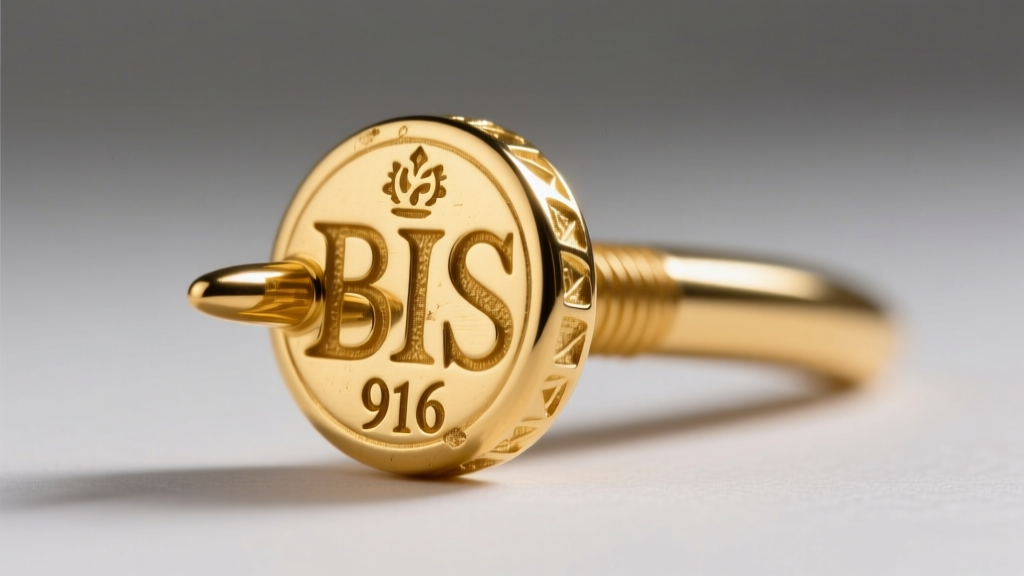
When sourcing authentic indian jewelry nose pieces, verifying the metallurgical integrity is a matter of both financial and biological safety. In India, the Bureau of Indian Standards (BIS) mandates hallmarking for gold jewelry. A genuine piece will bear the BIS logo, the purity grade (e.g., '916' for 22k), the assay center mark, and the jeweler's identification mark.
Beyond the gold purity itself, the most critical technical danger in heritage or unverified Indian jewelry lies in the solder used to attach the post to the decorative head. Historically, many traditional jewelers utilized cadmium-based or lead-based solders. These alloys have a lower melting point, making it easier to fuse the post to an intricate, heat-sensitive cast head without melting the primary piece. However, cadmium is a highly toxic heavy metal and a known carcinogen. When placed inside a warm, moist, and highly vascularized fistula, cadmium solder can leach into the bloodstream. Modern, reputable jewelers have transitioned to laser welding or high-temperature, cadmium-free hard solders. Always request documentation or X-ray fluorescence (XRF) testing if you are purchasing vintage or antique Indian nose jewelry for prolonged wear.
Adapting Heritage Pieces for Modern Piercing Standards
According to the Association of Professional Piercers, high-karat gold (above 18k) is generally not recommended for initial piercings due to its softness and the potential for alloy sensitivities, making implant-grade titanium the gold standard for healing tissue.
If you are planning to incorporate traditional Indian jewelry into your piercing journey, a phased approach is mandatory. For the initial piercing and the entire healing period (which can take 6 to 12 months for a nostril), you must use an internally threaded or threadless implant-grade titanium flat-back labret. Titanium's biocompatibility and mirror-finish polish prevent the harboring of bacteria and eliminate the risk of alloy-induced granulomas.
Once the fistula is fully matured and seasoned, you can transition to 22k gold. To adapt a vintage Nath or Laung for modern safety, take the piece to a specialized body jewelry fabricator. They can laser-weld a custom, internally threaded titanium or 14k gold post to the original 22k gold decorative head. This hybrid approach preserves the visual and cultural authenticity of the indian jewelry nose piece while ensuring the part of the jewelry resting inside the body meets strict 2026 biocompatibility and mechanical safety standards. By respecting both the cultural heritage and the biological realities of body modification, you can wear these stunning pieces safely for a lifetime.


