Engraving Your Jewelry Cute Bracelet Business Logo: Material Guide
Discover the best metals for engraving your jewelry cute bracelet business logo. Compare hardness, laser compatibility, and costs.

The Intersection of Brand Identity and Metallurgy
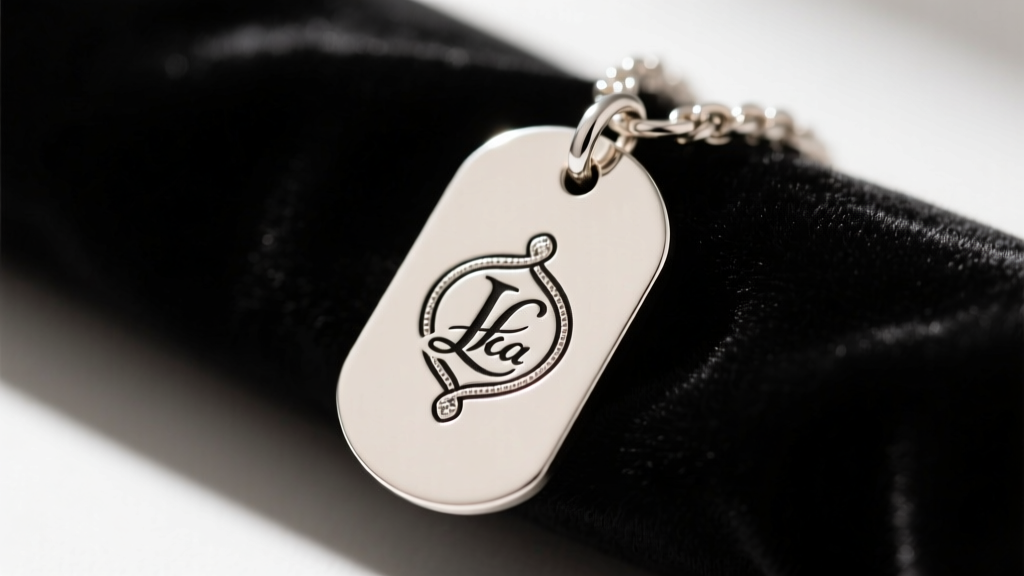
When launching an accessories brand, ensuring your jewelry cute bracelet business logo is flawlessly reproduced on every piece is critical for brand recognition and perceived value. A logo is more than just a graphic; it is a promise of quality. However, many emerging jewelry designers overlook the metallurgical realities of their chosen base metals. A delicate, intricate logo that looks stunning on a vector file might turn into an illegible blur if stamped into a metal that is too hard, or it might burn through the plating if lasered too aggressively on gold-filled blanks.
As we navigate the 2026 jewelry market, consumers are increasingly scrutinizing the craftsmanship of branded pieces. The method you use to apply your mark—whether through fiber laser etching, rotary engraving, or traditional hand stamping—must be perfectly matched to the material's Vickers hardness (HV), temper, and surface treatment. According to industry standards outlined by Rio Grande, understanding the temper (dead-soft, half-hard, or hard) of your bracelet blanks is just as important as the alloy composition itself when planning your branding strategy.
Material Hardness & Engraving Compatibility Chart
Before investing in a 20-watt fiber laser or a set of steel hallmark stamps, review the physical properties of the most common bracelet blank materials. The following table provides a baseline for small-batch production planning.
| Material | Vickers Hardness (HV) | Best Engraving Method | Tarnish Resistance | Est. Cost per 14mm Tag |
|---|---|---|---|---|
| Sterling Silver (925) | 60 - 120 HV | Fiber Laser, Hand Stamp | Low (Requires Anti-Tarnish) | $1.80 - $2.50 |
| Argentium Silver (935) | 70 - 130 HV | Fiber Laser (High Contrast) | High (Germanium Alloy) | $2.75 - $3.50 |
| 14K Gold-Filled (1/20) | 110 - 140 HV | Light Laser, Rotary | High | $1.20 - $1.80 |
| 316L Stainless Steel | 150 - 200 HV | MOPA Fiber Laser | Very High | $0.30 - $0.60 |
| Grade 2 Titanium | 150 - 250 HV | Fiber Laser (Color Marking) | Very High | $0.80 - $1.50 |
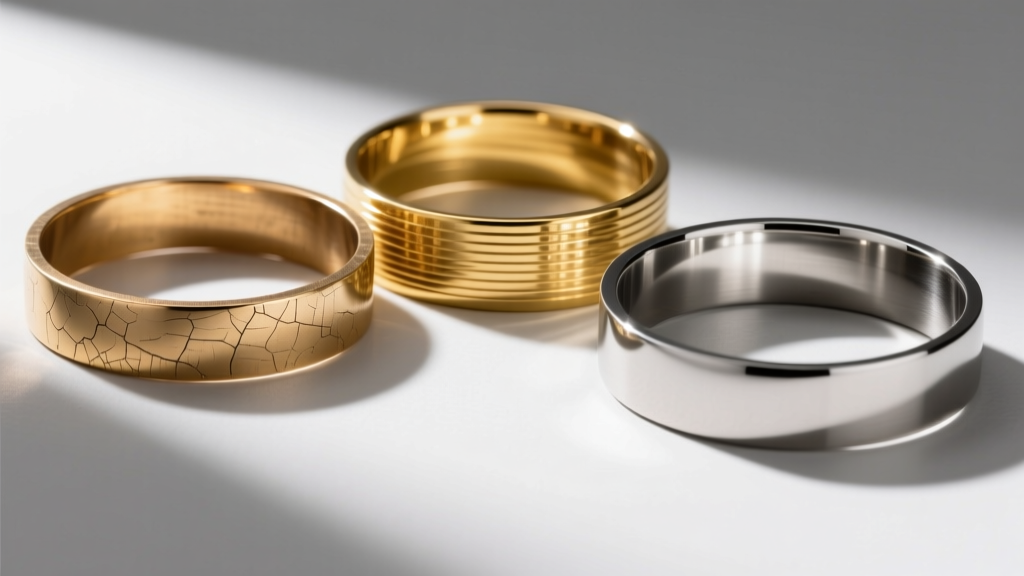
Deep Dive: Top Metals for Logo Stamping and Laser Etching
Sterling Silver (925) & Argentium
Sterling silver remains the gold standard for mid-tier boutique bracelet lines. Its relatively low hardness in the "dead-soft" temper makes it incredibly forgiving for hand stamping. If your jewelry cute bracelet business logo features a mix of typography and small iconography, dead-soft 925 silver will yield crisp, deep impressions using standard 3/32-inch steel stamps. However, for laser engraving, standard 925 silver can sometimes yield a low-contrast, grayish mark.
This is where GIA-recognized Argentium silver shines. Alloyed with germanium, Argentium not only resists tarnish but also reacts beautifully to 1064nm fiber lasers, producing a stark, pitch-black annealed mark that makes intricate logos pop without the need for chemical darkening agents like liver of sulfur.
14K Gold-Filled vs. Solid 14K Gold
Gold-filled (GF) materials are notoriously tricky for branding. A standard 1/20 14K GF bracelet blank consists of a brass core mechanically bonded to a 14K gold outer layer that typically comprises only 5% of the total weight. The thickness of this gold layer is usually between 0.03mm and 0.05mm. If you use a rotary engraver or set your laser power too high, you will cut through the gold layer and expose the raw brass underneath. This not only ruins the aesthetic but will cause the exposed brass to oxidize and turn the wearer's skin green.
For gold-filled blanks, limit your laser engraving depth to a maximum of 0.02mm. Use a high-speed, low-power pass (e.g., 1500mm/s at 20% power on a 20W machine) to lightly scorch the surface for a subtle, tonal logo rather than a deep carve. If your logo requires deep engraving, you must upgrade to solid 14K gold or use a surface-level enamel fill.
Stainless Steel (316L) & Titanium
For durable, waterproof, and budget-friendly bracelet lines, 316L surgical stainless steel is unmatched. However, its high Vickers hardness makes hand stamping nearly impossible without specialized carbide stamps and a heavy press. Laser engraving is the only viable option. Using a MOPA (Master Oscillator Power Amplifier) fiber laser, you can adjust the pulse width to create deep black marks or even vibrant colors on titanium and steel through controlled surface oxidation. This allows for highly detailed, full-color logo variations that are completely impervious to water, sweat, and friction.
Engraving Techniques: Laser vs. Rotary vs. Hand Stamping
Choosing the right application method dictates the equipment you need and the final tactile feel of your brand mark on the wrist.
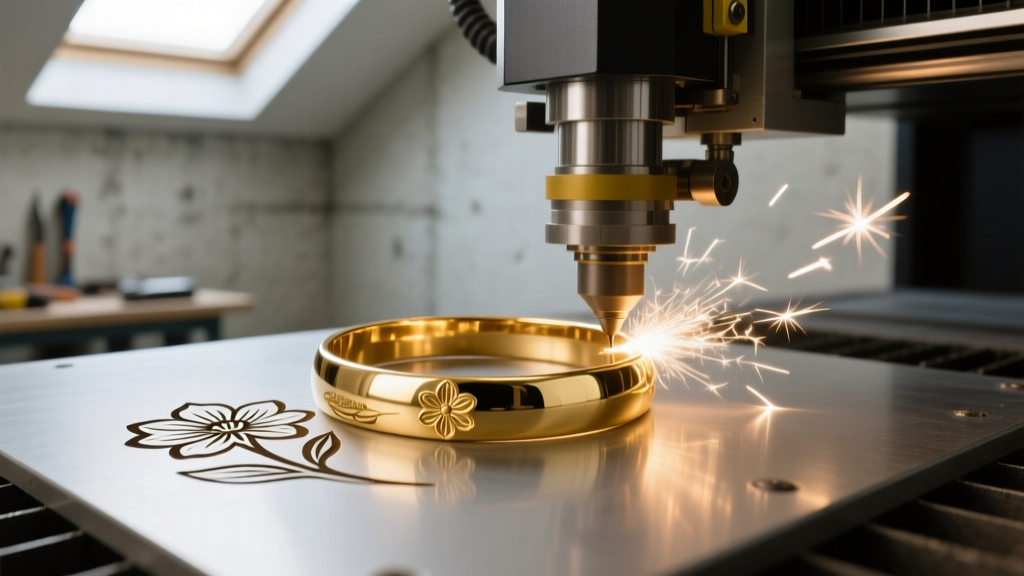
- Fiber Laser Etching (1064nm): The industry standard for modern jewelry branding. It offers micron-level precision, perfect for complex logos with fine line weights (down to 0.05mm). It requires zero physical force, meaning delicate chain bracelets won't stretch or deform during the marking process.
- Rotary/Diamond Drag Engraving: Uses a physical diamond-tipped bit to scratch the metal. It creates a bright, reflective cut that catches the light beautifully on high-polish bangles. Best for simple, bold logos or monograms, as fine details can become clogged with metal swarf (shavings).
- Hand Stamping: Offers an artisanal, slightly imperfect aesthetic that appeals to the handmade market. Requires dead-soft metals, a heavy steel bench block, and a brass or rawhide mallet. Never use a steel hammer on steel stamps, as it will mushroom the tops of the stamps and degrade your logo's clarity over time.
Finishing and Sealing: Protecting Your Brand Mark
Once your jewelry cute bracelet business logo is applied, the raw engraved area is vulnerable. In silver, the exposed microscopic pores will accelerate localized tarnishing. In brass or copper alloys, it will oxidize rapidly. To protect the integrity of the logo, you must implement a post-engraving finishing protocol.
For laser-etched silver and steel, a light polish with a microfiber cloth and a non-abrasive jeweler's rouge will remove any surface soot without dulling the engraving. For hand-stamped pieces, applying a thin coat of micro-crystalline wax (such as Renaissance Wax) will seal the metal from moisture and skin oils. If you are producing enameled logos, ensure you are using cold enamel (epoxy resin) for small-batch tag filling, as it cures at room temperature and won't warp thin gauge bracelet blanks like kiln-fired vitreous enamel might.
Sourcing Blank Bracelets for Small Batch Production
The success of your branding relies heavily on the consistency of your blanks. When ordering from major suppliers like Stuller or specialized findings manufacturers, always specify the temper. For charm bracelets that require stamping, order "dead-soft" or "annealed" tags. For bangles that need to retain their shape after laser etching, "half-hard" is the optimal choice.
Furthermore, pay close attention to the surface finish of the blanks. "Mirror finish" blanks will reflect laser light and can sometimes cause scarring around the edges of the logo if the lens isn't perfectly calibrated. "Satin" or "matte" finishes absorb laser energy more evenly, resulting in a crisper, more defined logo mark with less post-processing required. By aligning your material science knowledge with your branding goals, you ensure that every bracelet leaving your studio carries a mark of quality that will endure years of daily wear.


