How to Remove a Link From a Jewelry Chain Bracelet for the Perfect Fit
Learn exactly how to remove a link from a jewelry chain bracelet. Expert guide on resizing Cuban, paperclip, and Figaro chains for perfect 2026 wrist stacks.

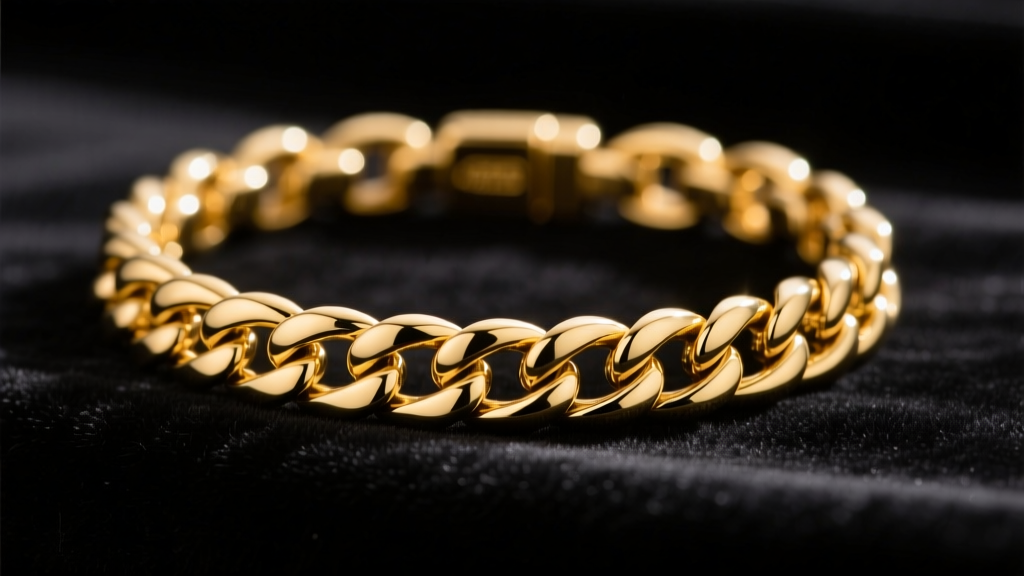
The contemporary jewelry landscape has shifted dramatically toward bespoke, tailored fits. In 2026, the "second-skin" chain trend dominates wrist styling, meaning loose, dangling bracelets are out, and precision-sized stacks are in. Whether you are restoring a vintage piece or adjusting a newly purchased chain to sit flush against your wrist for a seamless stack, understanding how to remove a link from a jewelry chain bracelet is an essential skill. However, this is not a one-size-fits-all process. The metallurgy of the chain, the link architecture, and the desired aesthetic drape all dictate the removal technique.
The Anatomy of Trending Chain Links (And Why Sizing Matters)
Before making any cuts, you must understand the structural integrity of your specific chain style. High-end chain bracelets are rarely constructed with simple open jump rings; they are soldered shut to prevent snagging and breaking. This means removing a link requires cutting through solid metal and subsequently rejoining the chain.
Cuban Link Chains
Cuban links are characterized by their thick, interlocking, and uniformly flattened oval links. Because they are heavily soldered and often feature a high-polish finish, removing a link requires a jeweler's saw rather than wire cutters, which would crush the link and ruin the geometric symmetry. Furthermore, 14k gold Cuban links possess a higher Vickers hardness than 18k gold due to their copper and zinc alloy content, meaning they require more pressure to saw but hold their shape better during reassembly.
Paperclip Chains
The paperclip chain remains a massive trend for minimalist stacking. While fashion jewelry versions use open jump rings, fine jewelry iterations (especially those in solid 18k gold or platinum) feature laser-soldered rectangular links. Hollow paperclip links are notoriously fragile; applying lateral pressure with cutting pliers will instantly collapse the hollow tubing, rendering the link unsalvageable.
Figaro Chains
Figaro chains feature a distinct pattern—typically three short circular links followed by one elongated oval link. Resizing a Figaro bracelet is a mathematical puzzle. If you simply cut out a random section, you will destroy the 3:1 visual rhythm. You must calculate the removal so that the clasp reconnects at the exact start of a new pattern sequence.
Essential Tools for Precision Link Removal
Attempting to resize a fine chain bracelet with standard household pliers is a guaranteed way to mar the metal, crush the links, or injure yourself. Professional jewelers rely on specialized tools to ensure clean cuts and seamless reconnections. According to industry standards outlined by Jewelers of America, using the correct gauge of cutting tool is paramount to preserving the chain's structural integrity.
| Chain Style | Link Construction | Primary Removal Tool | Aesthetic Risk Factor |
|---|---|---|---|
| Cuban Link | Solid, Soldered | Jeweler's Saw (2/0 blade) | Pattern symmetry loss, visible solder seams |
| Paperclip | Hollow/Solid, Soldered | Flush Cutters / Laser Welder | Crushing hollow links, heat warping |
| Figaro | Solid, Soldered | Jeweler's Saw (3/0 blade) | Disrupts the 3:1 link ratio pattern |
| Rope Chain | Twisted, Soldered | Laser Cutter / Saw | Untwisting of the rope helix structure |
For sawing, a standard bench pin and a heavy-duty saw frame are required. You will need 2/0 or 3/0 saw blades (available from specialized suppliers like Rio Grande) depending on the thickness of the wire. For softer metals like high-karat gold or pure silver, rubbing the saw blade with beeswax lubricant prevents the metal from gumming up the blade teeth and snapping it.
Step-by-Step: How to Remove a Link From a Jewelry Chain Bracelet
When figuring out how to remove a link from a jewelry chain bracelet, precision is your best friend. Follow this professional framework to ensure a clean resize.
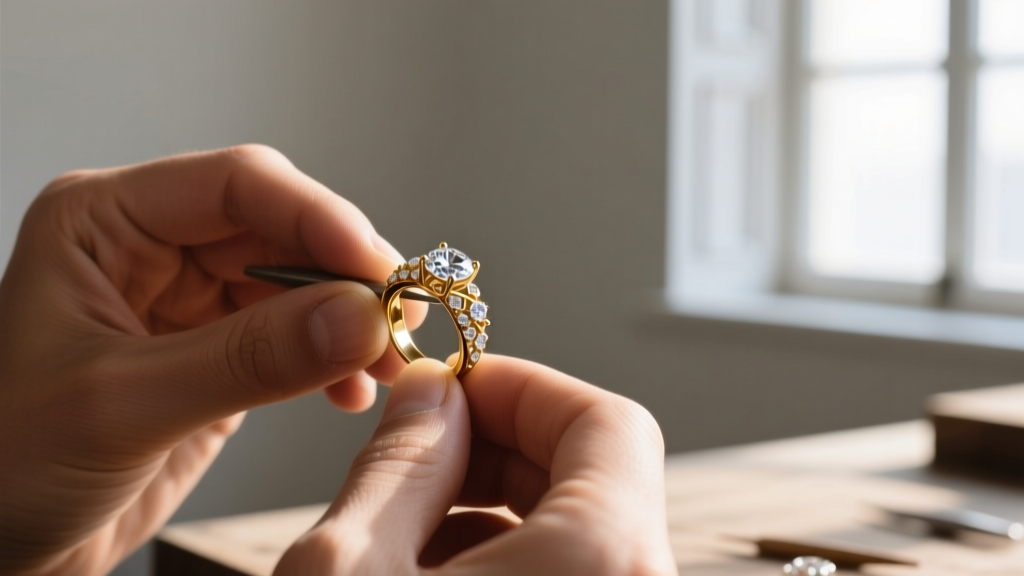
Step 1: Measure and Isolate
Wrap the bracelet around your wrist to determine the exact number of links to remove. Use a small piece of blue painter's tape to mark the links that will be removed. This prevents you from accidentally cutting the wrong section, which is especially critical for patterned chains like the Figaro or Byzantine.
Step 2: Secure the Chain
Never cut a chain while it is dangling in the air. Lay the bracelet flat on a wooden bench pin. Use a small pair of locking tweezers or a chain-holding jig to keep the links immediately adjacent to your cut zone completely immobilized. This prevents the chain from whipping back when tension is released.
Step 3: The Cut
If you are cutting through a solid, soldered link (like on a Cuban chain), thread your jeweler's saw blade through the center of the link. Saw straight down through the bottom half of the link, then unhook it from the adjacent link. Pro Tip: Always cut the link you intend to discard, never the link you intend to keep. If the saw slips, the damage is confined to the scrap metal.
Step 4: Reconnection and Soldering
Once the excess links are removed, the two ends of the bracelet must be reunited. For hollow chains or delicate paperclip chains, traditional torch soldering can melt the surrounding metal. In these cases, jewelers use an Orion Pulse laser welder, which fuses the metal using localized heat without affecting the rest of the chain. For solid chains, a jump ring can be inserted, closed with chain-nose pliers, and soldered using hard-grade silver or gold solder to ensure the joint is as strong as the original links.
Style Analysis: How Resizing Impacts Chain Drape and Stacking
From a style perspective, the fit of a chain bracelet completely alters its visual weight and how it interacts with other pieces on your wrist. The "waterfall stack"—a trending 2026 styling technique where a delicate chain, a mid-weight Figaro, and a heavy Cuban link cascade perfectly without tangling—relies entirely on micro-sizing.
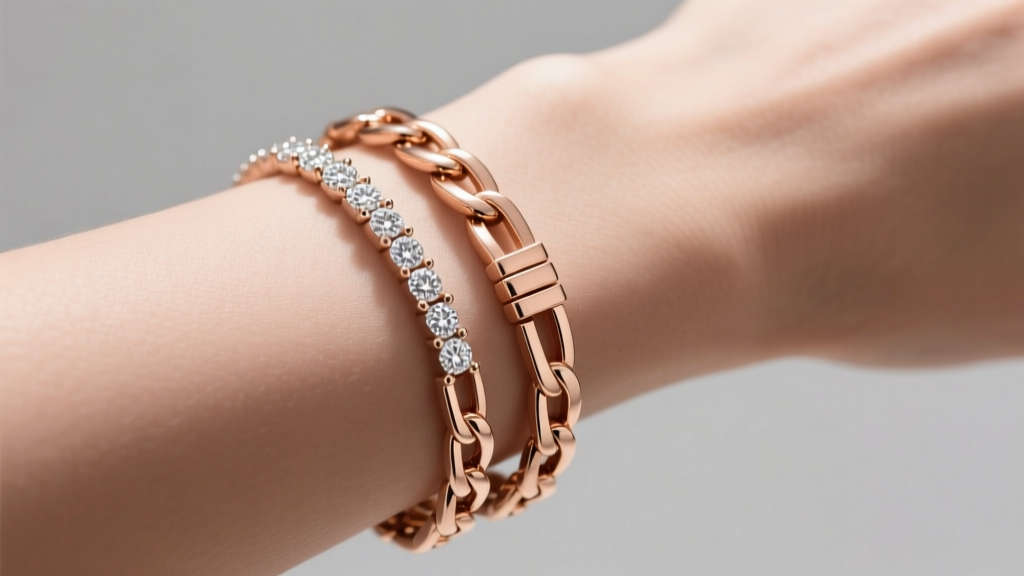
If a Cuban link bracelet is too loose (e.g., 7.5 inches on a 6-inch wrist), the heavy links will slide down over the hand, obscuring the wrist bone and creating a bulky, unrefined silhouette. By removing links to achieve a tailored 6.25-inch fit, the bracelet sits exactly at the ulnar styloid process (the wrist bone). This allows the chain to drape elegantly and creates a clean canvas for stacking a flush diamond tennis bracelet underneath it without the metal clasps grinding against one another.
"The difference between a good stack and a masterful stack is often less than three millimeters of chain. Tailoring your base chains to your exact wrist circumference is the foundation of modern wrist styling." — Senior Jewelry Stylist, Jewel Style Radar
When to Call a Professional Jeweler
While understanding the mechanics of link removal is valuable for the jewelry enthusiast, certain scenarios demand professional intervention. If your bracelet features hollow links, rhodium plating (common on white gold), or is set with micro-pave diamonds near the clasp, do not attempt a DIY resize. The heat from traditional soldering will shatter nearby diamonds or burn off the rhodium plating, requiring an expensive re-plating job. Furthermore, if you are working with platinum chains, the extremely high melting point requires specialized oxygen-gas torches and platinum-specific solder that are not viable for home workshops.
Ultimately, mastering how to remove a link from a jewelry chain bracelet bridges the gap between off-the-rack jewelry and bespoke, curated style. By respecting the metallurgy and architecture of your chains, you ensure that your wrist stacks remain secure, symmetrical, and effortlessly chic.


