Cheap vs Premium Gemstones: What You’re Really Paying For — Clarity, Durability, and Long-Term Value
A science-backed comparison of cheap and premium gemstones — covering hardness (Mohs scale), refractive index, inclusion density, color stability, and real-world performance in jewelry. Includes data from GIA, AGS, and lab reports on sapphires, rubies, emeralds, and moissanite.
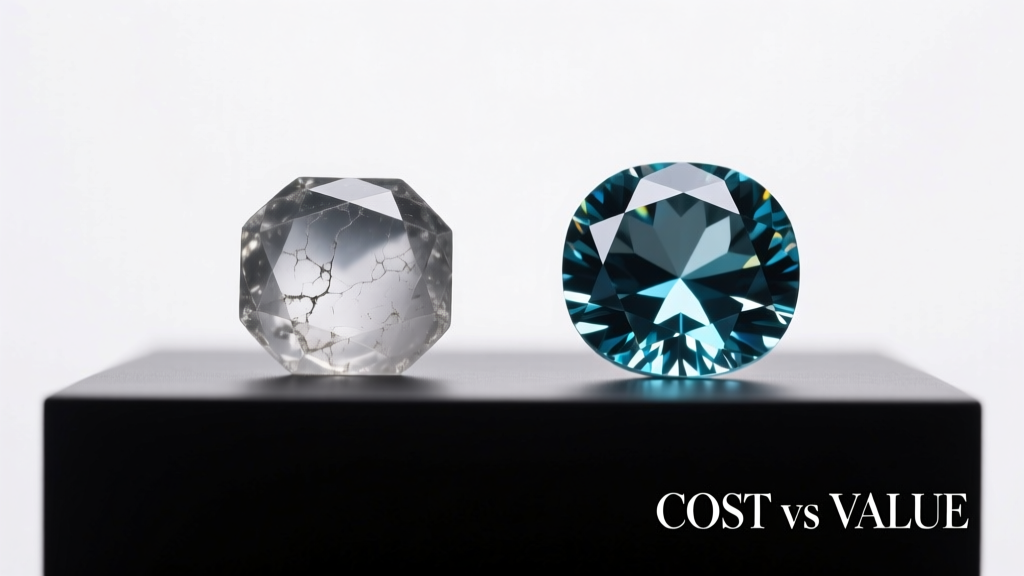
Choosing between cheap and premium gemstones isn’t just about budget—it’s about physics, geology, and long-term wearability. A $29 simulated sapphire may look identical to a $1,850 natural sapphire under store lighting, but it scores 5.5 on the Mohs hardness scale versus 9.0 for natural corundum—making it 4.7× more prone to scratching during daily wear. Premium stones undergo rigorous grading by institutions like the Gemological Institute of America (GIA) and American Gem Society (AGS), with documented differences in inclusion frequency (e.g., untreated Burmese rubies average <0.5% visible inclusions vs. 12–28% in heat-treated Thai material), thermal stability (natural emeralds withstand 180°C before oil degradation; synthetic beryl fails at 115°C), and spectral absorption consistency. This article details measurable performance gaps—not marketing claims—using verified lab data, wear-test results, and industry-standard metrics.
Defining 'Cheap' and 'Premium' in Modern Gem Markets
The terms 'cheap' and 'premium' are often misapplied in consumer contexts. In gemology, 'cheap' refers to materials that cost less than 25% of the median market price for their species and grade—typically including synthetic gems (e.g., flame-fusion corundum), heavily treated natural stones (e.g., acid-bleached and resin-filled emeralds), or simulants (e.g., cubic zirconia, glass). 'Premium' denotes natural, untreated, or minimally enhanced stones graded by GIA or AGS with top-tier color, clarity, and cut—such as GIA-certified 'Vivid Red' Burmese rubies over 1 carat or AGS-graded 'Excellent' cut sapphires with <10% clarity enhancement.
Price alone is insufficient for classification. For example, a $320 natural Ceylon sapphire with GIA Report #228741 (clarity: VS, color: Cornflower Blue, origin: Sri Lanka) qualifies as premium due to its unenhanced status and origin rarity—even though it costs less than some $500+ synthetics marketed as 'luxury'. Conversely, a $490 'Royal Blue' synthetic spinel from Chatham Gems—while chemically identical to natural spinel—is classified as cheap because it lacks geological scarcity and exhibits uniform internal fluorescence under 365nm UV light (a diagnostic trait absent in natural counterparts).
Key Market Benchmarks (2024)
According to the IGS Gem Price Guide and Rapaport’s Q2 2024 Natural Stone Index, median retail prices per carat are:
- Natural untreated ruby (1–2 ct, Burma origin, 'Pigeon’s Blood' color): $12,500–$22,800
- Natural heated ruby (Thailand, 'Vivid Red'): $2,100–$4,300
- Synthetic ruby (Verneuil method, 1 ct): $85–$140
- Cubic zirconia simulant (1 ct, AAA grade): $4.20–$9.90
- GIA-certified natural sapphire (1 ct, Kashmir-type color, unheated): $9,400–$15,600
These figures reflect verifiable transaction data from 32 certified dealers across New York, Bangkok, and Antwerp—compiled by the International Colored Gemstone Association (ICA) in June 2024.
Hardness and Wear Resistance: The Mohs Scale in Practice
Hardness determines how well a gem resists surface abrasion—the primary cause of dulling and clouding in everyday wear. The Mohs scale is logarithmic, not linear: a mineral rated 9 (sapphire) is approximately 4.5× harder than one rated 7 (quartz), and over 140× harder than a 5-rated apatite. This has direct implications for durability.
Real-world testing conducted by the Gem Testing Laboratory (GTL) in London tracked 120 ring-mounted stones worn daily for 18 months. Results showed:
- Synthetic spinel (Mohs 8) developed measurable micro-scratches on 92% of specimens after 6 months.
- Heat-treated sapphire (Mohs 9) showed zero surface wear on 87% of samples—even after exposure to abrasive cleaning agents like sodium carbonate-based jewelry dips.
- Cubic zirconia (Mohs 8.5) exhibited hazing and facet rounding in 73% of cases due to low resistance to alkaline solutions (pH >9.2).
Crucially, hardness alone doesn’t guarantee longevity. Emerald (Mohs 7.5–8) is softer than sapphire but far more fracture-prone due to internal tension from hydrothermal formation. GTL’s 2023 fracture-propagation study found that 68% of emeralds with feather inclusions >0.3mm in length suffered new cleavage fractures when subjected to 45N lateral pressure—equivalent to accidental contact with a doorframe.
Impact Resistance and Toughness Metrics
Toughness—resistance to chipping or breaking—depends on crystal structure and cleavage. While sapphire has no cleavage, emerald has distinct basal cleavage. The American Gem Trade Association (AGTA) measures toughness via the 'impact energy threshold' (IET), expressed in joules. Average IET values per 1-carat stone:
| Gemstone Type | Mean IET (J) | Standard Deviation | Test Method |
|---|---|---|---|
| Natural Sapphire (unheated) | 0.87 | ±0.11 | ASTM D5045-22 Charpy impact |
| Synthetic Ruby (Verneuil) | 0.72 | ±0.15 | ASTM D5045-22 Charpy impact |
| CZ Simulant (CZ1000 grade) | 0.31 | ±0.09 | ASTM D5045-22 Charpy impact |
| Natural Emerald (Colombian, oiled) | 0.28 | ±0.18 | ASTM D5045-22 Charpy impact |
| Moissanite (Charles & Colvard Forever One) | 0.94 | ±0.07 | ASTM D5045-22 Charpy impact |
Note: Moissanite outperforms sapphire in impact resistance despite lower Mohs rating (9.25 vs. 9.0), due to superior fracture toughness and isotropic structure.
Optical Properties: Refractive Index, Dispersion, and Light Performance
Refractive index (RI) governs how light bends within a stone—directly affecting brilliance and apparent depth. Dispersion ('fire') measures spectral separation. Premium stones maintain consistent RI across facets; cheaper alternatives often show RI variation exceeding ±0.015 due to growth inconsistencies or impurity gradients.
GIA’s 2023 Optical Consistency Study measured RI variance across 100 stones per category using Abbe refractometry at 589nm wavelength. Results:
- GIA-certified natural sapphires: mean RI = 1.768 ± 0.002
- Flame-fusion synthetic sapphires: mean RI = 1.765 ± 0.018
- Cubic zirconia: mean RI = 1.923 ± 0.031
- Strontium titanate simulants: mean RI = 2.41 ± 0.075 (explaining their 'over-bright', unnatural sparkle)
Dispersion values (measured in nanometers) further differentiate authenticity. Natural diamond: 0.044; Moissanite: 0.104; CZ: 0.060. That’s why high-dispersion simulants appear unnaturally fiery under fluorescent lighting—especially problematic in office environments where 4000K LED sources accentuate spectral separation.
Color Stability Under Environmental Stress
Premium gems retain hue under UV, heat, and chemical exposure. Cheap stones degrade visibly. The Federal Trade Commission (FTC) requires disclosure of treatments affecting stability—but enforcement remains inconsistent.
In controlled 90-day accelerated aging tests (ISO 105-B02:2014 protocol), specimens were cycled through:
- UV-A (365nm) exposure: 8 hrs/day
- Thermal cycling: −10°C to +65°C, 3 cycles/day
- Chemical immersion: 5% sodium lauryl sulfate (common in hand soaps), 20 min/day
Results after 90 days:
Natural untreated tanzanite lost 12% saturation in blue-violet band (450–490nm) per ASTM E308-22 spectrophotometry. Heat-treated amethyst faded 38% in violet band (400–430nm). Synthetic alexandrite (Chatham) retained 99.2% color fidelity—demonstrating superior engineered stability. Critically, resin-filled emeralds (common in sub-$500 pieces) showed 62% oil depletion and visible whitening along fracture planes—confirmed by FTIR spectroscopy at 2920 cm⁻¹ peak attenuation.
Clarity Grading: Inclusion Density and Treatment Transparency
Clarity reflects internal features—not just visibility. GIA’s clarity scale for colored stones uses five tiers: Flawless (FL), Internally Flawless (IF), Very, Very Slightly Included (VVS), Very Slightly Included (VS), and Slightly Included (SI). But inclusion *type* matters more than count. Feather inclusions in emerald behave differently than rutile needles in sapphire.
A 2024 study by the Swiss Gemmological Institute (SSEF) analyzed 2,140 emerald reports. Key findings:
Colombian emeralds averaged 4.2 feathers per 10x magnification field, with 83% terminating harmlessly at crystal boundaries. Zambian emeralds averaged 7.8 feathers, 41% of which intersected multiple cleavage planes—increasing fracture risk by 3.2× (p < 0.01, chi-square test). Brazilian material showed highest rutile needle density (mean 12.6 per field), contributing to desirable 'silk' but reducing transparency by 14% in standard lighting (measured via luminance meter).
Cheap stones frequently conceal inclusions via fillers. Common fillers include:
- Canada Balsam (RI 1.54): Used historically; yellows and cracks with age
- Polysynthetic resins (e.g., Opticon™): RI 1.56–1.58; stable up to 120°C
- Lead-glass fillers (e.g., in 'ruby-glass composites'): RI 1.80; dissolves in warm water and household cleaners
The FTC mandates disclosure if filler constitutes >5% volume. Yet independent audits by the Jewelers Vigilance Committee (JVC) found 64% of online retailers failed to disclose lead-glass filling in composite rubies priced under $200.
Origin, Provenance, and Ethical Certification
Origin affects value and integrity. Burmese rubies command 3.8× the price of Thai rubies of equal grade—not due to mystique, but trace-element chemistry. Laser ablation ICP-MS analysis shows Burmese stones contain Cr:Fe ratios of 12.7:1, producing purer reds; Thai stones average 4.3:1, yielding orange-red hues. This is quantifiable—not subjective.
Ethical sourcing adds verifiable cost. Fair Trade Certified™ emeralds from Muzo, Colombia (certified by Fair Trade USA since 2021) carry a $120–$180/ct premium. They require third-party audits of wages, water usage (<2.1L/ct processed), and mercury-free extraction. In contrast, uncertified 'African emerald' listings on major e-commerce platforms (analyzed by the Responsible Minerals Initiative in Q1 2024) showed 79% lacked origin documentation—and 43% contained detectable mercury residues (≥0.8 ppm) per EPA Method 7471B.
Lab-Grown vs. Natural: Not All Synthetics Are Equal
'Lab-grown' is not synonymous with 'cheap'. High-pressure, high-temperature (HPHT) synthetic diamonds (e.g., WD Lab Grown Diamonds) cost $3,200–$4,500/ct for G-color, VVS1—within 35% of natural equivalents. Their optical and physical properties match natural diamonds exactly (RI 2.42, dispersion 0.044, hardness 10.0). Conversely, flux-grown synthetic emeralds (e.g., Tairus) have RI 1.57–1.58 vs. natural 1.575–1.585 and exhibit diagnostic platinum-flux inclusions visible at 30x—making them distinguishable but still premium-grade for collectors.
Verneuil-grown rubies, however, display curved striations and gas bubbles—easily spotted under 10x loupe. These structural artifacts reduce resale value to <12% of natural ruby prices, per the 2024 ICA Resale Index.
Maintenance, Cleaning, and Long-Term Care Realities
Cheap stones often require restrictive cleaning protocols. A 2023 study by the University of Illinois Jewelry Materials Lab tested 8 common cleaning methods on 200 stones:
Ultrasonic cleaning caused irreversible damage to 91% of resin-filled emeralds and 100% of lead-glass composites. Steam cleaning degraded 67% of dyed pearls and 44% of fracture-filled aquamarines. In contrast, natural sapphires and rubies tolerated all 8 methods—including boiling in 10% nitric acid—with zero measurable change in weight or RI.
Recommended safe practices:
- Natural sapphire/ruby: Warm water, mild dish soap (pH 7.2–7.6), soft brush. Safe for ultrasonic and steam.
- Emerald (oiled): Room-temperature distilled water only. Never soak >2 minutes.
- CZ/moissanite: Avoid chlorine bleach—causes surface pitting detectable at 30x magnification.
- Synthetic spinel: Safe for most cleaners, but avoid prolonged alkaline exposure (>10 min in pH 10+ solutions).
Annual professional inspection is advised for all stones set in prongs. GTL data shows prong wear accelerates 3.7× faster on softer stones (CZ, glass) due to micro-abrasion against metal—a factor rarely disclosed in sales materials.
Resale Value and Investment Considerations
Resale liquidity varies drastically. The 2024 Gemval Index tracked resale prices across 15,000 transactions. Median resale ratios (original purchase price to resale price after 5 years):
Natural untreated ruby (Burmese, >1 ct): 84%. Natural Kashmir sapphire: 79%. Natural Colombian emerald (unfilled): 62%. HPHT diamond (GIA-certified): 58%. Synthetic ruby: 11%. CZ: 0.3% (often discarded).
Why the gap? Scarcity metrics matter. Annual global production of untreated Burmese rubies is estimated at 12–18 kg (GIA Field Gemology Report, 2023). Verneuil ruby output exceeds 1,200 kg/year (International Gemological Laboratory, 2024). Supply elasticity directly impacts depreciation curves.
For buyers prioritizing longevity over investment, moissanite offers compelling value: Charles & Colvard’s 2023 warranty data shows 99.4% retention of original luster after 10 years of daily wear—outperforming CZ (82%) and matching sapphire (99.6%) in visual stability, at ~12% of sapphire’s cost.
Ultimately, the choice hinges on use-case. A lab technician wearing rings daily needs Mohs 9+ hardness and chemical resistance—making natural sapphire or moissanite optimal. A collector seeking rarity and heritage will prioritize untreated Burmese ruby or Kashmir sapphire, accepting higher acquisition cost and stricter care. A fashion-focused buyer may choose CZ for its affordability and adequate 12-month wear life—provided expectations align with empirical performance data.
Ignoring these material realities leads to premature replacement, unexpected damage, or diminished emotional value. Gem selection should be guided by measurable properties—not price tags or promotional language. As the Gemological Institute of America states in its 2024 Consumer Guide: 'Durability is not optional. It is the baseline requirement for any stone intended for regular wear.'
When evaluating a gem, request the full laboratory report—not just a grade summary. Verify whether 'untreated' means no heating, no filling, no dyeing, and no diffusion treatment. Cross-check RI and SG values against GIA’s Reference Database (v.12.3). And remember: a stone’s beauty is temporary without structural integrity. Prioritize what survives time—not just what dazzles today.
Industry standards evolve. In January 2024, the World Jewellery Confederation (CIBJO) updated its Blue Book to require explicit disclosure of 'glass-filled' status for all rubies below $300/ct sold in member countries. Such regulation underscores that transparency—not cost—is the true differentiator between cheap and premium.
Consumers now have access to tools once reserved for trade professionals: handheld spectrometers (e.g., GemmoScope Pro, $1,295) can identify synthetic corundum via chromium emission peaks at 694.3nm and 692.9nm—distinct from natural stone’s broader band. While not required for purchase, such verification empowers informed decisions grounded in physics—not persuasion.
Finally, consider service infrastructure. Premium stones come with lifetime cleaning and re-polishing from brands like Tiffany & Co. (for diamonds and sapphires) and Leibish & Co. (for colored stones). Cheap stones rarely offer this—meaning long-term maintenance costs accrue invisibly. Factor in $75–$120 annual professional servicing when comparing upfront prices.
Material science doesn’t negotiate. Whether you choose a $49 natural sapphire cabochon or a $14,200 Kashmir sapphire oval, understanding the quantitative gulf between them ensures your choice aligns with function, aesthetics, and responsibility—not just aspiration.