How Do You Clean James Avery Jewelry Without Ruining Patina?
Learn how do you clean James Avery jewelry safely. Troubleshoot heavy tarnish, protect intentional oxidation, and care for porous stones.

The James Avery Dilemma: Why Standard Silver Cleaners Fail
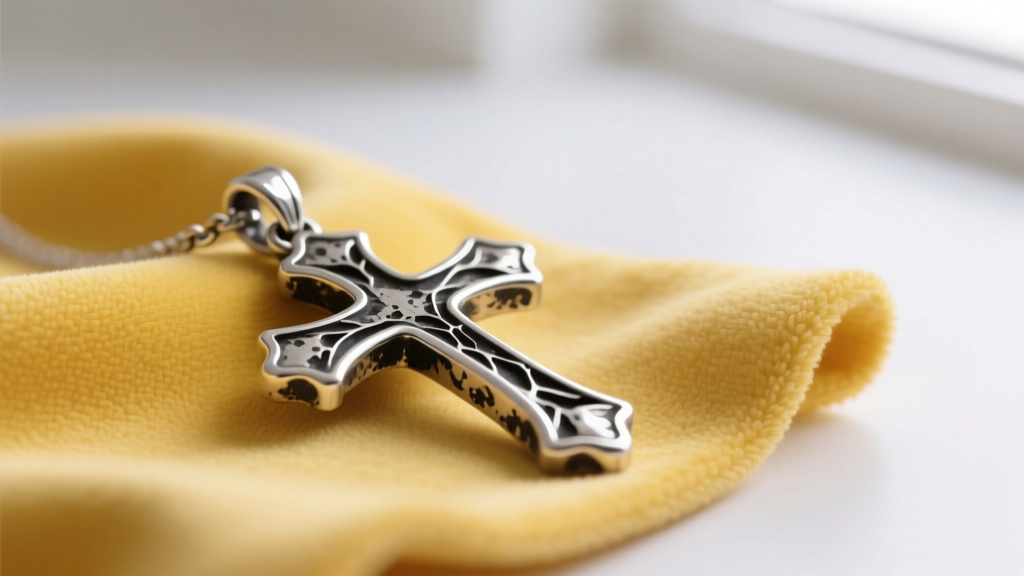
When devoted collectors and new enthusiasts alike ask, "how do you clean James Avery jewelry," the answer is rarely as simple as grabbing a bottle of commercial silver dip from the supermarket. James Avery pieces are celebrated for their intricate, sculptural designs and heavy use of intentional oxidation. Artisans use chemical compounds, typically liver of sulfur, to darken the recessed areas of sterling silver. This creates a high-contrast, three-dimensional effect that highlights the brand's signature botanical, religious, and wildlife motifs.
The primary troubleshooting issue arises when owners use liquid silver dips. These commercial solutions rely on thiourea, a powerful chemical that instantly strips silver sulfide (tarnish) from the metal's surface. However, thiourea cannot distinguish between accidental surface tarnish and the artisan-applied patina in the crevices. A three-second dunk in a silver dip will permanently strip the dark oxidation from your piece, leaving it looking flat, chalky, and entirely devoid of its original artistic depth. Furthermore, many James Avery designs feature porous gemstones that are highly reactive to the harsh acids found in these dips.
Step-by-Step Troubleshooting: Safe Cleaning Protocols
To properly maintain the contrast and integrity of your jewelry, you must adopt a mechanical and mild-surfactant approach rather than a chemical one. Here is the professional framework for cleaning heavily textured sterling silver.
Phase 1: The Targeted Dry Polish
For light surface tarnish and日常 oils, avoid liquid cleaners entirely. Instead, use a dual-layer jeweler's polishing cloth (such as a Sunshine Cloth). The inner layer of these cloths is impregnated with a mild jeweler's rouge and a microscopic abrasive, while the outer layer is a soft flannel for buffing.
- The Technique: Gently rub the raised, high-polish areas of the silver. Fold the cloth to a fine point to navigate tight spaces, but never force the abrasive layer into the deep, darkened crevices.
- The Warning: Do not use these cloths on oxidized finishes or matte-brushed surfaces, as the mild abrasive will slowly wear away the intentional patina and alter the metal's texture.
Phase 2: The Mild Surfactant Wash
When body oils, lotions, and environmental dirt become impacted in the intricate details of a charm or ring, a wet wash is required.
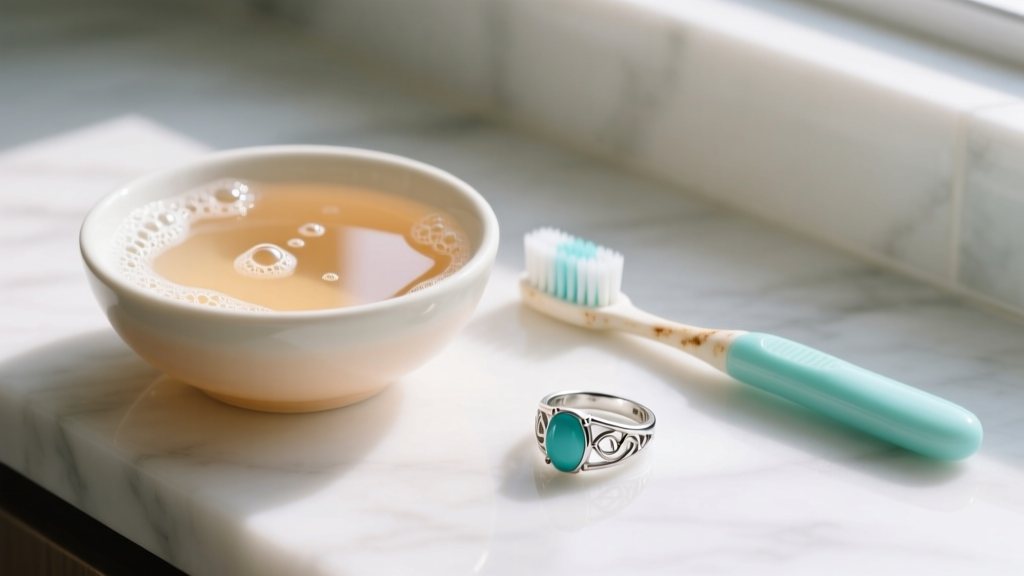
- Prepare the Solution: Mix a few drops of pH-neutral, lotion-free dish soap (like original blue Dawn) into a bowl of lukewarm distilled water. Avoid tap water, as the chlorine and dissolved minerals can leave micro-deposits on the silver.
- Agitate Gently: Submerge the jewelry for no more than 3 to 5 minutes to loosen debris.
- Mechanical Removal: Use an extra-soft baby toothbrush. Sterling silver sits at a 2.5 to 3 on the Mohs hardness scale, meaning it scratches easily. Stiff bristles will leave micro-abrasions that catch light and dull the polish over time. Brush gently in circular motions, allowing the soapy water to lift the dirt from the crevices without scrubbing away the oxidation.
- Rinse and Dry: Rinse under a gentle stream of distilled water. Immediately pat dry with a lint-free microfiber cloth, and use a hair dryer on the 'cool' setting to blow moisture out of deep, hard-to-reach crevices. Trapped moisture is the primary catalyst for rapid re-tarnishing.
Gemstone Triage: Handling Turquoise, Pearls, and Opals
James Avery frequently incorporates organic and porous gemstones into their sterling silver and 14k gold settings. Cleaning the metal is only half the battle; troubleshooting gemstone safety is where most mistakes occur. According to the Gemological Institute of America (GIA), porous stones require drastically different care protocols than crystalline gems like amethyst or garnet.
| Gemstone Type | Porosity & Hardness | Cleaning Protocol | Strict Prohibitions |
|---|---|---|---|
| Turquoise | Porous (Mohs 5-6) | Damp microfiber wipe only. | Ultrasonics, silver dips, steam, hot water. |
| Freshwater Pearl | Organic (Mohs 2.5) | Dry cloth. Occasional damp wipe. | Any soap, ammonia, ultrasonics, abrasives. |
| Lapis Lazuli | Porous (Mohs 5-5.5) | Dry brush or barely damp cloth. | Acidic cleaners, prolonged water exposure. |
| Opal | Hydrated Silica (Mohs 5.5) | Dry, soft cloth buffing. | Heat, ultrasonics, sudden temp changes. |
| Amethyst / Quartz | Non-Porous (Mohs 7) | Mild soap, soft brush, warm water. | Prolonged direct UV light (causes fading). |
Ultrasonic Cleaner Warning: Never place James Avery turquoise or opal pieces in an ultrasonic cleaner. The high-frequency cavitation bubbles create microscopic shockwaves that can easily fracture stabilized turquoise or cause the nacre on pearls to peel and craze.
Disaster Recovery: What to Do If You Ruined the Patina
If you have already used a chemical dip and stripped the dark contrast from your jewelry, the piece will look unnaturally bright and flat. Do not panic; the oxidation can be restored, though it requires careful intervention.
The At-Home Egg Yolk Method
For a gentle, DIY re-oxidation, you can utilize the natural hydrogen sulfide gas emitted by hard-boiled egg yolks. Place a freshly boiled, crushed egg yolk into a sealed plastic container alongside your clean, dry jewelry. Ensure the yolk does not physically touch the silver. Seal the container and wait 12 to 24 hours. The sulfur gas will react with the copper alloy in the sterling silver, creating a uniform layer of dark silver sulfide. Once the desired darkness is achieved, remove the piece and use a polishing cloth to gently buff only the raised areas, leaving the crevices dark.
Professional Refurbishment
For highly complex pieces or those featuring delicate gemstones that you cannot risk exposing to DIY gases, the safest route is professional restoration. You can send the piece directly to the manufacturer's repair department for a professional re-oxidation and polishing service, which typically costs between $30 and $60 depending on the complexity of the charm.
Preventative Maintenance Framework
The Silver Institute notes that sterling silver tarnishes primarily due to exposure to sulfur compounds and high humidity. By controlling the storage environment, you can drastically reduce the need for deep cleaning.
- Anti-Tarnish Strips: Store your jewelry in airtight polyethylene ziplock bags with 3M anti-tarnish strips. These strips absorb ambient sulfur gases and remain effective for 6 to 12 months.
- Avoid Sulfur-Rich Environments: Remove your jewelry before visiting hot springs, handling rubber bands (which contain sulfur-based vulcanizing agents), or applying sulfur-based acne treatments.
- Silica Gel Packets: Toss a few silica gel packets into your jewelry box to control ambient humidity, which acts as a catalyst for the tarnishing process.
Expert Takeaway: Learning how do you clean James Avery jewelry is ultimately about preservation, not just polishing. By avoiding harsh chemical dips, utilizing targeted mechanical cleaning, and respecting the porosity of natural gemstones, you ensure that the sculptural depth and artistic intent of your pieces survive for generations.


