Electric Jewelry Cleaner Guide: Metal & Gemstone Safety
Discover how different metals and gemstones react to an electric jewelry cleaner. Learn material-specific safety tips to prevent damage and restore shine.

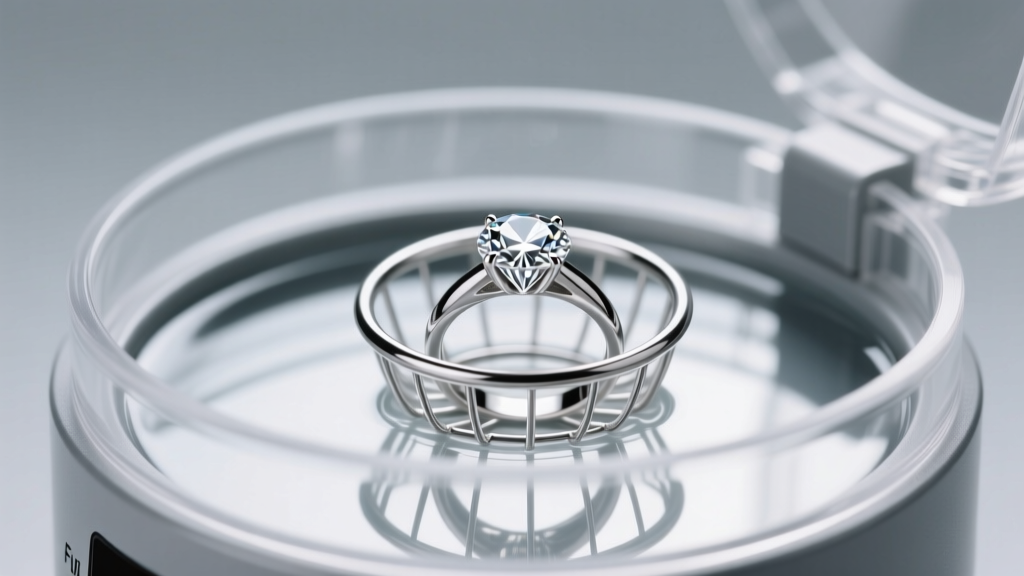
An electric jewelry cleaner—specifically an ultrasonic machine—is one of the most powerful tools in a modern jewelry care arsenal. By utilizing high-frequency sound waves to create microscopic cavitation bubbles, these devices blast away sebum, lotions, and environmental grime from the deepest crevices of a setting. However, the very physics that make an electric jewelry cleaner so effective can also cause catastrophic damage if applied to the wrong materials. In 2026, with the market flooded with dual-frequency sweep models and compact travel units, understanding the metallurgical and gemological properties of your jewelry is no longer optional; it is essential for preservation.
This guide breaks down the material science behind ultrasonic cleaning, providing a definitive framework for determining which metals and gemstones can safely withstand cavitation, and which will be destroyed by it.
The Physics of Cavitation and Material Hardness
Most consumer and professional electric jewelry cleaners operate at frequencies between 40 kHz and 45 kHz. At these frequencies, the transducer generates thousands of microscopic vacuum bubbles in the cleaning solution per second. When these bubbles collapse against a surface, they release localized shockwaves and micro-jets of liquid. This process, known as cavitation, is highly effective at dislodging particulate matter.
However, cavitation does not discriminate between dirt and soft materials. The structural integrity of a metal or gemstone—specifically its hardness, density, and fracture toughness—dictates whether it will survive the cleaning cycle. While modern 2026 models often feature "sweep" technology to distribute the ultrasonic waves evenly and prevent standing-wave hot spots, the fundamental mechanical stress on the jewelry remains significant. According to the Gemological Institute of America (GIA), the primary risk factors are not just surface scratching, but the exacerbation of internal fractures and the degradation of chemical treatments.
Precious Metals: Alloy Compositions and Reactions
Precious metals are generally safe for ultrasonic cleaning, but their specific alloy compositions dictate the exact parameters you should use. Pure metals behave very differently from their alloyed counterparts.
Gold (14k, 18k, and 24k)
Gold is alloyed with metals like copper, silver, and zinc to increase its durability. A 14k gold piece (58.5% pure gold) is highly resilient and perfectly safe for standard 3-minute ultrasonic cycles. An 18k gold piece (75% pure gold) is slightly softer but still entirely safe. However, 24k gold (99.9% pure) is exceptionally malleable. Prolonged exposure to aggressive cavitation can cause microscopic pitting on the surface of 24k gold, dulling its mirror finish over time.
Platinum (Pt950 and Pt900)
Platinum is incredibly dense and possesses high tensile strength. It is arguably the safest precious metal for an electric jewelry cleaner. The cavitation process will easily clean intricate filigree and micro-pave settings without risking metal fatigue or surface degradation. Furthermore, unlike white gold, platinum does not require rhodium plating, meaning there is no risk of the ultrasonic waves stripping away a surface coating.
Sterling Silver and Rhodium Plating
Sterling silver (92.5% silver, 7.5% copper) is structurally safe for ultrasonic cleaning. However, ultrasonic waves alone will not remove heavy silver sulfide tarnish; they only remove physical debris. You must use a specialized silver dip or a mild chemical surfactant in the tank to dissolve tarnish. A critical warning applies to rhodium-plated white gold and silver: frequent, prolonged ultrasonic cycles can accelerate the microscopic delamination of the rhodium layer, causing the jewelry to yellow prematurely.
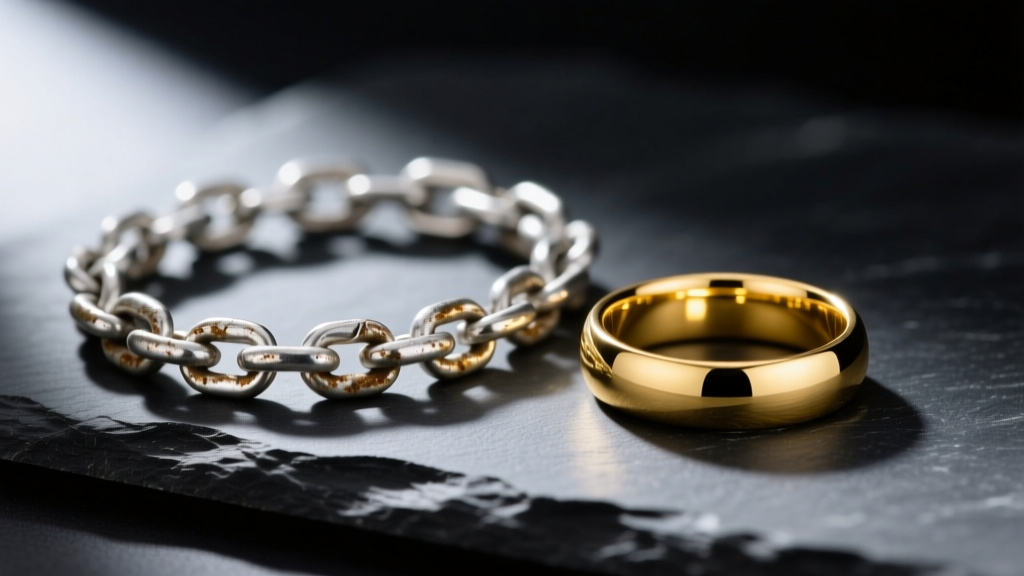
Alternative Metals and Body Jewelry
The rise of alternative metals in both fine jewelry and body piercings requires a separate set of rules. These materials are often prized for their hardness, but their manufacturing processes introduce unique vulnerabilities.
- Implant-Grade Titanium (Ti6Al4V): The gold standard for body jewelry. Titanium is highly resistant to corrosion and incredibly strong. It is 100% safe for electric jewelry cleaners, making it ideal for cleaning threaded or threadless body jewelry ends where sebum buildup is common.
- Tungsten Carbide: Exceptionally hard and scratch-resistant, solid tungsten carbide rings are completely safe. However, if the ring features inlays of softer materials (like wood, carbon fiber, or meteorite), the ultrasonic vibrations can shatter the inlay or break the adhesive bond.
- Stainless Steel (316L Surgical): Safe for ultrasonic cleaning, but beware of PVD (Physical Vapor Deposition) coatings. While high-quality PVD applied in 2026 is highly durable, cheaper black or rose-gold PVD coatings can blister or peel under the stress of 40 kHz cavitation.
The Gemstone Matrix: Mohs Scale vs. Fracture Toughness
The most common mistake consumers make is assuming that a gemstone's hardness (measured on the Mohs scale) dictates its ultrasonic safety. This is a dangerous fallacy. Ultrasonic safety is actually determined by a gemstone's fracture toughness and its porosity. A diamond is a 10 on the Mohs scale but has "good" toughness due to cleavage planes, whereas an emerald is a 7.5 but has "poor" toughness due to natural inclusions.
| Gemstone | Mohs Hardness | Fracture Toughness | Ultrasonic Verdict |
|---|---|---|---|
| Diamond | 10 | Good (Cleavage planes) | Safe (Avoid if heavily included/feathered) |
| Ruby / Sapphire | 9 | Excellent | Safe (Avoid if fracture-filled with lead glass) |
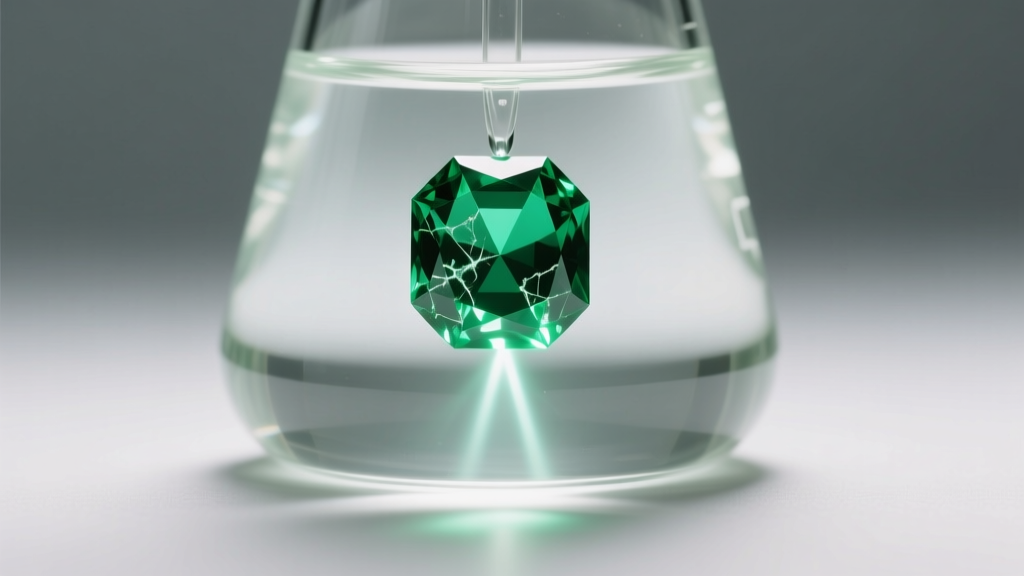
| Emerald | 7.5 - 8 | Poor | UNSAFE (Cavitation strips cedar oil fillers) |
| Opal | 5.5 - 6.5 | Very Poor | UNSAFE (Causes crazing and structural cracking) |
| Tanzanite | 6.5 - 7 | Fair | UNSAFE (High risk of cleavage splitting) |
| Pearl (Organic) | 2.5 - 4.5 | Very Poor | UNSAFE (Dissolves nacre and destroys luster) |
| Turquoise | 5 - 6 | Poor (Porous) | UNSAFE (Absorbs chemicals, alters color) |
As noted by experts at the American Gem Society, organic gemstones like pearls, coral, and amber are entirely incompatible with electric jewelry cleaners. The porous nature of these materials allows the cleaning solution to penetrate the stone, while the ultrasonic vibrations literally shake the delicate crystalline structures apart.
The 3-Second Sorting Framework
Before turning on your electric jewelry cleaner, implement this rapid triage framework to prevent catastrophic damage:
- Check the Prongs: Use a 10x jeweler's loupe to inspect the setting. If a prong is lifted or worn thin, the ultrasonic vibrations can easily shake the gemstone loose, sending it to the bottom of the tank where it may be scratched by the metal basket.
- Identify Treatments: If your ruby is fracture-filled with lead glass (a common treatment for lower-grade stones), the ultrasonic waves and cleaning solvents will dissolve the filler, leaving the stone cloudy and structurally compromised.
- Separate by Hardness: Never clean multiple pieces in the same basket without separating them. The cavitation process causes jewelry to vibrate violently. A diamond ring bumping against a platinum band is fine, but it will easily scratch a softer 14k gold piece or chip a neighboring gemstone.
Chemical Solvents vs. Plain Water
The liquid medium in your electric jewelry cleaner is just as important as the ultrasonic waves. For diamonds, platinum, and solid gold, a simple solution of warm water and a few drops of mild, ammonia-free dish soap is the most effective and safest choice. Ammonia-based cleaners can degrade the alloys in lower-karat gold over time and will permanently cloud porous stones if accidentally used.
For heavily soiled items, specialized ultrasonic cleaning concentrates containing mild alkaline surfactants are highly effective. Avoid harsh acidic solutions or bleach, which will chemically react with the copper and zinc alloys in rose gold and sterling silver, causing irreversible pitting and discoloration. As highlighted in care guides by Jewelers Mutual, when in doubt about a chemical solvent, stick to distilled water and rely on the mechanical action of the machine, followed by a gentle polish with a microfiber cloth.
When to Skip the Electric Cleaner Entirely
While an electric jewelry cleaner is a marvel of modern maintenance, it is not a universal panacea. Skip the machine entirely if your jewelry features tension settings (where the metal's own pressure holds the stone, which can be relaxed by ultrasonic vibration), antique pieces with fragile enamel work (guilloché or plique-à-jour), or any gemstone that exhibits visible surface-reaching fractures. In these cases, the time-honored method of a soft-bristled baby toothbrush, lukewarm soapy water, and gentle manual agitation remains the undisputed gold standard for safe, effective jewelry care.