How Can I Clean My Jewelry at Home: Troubleshooting Tarnish & Grime
Wondering how can I clean my jewelry at home safely? Discover expert troubleshooting steps for removing stubborn tarnish, grime, and oxidation.

When your favorite everyday pieces lose their luster, the immediate question is often: how can I clean my jewelry at home without causing irreversible damage? The internet is flooded with generic advice, but jewelry cleaning is not a one-size-fits-all process. A method that restores a diamond solitaire to brilliant clarity might permanently cloud an emerald or strip the rhodium plating off white gold.
In 2026, with the rise of complex lab-grown diamond inclusions and advanced metal alloys, understanding the chemistry of tarnish and grime is critical. This troubleshooting guide bypasses the fluff and dives deep into the material science of home jewelry cleaning, helping you diagnose and fix specific cleaning failures.
The Core Problem: Why Your Jewelry Gets Cloudy and Tarnished
Before applying any cleaning agent, you must identify the exact nature of the dullness. Jewelry loses its shine due to three primary culprits:
- Chemical Oxidation (Tarnish): Pure gold and platinum do not tarnish, but the alloy metals mixed with them (like copper and zinc in 14K gold) react with sulfur and moisture in the air, creating a dark surface layer.
- Sebum and Cosmetic Buildup: Lotions, sunscreens, and natural skin oils create a hydrophobic film. This film traps dead skin cells and microscopic dust, particularly in the pavilion (the underside) of gemstone settings, blocking light return and making diamonds look cloudy.
- Micro-Scratches: Sometimes, what appears to be dirt is actually a web of microscopic abrasions on the metal or stone surface that scatters light, reducing brilliance.
How Can I Clean My Jewelry at Home? A Material-by-Material Guide
Sterling Silver (925): Reversing Silver Sulfide Oxidation
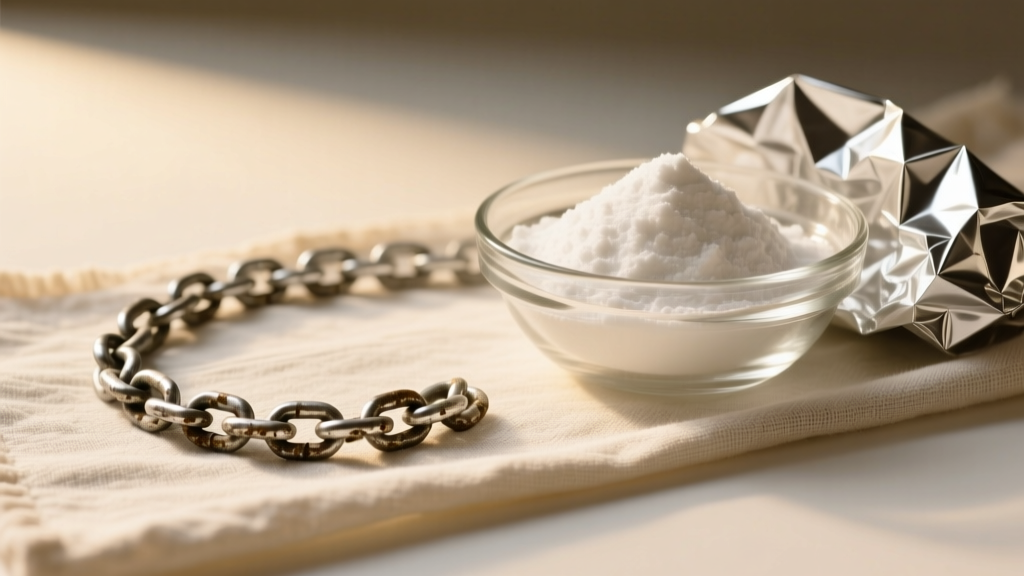
Sterling silver tarnishes when it reacts with hydrogen sulfide in the air, forming silver sulfide ($Ag_2S$). Polishing cloths merely rub this layer off, slowly wearing away your silver over time. Instead, use an electrochemical reversal bath.
- Line a glass bowl with aluminum foil (shiny side up).
- Place your silver jewelry on the foil, ensuring direct contact.
- Sprinkle 2 tablespoons of baking soda and 1 tablespoon of non-iodized salt over the pieces.
- Pour boiling water into the bowl until the jewelry is submerged.
The Science: The baking soda and salt create an electrolyte solution. The aluminum acts as a sacrificial anode, pulling the sulfur atoms away from the silver and transferring them to the foil. You will smell a distinct rotten-egg odor (hydrogen sulfide gas) as the tarnish vanishes in roughly 3 to 5 minutes. Rinse thoroughly and dry with a microfiber cloth.
14K and 18K Gold: Dissolving Sebum and Lotion Buildup
Gold alloys require degreasing rather than chemical stripping. Avoid toothpaste, which contains abrasive silica particles (Mohs hardness of 7) that will scratch 14K gold (Mohs hardness of 3-4).
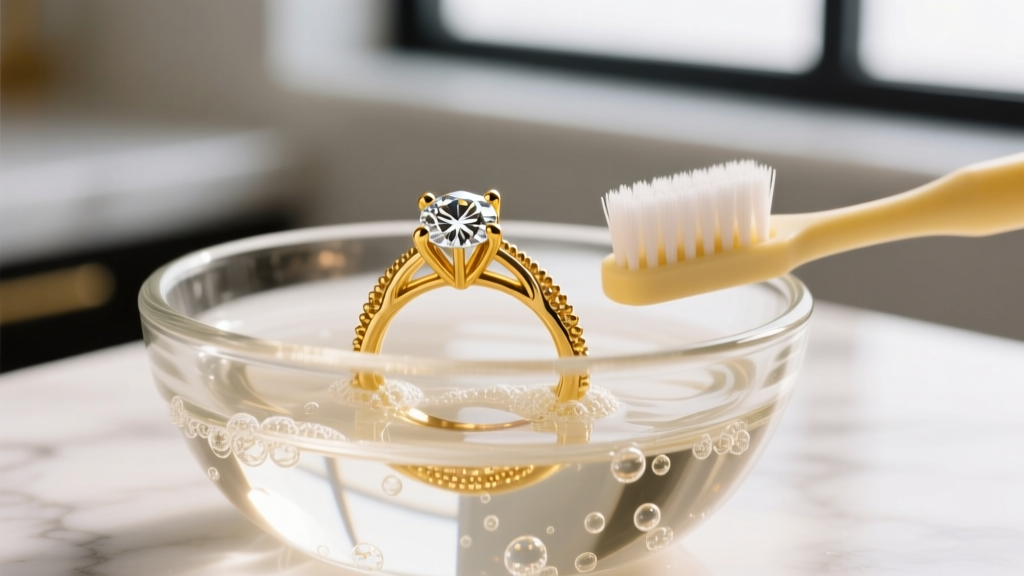
The Protocol: Mix 1 cup of warm distilled water with 3 drops of mild, phosphate-free dish soap (like Dawn). Let the jewelry soak for 15 minutes to break down the lipid bonds of the sebum. Use a soft-bristled infant toothbrush or a specialized 0.05mm brass-bristle jewelry brush to gently agitate the pavilion of the stones. Rinse under a gentle stream of lukewarm water over a closed drain.
Gemstone-Specific Failure Modes: What NOT to Do
The most common home-cleaning disasters occur when consumers treat all gemstones like diamonds. According to the Gemological Institute of America (GIA), a stone's Mohs hardness and its structural inclusions dictate its cleaning vulnerability.
| Gemstone | Mohs Hardness | Primary Vulnerability | Home Cleaning Verdict |
|---|---|---|---|
| Diamond (Mined & Lab) | 10 | Cleavage planes (hard knocks) | Safe for ultrasonics & steam |
| Sapphire / Ruby | 9 | Fracture-filled stones | Safe for mild soap; avoid ultrasonics if fractured |
| Emerald | 7.5 - 8 | Oiled fractures (Cedar oil) | NEVER use ultrasonics or harsh chemicals |
| Opal | 5.5 - 6.5 | Water content (Dehydration) | Wipe only with damp cloth; no soaking |
| Pearl | 2.5 - 4.5 | Organic nacre layers | Wipe with damp cloth; never submerge |
DIY vs. Commercial: When Home Remedies Fail
If you are asking "how can I clean my jewelry at home" because commercial cleaners left your pieces looking worse, you likely misused an ultrasonic cleaner. Modern 2026 home ultrasonics often feature dual-frequency switches. A 40kHz frequency creates larger cavitation bubbles, which are excellent for blasting heavy grime off solid gold bands but can vibrate stones right out of worn prongs. An 80kHz frequency creates smaller, gentler bubbles, making it safer for intricate filigree and delicate settings.
Never put fracture-filled diamonds, emeralds, opals, or pearls in an ultrasonic cleaner. The high-frequency vibrations can shatter internal inclusions or strip the oils that hold fragile stones together.
For persistent grime in diamond pavilions that soap won't touch, a 1:10 ratio of household ammonia to water is highly effective for diamonds and sapphires, but it will permanently cloud porous stones like turquoise and lapis lazuli.
Advanced Troubleshooting: Fixing Botched Home Cleanings
Problem: My white gold ring turned yellowish after cleaning.
Diagnosis: White gold is naturally a pale yellow alloy. It is plated with rhodium to achieve a bright white finish. Aggressive scrubbing, ultrasonic vibrations, or acidic DIY cleaners (like vinegar or lemon juice) can strip this microscopic plating, revealing the yellow alloy beneath.
Solution: You cannot fix this at home. Stop cleaning it and take it to a jeweler for a professional rhodium re-plating, which typically costs between $35 and $75.
Problem: My emerald looks dry, cloudy, and fractured after washing.
Diagnosis: Over 90% of commercial emeralds are treated with cedar oil or Opticon resin to mask natural surface-reaching fractures. Dish soaps and degreasers strip this oil out, making the fractures highly visible and the stone look cloudy.
Solution: According to Jewelers of America, emeralds require specialized re-oiling. Wipe the stone gently with a damp, lint-free cloth and consult a lapidary to have it professionally re-oiled.
Final Thoughts on Home Maintenance
Knowing how to troubleshoot your jewelry cleaning routine saves you from costly mistakes. By matching the cleaning method to the specific metallurgy and gemological properties of your piece, you can maintain professional-level brilliance from your bathroom sink. When in doubt, stick to warm water, mild soap, and a soft brush—and leave the harsh chemicals to the professionals.


