Jewelry Ultrasonic Cleaner Buying Guide: What to Look For
Discover what to look for in a jewelry ultrasonic cleaner. Compare frequencies, tank sizes, and safety features to protect your gems and metals.

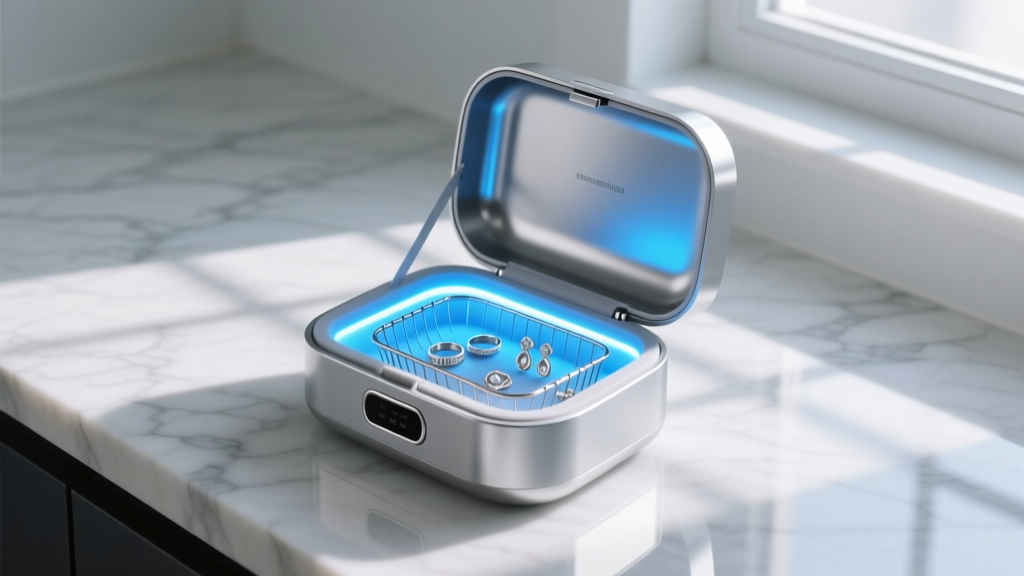
Investing in a jewelry ultrasonic cleaner is one of the most effective ways to restore the brilliance of your favorite pieces at home. However, not all machines are created equal. The market is flooded with cheap, underpowered units that can actually damage delicate settings or fail to remove stubborn grime. As we navigate the 2026 landscape of home jewelry care, understanding the technical specifications of these devices is crucial. This comprehensive buying guide will break down the exact features, frequencies, and safety protocols you need to consider before making a purchase.
The Physics of Cavitation: Why Frequency is Everything
The core mechanism of any ultrasonic cleaner is cavitation. High-frequency sound waves travel through a liquid medium, creating millions of microscopic vacuum bubbles. When these bubbles collapse against the surface of your jewelry, they generate intense, localized micro-jets of liquid that blast away dirt, oils, and tarnish from microscopic crevices and underneath gemstone pavilions.
The frequency of the machine, measured in kilohertz (kHz), dictates the size and aggressiveness of these bubbles:
- 35kHz - 40kHz: This is the standard range for most home jewelry cleaners. It produces larger cavitation bubbles that provide a more aggressive clean. It is ideal for heavy soil, plain gold bands, and durable gemstones like diamonds and sapphires.
- 45kHz - 50kHz: Higher frequencies create smaller, denser bubbles. This results in a gentler cleaning action that is better suited for intricate pave settings, vintage pieces with fragile milgrain detailing, and lightly soiled items.
- 80kHz and above: Generally reserved for commercial or laboratory use, these ultra-high frequencies are exceptionally gentle. While they won't damage delicate metals, they lack the mechanical force required to remove heavy sebum and cosmetic buildup from jewelry.
Expert Tip: For a versatile home setup, look for a dual-frequency machine or stick to a high-quality 42kHz-45kHz model, which offers the perfect middle ground between cleaning power and setting preservation.
Tank Dimensions, Capacity, and the Basket Rule
Tank capacity is often misunderstood. A 600ml (20 oz) tank is the industry standard for home use and is perfectly adequate for rings, earrings, and bracelets. However, the physical dimensions of the tank matter just as much as the volume. If you plan to clean long pearl necklaces or oversized bangles, you will need a rectangular tank with a minimum length of 8 inches.
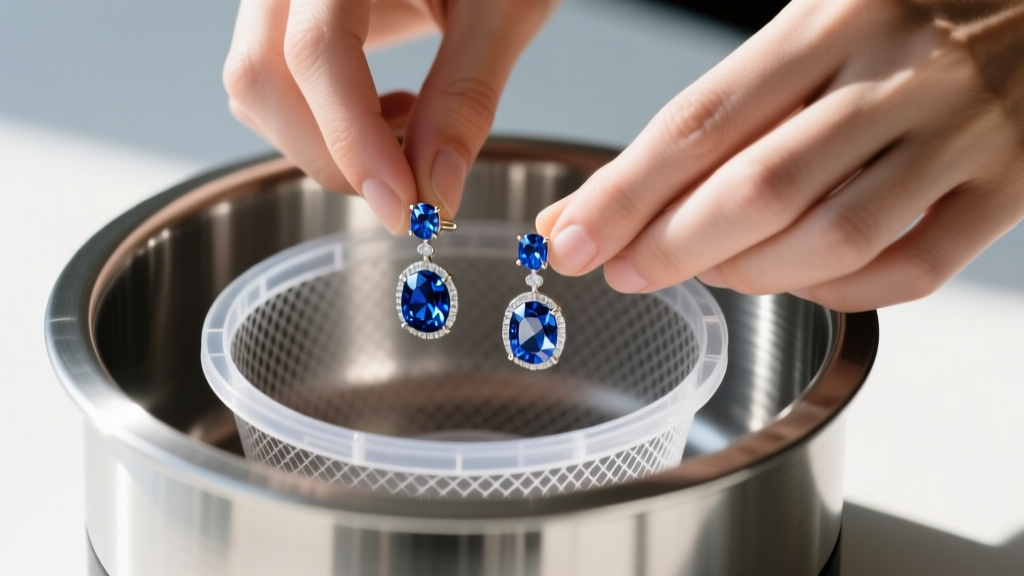
The most critical component of the tank setup is the suspended wire basket. You must never place jewelry directly on the stainless steel floor of the tank. Doing so causes two major issues:
- Transducer Dampening: The piezoelectric transducers are mounted to the bottom of the tank. Heavy metal jewelry resting on the floor absorbs the acoustic energy, reducing cleaning efficiency and potentially overheating the transducer.
- Scratching: The high-frequency vibrations will cause the jewelry to rattle against the steel floor, resulting in severe micro-scratches on polished metals and gemstone girdles.
Always ensure the included basket has rubber-tipped feet or hangs securely from the tank rim to maintain proper acoustic coupling.
Material Safety: What You Can and Cannot Clean
The most common mistake consumers make is assuming that if a machine is sold for 'jewelry,' it is safe for all jewelry. Ultrasonic waves and the heat they generate can catastrophically damage porous, fractured, or treated gemstones. According to the Gemological Institute of America (GIA), ultrasonic vibrations can easily shatter gems with internal fractures or strip away the oils and resins used to treat them.
| Material | Ultrasonic Safety | Notes & Failure Risks |
|---|---|---|
| Diamond (Untreated) | Safe | Ensure prongs are tight; vibrations can shake loose stones in worn settings. |
| Fracture-Filled Diamond | UNSAFE | Cavitation will cloud the glass-like filler, permanently ruining the stone's clarity. |
| Sapphire & Ruby | Safe | Heat-treated stones are generally fine. Avoid if the stone has significant surface-reaching fractures. |
| Emerald | UNSAFE | Most emeralds are oil-treated. Ultrasonics will strip the cedar oil, revealing heavy inclusions and whitening the stone. |
| Pearl, Opal, Coral | UNSAFE | Highly porous and soft. The vibrations will cause delamination, cracking, and total structural failure. |
| 14k/18k Gold & Platinum | Safe | Excellent for removing lotion and dead skin from underneath the shank. |
| Sterling Silver | Conditional | Removes dirt but does not remove oxidation (tarnish). Requires a chemical silver dip solution in the tank to work effectively. |
Essential Features to Demand in 2026
When evaluating models, look beyond the basic on/off switch. Modern ultrasonic cleaners should include specific features to optimize the cleaning process and protect your investment.
Degassing Function
Tap water contains dissolved gases that interfere with the formation of cavitation bubbles. A 'degas' mode runs the machine in short, alternating pulses to rapidly expel these gases from the liquid. If your chosen model lacks a dedicated degas button, you will need to run the machine empty for 10-15 minutes before adding your jewelry, which wastes time and energy.
Digital Timers vs. Analog Dials
Always opt for a digital timer with precise 1-minute increments. Over-cleaning can lead to metal fatigue in delicate prongs. A standard cleaning cycle should never exceed 3 to 5 minutes. Analog dials are notoriously inaccurate and often fail to shut off completely, leading to transducer burnout.
The Heating Element Debate
Many premium models feature built-in heaters to warm the solution to 40°C (104°F), which significantly accelerates the breakdown of oils and cosmetics. However, sudden temperature changes can cause thermal shock in certain gemstones like tanzanite or opal (though opals shouldn't be in the tank anyway). We recommend buying a unit without a heater and simply filling the tank with warm tap water mixed with a few drops of mild, ammonia-free dish soap.
Pricing Tiers and Brand Recommendations
The market is segmented into three distinct tiers based on transducer quality, tank gauge thickness, and warranty support.
- Entry-Level ($30 - $50): Brands like Magnasonic dominate this space. These units typically feature a single 42kHz transducer and a plastic-molded exterior with a stainless steel inner bowl. They are adequate for occasional use but lack degassing functions and have thinner steel that dampens acoustic waves over time.
- Mid-Range ($60 - $120): This is the sweet spot for serious collectors. Brands like iSonic and Blitz offer dual-frequency options, digital displays, and heavy-duty stainless steel tanks. The GIA Gem Care guidelines often align with the gentle yet effective cleaning provided by these calibrated mid-range machines.
- Prosumer / Commercial ($150 - $300+): Brands like VEVOR and Sharpertek offer commercial-grade transducers, sweeping technology (which distributes sound waves evenly to prevent 'hot spots' that can pit metals), and replaceable baskets. These are overkill for a single ring but essential for estate jewelers or avid collectors.
Maintenance and Common Failure Modes
To ensure your ultrasonic cleaner lasts for years, you must understand its primary failure modes. The most common cause of death for these machines is running the tank dry. Without liquid to absorb the acoustic energy, the transducers will rapidly overheat and crack the epoxy bonding them to the steel tank.
Additionally, hard water minerals and jewelry cleaning chemicals can cause scaling on the bottom of the tank. This mineral buildup acts as an insulator, blocking the sound waves. To prevent this, empty the tank after every use, wipe it dry with a microfiber cloth, and run a 10-minute cycle with a 50/50 mix of white vinegar and distilled water once a month to descale the transducer plate.
Conclusion
Choosing the right jewelry ultrasonic cleaner requires balancing cleaning power with material safety. By prioritizing a 42kHz-45kHz frequency, insisting on a suspended basket, and strictly adhering to gemstone safety charts, you can safely restore your jewelry's factory-level brilliance at home. Avoid the cheapest options, invest in a mid-range unit with a digital timer and degassing function, and your machine will pay for itself in saved professional cleaning fees within the first year.


