The Chemistry of a Home Remedy for Cleaning Jewelry Safely
Discover the chemical science behind every home remedy for cleaning jewelry. Learn which DIY solutions safely restore metals and which destroy gemstones.

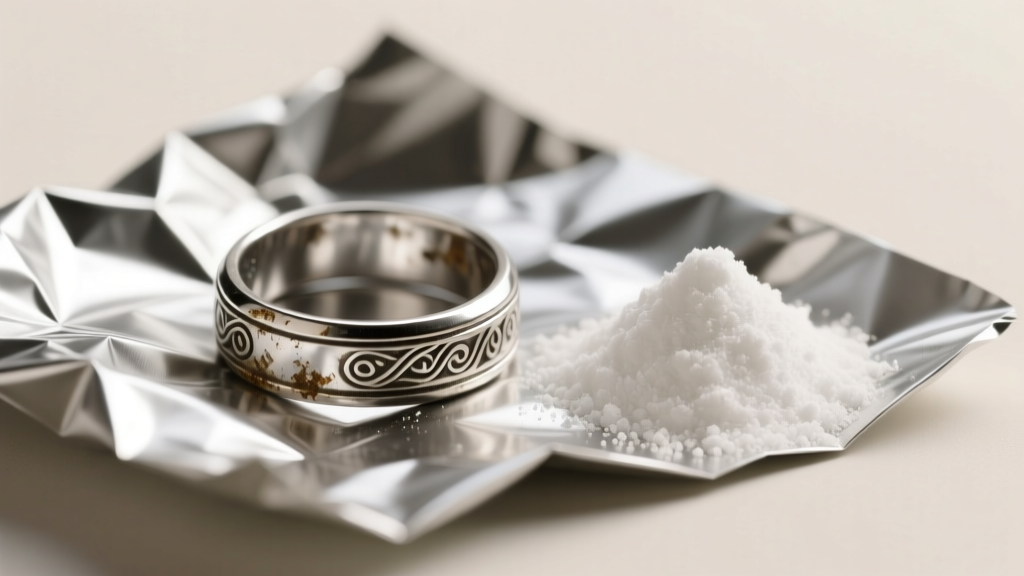
When searching for a reliable home remedy for cleaning jewelry, the internet is flooded with anecdotal advice ranging from ketchup soaks to toothpaste scrubs. However, as metallurgists and gemologists know, jewelry cleaning is not merely about removing dirt; it is an applied exercise in chemistry. Applying the wrong chemical compound to a specific metal alloy or porous gemstone can result in irreversible galvanic corrosion, micro-scratching, or structural dissolution.
In this expert deep dive, we bypass the myths and examine the exact chemical mechanisms behind the most popular DIY jewelry cleaning methods. By understanding the electrochemical reactions, surfactant behaviors, and Mohs hardness scales involved, you can safely restore your precious metals and gemstones without causing microscopic damage.
The Electrochemical Reality of Silver Tarnish Removal
The most famous home remedy for cleaning jewelry involves lining a bowl with aluminum foil, adding hot water, baking soda, and salt, then submerging tarnished silver. This is not a mere cleaning hack; it is a controlled galvanic redox (reduction-oxidation) reaction.
Silver tarnish is primarily silver sulfide ($Ag_2S$), a dark compound that forms when elemental silver reacts with sulfur compounds in the atmosphere. When you submerge the tarnished silver in an electrolyte solution (water mixed with sodium bicarbonate and sodium chloride) and ensure it physically touches the aluminum foil, you create a voltaic cell.
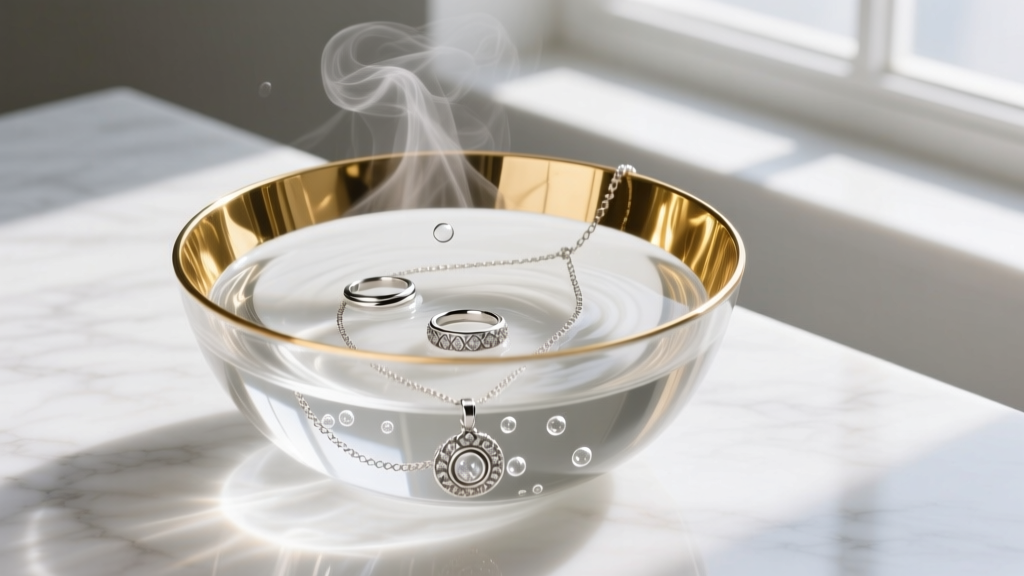
Aluminum has a lower standard electrode potential than silver, meaning it acts as a sacrificial anode. The aluminum oxidizes, releasing electrons that travel through the metal-to-metal contact into the silver sulfide. This reduces the silver sulfide back into elemental silver, while the sulfur ions migrate to the aluminum, forming aluminum sulfide. The baking soda does not "scrub" the tarnish away; it simply increases the electrical conductivity of the water, accelerating the electron transfer. According to The Silver Institute, this method is highly effective for heavy tarnish on solid sterling silver, provided the piece has no glued-in gemstones, as the boiling water can melt cyanoacrylate adhesives.
Surfactant Chemistry: Dish Soap vs. Castile Soap
For routine degreasing—removing sebum, lotions, and environmental oils from diamond settings and gold bands—a mild detergent is the gold standard. However, not all soaps are chemically identical. The efficacy of a soap depends on its surfactant profile and pH level.
The Surfactant Comparison Matrix
| Cleaning Agent | Chemical Base | pH Level | Best Use Case | Limitations |
|---|---|---|---|---|
| Dawn Ultra (Original) | Anionic Surfactants | 8.5 - 9.5 | Diamond, Platinum, 14k/18k Gold | Can strip protective patinas on oxidized silver |
| Dr. Bronner's Castile | Saponified Oils | 9.0 - 10.0 | Solid Gold, High-Polish Platinum | Leaves fatty acid scum in hard water areas |
| Murphy's Oil Soap | Potassium Hydroxide | 10.5 - 11.0 | Wood inlays, porous organic beads | Too alkaline for pearls; leaves heavy residue |
Anionic surfactants, like those found in standard blue dish soap, possess a hydrophilic head and a hydrophobic tail. They excel at emulsifying non-polar lipids (skin oils) into the water so they can be rinsed away. Conversely, true castile soaps are made from saponified plant oils. In areas with hard water (high calcium and magnesium content), castile soaps react with the dissolved minerals to form insoluble calcium stearate—commonly known as soap scum. This scum can become trapped in the intricate pavé settings of an engagement ring, creating a dull, cloudy film that is incredibly difficult to remove without an ultrasonic cleaner.
The Abrasive Threat: Baking Soda and the Mohs Scale
A pervasive and damaging myth in jewelry care is the use of a baking soda and water paste to manually polish gold and silver rings. To understand why this is detrimental, we must consult the Mohs scale of mineral hardness.
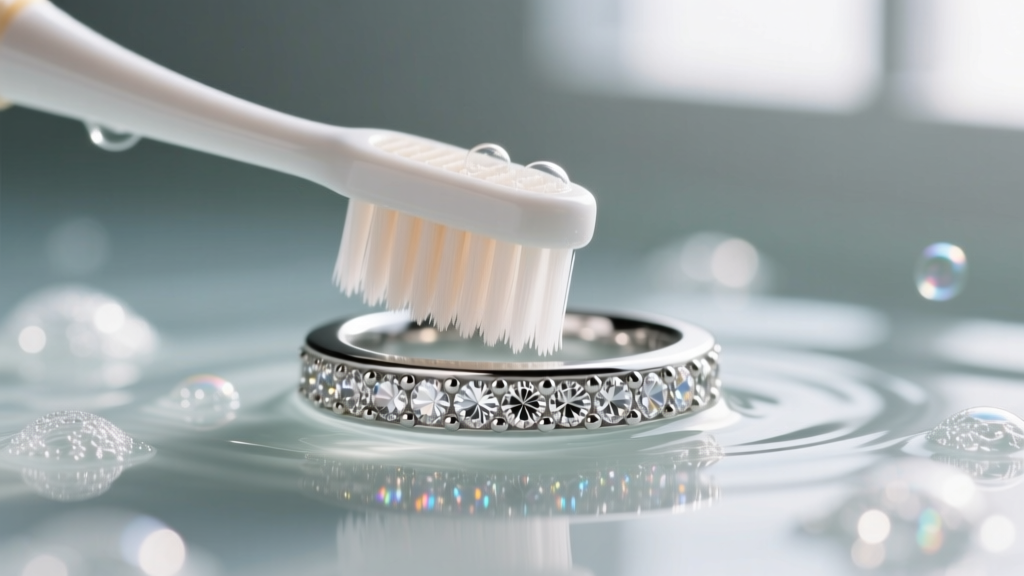
Sodium bicarbonate (baking soda) registers at approximately 2.5 on the Mohs scale. Pure 24k gold is also 2.5 to 3, while sterling silver ranges from 2.5 to 3. Even 14k gold, alloyed with copper and zinc for durability, only reaches about 3.5 to 4. When you rub a baking soda paste onto a high-polish gold or silver surface, you are essentially dragging particles of equal or greater hardness across the metal. While it may remove a layer of tarnish, it simultaneously creates thousands of microscopic striations. Over time, this micro-abrasion destroys the mirror finish, leaving the metal with a permanent, dull satin appearance. For manual polishing, gemologists recommend using a treated, non-abrasive microfiber polishing cloth that relies on chemical tarnish-inhibitors rather than physical friction.
Acid Sensitivity in Organic and Porous Gemstones
Another dangerous home remedy for cleaning jewelry involves acidic solutions like white vinegar or lemon juice, often suggested for dissolving mineral deposits. While a mild acid might safely clean a solid platinum band, it is catastrophic for organic and porous gemstones.
"Never expose pearls, coral, or turquoise to acidic solutions. The calcium carbonate in pearls will actively dissolve in acetic acid, permanently destroying the nacre's orient and luster." — Gemological Institute of America (GIA)
Pearls and coral are primarily composed of calcium carbonate ($CaCO_3$). When exposed to acetic acid (vinegar), a chemical reaction occurs that yields calcium acetate, water, and carbon dioxide gas. You are literally dissolving the gemstone. Similarly, turquoise and malachite are highly porous and chemically unstable. They readily absorb liquids, and acidic or alkaline cleaners will alter their copper-based chemical structures, causing permanent color shifts and structural weakening. Opals, which contain up to 21% water by weight, are susceptible to "crazing" (a network of fine cracks) if exposed to the hot water often recommended in DIY soaking remedies.
Expert Decision Matrix: Matching Remedy to Material
To safely clean your collection, abandon one-size-fits-all hacks and apply this material-specific decision framework:
- Diamonds, Sapphires, and Rubies (Mohs 8-10): Highly durable and chemically inert. Safe for warm water, anionic dish soap, and soft-bristled brushing. Can withstand brief ultrasonic cleaning unless heavily included.
- Solid Gold and Platinum: Use a mild dish soap and warm water bath. Avoid abrasive pastes entirely. For heavy grease buildup behind the gallery of a ring, use a wooden toothpick rather than metal tools to prevent scratching the prongs.
- Sterling Silver (Solid): Utilize the aluminum foil electrochemical redox method for heavy, blackened tarnish. For light yellowing tarnish, use a specialized silver polishing cloth impregnated with jeweler's rouge.
- Emeralds, Opals, and Pearls: Strictly wipe with a damp, untreated microfiber cloth. Never submerge in water, never use soap (which can strip the natural oils from emeralds), and never apply heat or acids.
By understanding the underlying chemistry and material science, you can effectively evaluate any home remedy for cleaning jewelry before applying it to your precious pieces. True expertise in jewelry care lies not in aggressive cleaning, but in the precise, gentle preservation of both metal and stone.


