Can You Clean Jewelry With Hydrogen Peroxide? Safe Step-by-Step Guide
Learn if you can clean jewelry with hydrogen peroxide safely. Our step-by-step guide covers safe metals, gems to avoid, and exact soaking times.

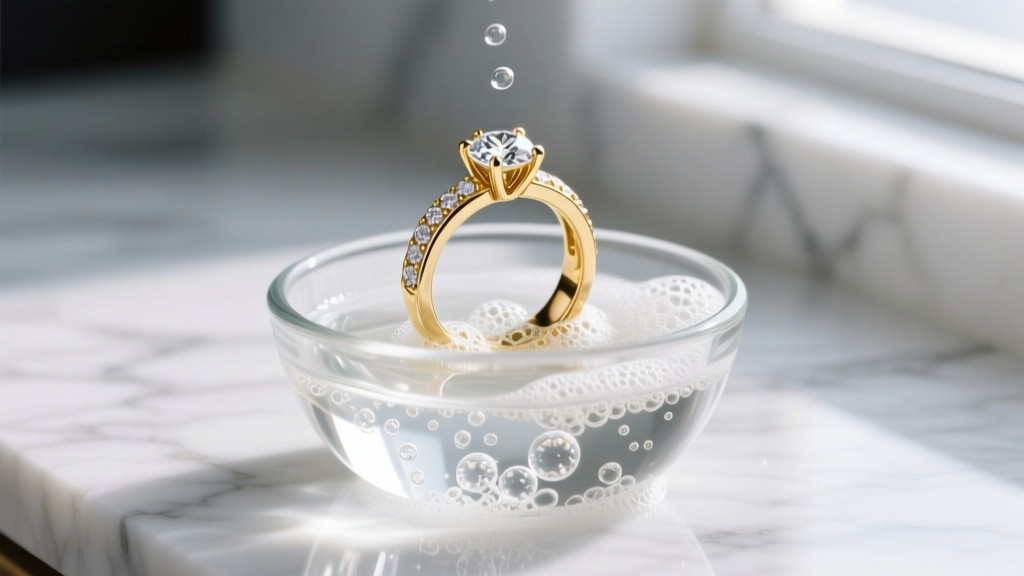
If you have ever searched for a quick, cheap way to restore your jewelry's sparkle, you have likely encountered a common internet hack: soaking your pieces in hydrogen peroxide. The vigorous bubbling action looks incredibly satisfying, giving the illusion that the solution is actively eating away years of grime. But as with many viral cleaning hacks, the reality of chemical reactions is far more nuanced. So, can you clean jewelry with hydrogen peroxide? The short answer is yes, but only for specific metals and gemstones, and only when used with strict time limits.
Hydrogen peroxide (H2O2) is a powerful oxidizer. While it is highly effective at breaking down organic matter like sebum, dead skin cells, and soap scum, it can also trigger rapid, irreversible chemical reactions in vulnerable metals and porous gemstones. In this comprehensive guide, we will break down the exact science of H2O2, provide a definitive safety list, and offer a professional step-by-step protocol for cleaning your jewelry without causing catastrophic damage.
The Science: How Hydrogen Peroxide Interacts With Jewelry
Hydrogen peroxide cleans through a process called oxidation. When H2O2 comes into contact with organic debris or certain catalytic metals, it rapidly decomposes into water (H2O) and oxygen (O2). This decomposition creates the visible effervescence (bubbling) that physically lifts microscopic particles out of prong settings and chain links.
However, oxidation is a double-edged sword. While it destroys bacteria and organic buildup, it also forces electrons away from metal surfaces. For body jewelry, this makes it an excellent occasional sterilizer for biological crust. For fine jewelry, it can accelerate tarnishing or strip microscopic plating layers. When using this chemical, you must strictly use standard 3% pharmacy-grade hydrogen peroxide. Never use 12% hair developer or 35% food-grade concentrations, as these will cause immediate chemical burns to your skin and severe pitting to metal alloys.
The Safe List: Metals and Gems That Tolerate H2O2
Not all jewelry is created equal. High-karat golds, inert metals, and specific crystalline structures can withstand short soaks in a 3% H2O2 solution. According to guidelines regarding gemstone durability from the Gemological Institute of America (GIA), stones with high Mohs hardness and no cleavage planes are generally safe from chemical etching, provided they are not fracture-filled.
| Material | H2O2 Safety Level | Max Soak Time | Expert Notes |
|---|---|---|---|
| Platinum | Very Safe | 10 Minutes | Highly inert; will not oxidize or tarnish. |
| ASTM F136 Titanium | Very Safe | 10 Minutes | Ideal for body jewelry and piercing crust removal. |
| 14k / 18k Gold | Safe | 5 Minutes | Prolonged exposure may dull copper alloys in rose gold. |
| Surgical Steel | Safe | 5 Minutes | Good for body jewelry; ensure it is polished and dry after. |
| Diamonds | Very Safe | 10 Minutes | Mohs 10; impervious to H2O2. Excellent for greasy buildup. |
| Sapphires & Rubies | Safe | 5 Minutes | Corundum family (Mohs 9). Avoid if fracture-filled. |
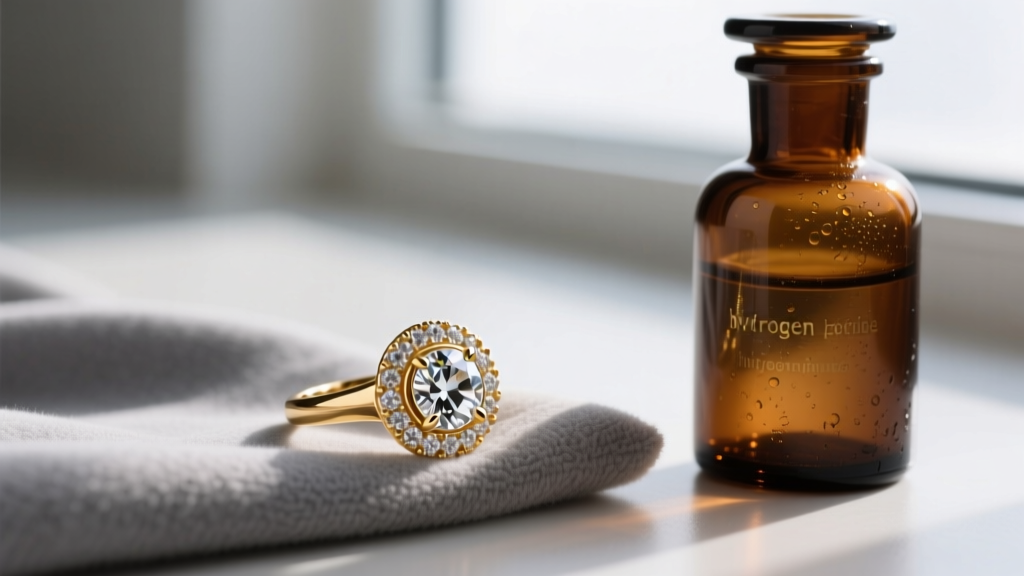
The Danger Zone: What Hydrogen Peroxide Will Ruin
The most common jewelry cleaning disasters occur when well-meaning owners drop incompatible pieces into a peroxide bath. The oxidative properties of H2O2 will cause immediate, sometimes irreversible damage to the following materials:
- Sterling Silver: Hydrogen peroxide accelerates oxidation. Dropping sterling silver into H2O2 will cause it to turn black almost instantly as it forces the rapid creation of silver oxide and silver sulfide on the surface.
- Porous and Organic Gemstones: Pearls, opals, turquoise, lapis lazuli, malachite, and coral are highly porous. H2O2 will penetrate their micro-fissures, dissolving the organic matrix of pearls and causing opals to craze or crack from internal chemical stress.
- Emeralds: Nearly all natural emeralds are treated with cedar oil or synthetic resins to fill surface-reaching fissures. H2O2 will strip these oils, leaving the stone looking cloudy, heavily included, and structurally compromised.
- Plated Jewelry: Gold vermeil, gold-filled, and rhodium-plated sterling silver rely on microscopic surface layers. The aggressive bubbling action of peroxide will physically lift and peel the plating away from the base metal.
Expert Warning: If your jewelry features any gemstone held in with glue (common in cluster rings and inexpensive fashion jewelry), never use hydrogen peroxide. The oxidizer will break down the cyanoacrylate or epoxy adhesives, causing your stones to fall out.
Step-by-Step: How to Clean Safe Jewelry With Hydrogen Peroxide
If you have confirmed your jewelry is on the safe list—particularly if you are cleaning diamond rings with heavy hand-lotion buildup or titanium body jewelry needing a deep sanitizing soak—follow this precise protocol.
Step 1: Preparation and Inspection
Inspect your jewelry under a bright light. Ensure all prongs are tight and there are no loose stones. Pour standard 3% hydrogen peroxide into a small glass or ceramic bowl. Never use a metal bowl; metal acts as a catalyst and will cause the peroxide to decompose into plain water and oxygen before it even touches your jewelry.
Step 2: The Timed Soak
Submerge the jewelry completely. Set a timer for exactly 3 to 5 minutes. You will see immediate bubbling as the oxygen releases and lifts organic debris from the setting. Do not exceed 10 minutes, even for diamonds and platinum.
Step 3: Gentle Agitation
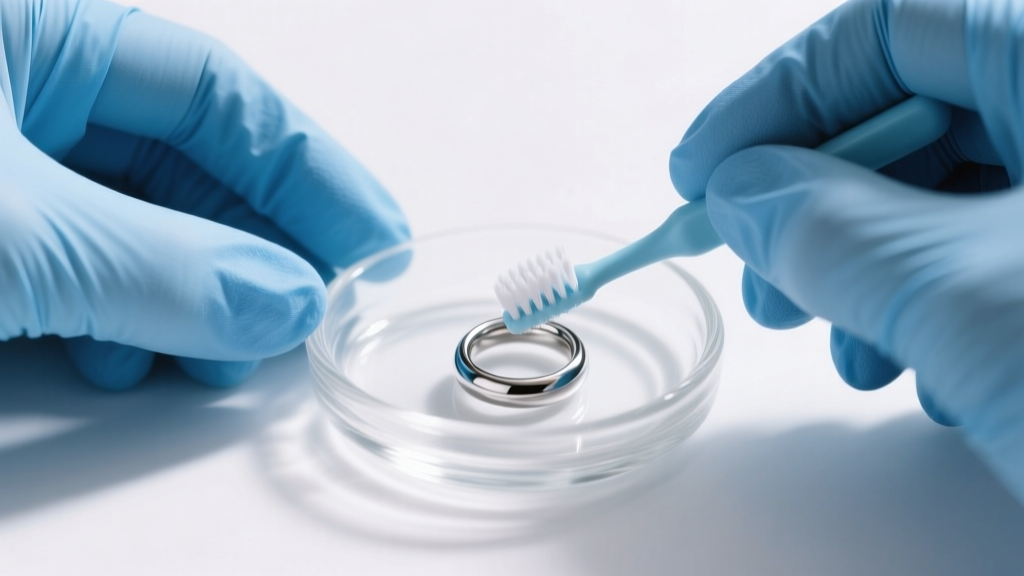
Remove the piece from the solution. Using a brand-new, ultra-soft baby toothbrush, gently sweep the bristles over the back of the setting (the pavilion) and along the chain links. Do not scrub aggressively; the chemical has already loosened the debris.
Step 4: Neutralize, Rinse, and Dry
Rinse the jewelry thoroughly under warm, running distilled water. Distilled water is crucial here, as tap water contains chlorine and hard minerals that can leave spots or react with residual peroxide. Pat dry with a lint-free microfiber cloth. For body jewelry, allow it to air-dry completely on a clean paper towel before reinserting it into a piercing to avoid trapping moisture against healing tissue, a best practice supported by the Association of Professional Piercers (APP).
Troubleshooting: What If My Jewelry Discolors?
Accidents happen. If you mistakenly dropped a sterling silver ring into the peroxide bath and it emerged black and tarnished, do not panic, and do not use abrasive toothpaste to scrub it. The oxidation is superficial. You can reverse the chemical reaction using a galvanic bath: line a glass bowl with aluminum foil (shiny side up), add a tablespoon of baking soda, and pour in boiling water. Submerge the silver so it touches the foil. The electrochemical reaction will transfer the sulfur and oxidation from the silver to the aluminum, restoring the metal in about 60 seconds.
If a porous stone like turquoise or a pearl was exposed, the damage is likely permanent etching. Take it to a professional lapidary or jeweler immediately; they may be able to lightly polish the surface to remove the chemical burn, though some material loss is inevitable.
Expert Verdict: Is H2O2 Better Than Dish Soap?
While hydrogen peroxide is a fantastic tool for specific scenarios—namely, sterilizing titanium body jewelry or stripping heavy, caked-on biological grease from the underside of a diamond solitaire—it should not replace your daily or weekly cleaning routine. For 95% of fine jewelry, a simple solution of warm water and a few drops of mild, phosphate-free dish soap (like Dawn) is vastly superior. Dish soap is a surfactant; it safely encapsulates oils and dirt without triggering oxidative chemical reactions with metal alloys or gemstone treatments.
Reserve the hydrogen peroxide for heavy-duty, occasional deep cleans on compatible materials, and always respect the chemistry. By understanding the exact limitations of H2O2, you can keep your jewelry brilliantly clean without sacrificing its structural integrity.