Ultrasonic Jewelry Cleaners: Which Gemstone Materials Survive?
Discover which gemstones and metals survive ultrasonic jewelry cleaners. Learn material properties, Mohs hardness limits, and safe cleaning protocols.

The Physics of Cavitation: Why Material Properties Matter
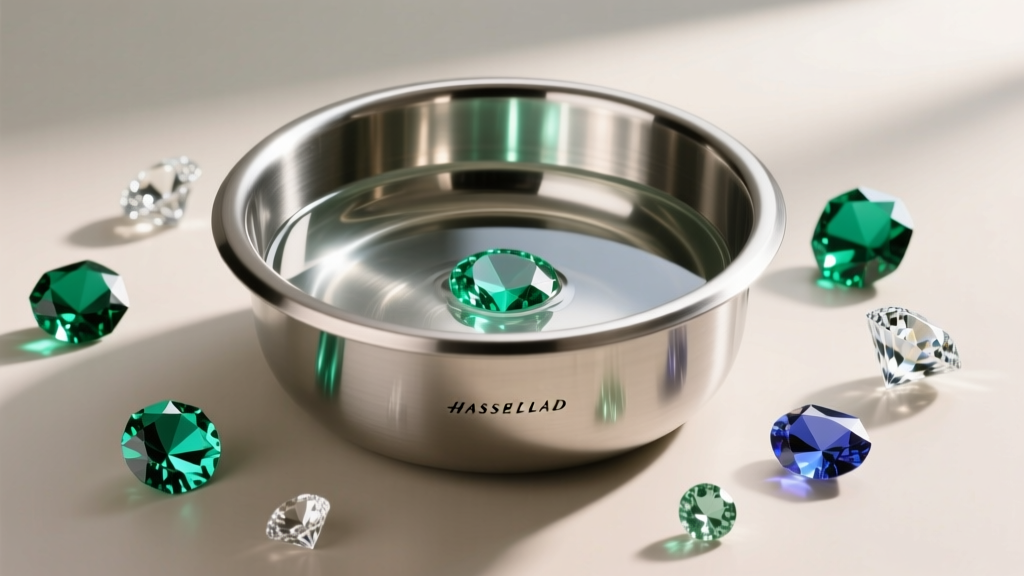
Ultrasonic jewelry cleaners are incredibly efficient at removing decades of built-up sebum, cosmetics, and environmental grime from jewelry settings. However, their cleaning power relies on a violent physical process called cavitation. When high-frequency sound waves (typically between 35 kHz and 40 kHz) pass through a liquid medium, they create microscopic vacuum bubbles. When these bubbles collapse, they generate localized shockwaves and momentary temperatures reaching up to 5,000 Kelvin. While the bulk liquid remains cool, the sheer mechanical force of these implosions can easily shatter gems with internal tension, cleavage planes, or structural porosity. Understanding the material science behind your jewelry is the only way to safely utilize these machines without causing catastrophic, irreversible damage to your collection.
The Danger Zone: Porous and Fractured Gemstones
The most common mistake consumers make is assuming that a gemstone's Mohs hardness equates to ultrasonic durability. Hardness only measures scratch resistance, not toughness (a material's resistance to breaking or chipping). Many relatively hard stones possess internal vulnerabilities that make them entirely unsuitable for ultrasonic cavitation.
Organic and Porous Materials
Organic gems and highly porous stones should never enter an ultrasonic bath. Pearls (Mohs 2.5-4.5), coral, amber, and ivory are highly sensitive to both the mechanical vibration and the chemical cleaning solutions typically used in the bath. The vibrations can easily detach pearls from their epoxy mountings or cause the nacre to peel. Similarly, opals contain between 3% and 21% water within their silica structure. The localized heat and pressure from cavitation can cause 'crazing'—a network of permanent internal fractures that ruins the stone's optical play-of-color.
Fracture-Filled and Included Stones
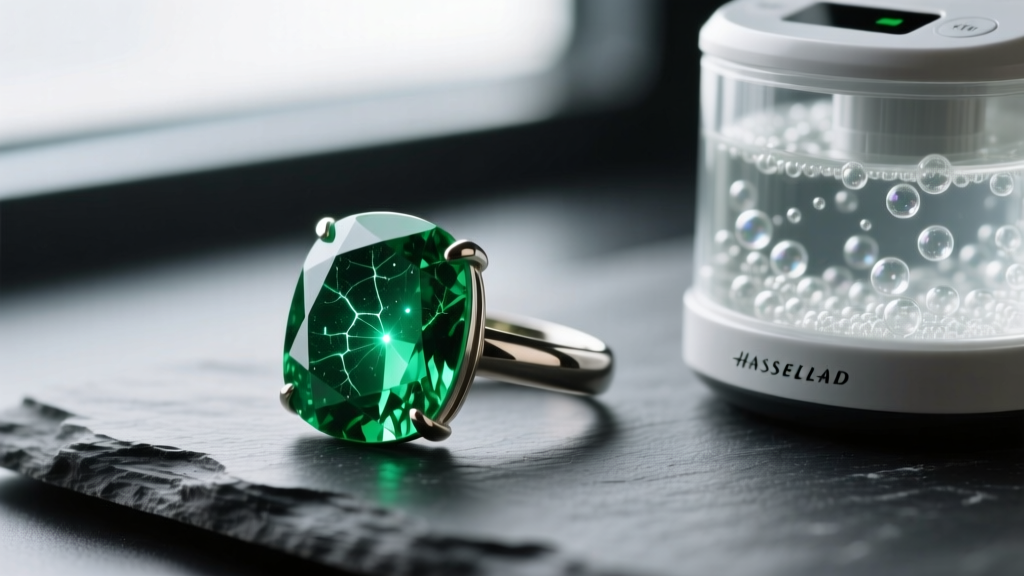
Emeralds (Mohs 7.5-8) are the classic example of hardness betraying toughness. Nearly all commercial emeralds contain a network of internal fractures known as 'jardin'. To improve clarity, gemologists routinely fill these fractures with cedar oil, synthetic resins, or Opticon. The intense microscopic shockwaves of an ultrasonic cleaner will boil, dislodge, or cloud these fillers, leaving the emerald looking fractured, opaque, and significantly devalued. According to the Gemological Institute of America (GIA), emeralds, tanzanite, and fracture-filled rubies must only be cleaned with warm, soapy water and a soft brush.
Safe Metals and Durable Gems: The Ultrasonic Sweet Spot
Ultrasonic jewelry cleaners excel when used on high-toughness metals and single-crystal gemstones with excellent structural integrity. The following materials are generally safe for standard 40 kHz ultrasonic cycles:
- Platinum and Palladium: Highly durable, dense metals that easily withstand cavitation. Excellent for cleaning intricate milgrain or pavé settings.
- 14k and 18k Gold (White, Yellow, Rose): Alloyed for durability. However, avoid ultrasonics for gold-plated or vermeil jewelry, as the vibration will accelerate the delamination of the microscopic gold layer from the brass or silver base.
- Diamonds (Unfractured): Diamonds possess exceptional toughness but have perfect cleavage planes. While generally safe, if a diamond has a deep feather or laser-drilled fracture, the ultrasonic waves can cause it to split.
- Uncolored Sapphires and Rubies: Corundum (Mohs 9) is incredibly tough. Heat-treated stones are safe, but diffusion-treated or beryllium-treated stones may experience surface alteration if exposed to heated ultrasonic baths.
Material Compatibility Matrix for Ultrasonic Jewelry Cleaners
Use this quick-reference matrix to determine the safety profile of common jewelry materials before initiating a cleaning cycle.
| Material | Mohs Hardness | Toughness | Ultrasonic Safe? | Specific Risks & Notes |
|---|---|---|---|---|
| Diamond | 10 | Good/Excellent | Yes (Caution) | Avoid if fracture-filled or has deep cleavage feathers. |
| Ruby/Sapphire | 9 | Excellent | Yes | Safe unless heavily fracture-filled with lead glass. |
| Emerald | 7.5 - 8 | Poor | NO | Will strip cedar oil/resin fillers from internal fractures. |
| Tanzanite | 6 - 7 | Poor | NO | Perfect cleavage; highly prone to shattering under vibration. |
| Opal | 5.5 - 6.5 | Very Poor | NO | Water content causes thermal shock and internal crazing. |
| Pearl/Coral | 2.5 - 4.5 | Very Poor | NO | Organic; vibrations will dissolve epoxy and damage nacre. |
| Platinum | N/A | Excellent | YES | Ideal for ultrasonic; removes polishing compound easily. |
| 14k/18k Gold | N/A | Good | YES | Safe. Avoid high heat to prevent alloy stress. |
| Sterling Silver | N/A | Good | YES | Use specific anti-tarnish solutions; water alone won't remove oxidation. |
Frequency and Wattage: Tuning Your Cleaner to the Material
Not all ultrasonic jewelry cleaners are built equally, and the machine's specifications dictate what materials it can safely handle. Standard consumer models operate at 35 kHz to 40 kHz. This lower frequency creates larger cavitation bubbles, resulting in a more aggressive clean that is perfect for removing heavy dirt from platinum and diamond engagement rings. However, this aggressive action can cause micro-pitting on softer metals like high-karat (22k or 24k) gold or sterling silver.
For softer metals or delicate settings, professional jewelers utilize high-frequency ultrasonic cleaners operating between 80 kHz and 130 kHz. Higher frequencies produce smaller, less violent cavitation bubbles. This provides a much gentler, more penetrating clean that safely navigates intricate filigree work and softer alloys without causing surface abrasion. Furthermore, wattage matters: a 50-watt heater paired with a 35-watt transducer in a small 200ml tank will heat the liquid too rapidly, risking thermal shock to gems like tanzanite or peridot. Always monitor the bath temperature, ensuring it never exceeds 40°C (104°F) for mixed-material jewelry.
Best Practices for Mixed-Material Jewelry
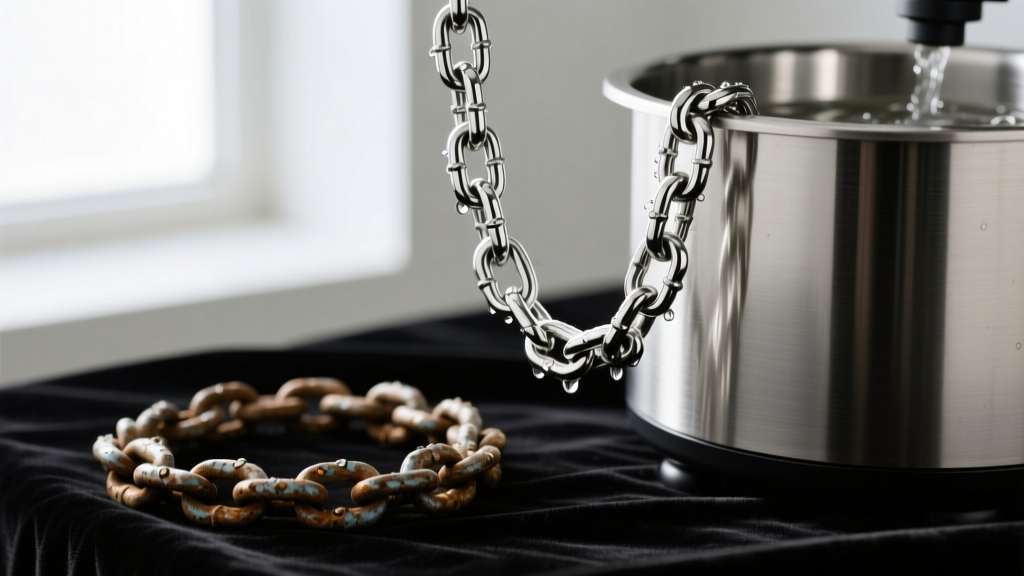
When cleaning pieces that combine safe metals with questionable gemstones (such as a platinum ring featuring diamonds and emerald accents), always default to the most fragile material's safety threshold. In this scenario, the ultrasonic cleaner must be avoided entirely. Additionally, be highly cautious with rhodium-plated white gold. While the gold alloy itself is safe, prolonged exposure to ultrasonic waves—especially in alkaline cleaning solutions—can thin the microscopic rhodium plating, exposing the yellowish-white gold alloy beneath and necessitating an expensive re-plating session at your jeweler.
Expert Troubleshooting Tip: If your jewelry emerges from the ultrasonic bath with a dull, cloudy film, you are likely experiencing 'cavitation redeposition.' This happens when dislodged dirt and oils are not properly suspended in the cleaning solution and settle back onto the metal. To prevent this, always use a few drops of a high-quality, ammonia-free surfactant specifically designed for ultrasonic jewelry cleaners, and rinse the piece immediately in distilled water rather than tap water, which contains hard minerals that leave spot deposits.
By respecting the physical properties and structural vulnerabilities of different gemstones and metals, you can leverage the immense power of ultrasonic jewelry cleaners to restore your durable pieces to their original brilliance, while keeping your most delicate treasures safely out of harm's way. For further reading on gemstone durability and care, the American Gem Society (AGS) provides excellent consumer guidelines on maintaining fine jewelry investments.


