How to Clean Rust Off Jewelry: Distressed Metal Trends
Discover how to clean rust off jewelry while preserving intentional oxidation. Expert guide on base metal corrosion, chelators, and distressed trends.

The 2026 Aesthetic Dilemma: Flaw vs. Feature
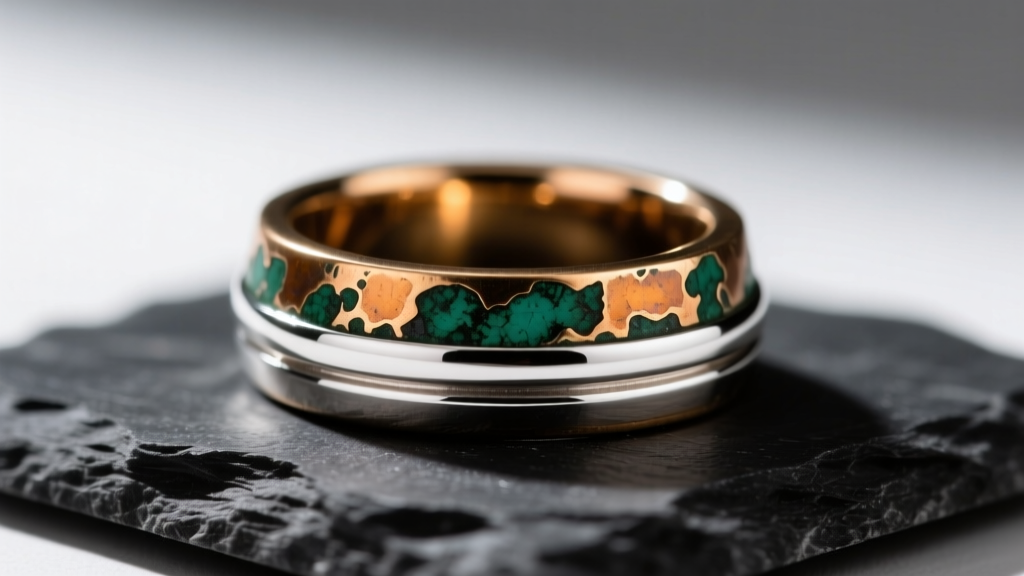
In the contemporary jewelry landscape, the line between damage and design has never been blurrier. The 2026 trend cycle has fully embraced 'wabi-sabi' brutalism, Y2K grunge revivals, and artisanal oxidized metals. Independent jewelers are deliberately exposing iron, low-carbon steel, and brass to accelerated corrosion to achieve rich, textured patinas. However, for vintage collectors and everyday wearers of fashion jewelry, unintentional base metal corrosion remains a frustrating reality. Understanding how to clean rust off jewelry requires a nuanced approach: you must first determine if the oxidation is a destructive chemical reaction or a deliberate artistic finish.
Rust is specifically the oxidation of iron and its alloys, resulting in iron oxide (Fe2O3). Unlike silver tarnish, which sits on the surface as a thin sulfide layer, rust actively consumes the structural integrity of the metal, causing pitting, flaking, and eventual disintegration. When dealing with mixed-media artisanal pieces or vintage costume jewelry, applying the wrong cleaning method can strip thousands of dollars of intentional artistry or irreparably damage delicate gemstone settings.
Corrosion Matrix: Identifying Your Metal's Enemy
Before reaching for a polishing cloth or a chemical bath, you must accurately identify the type of corrosion. The Gemological Institute of America (GIA) emphasizes that misidentifying metal degradation is the leading cause of consumer jewelry damage. Use the matrix below to diagnose your piece.
| Metal Type | Corrosion Type | Chemical Composition | Visual Characteristics | Recommended Protocol |
|---|---|---|---|---|
| Iron / Low-Carbon Steel | True Rust | Iron Oxide (Fe2O3) | Flaky, orange/brown, structural pitting | Chelating agents, mild acids |
| Sterling Silver (925) | Tarnish | Silver Sulfide (Ag2S) | Yellow, brown, or black surface film | Aluminum foil electrolytic bath |
| Brass / Bronze / Copper | Patina / Verdigris | Copper Carbonate | Green, teal, or dark brown crust | Lemon/salt, or preserve if intentional |
| Corten / Weathering Steel | Intentional Rust | Stable Oxide Layer | Uniform, deep orange, non-flaking | DO NOT CLEAN (Seal with wax only) |
How to Clean Rust Off Jewelry: The Base Metal Protocol
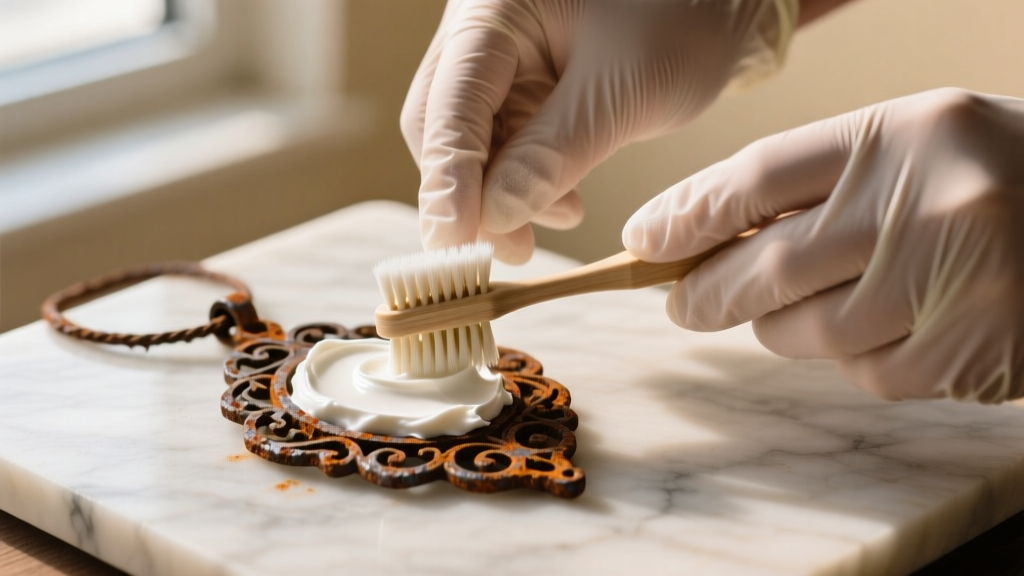
When you are dealing with unintentional rust on iron-based fashion jewelry, vintage chainmaille, or low-grade steel findings, you need to halt the oxidation process and lift the iron oxide without dissolving the underlying metal. Abrasive methods like sandpaper or harsh wire brushes will remove the rust but will also destroy the jewelry's original machining marks and polish.
Step 1: The Acetic Acid Soak (For Solid Iron/Steel)
White vinegar contains roughly 5-8% acetic acid (pH ~2.4), which is strong enough to dissolve iron oxide but mild enough to spare most base metals if monitored correctly. Submerge the rusted iron or steel component in a glass bowl of distilled white vinegar. Time limit: 15 to 30 minutes. Do not leave it overnight, as prolonged acid exposure will begin to etch the healthy iron, causing micro-pitting. After soaking, agitate the piece with a soft-bristled brass brush (brass is softer than steel and will not scratch it) to dislodge the softened rust.
Step 2: The Chelation Method (For Mixed Metals)
If your piece features mixed metals—such as an iron pendant with copper wire wrapping—vinegar will aggressively strip the copper and brass elements. Instead, use a commercial chelating agent like Evapo-Rust. Chelators work by selectively binding to iron ions and lifting them away without affecting copper, silver, or brass. Submerge the piece for 1 to 2 hours, rinse thoroughly with distilled water, and immediately dry with a microfiber cloth.
Step 3: Neutralization and Passivation
Acidic and chelating treatments leave the bare metal highly reactive and prone to 'flash rusting' within minutes of exposure to ambient humidity. To passivate the surface, create a slurry of sodium bicarbonate (baking soda) and distilled water. Rub this alkaline paste over the metal to neutralize any residual acids, rinse again, and immediately apply a microcrystalline wax (such as Renaissance Wax) to create an inert, moisture-blocking barrier.
Trend Analysis: Preserving Intentional Distress and Oxidation
The modern jewelry market has seen a massive surge in 'dark metals' and oxidized finishes. Brands and independent artisans use liver of sulfur or accelerated rusting chambers to create moody, gothic, or industrial aesthetics. If you own a piece where the rust or oxidation is intentional, traditional cleaning methods will ruin the designer's vision by stripping the piece back to bright, shiny metal.
'The biggest mistake collectors make with artisanal brutalist jewelry is treating intentional patina like dirt. You aren't cleaning the metal; you are cleaning the negative space. The goal is to remove skin oils and environmental grime from the high-polish accents while leaving the oxidized recesses completely untouched.' — Master Bench Jeweler & Metallurgist
To clean intentionally distressed jewelry, abandon full-immersion baths. Instead, use a localized cleaning approach. Dip a cotton swab in a mild, pH-neutral dish soap solution and carefully trace the raised, polished edges of the metal. Use a dry, soft horsehair brush to dust out the oxidized crevices. This maintains the high-contrast visual depth that defines the 2026 distressed metal trend.
Failure Modes: Gemstone Porosity and Chemical Sensitivity
Learning how to clean rust off jewelry becomes exponentially more dangerous when porous gemstones are involved. The chemical agents used to dissolve iron oxide will catastrophically damage several popular gemstones. According to guidelines from the Jewelers of America, organic and porous stones require strict isolation during any rust removal process.
- Turquoise and Lapis Lazuli (Mohs 5-6): Highly porous and chemically sensitive. Acetic acid (vinegar) will permanently bleach turquoise and dissolve the calcite matrix in lapis lazuli. If a rusted setting holds these stones, the stone must be temporarily removed by a professional bench jeweler before rust treatment.
- Opals (Mohs 5.5-6.5): Contain up to 20% water. Prolonged soaking in any liquid, especially chelating agents or acidic solutions, can cause 'crazing' (internal fracturing) and destroy the stone's play-of-color.
- Pearls and Coral: Composed of calcium carbonate. They will literally dissolve and pit if exposed to the mild acids required to break down iron oxide.
- Diamonds, Sapphires, and Rubies (Mohs 9-10): Chemically inert and safe for chelating baths. However, if the rust has compromised the structural integrity of the prongs holding these hard stones, the chemical removal of the rust may cause the weakened prong to snap, resulting in stone loss.
Preventative Care for Base Metal Collections
Rust requires three elements: iron, oxygen, and moisture. Eliminating moisture is the most practical preventative measure for jewelry collectors, especially those living in high-humidity coastal climates.
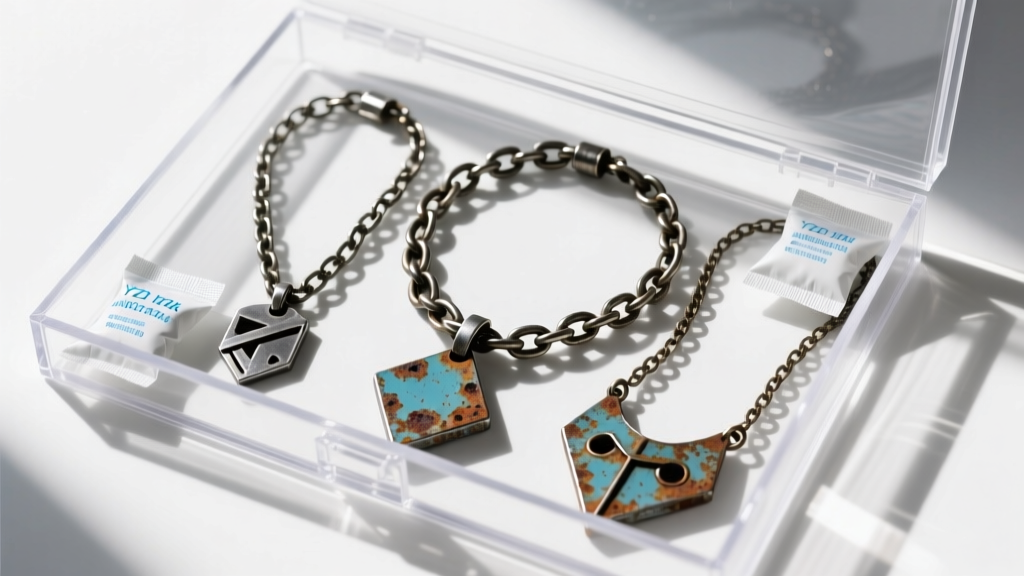
Store your iron, steel, and mixed-base-metal jewelry in airtight acrylic or glass display boxes rather than fabric-lined wooden boxes, which trap ambient moisture and off-gas corrosive organic acids from the wood and adhesives. Line the storage container with indicating silica gel packets (which change color when saturated and can be baked to recharge) and 3M anti-tarnish strips, which absorb airborne sulfur and reactive gases. Avoid the outdated internet 'hack' of painting jewelry with clear nail polish; modern nail polishes contain plasticizers and solvents that yellow over time, peel unpredictably, and can trap moisture against the metal, accelerating localized galvanic corrosion underneath the coating.


