How to Clean Tarnished Jewelry Based on Metal Properties
Discover how to clean tarnished jewelry based on specific metal properties. Compare silver, brass, and gold alloys for safe, effective restoration.

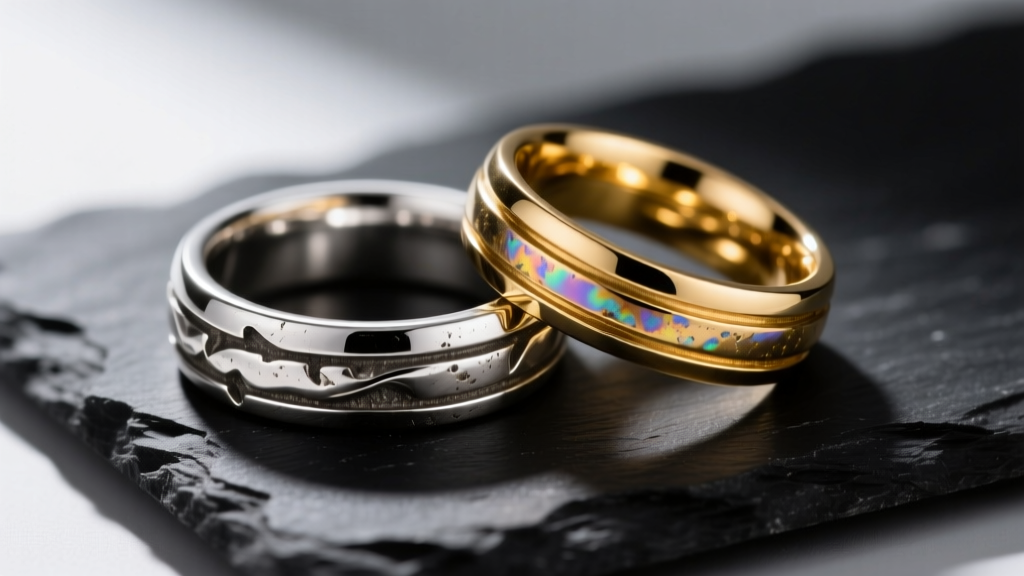
The Chemistry of Tarnish: Why Metals React
To effectively clean tarnished jewelry, you must first understand that tarnish is not simply dirt or grime; it is a fundamental metallurgical reaction. When we talk about cleaning, we are actually talking about reversing or removing a chemical compound that has formed on the surface of the metal. Different alloys react with different environmental triggers—primarily sulfur, oxygen, and moisture. According to the Gemological Institute of America (GIA), treating all metals with a universal cleaner is the fastest way to destroy delicate finishes, strip valuable platings, and fracture porous gemstones. This guide breaks down the exact material properties of common jewelry metals and the specific chemical or mechanical interventions required to restore them safely.
Sterling Silver: Reversing Silver Sulfide
Sterling silver (92.5% silver, 7.5% copper) does not actually oxidize in the traditional sense. The black or yellowish film that forms on its surface is silver sulfide (Ag2S), created when silver reacts with hydrogen sulfide gas present in the atmosphere, wool, rubber, and certain foods. The Silver Institute notes that humidity and airborne pollutants accelerate this sulfidation process exponentially.
Because the copper in sterling silver is highly reactive, the alloy is particularly prone to rapid darkening. Many commercial 'silver dips' rely on harsh thiourea-based acids to strip this layer. While effective, these acids are highly toxic, leave a porous surface that re-tarnishes faster, and can permanently cloud soft gemstones like turquoise or opal.
The Aluminum Foil Electrochemical Bath
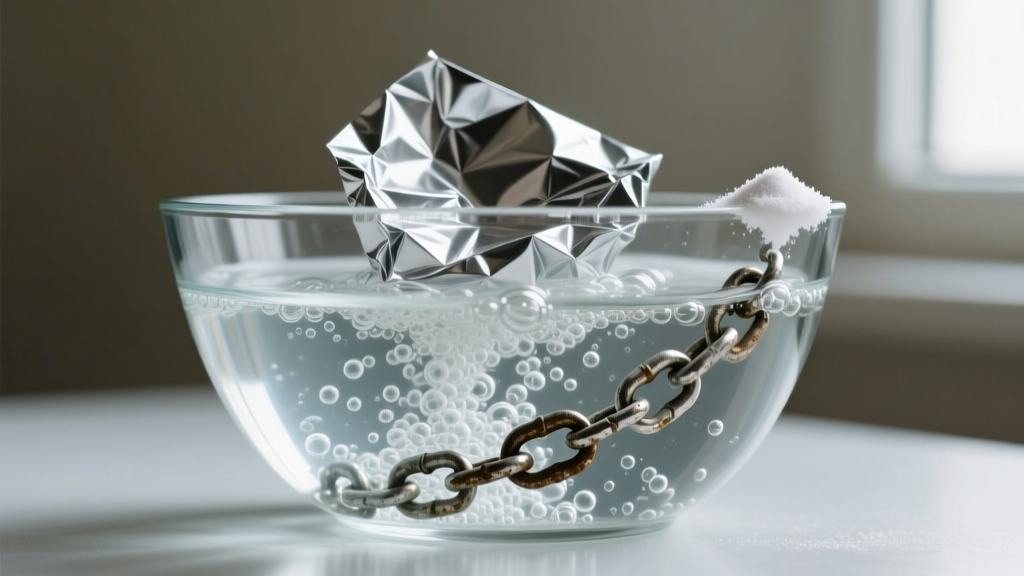
For solid sterling silver without porous stones, the safest and most scientifically sound method to clean tarnished jewelry is an electrochemical reduction bath. This process converts the silver sulfide back into elemental silver without removing any of the base metal.
- The Setup: Line a glass bowl with aluminum foil (shiny side up). The aluminum acts as the anode.
- The Electrolyte: Add 2 tablespoons of sodium bicarbonate (baking soda) and 1 tablespoon of non-iodized salt.
- The Catalyst: Pour boiling water over the mixture to dissolve the electrolytes.
- The Reaction: Submerge the silver. The aluminum is more electropositive than silver, causing a galvanic reaction where sulfur atoms detach from the silver and bond to the aluminum.
Warning: Never use this method on oxidized (intentionally blackened) silver jewelry, as it will strip the deliberate patina from the crevices, ruining the contrast.
Copper and Brass: Managing Oxidation and Dezincification
Copper and its primary alloy, brass (copper and zinc), undergo true oxidation, forming copper oxide (which appears brown or black) and eventually copper carbonate, known as verdigris (the powdery green crust). While copper is relatively forgiving, brass presents a unique metallurgical vulnerability known as dezincification and stress corrosion cracking.
If you use ammonia-based cleaners on brass jewelry, the ammonia selectively leaches the zinc out of the alloy matrix, leaving behind a porous, sponge-like copper structure that is incredibly brittle. Furthermore, if the brass has been work-hardened (such as a stamped brass cuff or a drawn wire), ammonia exposure can cause microscopic stress fractures, leading to sudden snapping.
To safely clean tarnished jewelry made of brass or copper, rely on mild organic acids. A paste made from equal parts lemon juice (citric acid) and fine pumice powder will gently abrade the copper oxide layer while the acid dissolves the remaining salts. For heavy verdigris, a 5% solution of white vinegar applied with a cotton swab for no more than 60 seconds, followed by an immediate baking soda rinse to neutralize the acid, will halt the corrosion without compromising the zinc matrix.
Material Comparison Table: Tarnish Rates and Cleaning Agents
| Metal / Alloy | Tarnish Compound | Safe Cleaning Agent | Agents to Avoid | Avg. Time to Tarnish |
|---|---|---|---|---|
| Sterling Silver (925) | Silver Sulfide | Electrochemical bath, mild soap | Bleach, thiourea dips | 2–6 months |
| Brass (Cu/Zn) | Copper Oxide / Carbonate | Citric acid, specialized brass paste | Ammonia, harsh alkalis | 1–3 months |
| Copper (Pure) | Copper Oxide | Vinegar/salt solution, ketchup | Chlorine, bleach | 2–4 weeks |
| 14k Yellow Gold | Copper/Silver Sulfide | Warm water, mild dish detergent | Abrasive polishing cloths | 1–3 years |
| Rhodium-Plated White Gold | Underlying alloy oxidation | Microfiber cloth only | Ultrasonic, silver dip | N/A (Plating wears) |
Gold Alloys: Why 14K Tarnishes but 24K Does Not
Pure 24-karat gold is a noble metal; it does not react with oxygen or sulfur, meaning it will never tarnish. However, 24k gold is too soft for structural jewelry (yielding at just 25-30 on the Vickers hardness scale). To create durable pieces, gold is alloyed with copper, silver, zinc, and nickel. It is these secondary metals that tarnish.
14-karat gold contains 58.5% pure gold and 41.5% alloy metals. When a 14k gold ring tarnishes, you are actually seeing the copper and silver within the alloy matrix reacting to environmental sulfur and chlorine. To clean tarnished jewelry made of karat gold, avoid abrasive polishing compounds like rouge or tripoli. These compounds remove microscopic layers of the alloy, eventually altering the precise tolerances of prong settings and thinning the shank of the ring.
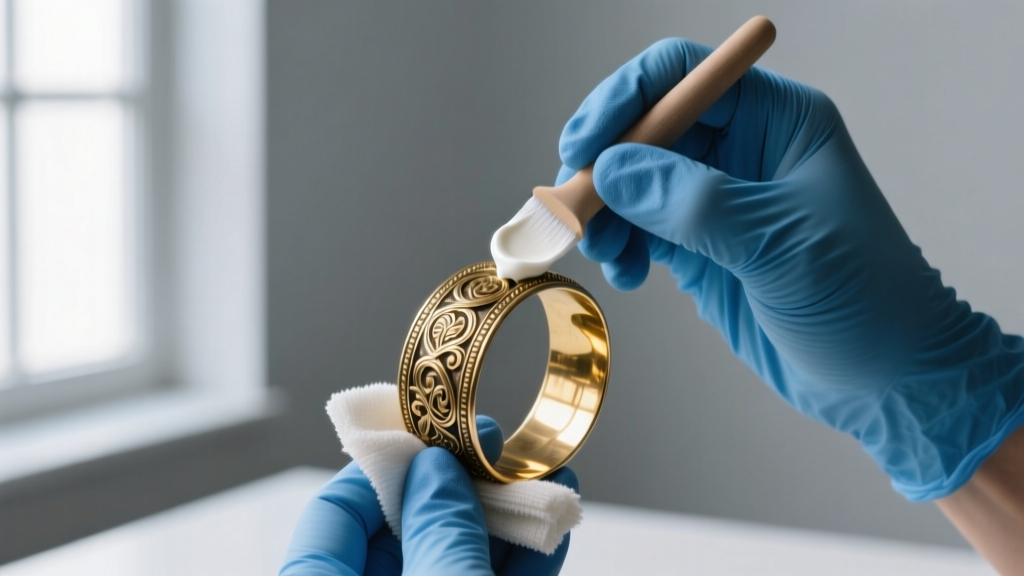
Instead, use a few drops of phosphate-free dish soap in warm water and a soft-bristled baby toothbrush. The mechanical action of the bristles is sufficient to dislodge the thin layer of copper sulfide without abrading the gold matrix. For intricate filigree work, a 42kHz ultrasonic cleaner can be used safely on solid, un-plated gold, provided no fracture-filled diamonds or emeralds are present in the setting.
Gemstone Porosity and Plating Vulnerabilities
The most critical failure point when attempting to clean tarnished jewelry is ignoring the stones and surface treatments. Modern jewelry frequently features nano-coatings, rhodium flashing, and highly porous organic gems that are instantly destroyed by chemical tarnish removers.
"The cavitation bubbles generated by ultrasonic cleaners can easily strip rhodium platings that are less than 1.0 microns thick, exposing the yellowish white gold alloy beneath and necessitating a complete re-plating by a professional jeweler."
Porous Gemstones: Turquoise, lapis lazuli, malachite, pearls, and opals possess a high degree of porosity and low Mohs hardness. If liquid silver dip or brass cleaner wicks into the microscopic fissures of a turquoise cabochon, it will permanently stain the stone from the inside out. These pieces must only be cleaned with a barely damp, lint-free cloth.
Rhodium and Vermeil Platings: White gold is almost always plated with rhodium to achieve a bright, mirror-like white finish. Vermeil is a thick layer of gold (minimum 2.5 microns) over sterling silver. Never submerge plated jewelry in chemical baths or subject it to ultrasonic frequencies. The chemical solvents will dissolve the plating, and the ultrasonic waves will cause the plated layer to delaminate and flake off the base metal.
Preventative Storage Based on Metal Porosity
Once you have successfully restored your pieces, preventing future sulfidation and oxidation is vastly superior to repeated cleaning, which inherently causes microscopic wear. Store sterling silver in airtight polyethylene zip-lock bags alongside 3M Anti-Tarnish strips, which absorb airborne sulfur compounds before they can reach the metal surface. Keep copper and brass pieces in low-humidity environments, ideally with silica gel desiccant packets to prevent the moisture required for copper carbonate formation. By respecting the specific metallurgical properties of your jewelry, you ensure its structural integrity and aesthetic brilliance for decades.