How to Clean Tarnished Jewelry Without Ruining Patina
Discover how to clean tarnished jewelry safely. Our trend guide protects intentional patinas on vintage, mixed-metal, and oxidized silver pieces.

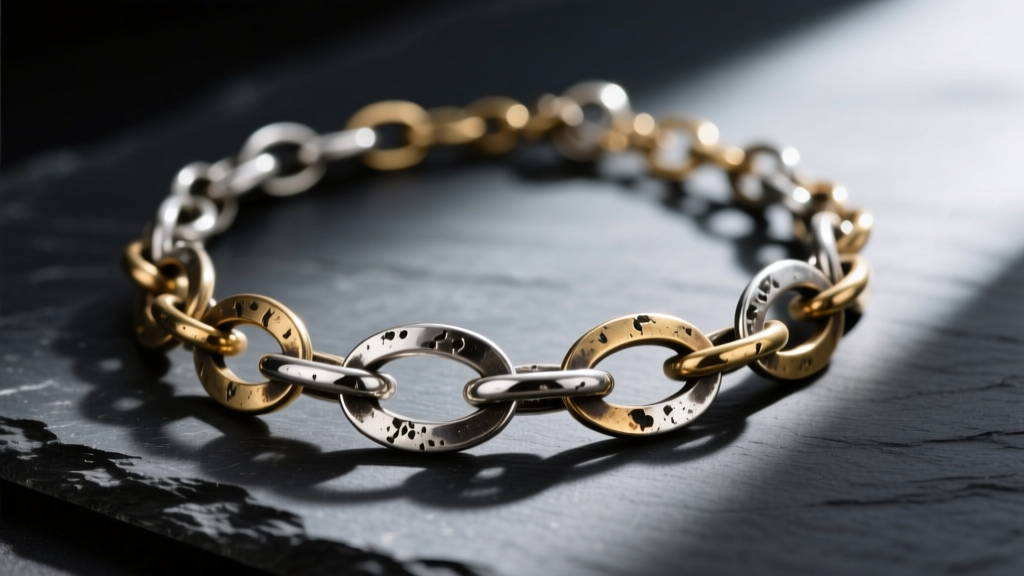
The 2026 Patina Paradox: When Tarnish is a Trend
In the contemporary jewelry landscape of 2026, the hyper-polished, minimalist aesthetics of the 2010s have fully given way to 'heritage grunge' and 'archival revival' trends. Designers are intentionally utilizing oxidized sterling silver, raw brass, and acid-etched gold vermeil to create pieces that look excavated rather than manufactured. But this stylistic shift introduces a complex maintenance dilemma for collectors and everyday wearers alike: knowing exactly how to clean tarnished jewelry without stripping away a $400 intentional designer patina.
Tarnish is not inherently 'dirty.' It is a chemical reaction. However, when environmental tarnish (caused by sweat, cosmetics, and atmospheric sulfur) crosses the line from an attractive antique finish to a skin-irritating, flaky grime, intervention is required. The challenge lies in selectively removing corrosive buildup while preserving the darkened crevices that give mixed-metal and vintage-inspired pieces their architectural depth.
Identifying Your Metal: The Chemistry of Tarnish
Before reaching for a polishing cloth, you must identify the metal alloy and the type of tarnish present. The Gemological Institute of America (GIA) emphasizes that treating a metal blindly is the fastest way to destroy its structural and aesthetic integrity.
Sterling Silver (925) vs. Silver Plated
Sterling silver tarnishes when the copper alloyed within it reacts with sulfur and moisture to form copper sulfide, while the silver forms silver sulfide (Ag2S). This presents as a yellowish, then brown, and finally black film. Silver-plated jewelry, however, features a microscopic layer of pure silver over a base metal core (usually brass or copper). If you use abrasive pastes on plated jewelry, you will strip the silver layer entirely, exposing the base metal to rapid, irreversible corrosion.
Raw Brass and Bronze
Brass (copper and zinc) and bronze (copper and tin) develop a greenish-black patina known as verdigris or copper oxide. In 2026, raw brass signet rings and chunky bronze chain links are highly coveted for their evolving, 'living' finish. Cleaning these requires a fundamentally different approach than silver, as acidic cleaners that brighten brass will instantly strip the coveted antique toning.
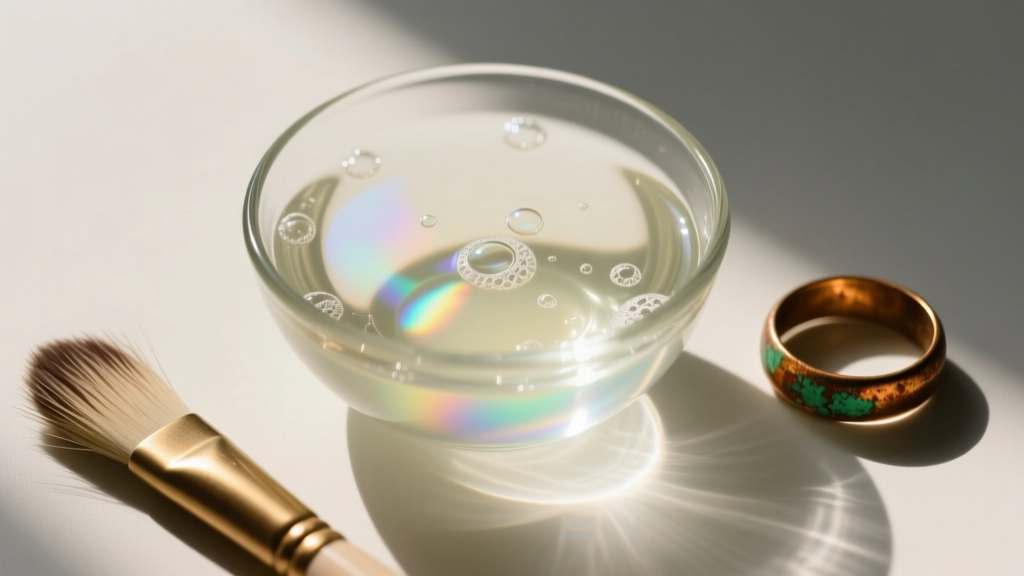
How to Clean Tarnished Jewelry: Trend-Safe Methods
Forget the harsh, ammonia-based commercial dips of the past. Modern jewelry conservation relies on targeted, low-impact methods that respect the integrity of mixed-metal constructions and porous gemstones.
Method 1: The Mild Surfactant Wash (For Mixed Metals & Gemstones)
This is the safest method for 90% of contemporary jewelry, especially pieces featuring mixed metals or delicate gemstones like turquoise, opal, or pearls.
- The Solution: Mix 3 drops of pH-neutral dish soap (like Dawn Platinum) into a bowl of distilled water. Avoid tap water, as dissolved minerals and chlorine can cause spotting.
- The Tool: Use a natural horsehair detailing brush. Nylon brushes are too stiff and will leave micro-scratches on high-karat gold vermeil and polished silver edges.
- The Technique: Submerge the piece for exactly 3 minutes. Gently agitate the brush only on the high-polish raised areas, avoiding the darkened, recessed crevices where the intentional patina lives.
- The Rinse: Rinse under a gentle stream of lukewarm distilled water and pat dry with a lint-free microfiber cloth. Never air-dry, as water spots will etch into raw brass.
Method 2: The Kneaded Eraser Trick (For Targeted Edge Polishing)
When you want to brighten only the raised, high-wear edges of an oxidized silver cuff (a hallmark of the 'lived-in' luxury trend) without touching the blackened background, use an artist's kneaded rubber eraser. Unlike fiberglass scratch pens or baking soda pastes, a kneaded eraser lifts silver sulfide through gentle friction and static adhesion without generating abrasive dust that could scratch adjacent gemstones.
Method 3: The Electrochemical Bath (For High-Polish Silver ONLY)
Warning: Never use this method on intentionally oxidized jewelry, mixed metals, or pieces with glued-in gemstones. This method uses ion exchange to convert silver sulfide back into pure silver.
- Line a glass bowl with aluminum foil, shiny side up.
- Add 1 tablespoon of baking soda and 1 tablespoon of non-iodized salt.
- Pour in boiling distilled water to dissolve the electrolytes.
- Submerge the solid sterling silver piece for 30 to 60 seconds.
- Remove with wooden tongs, rinse, and buff.
The Smithsonian Museum Conservation Institute notes that while electrochemical cleaning is highly effective for pure silver, it leaves the metal in a highly reactive state, making it prone to rapid re-tarnishing if not immediately sealed or stored properly.
The Mixed-Metal Danger: Galvanic Corrosion
One of the most critical style trends of 2026 is the blending of silver, gold, and brass in a single chain or ring. You must understand galvanic corrosion. If you submerge a piece containing both sterling silver and raw brass into an electrolyte solution (like the baking soda/aluminum bath), you create a galvanic cell. The dissimilar metals will force an electrical current through the solution, causing the more anodic metal (brass) to rapidly dissolve and pit. Always separate mixed-metal jewelry and clean each component individually using the mild surfactant wash.
Strategic Maintenance: Finish Type Matrix
To maintain the delicate balance between 'stylishly antiqued' and 'neglected,' consult this decision matrix before applying any cleaning agent.
| Metal Finish | Tarnish Type | Safe Cleaning Agent | Trend Impact / Risk |
|---|---|---|---|
| High-Polish 925 Silver | Black Silver Sulfide | Aluminum Foil Bath, Silver Polishing Cloth | Restores mirror shine; no risk to patina. |
| Intentional Oxidation | Surface Grime / Oils | Horsehair Brush + Mild Soap | Preserves dark crevices; brightens edges. |
| Raw Brass / Bronze | Green Verdigris | Lemon Juice + Salt (Targeted only) | Strips patina to bright yellow; use sparingly. |
| 18k Gold Vermeil | Underlying Copper Bleed | Microfiber Cloth Only | Liquid cleaners risk stripping the 2.5-micron gold layer. |
Preserving the 'Lived-In' Look: Archival Storage
Cleaning is only half the battle; how you store your jewelry dictates how quickly it will tarnish again. The modern jewelry collector must move beyond the standard felt jewelry box, which often contains glues and dyes that off-gas sulfur.
- Pacific Silvercloth: Woven with thousands of microscopic silver particles, this fabric intercepts sulfur gases before they reach your jewelry. It is essential for wrapping high-polish silver pieces.
- 3M Anti-Tarnish Strips: These absorb airborne sulfides and hydrogen sulfide. Place one strip inside an airtight Ziploc bag with your mixed-metal chains. Replace every 6 months.
- Silica Gel Packets: Moisture accelerates the oxidation of raw brass and bronze. Keeping a small desiccant packet in your jewelry drawer stabilizes the humidity, slowing the 'living' finish from turning your skin green.
Expert Verdict: Embrace the Evolution
Understanding how to clean tarnished jewelry in the context of modern style trends means accepting that jewelry is a dynamic material. A slight darkening on the shank of a raw brass ring or the recessed links of a silver chain tells a story of wear and provenance. By utilizing targeted, non-abrasive cleaning methods, you protect the structural integrity of your pieces while honoring the intentional, archival aesthetics that define the current era of jewelry design.


