How Do You Make Homemade Jewelry Cleaner? A Cost & Value Guide
Discover how do you make homemade jewelry cleaner with our budget assessment. Compare DIY recipes vs commercial costs and protect your gems.

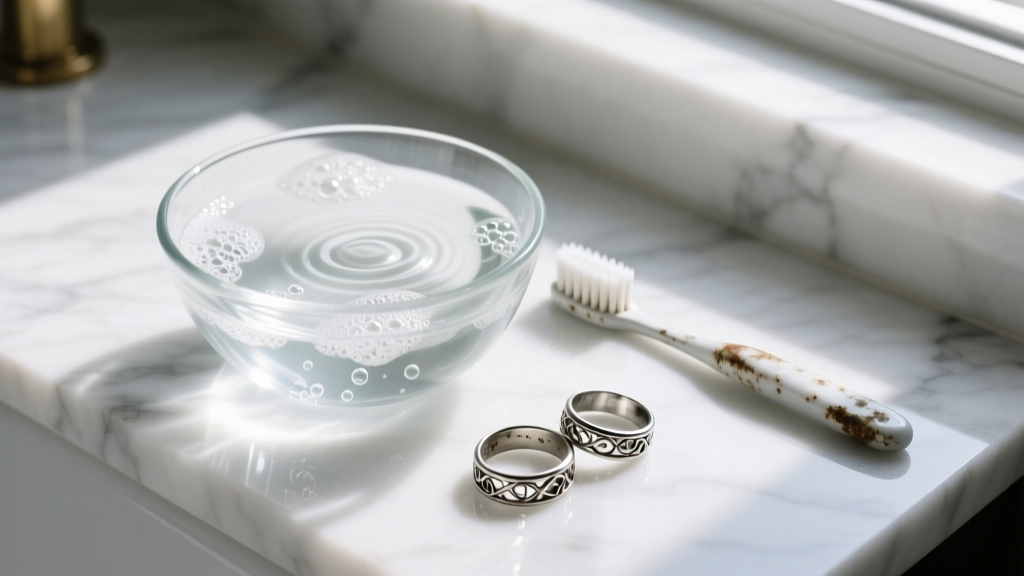
In the current economic climate of 2026, consumers are heavily scrutinizing their household budgets, leading to a massive surge in DIY maintenance solutions. Commercial jewelry cleaning solutions from brands like Connoisseurs or Hagerty typically retail between $9 and $18 per bottle. While these products offer convenience, many budget-conscious collectors and everyday wearers are asking a critical question: how do you make homemade jewelry cleaner that actually works without compromising the integrity of precious metals and gemstones?
As a domain expert in jewelry care, I approach this question not just from a chemical perspective, but through a strict budget and value assessment. A true value assessment weighs the upfront financial savings against the potential long-term costs of material degradation, micro-scratching, and loss of gemstone brilliance. Below, we break down the exact recipes, the hidden costs of DIY methods, and a comprehensive material compatibility guide to help you decide if homemade cleaners offer genuine value or represent a false economy.
The True Cost: Commercial vs. Homemade Cleaners
Before diving into the chemistry, we must establish the baseline financial comparison. A standard 8-ounce bottle of commercial gold and diamond cleaner costs roughly $12 and provides about 30 uses, equating to $0.40 per cleaning session. Silver dip solutions, which rely on thiourea and mild acids, cost about $15 for 20 uses, or $0.75 per session.
Conversely, the raw materials for a highly effective, multi-purpose homemade jewelry cleaner cost pennies. A bottle of distilled water ($1.50 for a gallon) and a bottle of ammonia-free, phosphate-free dish soap ($4.00 for 24 ounces) yield hundreds of batches. The cost per DIY cleaning session drops to approximately $0.02. From a purely financial standpoint, the DIY route offers a 95% cost reduction. However, the value proposition shifts dramatically when we factor in the risk of improper formulation, which can strip rhodium plating or dehydrate porous gemstones.
How Do You Make Homemade Jewelry Cleaner? The Core Recipes
When searching for how do you make homemade jewelry cleaner, most results focus purely on the recipe without explaining the chemical mechanics. To maximize value and minimize risk, you must tailor your solution to the specific metal and gemstone profile. Here are the two most scientifically sound, budget-friendly formulations.
Recipe 1: The Mild Degreaser (For Diamonds, Sapphires, and Gold)
Diamonds and corundum (sapphires and rubies) are highly durable, rating 9 to 10 on the Mohs hardness scale. Their primary enemy is not tarnish, but sebum, lotions, and environmental grease that cling to their oleophilic (oil-attracting) surfaces, severely reducing light return and brilliance.
- Ingredients: 1 cup of warm distilled water (never tap water, as calcium carbonate leaves micro-deposits), 3 drops of mild, ammonia-free dish soap (such as Dawn Free & Clear).
- Method: Submerge the jewelry for 15 minutes to allow the surfactants to break the surface tension of the oils. Gently agitate with a brand-new, extra-soft baby toothbrush. Rinse with distilled water and dry with a lint-free microfiber cloth.
- Value Assessment: Exceptional. This mimics the chemical action of $15 commercial diamond dips without the harsh alkaline builders that can dull secondary accent stones.
Recipe 2: The Electrochemical Silver Bath (For Solid Sterling Silver)
Sterling silver (92.5% silver, 7.5% copper) tarnishes when the copper reacts with hydrogen sulfide in the air, forming black silver sulfide. Commercial silver polishes use mild abrasives to physically scrape this layer off, which removes microscopic layers of silver over time. The DIY electrochemical bath reverses the chemical reaction, saving both money and metal mass.
- Ingredients: A glass bowl lined with heavy-duty aluminum foil (shiny side up), 1 cup boiling distilled water, 1 tablespoon baking soda (sodium bicarbonate), and 1 teaspoon kosher salt.
- Method: Place the tarnished silver in direct contact with the aluminum foil. Pour the boiling water over the jewelry, then add the baking soda and salt. The resulting redox reaction transfers the sulfur from the silver to the aluminum. Remove after 3 minutes, rinse, and buff.
- Value Assessment: High financial value, but moderate aesthetic risk. This method strips all tarnish, including the dark patina in antique crevices that collectors value. Use only on modern, high-polish silver chains and bands.
Ingredient Cost Breakdown & Value Matrix
| Cleaning Method | Cost Per Use | Best Application | Risk Level | Overall Value Rating |
|---|---|---|---|---|
| Commercial Silver Dip | $0.75 | Heavy tarnish, intricate filigree | Medium (Chemical odor) | 3/5 |
| DIY Electrochemical Bath | $0.05 | Modern sterling silver flatware/chains | High (Strips antique patina) | 4/5 |
| Commercial Diamond Cleaner | $0.40 | Everyday diamond engagement rings | Low | 3/5 |
| DIY Distilled Soap Bath | $0.02 | Diamonds, sapphires, 14k/18k gold | Very Low | 5/5 |
| Professional Ultrasonic | $15.00+ | Pave settings, deep grime removal | Low (If done by a pro) | 2/5 (Budget) |
Material Compatibility: When DIY Saves Money vs. Ruins Value
The most common failure mode in DIY jewelry care is applying a one-size-fits-all homemade cleaner to incompatible materials. According to the Gemological Institute of America (GIA), understanding gemstone porosity and hardness is non-negotiable when mixing household chemicals.
The Danger Zone: Porous and Fractured Gems
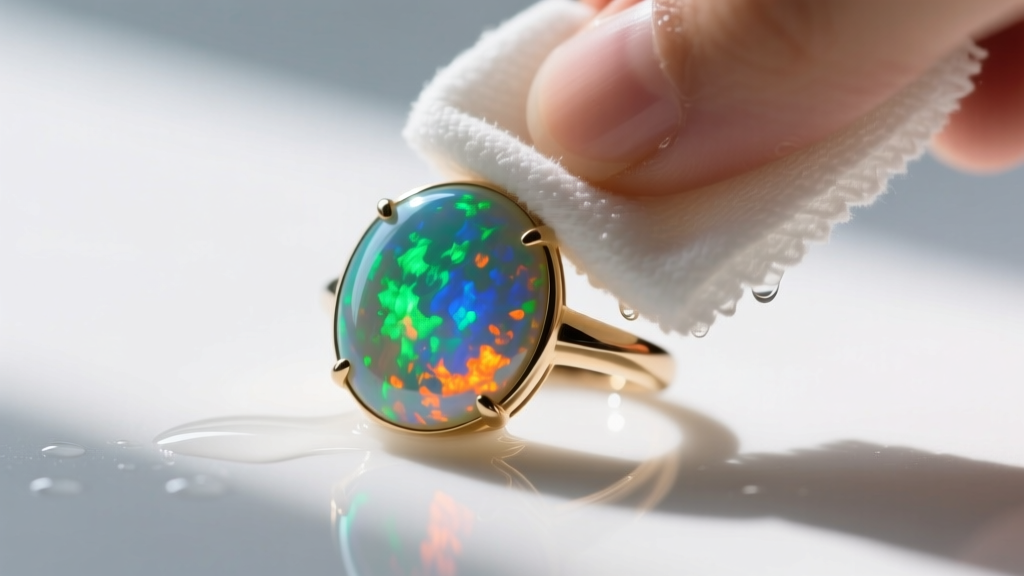
Never submerge opals, pearls, turquoise, lapis lazuli, or emeralds in any homemade liquid cleaner. Opals contain up to 20% water; submerging them in soapy water or baking soda solutions can cause crazing (internal cracking) as the stone's moisture equilibrium is disrupted. Pearls are organic calcium carbonate structures that will dissolve or lose their orient (luster) when exposed to even mildly acidic or alkaline DIY mixtures.
Emeralds are almost universally treated with cedar oil or synthetic resins to mask natural surface-reaching fractures. The surfactants in dish soap will actively strip these oils, leaving the emerald looking heavily included, cloudy, and significantly devalued. For these stones, the only budget-friendly and safe method is a gentle wipe with a barely damp, untreated microfiber cloth.
The Abrasive Threat: Baking Soda on High-Polish Gold
While baking soda is a staple in DIY cleaning, it has a Mohs hardness of roughly 2.5. Pure 24k gold has a Mohs hardness of 2.5 to 3, and 14k or 18k gold alloys are only slightly harder. Creating a thick baking soda paste and scrubbing a gold ring will result in a web of micro-scratches. Over time, this destroys the mirror finish, forcing you to pay a jeweler $30 to $50 for a professional re-polish, entirely negating the money saved by using a DIY cleaner.
The Hidden Costs of Homemade Cleaners (Failure Modes)
Budget assessments must account for hidden costs. When consumers attempt to mimic professional ultrasonic cleaners at home by placing jewelry in a jar of DIY solution and shaking it vigorously, they inadvertently create a micro-abrasion environment. Suspended dirt and silica particles act like liquid sandpaper against softer metals and gemstone girdles.
'The greatest hidden cost of DIY jewelry care is the gradual degradation of rhodium plating on white gold. Aggressive scrubbing with homemade pastes or stiff-bristled brushes will wear through the 0.5-micron rhodium layer in months rather than years, leading to premature and costly re-plating visits to the jeweler.' - Senior Bench Jeweler & Appraiser
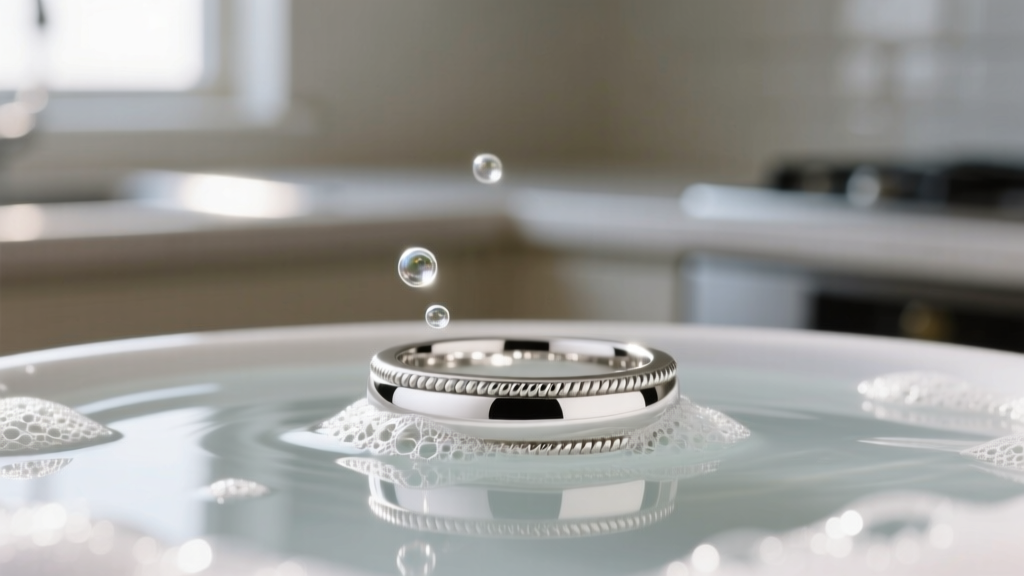
Furthermore, the Jewelers of America strongly advises against using boiling water (as required in the silver electrochemical bath) on any jewelry featuring pave settings or fracture-filled gems. The thermal shock can shatter treated diamonds or loosen the heat-sensitive adhesives sometimes used in cheaper cluster settings, resulting in lost stones and expensive repair bills.
Final Verdict: Is Homemade Jewelry Cleaner Worth It?
So, how do you make homemade jewelry cleaner work for your budget? The answer lies in strict material segregation. For durable, everyday pieces like diamond solitaires, sapphire studs, and plain gold wedding bands, the DIY distilled water and mild dish soap method offers unbeatable value. It costs virtually nothing, effectively removes grease, and preserves the metal's finish when paired with a soft baby toothbrush.
However, for heavily tarnished antique silver, porous organic gems (pearls, coral), or oil-treated stones (emeralds), the DIY route is a false economy. The risk of stripping patinas, dehydrating opals, or dissolving pearl nacre far outweighs the $10 savings on a commercial, gem-specific cleaner. By matching the chemical properties of your homemade solution to the exact metallurgical and gemological profile of your jewelry, you can safely cut your annual maintenance budget by over 80% without sacrificing an ounce of brilliance.


