Cleaning Jewelry With Vinegar: 2026 Trend Analysis & Safety Guide
Explore the 2026 trend of cleaning jewelry with vinegar. We analyze the aesthetic appeal, metallurgical risks, and safe DIY methods for vintage pieces.

The 2026 Aesthetic Shift: Why Vinegar Cleaning is Trending
In the ever-evolving landscape of jewelry styling, 2026 has seen a massive pivot away from the hyper-polished, flawless finishes of the early 2020s. Today's dominant aesthetic leans heavily into 'wabi-sabi'—the appreciation of imperfection, raw materials, and lived-in vintage character. This stylistic shift has resurrected a highly controversial DIY method across social media platforms: cleaning jewelry with vinegar. While traditional jewelers often scoff at the pantry staple, style influencers and vintage curators are intentionally using acetic acid to strip heavy lacquers, remove artificial patinas, and reveal the raw, unsealed base metals beneath.
However, treating your jewelry collection like a science experiment requires a deep understanding of metallurgy and gemology. The viral satisfaction of watching tarnish melt away in a vinegar bath masks a complex chemical reality. As a style and trend radar, we are breaking down the exact metallurgical boundaries of this trend, separating the aesthetic triumphs from the irreversible casualties.
The Chemistry of Acetic Acid vs. Precious Metals
Standard household white vinegar contains approximately 5% acetic acid by volume, yielding a highly acidic pH of roughly 2.4. When introduced to oxidized metals, the acetic acid acts as a mild chelating agent. It reacts with copper oxide (the primary component of tarnish on brass, bronze, and copper alloys) to form copper acetate, a water-soluble salt that easily washes away. This is why a dull, brown penny emerges from a vinegar soak looking bright and pink.
But how does this acidic environment interact with the complex alloys used in fine and fashion jewelry? The results are highly dependent on the karat weight and the specific alloying metals used.
Metals That Survive the Soak
- Platinum & Palladium: These noble metals are virtually inert to weak acetic acid. A vinegar soak will not harm the metal, though it will not effectively remove heavy grease or oils better than a standard dish soap solution.
- 24k Gold: Pure gold is non-reactive. However, 24k gold is rarely used in structural jewelry due to its softness, making this a moot point for most wearable pieces.
- Stainless Steel & Titanium: Highly resistant to acidic corrosion, these modern alternative metals will easily survive a vinegar bath, though prolonged exposure (over 24 hours) can compromise the passive oxide layer that prevents rust.
Metals That React: The Good and The Bad
The danger and the appeal of cleaning jewelry with vinegar lie in its reaction to alloyed metals. 14k and 18k gold are alloyed with copper, silver, and zinc to increase durability. While a brief 5-minute soak is generally safe, leaving 14k gold in vinegar for hours will micro-etch the copper alloys, leaving the surface porous, matte, and dull. For the 2026 'raw gold' trend, some stylists do this intentionally, but for traditional high-polish pieces, it is considered severe damage.
Sterling Silver (925) presents another paradox. Vinegar will remove light surface tarnish, but it will also strip the intentional 'antiquing' (black oxidation) used to highlight the intricate details of cast silver rings. Furthermore, if the silver contains sulfur-heavy tarnish, vinegar alone is ineffective; it requires a galvanic reaction using aluminum foil and baking soda instead.
Gemstone Casualties: The Porosity and Mohs Problem
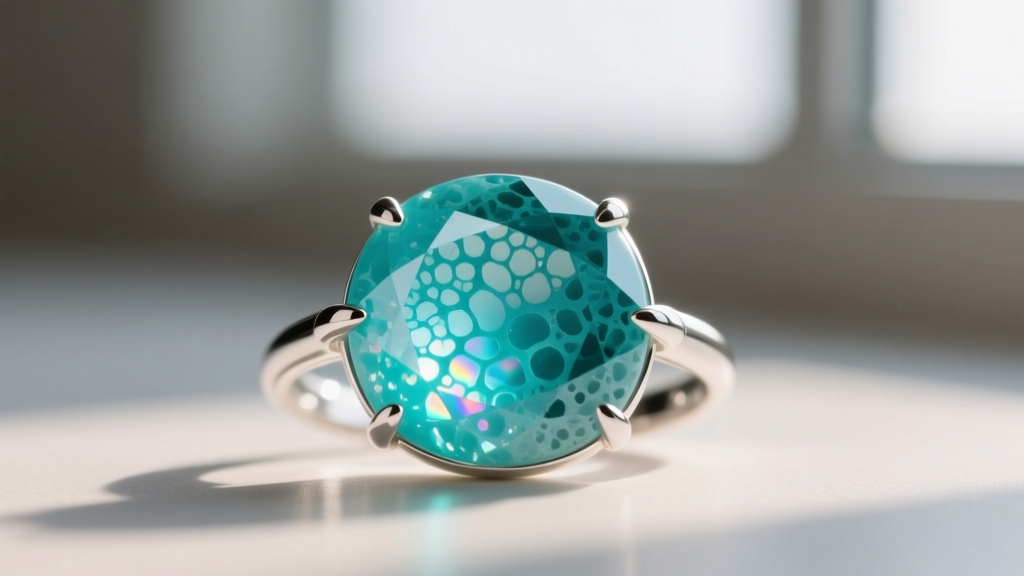
The most catastrophic failures in the vinegar cleaning trend occur when gemstones are introduced to the bath. The Mohs scale of mineral hardness is entirely irrelevant here; the true vulnerability is chemical stability and porosity. Organic gems and porous semi-precious stones will absorb the acetic acid, leading to irreversible structural degradation.
According to the Gemological Institute of America (GIA), organic gemstones require highly specific, neutral pH environments. Submerging them in a pH 2.4 solution is a guaranteed way to destroy their luster and structural integrity.
| Gemstone Material | Chemical Composition | Vinegar Reaction | 2026 Trend Verdict |
|---|---|---|---|
| Pearl | Calcium Carbonate | Severe Etching, Pitting, and Dissolving | Avoid Completely |
| Turquoise | Hydrated Phosphate | Absorbs Acid, Chalky Texture, Color Shift | Avoid Completely |
| Malachite | Copper Carbonate | Dissolves Banding, Releases Toxic Copper Salts | Hazardous / Avoid |
| Opal | Hydrated Silica | Dehydration, Crazing, and Cracking | Avoid Completely |
| Diamond | Carbon | None (Chemically Inert) | Safe (but soap is better) |
| Sapphire / Ruby | Corundum | None (Highly Stable) | Safe for brief soaks |
The Safe Vinegar Method for Brass, Copper, and Bronze
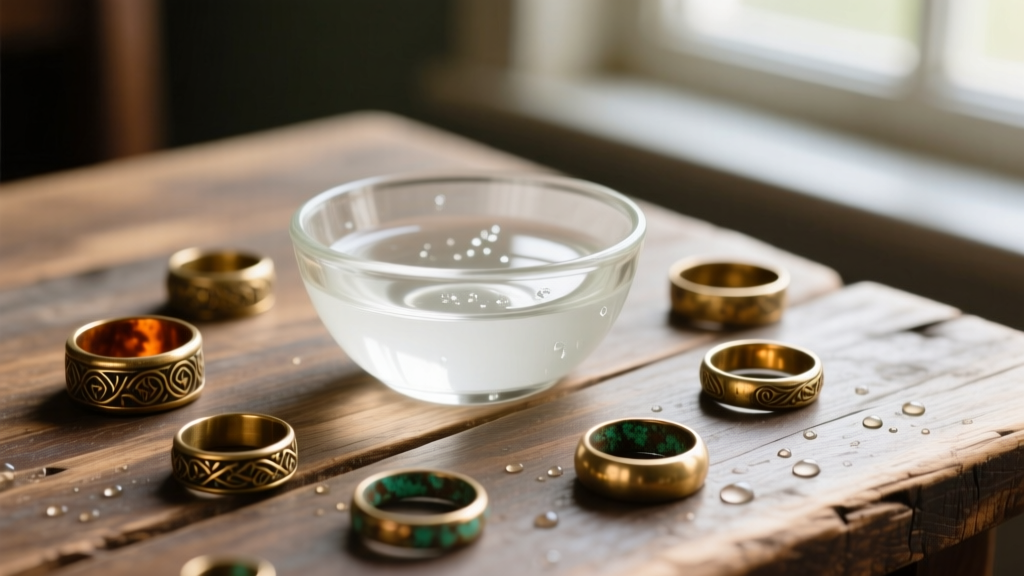
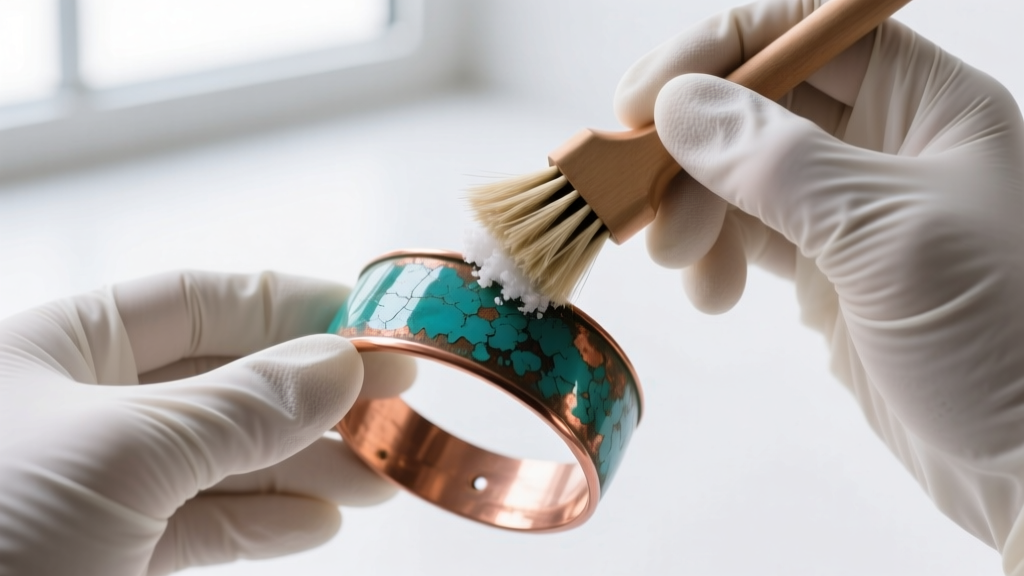
If you are curating a vintage collection featuring heavy brass cuffs, bronze signet rings, or unsealed copper bangles, cleaning jewelry with vinegar can yield spectacular, trend-aligned results. The goal is to strip decades of uneven, muddy oxidation and reveal a bright, raw, 'honey-gold' base metal that will naturally develop a new, even patina as you wear it against your skin's natural oils.
For heavy oxidation, white vinegar alone is too slow. We utilize a synergistic chemical reaction by introducing sodium chloride (table salt), which creates a mild hydrochloric acid environment when combined with the acetic acid, accelerating the tarnish removal exponentially.
- The Ratio: Mix 1/2 cup of distilled white vinegar with 1 tablespoon of non-iodized salt in a glass or ceramic bowl. Never use reactive metal bowls like aluminum or cast iron.
- The Agitation: Stir until the salt is completely dissolved. The solution should smell sharply acidic.
- The Soak: Submerge your solid brass, copper, or bronze piece. Do not soak pieces with glued-in stones or porous gems. Limit the soak to exactly 3 to 5 minutes.
- The Scrub: Remove the piece using wooden tongs. Use a soft-bristled baby toothbrush to gently agitate any remaining oxidation in the crevices.
- The Neutralization: This is the most skipped, yet most critical step. Rinse the jewelry thoroughly under warm water, then submerge it in a bowl of water mixed with a teaspoon of baking soda for 60 seconds to neutralize any lingering acid on the metal's surface.
- The Seal: Dry immediately with a microfiber cloth. To maintain the raw 2026 aesthetic without it turning your skin green, apply a micro-thin layer of natural beeswax or a specialized jewelry sealant like ProtectaClear.
Trend Verdict: When to DIY and When to See a Pro
The democratization of jewelry care via social media has empowered collectors to take restoration into their own hands, but it has also blurred the lines between safe maintenance and destructive experimentation. Cleaning jewelry with vinegar is not a universal panacea; it is a highly specific chemical tool best reserved for unsealed, non-precious base metals.
'The 2026 consumer desires authenticity and raw materiality in their accessories. Vinegar stripping allows us to reset vintage brass and copper to their factory-raw state, providing a blank canvas for the wearer's unique body chemistry to write a new patina. But applying this same logic to a 14k gold alloy or a turquoise inlay is a recipe for permanent devaluation.' — Metallurgical Finishing Guidelines, Rio Grande Jewelry Supply
For fine jewelry, heirloom pieces, or anything featuring organic gemstones, bypass the pantry and invest in a professional ultrasonic cleaning service or a pH-neutral, surfactant-based jewelry wash. Reserve the vinegar for the thrifted brass and the forgotten copper, and let the chemistry work in favor of your personal style narrative.