How to Remove Nail Polish on Cheap Jewelry Safely
Learn how to safely remove nail polish on cheap jewelry without stripping delicate flash plating, using expert non-acetone methods and tools.

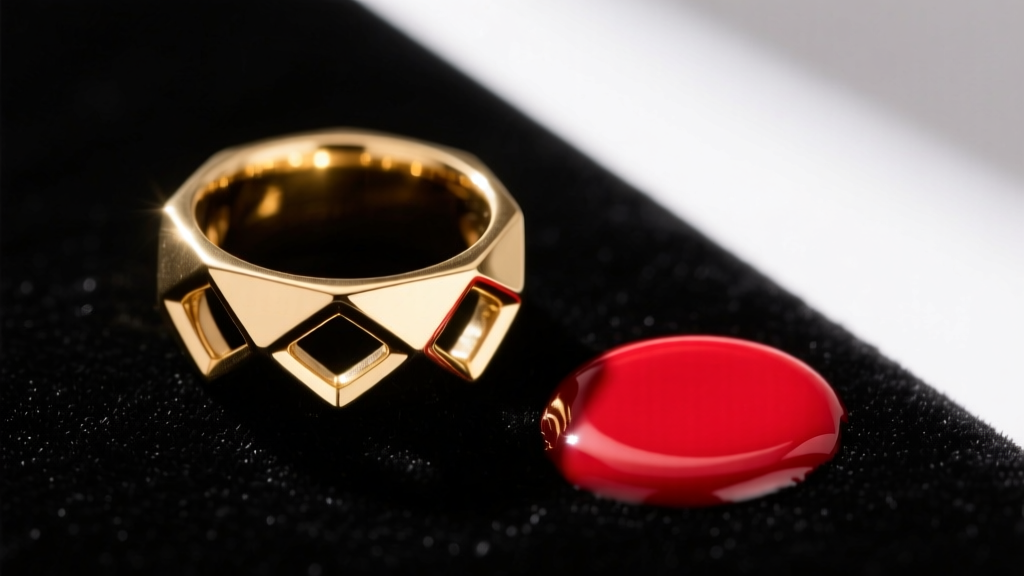
Getting nail polish on cheap jewelry is a heart-sinking moment for any accessory lover. Whether you accidentally brushed your freshly painted nails against your favorite gold-plated brass ring, or you are trying to strip away a yellowed, outdated layer of clear coat, the cleaning process requires extreme precision. Unlike solid gold or sterling silver, fashion jewelry relies on ultra-thin layers of plating that can be destroyed in seconds by the wrong chemicals.
In this comprehensive guide, we break down the exact chemistry of fashion jewelry plating, explain why standard removers will ruin your pieces, and provide a step-by-step masterclass on how to safely manage and remove nail polish on cheap jewelry without sacrificing the finish.
The Chemistry of Cheap Jewelry Plating vs. Solvents
To understand why nail polish remover is so dangerous to fashion jewelry, you must first understand how cheap jewelry is manufactured. Most affordable pieces are cast from base metals like zinc alloy, brass, or copper. To give them a luxurious appearance, they are electroplated with a microscopic layer of gold, silver, or rhodium.
This is known as 'flash plating.' While high-quality gold vermeil requires a minimum thickness of 2.5 microns, flash plating on cheap jewelry is typically between 0.01 and 0.05 microns thick. This layer is so thin that it is measured in mere molecules.
Standard nail polish remover contains acetone (dimethyl ketone), a highly aggressive solvent. Acetone does not just dissolve polish; it breaks down the molecular bonds of flash plating and the epoxy adhesives used to set rhinestones and glass gems. If you apply acetone to a zinc-alloy ring, you will strip the gold color instantly, leaving behind a dull, grayish base metal that will quickly oxidize and turn your skin green.
Solvent Safety Chart: What Will Strip Your Plating?
Before reaching for a bottle of remover, consult this safety matrix to understand how different solvents interact with delicate flash plating and glued-in gemstones.
| Solvent Type | Chemical Name | Effect on Flash Plating | Effect on Rhinestones/Glue |
|---|---|---|---|
| Standard Remover | Acetone | Strips plating instantly | Dissolves epoxy immediately |
| Non-Acetone Remover | Ethyl Acetate | Safe for brief, careful use | Softens glue with prolonged exposure |
| Rubbing Alcohol | Isopropyl Alcohol | Safe for quick spot cleaning | Mildly degrades glue over time |
| Warm Soapy Water | Sodium Lauryl Sulfate | Completely safe | Completely safe |
Step-by-Step: Removing Accidental Colored Polish
If you have accidentally smeared vibrant red or dark black polish onto a gold-plated or silver-plated fashion ring, do not panic. Avoid dipping the entire piece into any liquid. Instead, use the precision spot-cleaning method.
Step 1: The Precision Q-Tip Method
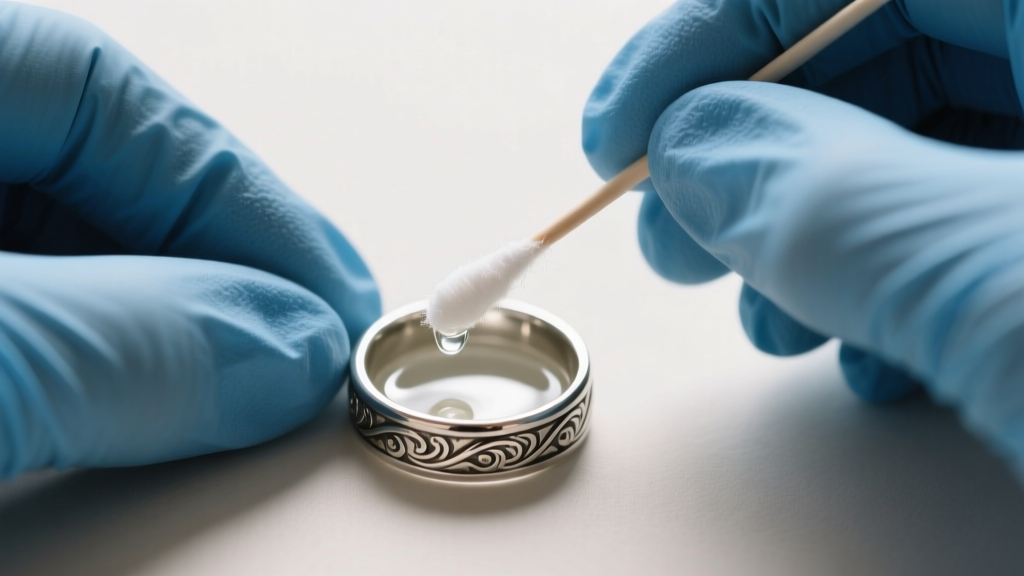
Gather 100% cotton swabs (synthetic tips will melt), a bottle of non-acetone nail polish remover, and a wooden orange cuticle stick. Pour a small amount of the non-acetone remover into a glass dish. Never use plastic, as ethyl acetate can warp and melt certain plastics, transferring chemical residue to your jewelry.
Dip the cotton swab into the remover and dab it gently onto the dried polish. Let it sit for exactly 10 to 15 seconds to soften the enamel. Do not rub aggressively. Once softened, use the wooden cuticle stick to gently scrape the polish away from the metal. Wood is softer than metal and will not scratch the flash plating underneath.
Step 2: The Soap and Water Neutralization
Once the visible polish is removed, the non-acetone solvent will leave behind a sticky, oily residue. Immediately wash the jewelry in a bowl of lukewarm water mixed with a few drops of pH-neutral dish soap (like Dawn). Use a baby toothbrush with ultra-soft bristles to gently sweep away any remaining solvent from the crevices. Pat dry immediately with a lint-free microfiber cloth to prevent water spots.
How to Strip Old, Yellowed Clear Coat Barriers
A massive trend on social media involves applying clear nail polish on cheap jewelry to create a barrier against nickel allergies. According to the American Academy of Dermatology, nickel contact dermatitis is incredibly common, and a clear coat can temporarily prevent metal-to-skin contact.
However, this hack has a major flaw: clear nail polish yellows, chips, and traps sweat against the base metal, eventually causing the jewelry to tarnish underneath the barrier. If you need to remove this old, yellowed clear coat, the Q-tip method will not work because the polish covers the entire piece.
The Warm Water and Mechanical Friction Soak
Because soaking cheap jewelry in chemical solvents will destroy the plating, you must rely on heat and mechanical friction to break down the clear coat.
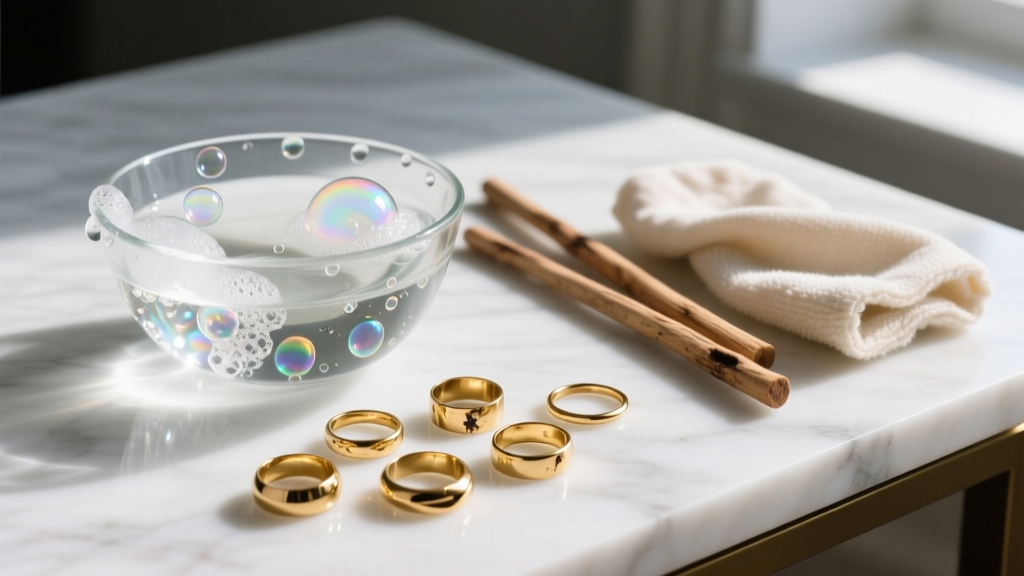
- Prepare a Hot Bath: Boil water and let it cool for two minutes (around 85°C/185°F). Pour it into a glass bowl and add a generous squeeze of grease-cutting dish soap.
- The Soak: Submerge the jewelry for 15 to 20 minutes. The heat will cause the base metal to expand slightly, breaking the rigid seal of the dried clear polish.
- The Peel: Remove the jewelry with wooden tongs. Use your fingernail or a wooden cuticle stick to find an edge of the clear coat. Slowly peel it away. It should lift off in satisfying, rubbery sheets.
- Residue Removal: If stubborn patches remain, apply a small amount of rubbing alcohol to a cotton pad and rub the specific spot. Isopropyl alcohol is generally safe for flash plating in short bursts and will dissolve the remaining clear coat adhesive.
Restoring the Flash Plating After Cleaning
After removing nail polish, your cheap jewelry might look slightly dull. This is because the solvents have stripped away the natural oils and any protective factory wax coating. You must restore the shine without using abrasive polishes.
Expert Warning: Never use treated jeweler's cloths (like the popular Sunshine polishing cloths) on cheap jewelry. These cloths contain micro-abrasives designed to remove tarnish from solid silver. On flash-plated jewelry, these abrasives will act like sandpaper, buffing the 0.03-micron gold layer right off the brass base.
Instead, use a clean, untreated microfiber cloth. Buff the piece gently in circular motions. If the metal is exposed brass or copper and has begun to tarnish from the trapped moisture of the clear coat, you can use a mild paste of baking soda and lemon juice, applied with a cotton swab, strictly on the bare metal areas, avoiding any glued-in stones. Rinse immediately and dry thoroughly. For long-term care, the Gemological Institute of America (GIA) recommends storing plated jewelry in anti-tarnish ziplock bags with silica gel packets to absorb ambient moisture.
Frequently Asked Questions
Can I use acetone on solid gold or platinum jewelry?
Yes. If your jewelry is solid 14k/18k gold, platinum, or palladium, acetone is perfectly safe and will not damage the metal. However, it will still dissolve the epoxy used to set pearls, opals, or emeralds, so avoid getting it near gemstone settings.
Will non-acetone remover ruin my cubic zirconia (CZ) stones?
Non-acetone remover (ethyl acetate) is generally safe for the CZ stones themselves, as they are incredibly hard and chemically inert. The danger lies in the glue holding the stones in the prongs. Prolonged soaking will dissolve the adhesive, causing your stones to fall out.
Is there a better alternative to clear nail polish for nickel allergies?
Yes. Instead of using nail polish, which degrades and chips, invest in a specialized nano-ceramic jewelry coating or simply buy jewelry made from implant-grade titanium (ASTM F-136) or niobium, which are 100% hypoallergenic and do not require chemical barriers.


