How to Really Clean Jewelry: Deep-Cleaning Gold & Diamonds Safely
Discover how to really clean jewelry at home. Expert tips for deep-cleaning diamond pavé, gold settings, and removing stubborn lotion buildup safely.

The Anatomy of Jewelry Grime: Why Surface Wiping Fails
Most jewelry owners believe that wiping their rings with a microfiber cloth constitutes cleaning. In reality, this merely redistributes a microscopic layer of sebum, cosmetic polymers, and dead epidermal cells across the metal. To understand how to really clean jewelry, you must first understand the environment underneath your gemstones. The gallery (the hollow space beneath the diamond) and the pavilion (the lower angled facets of the stone) act as microscopic traps for hydrophobic substances like dimethicone (found in lotions) and natural skin oils.
Over time, this mixture cures into a hardened, cement-like film that blocks light from entering the diamond's culet, drastically reducing its brilliance and fire. Standard jewelry wipes cannot reach into the 0.5-millimeter gaps between pavé beads. Deep cleaning requires a chemical breakdown of these lipids followed by precise mechanical agitation. The Gemological Institute of America (GIA) emphasizes that regular, thorough cleaning is essential not just for optics, but to allow for proper visual inspection of prong wear and structural integrity.
The Ultimate Deep-Clean Protocol for Gold and Diamonds
Forget harsh commercial dips and abrasive toothpaste. The most effective, safest method for deep-cleaning 14k/18k gold, platinum, and untreated diamonds relies on a controlled degreasing soak and precision brushing.
Step 1: The Degreasing Soak
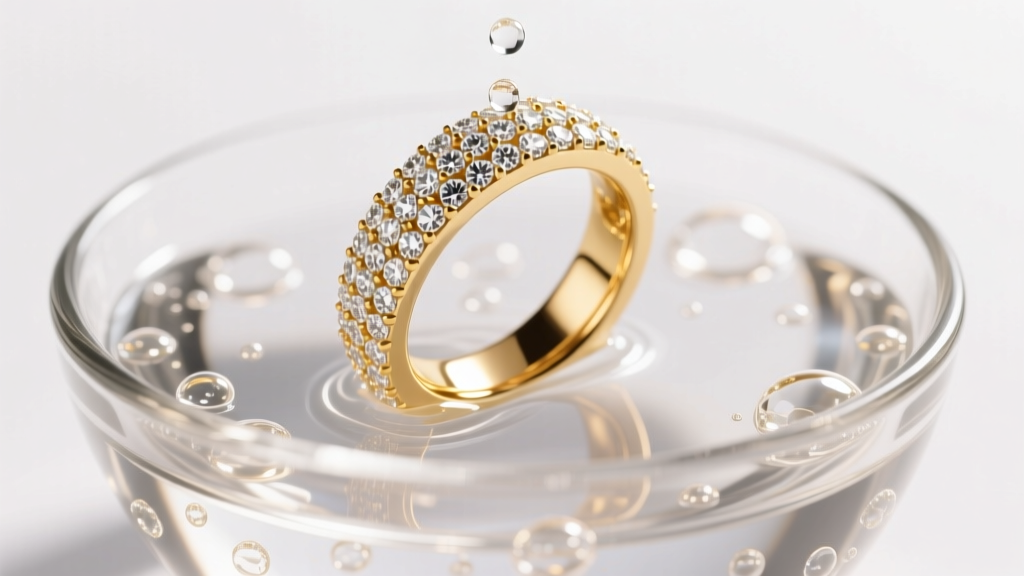
Fill a small glass or ceramic bowl with lukewarm water (approximately 98°F or 37°C). Avoid hot water, as extreme thermal shifts can cause microscopic stress fractures in older or included diamonds. Add three drops of a mild, non-lotion dish soap. Original blue Dawn (pH ~8.7) is the industry standard among bench jewelers because it is a highly effective anionic surfactant that breaks down lipid bonds without containing harsh bleaching agents or moisturizing additives that leave residue. Submerge your jewelry and let it soak for 30 to 45 minutes. This dwell time is critical; it allows the surfactant to penetrate and soften the hardened grime under the gallery.
Step 2: Precision Agitation
Remove the piece from the soak. Do not use a standard adult toothbrush, as the stiff nylon bristles (often 0.2mm or thicker) can inflict micro-scratches on high-polish gold and platinum. Instead, use an ultra-soft baby toothbrush or a specialized jewelry brush with 0.1mm bristles.
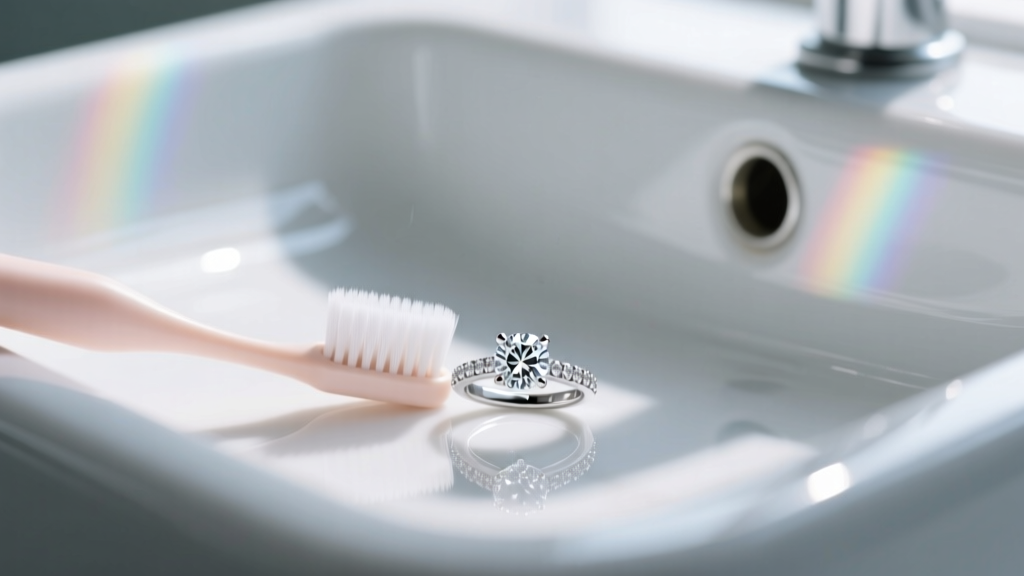
Hold the brush at a 45-degree angle to the gallery and use gentle, circular motions. Focus entirely on the underside of the setting where the pavilion facets meet the metal basket. Never scrub directly against the prongs or the delicate metal beads holding pavé melee diamonds, as repetitive lateral pressure can weaken the metal over time and loosen the stones. The goal is to dislodge the softened grime, not to scour the metal.
Step 3: The Microfiber Extraction and Rinse
Rinse the jewelry under a gentle stream of lukewarm tap water, ensuring the drain is securely plugged. For a flawless, spot-free finish, perform a final rinse using distilled water. Tap water contains dissolved calcium and magnesium ions that leave microscopic hard-water spots on the diamond's table facet as they evaporate, dulling the stone's optical clarity. Gently pat the piece dry with a clean, lint-free optical cloth, and use a wooden toothpick or a blast of compressed air to push out any trapped water droplets from the tight crevices of the setting.
The Danger Zone: Porous and Treated Gemstones
While the protocol above is perfect for diamonds, sapphires, and rubies, applying these methods to porous or treated gemstones will result in catastrophic, irreversible damage. Understanding gemstone mineralogy is a core component of knowing how to really clean jewelry without destroying it.
Emeralds, for example, are heavily included and almost universally fracture-filled with cedar oil or synthetic resins (like Opticon) to improve clarity. Submerging an emerald in soapy water, alcohol, or an ultrasonic cleaner will strip this filler, leaving the stone cloudy, fractured, and structurally compromised. Similarly, opals contain up to 20% water; harsh detergents and rapid drying can cause 'crazing' (a network of fine surface cracks). The GIA Gem Care Guidelines strictly advise against ultrasonic and chemical cleaning for organic and porous gems.
| Gemstone | Mohs Hardness | Cleaning Restriction | Primary Failure Mode |
|---|---|---|---|
| Emerald | 7.5 - 8.0 | No ultrasonics, no solvents, no soaking | Stripping of fracture-filling oils/resins |
| Opal | 5.5 - 6.5 | No soaking, no heat, no harsh chemicals | Dehydration leading to crazing and cracking |
| Pearl | 2.5 - 3.0 | No ultrasonics, no acids, wipe only | Dissolution of calcium carbonate nacre |
| Turquoise | 5.0 - 6.0 | No soaking, no commercial silver dips | Absorption of chemicals causing discoloration |
Ultrasonic vs. Steam: When to Call the Professionals
Many consumers purchase at-home ultrasonic cleaners, assuming they are a panacea for jewelry maintenance. Ultrasonic cleaners work via cavitation: high-frequency sound waves (typically 40kHz) create millions of microscopic vacuum bubbles in the liquid that violently implode against the jewelry. While this is excellent for blasting grime out of heavy chain links, it is highly dangerous for pavé and micro-pavé settings.
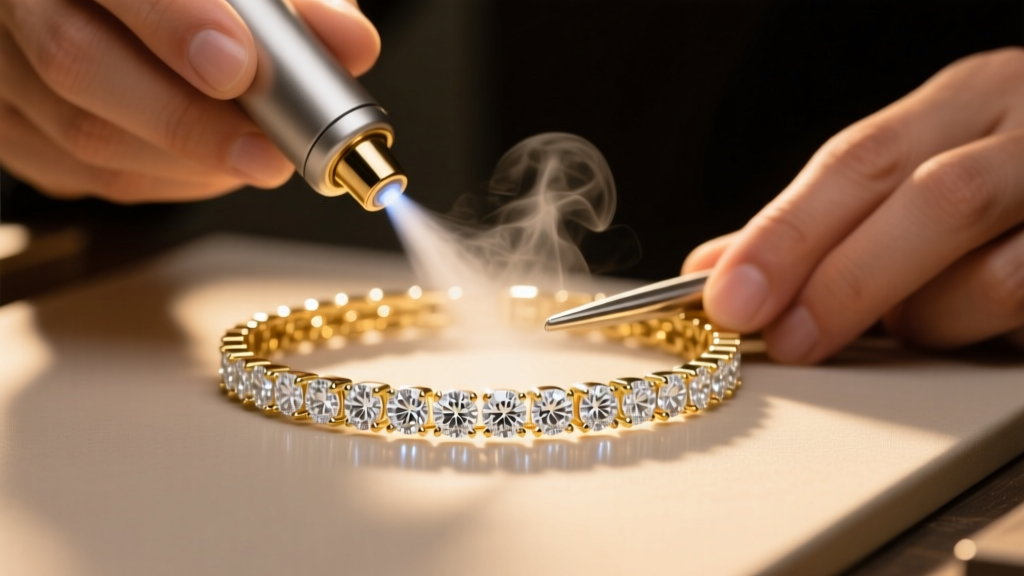
The intense, localized shockwaves from cavitation can induce metal fatigue in the tiny 0.5mm beads holding melee diamonds, vibrating them loose. Furthermore, if a diamond has a 'feather' (a surface-reaching internal fracture) near the girdle, the implosive force of the ultrasonic waves can cause the diamond to cleave or shatter entirely. Steam cleaning, conversely, uses high-pressure, high-temperature vapor (often exceeding 250°F) to blow debris out of settings. This is highly effective for diamonds and sapphires but will instantly shatter temperature-sensitive stones like tanzanite or emeralds due to thermal shock. Leave ultrasonic and steam cleaning to professional bench jewelers who can first inspect your piece under a 10x loupe to verify stone security and structural integrity.
Maintenance Schedules for Everyday Wear
To maintain maximum brilliance and structural safety, implement a tiered maintenance schedule based on your wearing habits:
- Weekly (At-Home): Perform the 30-minute degreasing soak and baby-brush agitation. This prevents the sebum and lotion matrix from hardening into a stubborn film.
- Monthly (Inspection): After cleaning, use a bright LED light and a magnifying loupe to check the gallery. Ensure no prongs are lifted and no pavé beads are worn flat. Clean metal should reflect light uniformly; dark shadows may indicate trapped debris or metal wear.
- Bi-Annually (Professional): Take your everyday pieces to a trusted jeweler for a professional ultrasonic/steam clean and a prong-tightening check. This is especially critical for engagement rings worn 24/7, as platinum and gold prongs slowly wear down from friction against clothing and surfaces.
By abandoning superficial wiping in favor of targeted chemical and mechanical cleaning, you ensure your fine jewelry remains as optically brilliant and structurally sound as the day it was crafted.


