Why Using Baking Powder to Clean Jewelry Damages Metals
Using baking powder to clean jewelry? Discover the chemical risks, residue damage to gemstones, and safe DIY alternatives for precious metals.

The Viral Myth: Baking Soda vs. Baking Powder
In the endless churn of social media life hacks, a dangerous trend has emerged regarding at-home jewelry maintenance. Well-meaning influencers frequently recommend using baking powder to clean jewelry, confusing it with its chemical cousin, baking soda. While baking soda (pure sodium bicarbonate) is a staple in gentle DIY silver polishing pastes, baking powder is an entirely different compound that can wreak havoc on precious metals, delicate platings, and porous gemstones.
As we navigate jewelry care in 2026, it is critical to separate internet folklore from metallurgical science. Using the wrong household pantry item can lead to irreversible micro-scratches, localized galvanic corrosion, and stubborn starchy buildup that traps moisture against the skin and metal. This guide breaks down the exact chemistry of why baking powder is a liability to your jewelry box and provides expert-approved alternatives.
The Chemistry Trap: What is Actually in Baking Powder?
To understand the damage, we must look at the chemical formulation. Baking soda is 100% sodium bicarbonate, a mild alkaline base (pH 8.3) that gently neutralizes acidic tarnish compounds like silver sulfide. Baking powder, however, is a complex leavening agent designed for baking, not metallurgy.
The Hidden Dangers of Cornstarch and Acidic Salts
A standard container of baking powder contains three distinct ingredients:
- Sodium Bicarbonate (Base): Only makes up about 20-30% of the mixture.
- Acidic Salts (Monocalcium Phosphate or Sodium Aluminum Sulfate): These react with the base when exposed to moisture to create carbon dioxide bubbles. This effervescence tricks users into thinking the solution is "lifting" dirt, when in reality, it is doing nothing to chelate metal oxidation.
- Cornstarch (Moisture Absorber): Making up nearly 40% of the volume, cornstarch is added to keep the powder dry in the tin. When mixed with water to form a jewelry cleaning paste, this cornstarch turns into a glue-like sludge.
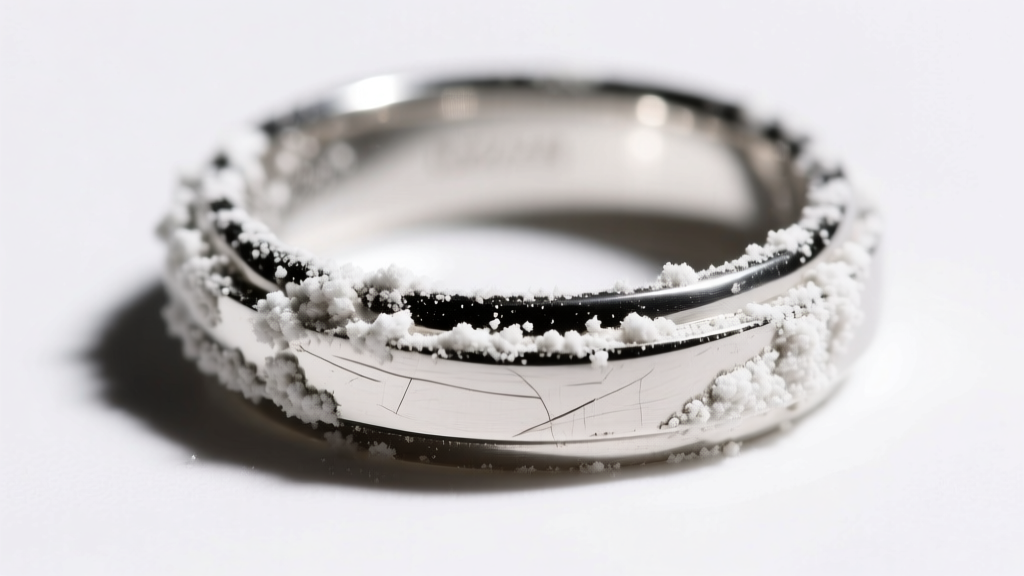
When you use baking powder to clean jewelry, the cornstarch sludge is forced deep into pavé settings, under bezel edges, and into the intricate galleries of cast rings. Once it dries, it hardens into a concrete-like matrix that is notoriously difficult to remove without professional ultrasonic equipment.
What Happens When You Use Baking Powder on Specific Metals
The acidic salts in baking powder pose a severe risk to alloyed metals. According to guidelines on precious metal care from Assay Office London, exposing mixed-metal alloys to uncontrolled acidic compounds can accelerate degradation. Below is a breakdown of how different metals react to baking powder exposure.
| Metal Type | Composition | Reaction to Baking Powder | Long-Term Risk |
|---|---|---|---|
| Sterling Silver (925) | 92.5% Silver, 7.5% Copper | Acidic salts target the copper alloy, causing localized galvanic corrosion and pitting. | Permanent micro-pitting and structural weakening of thin bands. |
| Gold Vermeil | Sterling silver base, thick gold plating | Cornstarch traps moisture against the porous silver base beneath microscopic plating pores. | Sub-surface oxidation causing the gold layer to blister and flake off. |
| Platinum (950) | 95% Platinum, 5% Ruthenium/Iridium | Largely inert to the acids, but cornstarch creates a dull, filmy patina that mimics scratching. | Loss of optical brilliance; requires professional steam polishing to restore. |
| Rhodium-Plated Silver | Silver base, rhodium flash plating | Abrasive dried cornstarch particles act like sandpaper during the rubbing phase. | Accelerated wear of the rhodium flash, exposing yellow-tinted silver beneath. |
Gemstone Casualties: Porous Stones and Prong Settings
The risks extend far beyond the metal bands. The Gemological Institute of America (GIA) strictly advises against using abrasive or starchy pastes on organic and porous gemstones. When you apply a baking powder paste to a ring featuring these stones, the consequences are often permanent.
"Porous gemstones act like microscopic sponges. Introducing starchy, acidic compounds into their crystalline structure can cause internal clouding, color shifting, and surface etching that no amount of professional polishing can reverse."
The Mohs Scale and Micro-Abrasions
Cornstarch particles, while seemingly soft to human touch, can harbor microscopic crystalline structures from the milling process. When rubbed against softer stones, they cause devastating micro-abrasions.
- Turquoise (Mohs 5-6): Highly porous. Baking powder acids will strip the natural waxes and oils, leaving the stone chalky, brittle, and prone to cracking.
- Opal (Mohs 5.5-6.5): Contains up to 20% water. The drying action of the cornstarch can draw moisture out of the opal's silica spheres, leading to "crazing" (a network of fine internal fractures).
- Pearls (Mohs 2.5-4.5): Composed of calcium carbonate. The acidic salts in baking powder will literally dissolve the pearl's nacre layer, destroying its luster and iridescence within minutes.
Damage Control: How to Fix Baking Powder Residue
If you have already used baking powder to clean jewelry and are now staring at a dull, white-crusted ring, do not attempt to scrape it out with a needle or toothpick. You risk snapping delicate prongs or scratching the metal. Follow this professional triage protocol to safely dissolve the starchy matrix.
- The Distilled Soak: Submerge the jewelry in a bowl of warm distilled water (never tap water, as chlorine and dissolved minerals will react with the exposed metal). Let it soak for 45 minutes to rehydrate the cornstarch.
- Castile Soap Emulsion: Add three drops of pH-neutral liquid Castile soap to the water. Avoid commercial dish soaps with degreasers or citrus extracts, which can strip protective metal patinas.
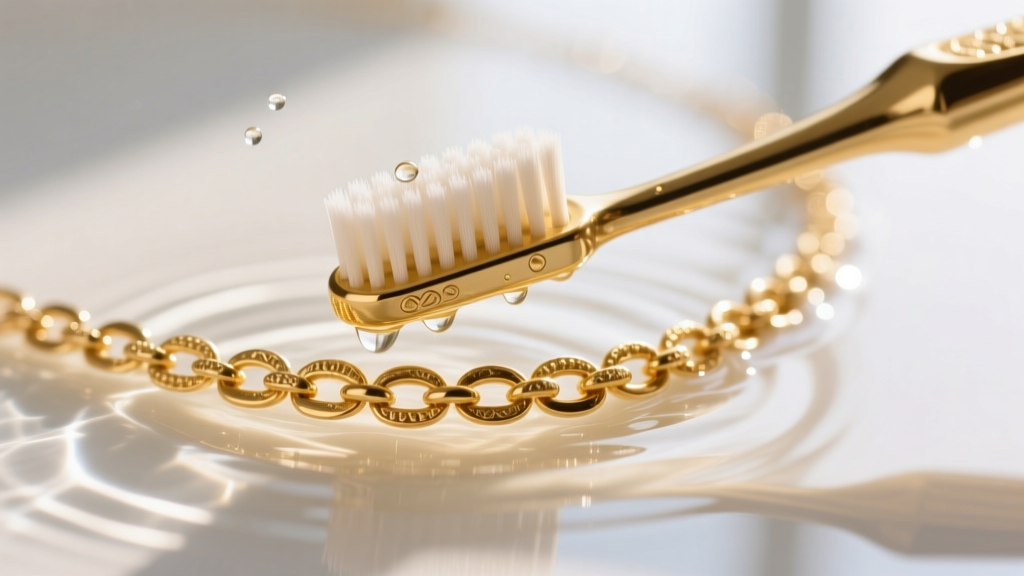
- Extra-Soft Agitation: Using a baby toothbrush (specifically one with 0.1mm ultra-soft bristles), gently sweep the setting from multiple angles. Do not scrub in circles; use a flicking motion to lift the sludge out from under the gallery.
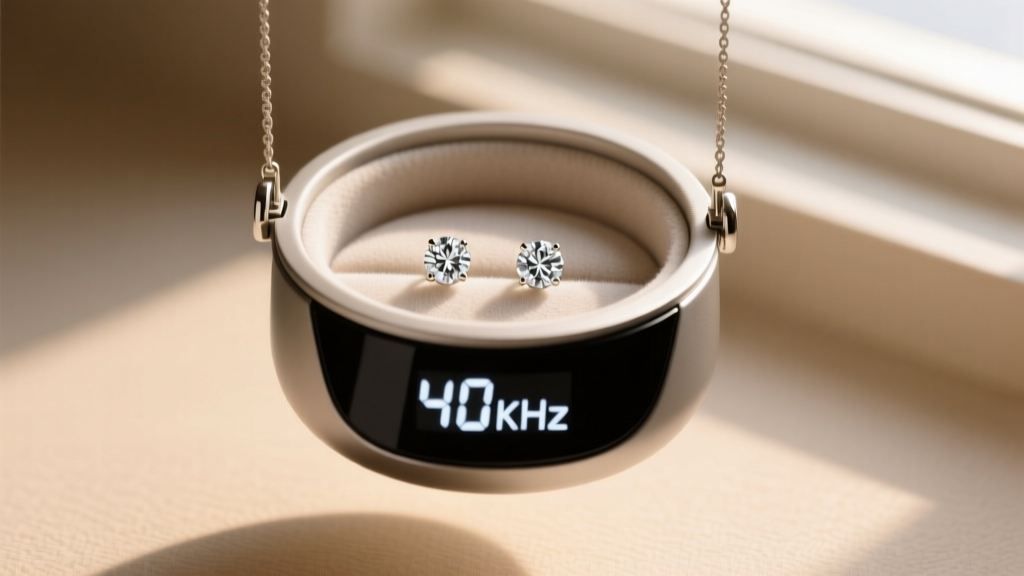
- Ultrasonic Intervention: If residue persists in tight pavé settings, use a 40kHz to 45kHz ultrasonic jewelry cleaner for exactly 120 seconds. The cavitation bubbles will implode against the metal, safely dislodging the starch without physical contact.
The Correct DIY Alternatives for 2026
Now that we have established why you must never use baking powder to clean jewelry, what should you use instead? Expert jewelers recommend relying on chemically stable, non-abrasive solutions tailored to your specific material.
Safe Recipes by Material
- For Solid Gold and Platinum: A simple bath of warm water and a few drops of Dawn Powerwash dish soap. The surfactants safely lift sebum and lotion buildup without attacking the metal alloys. Rinse with distilled water and dry with a microfiber optic cloth.
- For Sterling Silver Tarnish: Use a dedicated silver polishing cloth infused with micro-abrasives and anti-tarnish agents (such as Sunshine or Connoisseurs brands). The controlled abrasion removes silver sulfide safely without the starchy mess of pantry powders.
- For Diamond and Sapphire Solitaires: These hard stones (Mohs 9-10) can tolerate a 3-minute cycle in a standard 40kHz ultrasonic cleaner filled with a specialized alkaline jewelry concentrate. This restores the critical light return and brilliance that hand-washing often misses.
By understanding the precise chemistry of your cleaning agents, you protect the structural integrity and optical brilliance of your most cherished pieces. Leave the baking powder in the kitchen where it belongs, and trust proven, metallurgically sound methods for your jewelry care routine.


