No Tarnish Jewelry Catalogs 2025: Gifting & Care Guide
Discover the truth behind no tarnish jewelry catalogs 2025. Learn how to select, clean, and store PVD and rhodium gifts for lasting brilliance.

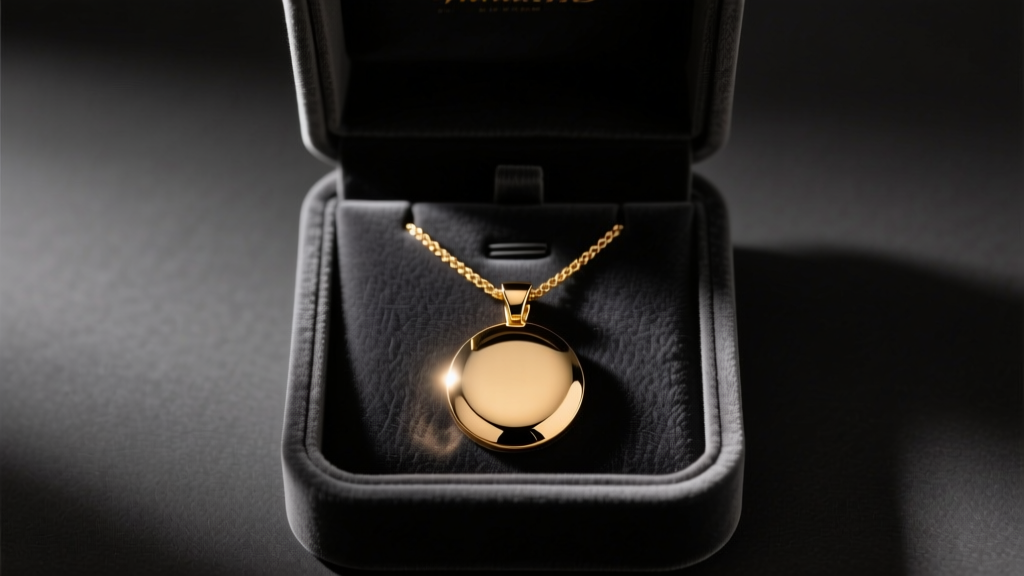
The 'No Tarnish' Myth: What 2025 Catalogs Actually Mean
As we navigate the gifting landscape in 2026, the search volume for 'no tarnish jewelry catalogs 2025' has skyrocketed. Shoppers are desperately seeking low-maintenance, enduring gifts that won't turn their loved ones' skin green or fade into a dull gray. However, from a metallurgical and gemological perspective, the term 'no tarnish' is a marketing convenience rather than a scientific absolute. Every metal interacts with its environment; the difference lies in the rate of degradation and the protective barriers applied by manufacturers.
When top-tier jewelry catalogs advertise 'no tarnish' or 'tarnish-resistant' pieces, they are typically referring to one of three material categories:
- PVD-Coated Stainless Steel: 316L surgical steel coated via Physical Vapor Deposition in a vacuum chamber. This bonds titanium nitride or gold zirconium to the steel at a thickness of 0.5 to 2.5 microns—up to 50 times thicker than traditional flash electroplating.
- Rhodium-Plated Sterling Silver: 925 silver dipped in rhodium, a platinum-group metal with a Mohs hardness of 6.0. This creates a brilliant, white-mirror finish that shields the underlying silver from sulfur-induced tarnish (silver sulfide).
- Inert Solid Metals: Solid Pt950 (Platinum) or Grade 23 Titanium (Ti-6Al-4V), which naturally resist oxidation and sulfurization due to their atomic stability.
Understanding which of these materials you are gifting is the first step in providing the recipient with the correct long-term care instructions. According to the GIA Gem Encyclopedia, proper maintenance of plated and coated metals is critical to preserving the integrity of the microscopic protective layers.
Occasion Matching Matrix: Gifting Tarnish-Resistant Metals
Matching the occasion to the specific 'no tarnish' material ensures the gift aligns with the recipient's lifestyle and maintenance willingness. Use this decision framework when browsing the latest catalogs:
| Occasion | Ideal 'No Tarnish' Material | Expected Plating Lifespan | Maintenance Level |
|---|---|---|---|
| Everyday Wear (Active) | PVD-Coated 316L Steel | 3 to 5+ Years | Low (Wipe down weekly) |
| Anniversary / Formal | Rhodium-Plated 925 Silver | 1 to 3 Years | Medium (Requires re-plating) |
| Milestone / Heirloom | Solid Pt950 or Grade 23 Ti | Lifetime | Low (Professional polish only) |
| Water/Swim Exposure | Solid Titanium (Uncoated) | Lifetime | None (Rinse with fresh water) |
Cleaning Protocols for PVD and Rhodium Gifts
The most common failure mode for 'no tarnish' jewelry is improper cleaning. Many well-meaning gift recipients will toss a new PVD-coated gold ring or a rhodium-plated silver pendant into an ultrasonic cleaner, effectively destroying the gift in minutes.
Why Ultrasonic Cleaners Destroy Plating
Expert Warning: Ultrasonic cleaners use high-frequency sound waves to create cavitation bubbles in a liquid solvent. When these microscopic bubbles implode against the surface of the jewelry, they create localized micro-jets of immense pressure. While this is excellent for removing grime from solid gold or diamonds, it will cause micro-fractures in 1-micron PVD layers and strip rhodium plating right off the sterling silver base.
The Safe Cleaning Recipe
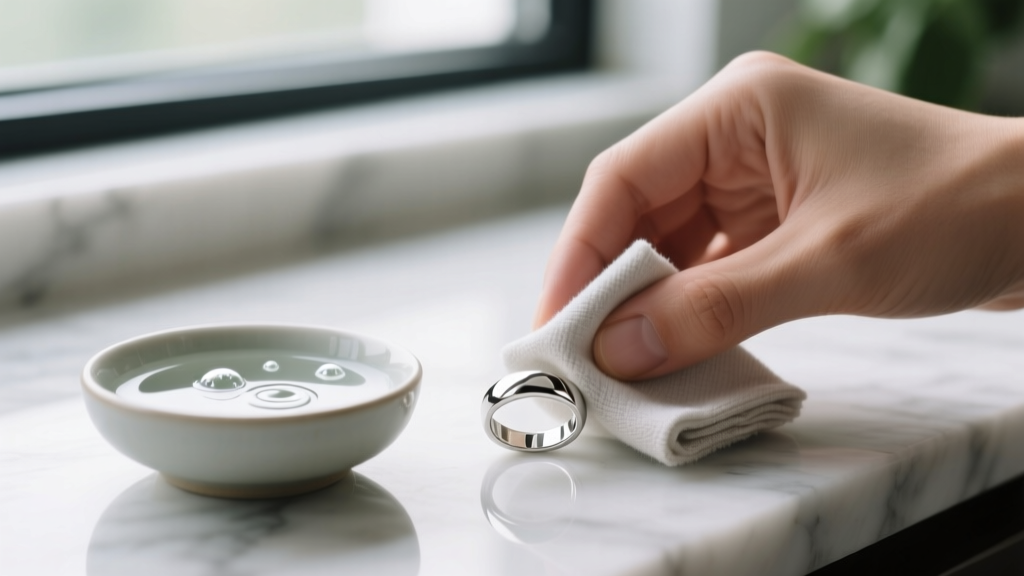
For both PVD stainless steel and rhodium-plated silver, the Jewelers of America recommends a gentle, non-abrasive approach:
- Mix the Solution: Combine 1 cup of distilled water (tap water contains chlorine and minerals that can leave spots) with 2 drops of pH-neutral, lotion-free dish soap.
- Soak Briefly: Submerge the jewelry for no more than 3 to 5 minutes to loosen sebum and environmental dust.
- Agitate Gently: Use a baby-soft toothbrush (bristles must be ultra-soft to prevent micro-scratches on the rhodium) to lightly sweep the crevices.
- Dry Completely: Pat dry with a lint-free microfiber cloth. Never air dry, as water spots will etch into the finish over time.
Long-Term Storage: Protecting the Base Metal
Even the best PVD and rhodium coatings will eventually experience microscopic wear, particularly on high-friction areas like the inside of rings or the clasps of necklaces. When the coating wears thin, the base metal (sterling silver or steel) becomes exposed to the atmosphere. For silver, the enemy is airborne sulfur and hydrogen sulfide, which rapidly creates black silver sulfide tarnish.
The Anti-Tarnish Storage Protocol
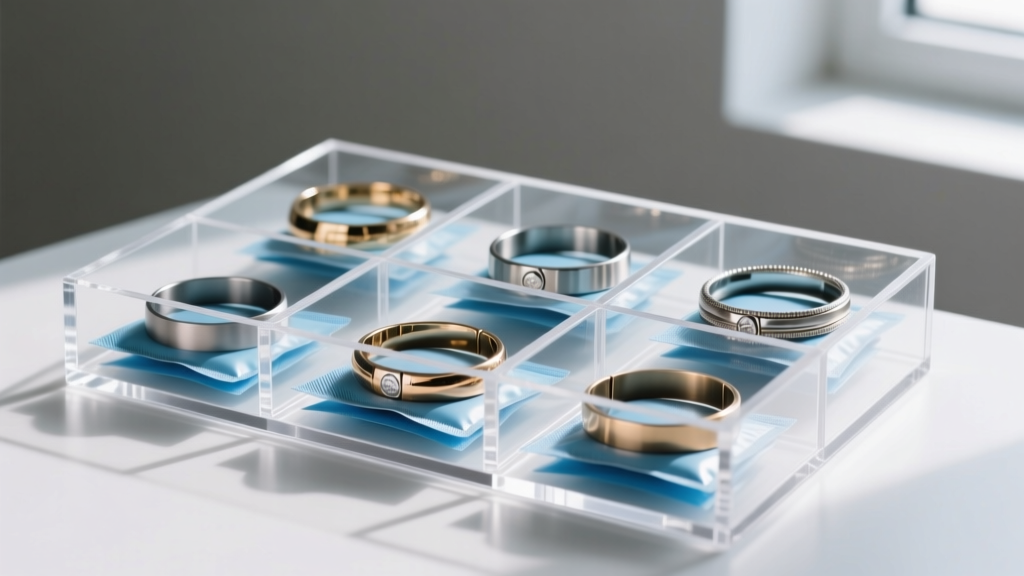
If you are gifting jewelry from the 2025 catalogs, include a proper storage kit to extend the life of the finish. Here is the exact storage environment required for tarnish-resistant pieces:
- Airtight Containment: Store pieces in zip-lock bags made of polyethylene or acrylic organizers with silicone seals. Avoid polyvinyl chloride (PVC) plastics, which off-gas sulfur and accelerate tarnishing.
- Moisture Control: Include a 5-gram silica gel desiccant packet in the storage container. Humidity acts as a catalyst for oxidation and tarnishing reactions.
- Sulfur Scavengers: Place a 3M anti-tarnish strip (which contains copper particles that react with sulfur before the silver can) or a piece of activated charcoal in the jewelry box. Replace these strips every 6 months.
- Friction Prevention: Never stack rhodium-plated silver rings together. Rhodium is hard (Mohs 6.0), but the silver beneath it is soft (Mohs 2.5-3.0). Stacking causes the rhodium of one ring to grind into the silver of another, causing premature delamination.
When 'No Tarnish' Fails: Restoration and Re-plating
It is vital to manage expectations when gifting plated jewelry. Rhodium plating on sterling silver is a sacrificial layer. Depending on the wearer's skin pH (acidic skin breaks down rhodium faster) and friction exposure, a rhodium-plated ring will typically show brass or silver wear-through at the bottom of the shank within 12 to 24 months.
Fortunately, this is not the end of the jewelry's life. Restoration is a standard service at most local jewelers. The process involves:
- Polishing: The jeweler will lightly buff the piece to remove any tarnish that has formed on the exposed silver.
- Electro-Cleaning: The piece is submerged in an electrolytic bath to strip remaining oils and old plating.
- Rhodium Dipping: The jewelry is submerged in a rhodium sulfate solution and subjected to a low-voltage electrical current, bonding a fresh 0.5 to 1.0-micron layer of rhodium to the surface.
Cost Expectation: Re-plating a standard ring or pendant typically costs between $45 and $125 in 2026, depending on the surface area and the current market price of rhodium, which is a highly volatile precious metal.
By understanding the science behind the 'no tarnish jewelry catalogs 2025' marketing, you can select gifts that not only dazzle on the day they are opened but remain brilliant for years through proper, scientifically-backed care and maintenance.


