The Science of Cleaning Jewelry with Baking Soda and Aluminum Foil
Learn the exact chemistry and step-by-step process for cleaning jewelry with baking soda and aluminum foil to safely remove heavy silver tarnish.

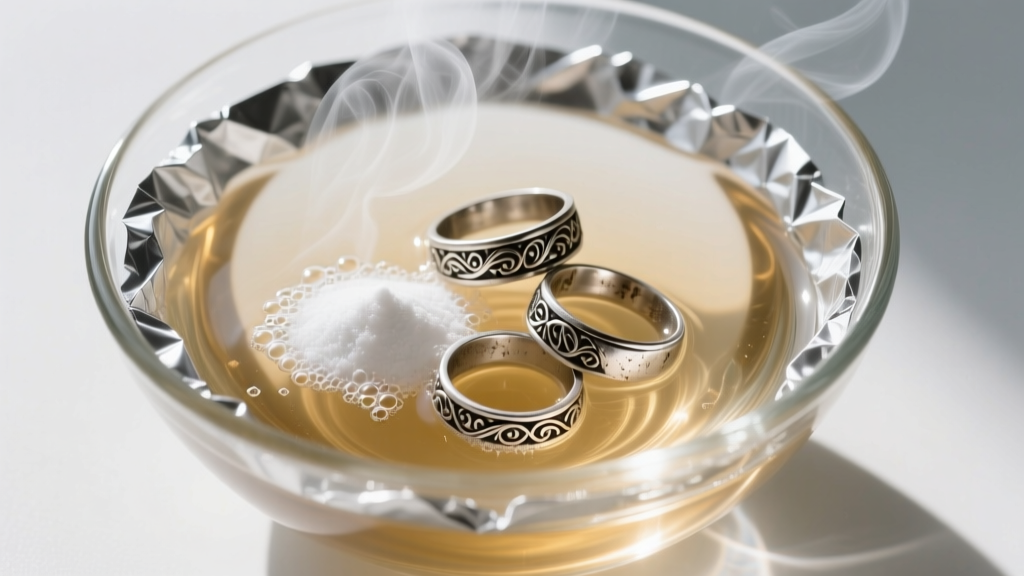
The Electrochemical Magic: Why This Method Actually Works
When it comes to cleaning jewelry with baking soda and aluminum foil, you aren't just performing a random household hack; you are initiating a highly specific galvanic electrochemical reaction. Tarnish on sterling silver is not dirt or grime—it is silver sulfide ($Ag_2S$), a chemical compound that forms when elemental silver reacts with hydrogen sulfide gas present in the ambient air, humidity, and even everyday foods like eggs and onions.
Commercial liquid silver dips often rely on thiourea, a toxic chemical that strips tarnish but leaves behind a microscopically rough surface. According to the Gemological Institute of America (GIA), this rough surface actually accelerates future tarnishing by increasing the silver's exposed surface area. The aluminum foil method, by contrast, uses ion exchange. Aluminum is a more reactive metal than silver. When submerged in a hot, alkaline electrolyte solution (baking soda and salt), the aluminum acts as an anode, giving up its electrons. The silver sulfide acts as a cathode, receiving those electrons. The sulfur atoms detach from the silver and bond with the aluminum, leaving behind pure, unblemished elemental silver without removing any microscopic layers of the metal itself.
The Exact Materials and Ratios You Need
To successfully execute this reaction, precision matters. Guessing the ratios or using the wrong vessel can halt the ion exchange or, worse, damage your jewelry.
- The Vessel: Use a glass, ceramic, or Pyrex bowl. Never use a stainless steel sink or bowl. Stainless steel contains iron and nickel, which can create a competing galvanic cell, potentially causing irreversible pitting on your silver.
- The Anode: Standard or heavy-duty aluminum foil. The myth that the 'shiny side' must face up is entirely false; the manufacturing process creates a microscopic difference that has zero impact on electron transfer.
- The Alkaline Catalyst: 1 tablespoon of pure sodium bicarbonate (baking soda) per 1 cup of water. Do not use baking powder, which contains acidic compounds that will neutralize the reaction.
- The Conductivity Booster: 1 tablespoon of coarse sea salt or kosher salt per 1 cup of water. The sodium chloride drastically increases the electrical conductivity of the water, speeding up the electron transfer.
- The Electrolyte Medium: 1 cup of boiling water (212°F / 100°C) per batch. Heat is required to catalyze the reaction; warm tap water will not provide enough thermal energy.
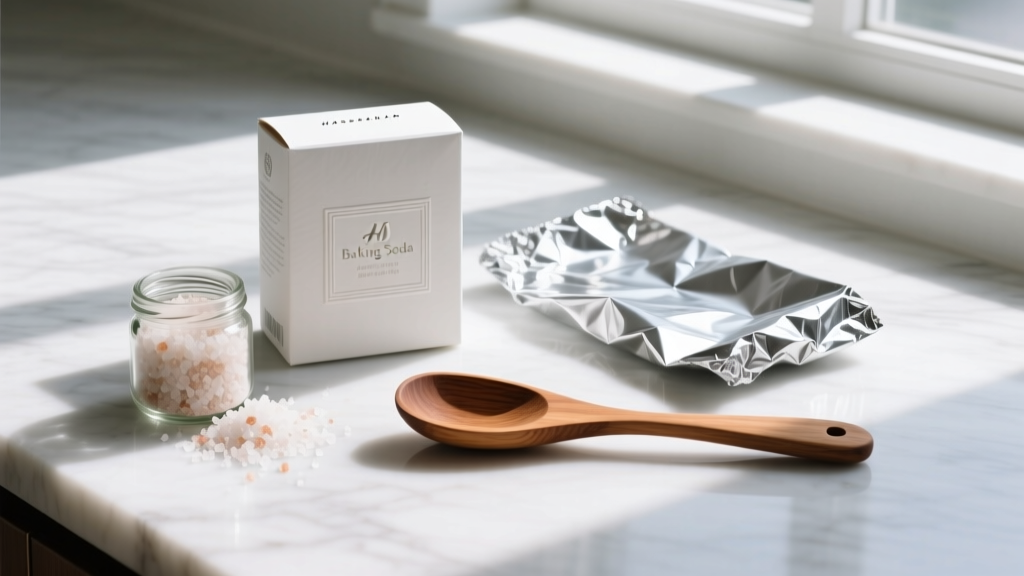
Step-by-Step: Cleaning Jewelry with Baking Soda and Aluminum Foil
Follow this precise protocol to safely restore heavily tarnished sterling silver (925) and fine silver (999) pieces.
- Prepare the Reaction Chamber: Line your glass or ceramic bowl with a generous sheet of aluminum foil. Ensure the foil is crumpled slightly and pushed into the corners so the jewelry will have multiple points of physical contact with the metal.
- Add the Dry Reagents: Sprinkle the baking soda and sea salt evenly over the bottom of the foil-lined bowl.
- Activate the Electrolyte: Carefully pour the boiling water directly over the dry ingredients. The mixture will fizz aggressively as carbon dioxide is released. Stir gently with a wooden or plastic spoon to dissolve the salt and soda completely.
- Submerge the Silver: Using wooden tongs, lower your silver jewelry into the solution. Critical Step: The silver must physically touch the aluminum foil for the electron transfer to occur. If you are cleaning a chain, drape it so multiple links rest against the foil.
- Monitor the Reaction: You will likely smell a distinct 'rotten egg' odor (hydrogen sulfide gas being released) and see tiny bubbles forming on the silver. Leave light tarnish for 1 to 2 minutes. Heavy, black tarnish may require 3 to 5 minutes.
- Extract and Neutralize: Remove the jewelry with tongs. Rinse it immediately under cool, distilled water to wash away any residual alkaline salts. (Distilled water prevents hard water calcium deposits from leaving white spots).
- Dry and Buff: Pat dry with a lint-free microfiber cloth. If a slight haze remains, a quick buff with a dry Sunshine polishing cloth will restore a mirror finish.
The Danger Zone: Metals and Gemstones You Must Never Submerge
While this method is miraculous for bare silver, the hot alkaline solution will permanently destroy certain finishes and porous organic gemstones. The electrochemical reaction does not discriminate between accidental environmental tarnish and intentional chemical oxidation.
| Material / Gemstone | Reaction to Electrochemical Bath | Verdict |
|---|---|---|
| Oxidized Sterling Silver | Strips the intentional dark patina from crevices, ruining the contrast of artisan or Edwardian designs. | NEVER |
| Silver-Plated Base Metal | If the plating is compromised, the electrolyte will seep underneath, causing the base metal (copper/brass) to swell and peel the silver off entirely. | AVOID |
| Pearls, Coral, Amber | Organic and highly porous. The alkaline baking soda will etch the nacre, permanently dulling the luster and degrading the surface. | NEVER |
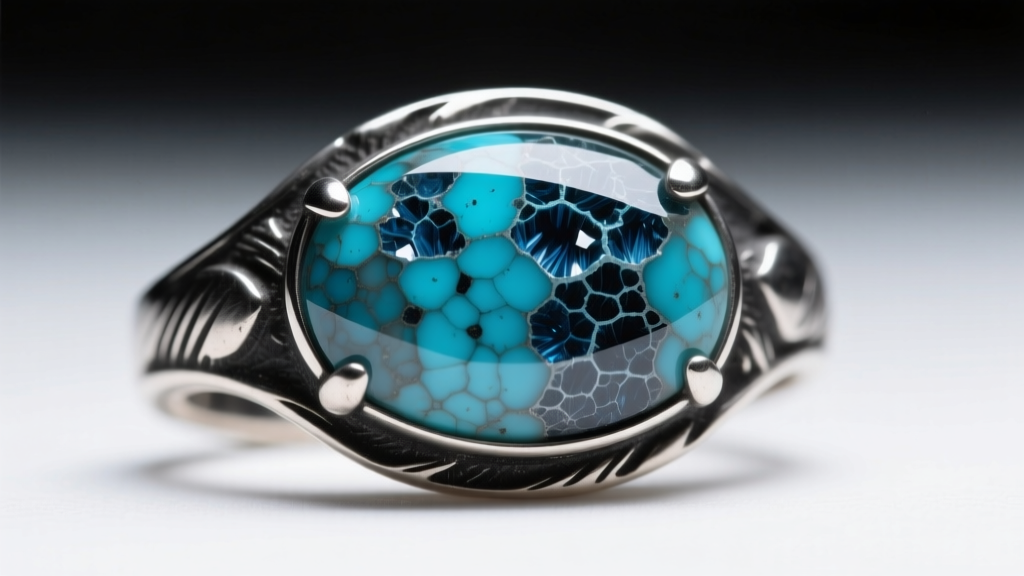
| Turquoise, Opal, Lapis Lazuli | These stones absorb liquids. The hot, salty water will seep into the matrix, causing internal cracking, color shifts, and structural failure. | NEVER |
| Diamonds, Sapphires, Rubies | Highly stable crystalline structures. Unaffected by the chemistry, though hot water can sometimes loosen older shellac-based jewelry glues. | SAFE (with caution) |
| Solid 14k / 18k Gold | Gold does not tarnish via sulfides, but the bath is safe for removing oils and lotions, provided no delicate stones are present. | SAFE |
Troubleshooting: When the DIY Method Fails
Sometimes, you will pull a piece of jewelry out of the bath and find that the black tarnish remains, or worse, the metal has taken on a strange yellowish-bronze hue. Here is how to diagnose and fix these specific failure modes.
The Yellow/Bronze Hue (Silver Polysulfides)
If your silver turns yellow or bronze, the reaction has stalled halfway. This happens when the layer of silver sulfide is exceptionally thick. The aluminum reduces the $Ag_2S$ into intermediate silver polysulfides, but lacks the thermal energy or time to break the final sulfur bonds. The Fix: Do not scrub it. Discard the exhausted electrolyte solution (it is now full of aluminum sulfate), line a fresh bowl with new foil, and repeat the process with boiling water. The second bath will push the polysulfides all the way back to pure elemental silver.
The Tarnish Didn't Move At All
If the black marks remain completely unaffected after 5 minutes of direct foil contact, you are likely not dealing with silver sulfide. Two common culprits exist:
- Rhodium Plating Wear: Many modern sterling silver pieces are flash-plated with rhodium to prevent tarnish. If this plating wears off in patches, the dark metal showing through is not tarnish; it is the oxidized copper alloy beneath the silver. No chemical bath can fix this; the piece must be professionally re-plated.
- Burnt Resin or Enamel: Dark marks near stone settings might be trapped polishing compound or burnt epoxy resin from manufacturing. This requires mechanical removal with a soft brass brush and mild dish soap, not electrochemistry.
Expert Insight: Never use toothpaste as a supplementary abrasive on silver that has just been electrochemically cleaned. Toothpaste contains hydrated silica, which has a Mohs hardness of 6.5 to 7. Sterling silver has a Mohs hardness of roughly 2.5 to 3. Scrubbing with toothpaste will carve deep, irreversible micro-scratches into the pristine silver surface you just restored.
Post-Cleaning Care and Long-Term Storage
Once you have successfully reverted the silver sulfide back to pure silver, the metal is highly reactive and vulnerable to immediate re-tarnishing. To protect your work, you must control the environment. Store your freshly cleaned pieces in airtight, PVC-free ziplock bags alongside 3M anti-tarnish strips, which absorb ambient hydrogen sulfide gas before it can reach the metal. For high-end or frequently worn pieces, wrap them in Pacific Silvercloth—a specialized cotton fabric embedded with microscopic silver particles that act as a sacrificial anode, absorbing the tarnish-causing gases so your actual jewelry doesn't have to.


