Beginner Guide: Choosing the Right Stainless Jewelry Cleaner
Learn how to safely clean 316L and 304 stainless steel jewelry. Compare DIY and commercial stainless jewelry cleaner methods to prevent pitting.

When you first invest in stainless steel jewelry, the appeal is obvious: it is durable, affordable, and boasts a brilliant silver-like luster that resists tarnish. However, a common misconception among beginners is that 'stainless' means 'stain-proof' or 'maintenance-free.' In reality, environmental pollutants, body oils, and harsh chemicals can dull the finish and compromise the metal's integrity over time. Choosing the right stainless jewelry cleaner is not just about restoring shine; it is about preserving the microscopic protective layers that keep your accessories looking pristine. This beginner-friendly guide breaks down the metallurgy of your jewelry, compares commercial and DIY cleaning solutions, and provides a foolproof routine to keep your pieces in flawless condition.
The Metallurgy of 'Stainless' Steel in Jewelry
To understand how to clean stainless steel, you must first understand what it is. Stainless steel is an iron alloy mixed with a minimum of 10.5% chromium. When exposed to oxygen, this chromium forms an invisible, ultra-thin layer of chromium oxide on the surface. According to Corrosionpedia, this process is known as passivation, and it is the shield that prevents rust and corrosion.
In the jewelry industry, you will primarily encounter two grades of stainless steel:
- 304 Stainless Steel: The most common and affordable grade. It contains 18% chromium and 8% nickel. While highly resistant to everyday wear, it lacks the extra chemical defenses needed to withstand prolonged exposure to chlorides (like salt water or sweat).
- 316L Surgical Stainless Steel: The premium standard for body jewelry and high-end fashion pieces. The 'L' stands for low carbon, and the alloy includes 2-3% molybdenum. This addition drastically increases resistance to pitting and crevice corrosion, making it the ideal choice for sensitive skin and daily wear.
Knowing your metal grade dictates which stainless jewelry cleaner you should use. While 316L can tolerate slightly more rigorous cleaning, 304 requires a much gentler approach to avoid stripping its passivation layer.
Why You Need a Dedicated Cleaning Approach
Many beginners make the mistake of reaching for generic household cleaners or silver dips. Silver polish, for instance, is formulated to remove silver sulfide (tarnish) through mild abrasion and chemical reduction. Stainless steel does not tarnish in this way; it simply accumulates surface grime, oils, and environmental deposits. Using a silver dip on stainless steel can leave a cloudy, irreversible residue and degrade the chromium oxide layer.
A proper stainless jewelry cleaner focuses on degreasing and lifting particulate matter without altering the metal's pH balance. Whether you opt for a commercial solution or a carefully formulated DIY mixture, the goal is to clean the surface while leaving the passivation layer completely intact.
Comparing Cleaner Types: Commercial vs. DIY Solutions
The market is flooded with products claiming to be the ultimate stainless jewelry cleaner, but do you really need to buy a specialized chemical? Below is a comparison of the most effective cleaning methods available to beginners.
| Cleaning Method | Best Used For | Risk Level | Estimated Cost |
|---|---|---|---|
| Mild Dish Soap & Warm Water | Everyday maintenance, 304 & 316L steel | Very Low | Under $1 |
| Commercial Liquid Jewelry Dips | Heavy grime, intricate chain links | Low to Medium | $8 - $15 |
| Ultrasonic Cleaners (40kHz) | Diamond-set steel, deep crevice cleaning | Medium (can loosen settings) | $35 - $60 |
| Baking Soda Paste | Stubborn spots (Use with extreme caution) | High (micro-scratching) | Under $1 |
Are Ultrasonic Cleaners Safe for Stainless Steel?
Ultrasonic cleaners use high-frequency sound waves (typically 40kHz to 80kHz) to create microscopic cavitation bubbles in a liquid solution. When these bubbles implode, they blast away dirt from crevices that a brush cannot reach. While highly effective for plain stainless steel chains or rings, the Gemological Institute of America (GIA) warns against using ultrasonic machines on jewelry with fracture-filled gemstones, soft pearls, or glued-in settings, as the vibrations can shatter stones or dissolve adhesives. If your stainless steel piece features delicate gemstone inlays, stick to manual cleaning.
The 4-Step Beginner Cleaning Routine
For 90% of your stainless steel jewelry, a gentle, manual approach is the safest and most effective method. Follow this step-by-step routine using a simple DIY stainless jewelry cleaner made from household ingredients.
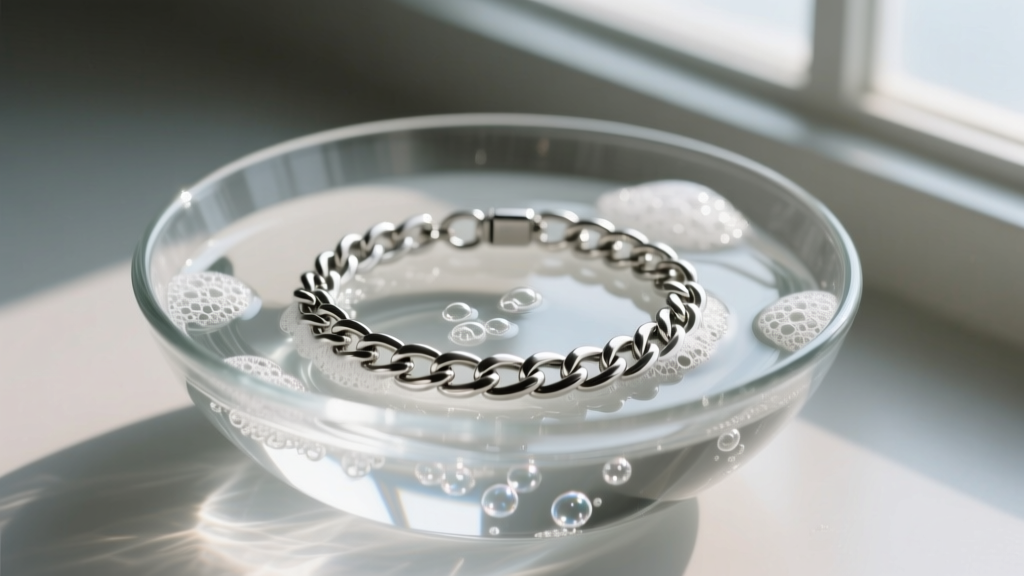
- Prepare the Solution: Fill a small glass or ceramic bowl with warm (not hot) water. Add 3 to 4 drops of a mild, phosphate-free liquid dish soap (such as Dawn or Castile soap). Avoid soaps with heavy moisturizers or citrus extracts, as these can leave a filmy residue or introduce unnecessary acids.
- Soak and Loosen: Submerge your jewelry in the solution. Let it soak for 5 to 10 minutes. This softens hardened sebum, lotions, and environmental dust trapped in the links or under the settings.
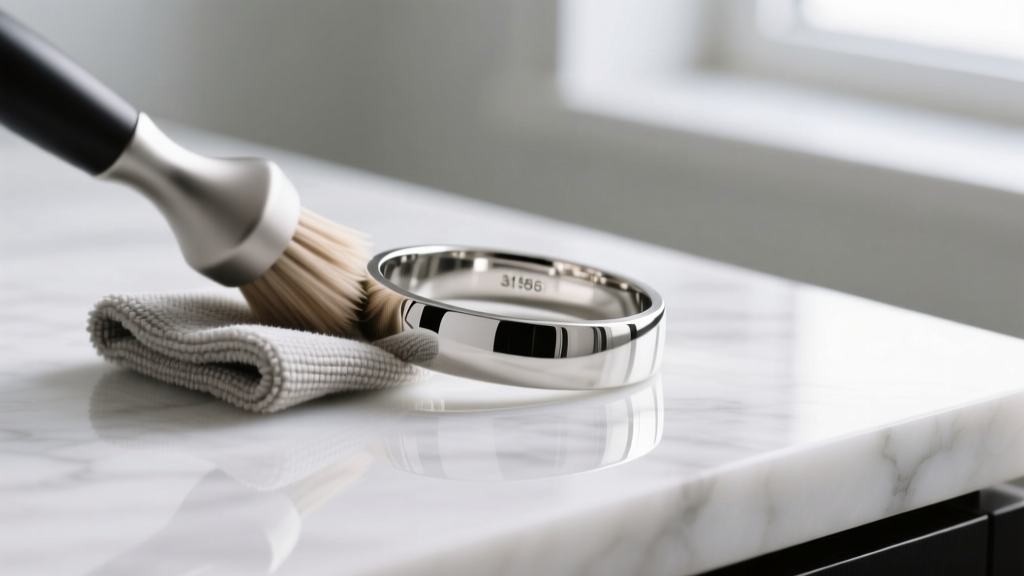
- Gently Agitate: Using an extra-soft nylon baby toothbrush, gently brush the jewelry. Pay special attention to the back of ring bands and the clasps of chains. Never use wire-bristle brushes or stiff-bristled adult toothbrushes, as they will introduce permanent micro-scratches into the steel's polished finish.
- Rinse and Dry Thoroughly: Rinse the piece under lukewarm running water to wash away all soap suds. Immediately pat it dry with a clean, non-embedded microfiber cloth. Air-drying stainless steel often results in hard water spots, which can look like permanent cloudiness.
Fatal Mistakes: Chemicals That Cause Pitting
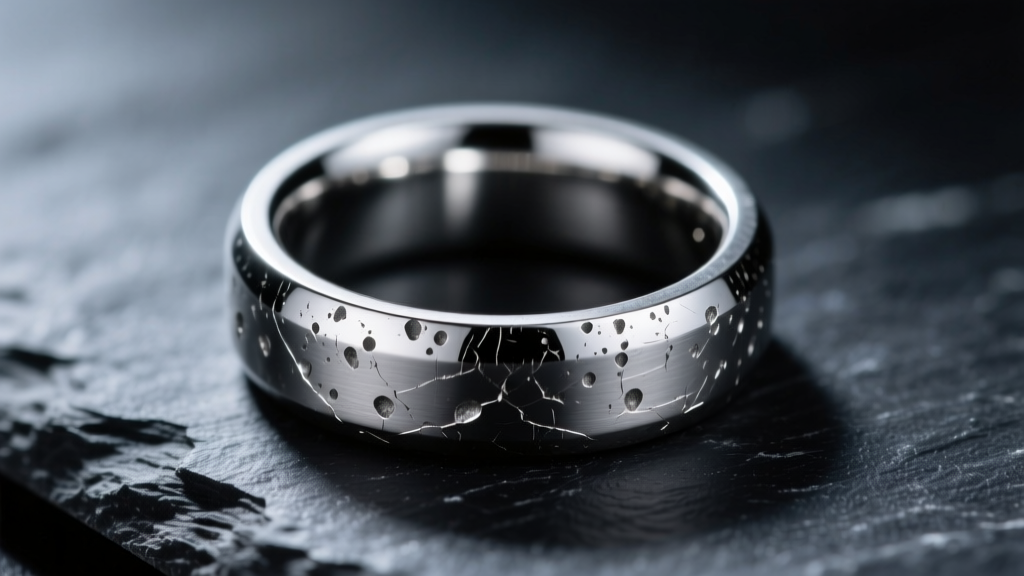
Even the highest grade 316L surgical steel has an Achilles' heel: chloride ions. When chlorides come into contact with stainless steel, they aggressively attack the chromium oxide passivation layer, leading to a destructive process called pitting corrosion. Once pitting begins, the metal develops microscopic, rust-filled craters that cannot be polished out.
To protect your jewelry, never use the following as a stainless jewelry cleaner:
- Bleach (Sodium Hypochlorite): Will cause rapid, severe pitting and permanent discoloration.
- Ammonia-based Cleaners: Common in glass cleaners (like Windex), ammonia can degrade the finish and irritate the skin if trapped in crevices.
- Chlorine Pool Water: While not a 'cleaner,' wearing your jewelry in chlorinated pools or hot tubs acts as a chemical bath that will ruin the polish over time.
- Toothpaste: A popular internet hack, toothpaste contains hydrated silica and calcium carbonate. These are highly abrasive and will leave a matte, scratched finish on mirror-polished steel.
Restoring the Shine: Polishing After Cleaning
Cleaning removes dirt, but it does not remove scratches or restore a dulled finish caused by months of friction against clothing and skin. If your stainless steel jewelry has lost its mirror shine after a thorough wash, it requires polishing, not just cleaning.
For minor dullness, a dedicated jeweler's polishing cloth (treated with a mild jeweler's rouge) is sufficient. Rub the cloth in a straight, back-and-forth motion rather than in circles; circular polishing makes micro-scratches highly visible under direct light. For deeper scratches on 316L steel, you can use a specialized metal polish like Flitz or Simichrome. These pastes contain ultra-fine alumina abrasives that safely level the microscopic ridges of the steel without eating away the metal. Apply a pea-sized amount to a microfiber cloth, buff the piece for 60 seconds, and wipe away the dark residue with a clean section of the cloth.
Pro Tip: Always store your cleaned stainless steel jewelry in individual soft pouches or a lined jewelry box. Even though stainless steel is incredibly hard (ranking around 5.5 to 6.5 on the Mohs scale), letting it tumble freely against other pieces will eventually lead to friction scratches that dull the factory finish.
By understanding the specific needs of your metal grade and avoiding harsh, abrasive chemicals, you can keep your stainless steel jewelry looking as brilliant as the day you bought it. Stick to gentle degreasing agents, soft nylon tools, and proper drying techniques, and your pieces will easily last a lifetime.


