Applying Clear Fingernail Polish on Jewelry: A Material Guide
Discover the chemical effects of applying clear fingernail polish on jewelry. Compare nail polish vs. professional sealants for metals and gems.

The internet is flooded with DIY jewelry hacks, and perhaps none is as pervasive as the advice to paint clear fingernail polish on jewelry. Promised as a miracle cure for preventing tarnish on sterling silver or stopping the dreaded 'green finger' effect from copper and brass alloys, this life hack seems like an inexpensive, accessible solution. However, from a materials science and gemological perspective, applying clear fingernail polish on jewelry is a highly flawed practice that can lead to irreversible chemical damage, accelerated localized corrosion, and ruined gemstones.
As we evaluate jewelry care standards in 2026, it is critical to move beyond anecdotal life hacks and understand the actual chemical interactions between cosmetic lacquers, metal alloys, and mineral structures. This guide breaks down the material properties of nail polish, how it interacts with specific jewelry metals and gemstones, and why professional-grade alternatives are the only safe choice for long-term preservation.
The Chemistry of Clear Fingernail Polish on Jewelry
To understand why this DIY method fails, we must examine the chemical composition of standard clear nail polish. Unlike specialized jewelry sealants, cosmetic nail polish is not formulated for long-term adhesion to inorganic metal lattices or mineral structures. It primarily consists of three components:
- Nitrocellulose: The film-forming polymer that creates the hard, glossy shell.
- Plasticizers (e.g., Camphor): Chemicals added to keep the nitrocellulose flexible and prevent immediate cracking.
- Solvents (e.g., Ethyl Acetate, Butyl Acetate): Volatile organic compounds (VOCs) that keep the mixture liquid until applied, evaporating rapidly upon exposure to air.
When you paint this mixture onto a ring or chain, the solvents evaporate, leaving behind a brittle nitrocellulose film. Over time, exposure to ultraviolet (UV) light causes photo-oxidation. The polymer chains break down, causing the polish to yellow and become highly brittle. More dangerously, degrading nitrocellulose can release trace amounts of nitric acid. When trapped against a metal surface in the presence of ambient humidity, this acidic micro-environment can actively etch and degrade sensitive metals and gemstone treatments.
Material Compatibility: Metals vs. Solvents
Base Metals (Copper, Brass, Bronze)
The primary reason people apply clear fingernail polish on jewelry is to create a barrier between copper-heavy alloys and the natural acids, salts, and moisture in human sweat. While the polish will temporarily prevent the oxidation reaction that causes green skin, it introduces a far worse failure mode: localized galvanic corrosion.
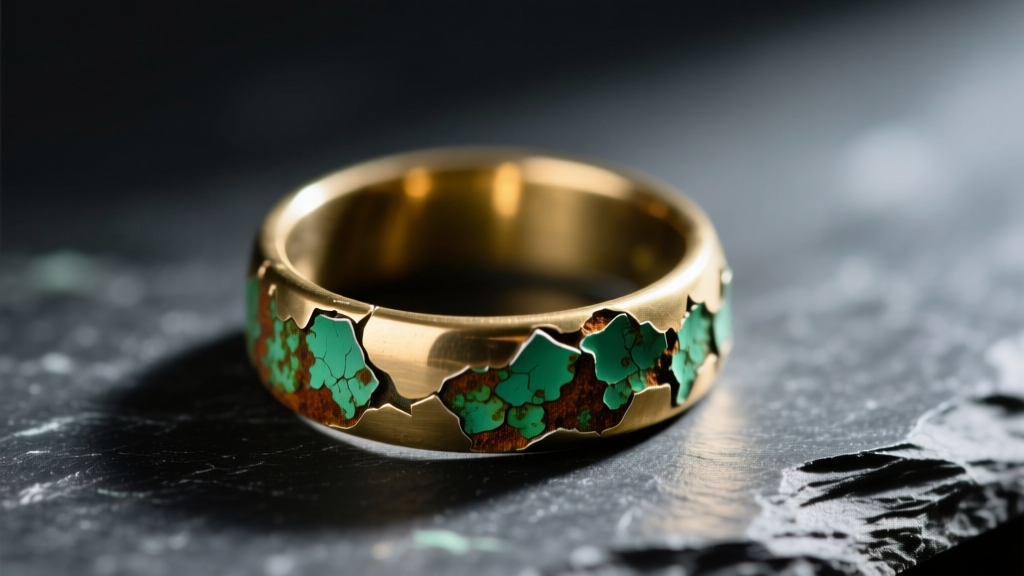
Nail polish does not bond permanently to base metals. Within weeks, microscopic chips and fissures will form in the lacquer. Moisture and sweat will seep through these microscopic breaches but will be unable to evaporate because the surrounding area is sealed by the polish. This trapped electrolyte creates a concentrated galvanic cell, accelerating pitting corrosion and the formation of verdigris (copper carbonate/chloride) directly underneath the polish. By the time you notice the damage, the metal surface is often permanently pitted and ruined.
Precious Metals (Sterling Silver, Gold, Platinum)
Sterling silver (.925) tarnishes when it reacts with hydrogen sulfide (H2S) in the atmosphere, forming black silver sulfide. While a lacquer barrier technically blocks H2S, the inevitable flaking of nail polish creates an uneven, patchy appearance. When you attempt to polish the silver with a standard abrasive cloth, the cloth will catch on the edges of the remaining lacquer, tearing it unevenly and leaving a cloudy, textured mess that requires harsh chemical strippers to fix.
Applying clear fingernail polish on jewelry made of 14k, 18k, or 24k gold, or platinum, is entirely unnecessary. These metals possess inherent nobility and do not oxidize or tarnish in normal atmospheric conditions. Furthermore, the high surface energy and smooth finish of polished platinum and high-karat gold prevent nitrocellulose from achieving any meaningful mechanical adhesion, resulting in the polish peeling off in large, unsatisfying sheets within days.
The Gemstone Hazard: Porosity and Treatments
The most catastrophic failures occur when clear fingernail polish on jewelry comes into contact with gemstones. The aggressive solvents in nail polish (ethyl acetate and butyl acetate) are highly effective at dissolving organic compounds and penetrating microscopic fissures.
According to the Gemological Institute of America (GIA), many gemstones undergo standard clarity and color enhancements that are highly vulnerable to cosmetic solvents:
- Fracture-Filled Emeralds: Most commercial emeralds are treated with cedar oil or synthetic resins to mask surface-reaching fractures. Nail polish solvents will dissolve these fillers, leaving the stone looking cloudy, heavily fractured, and significantly devalued.
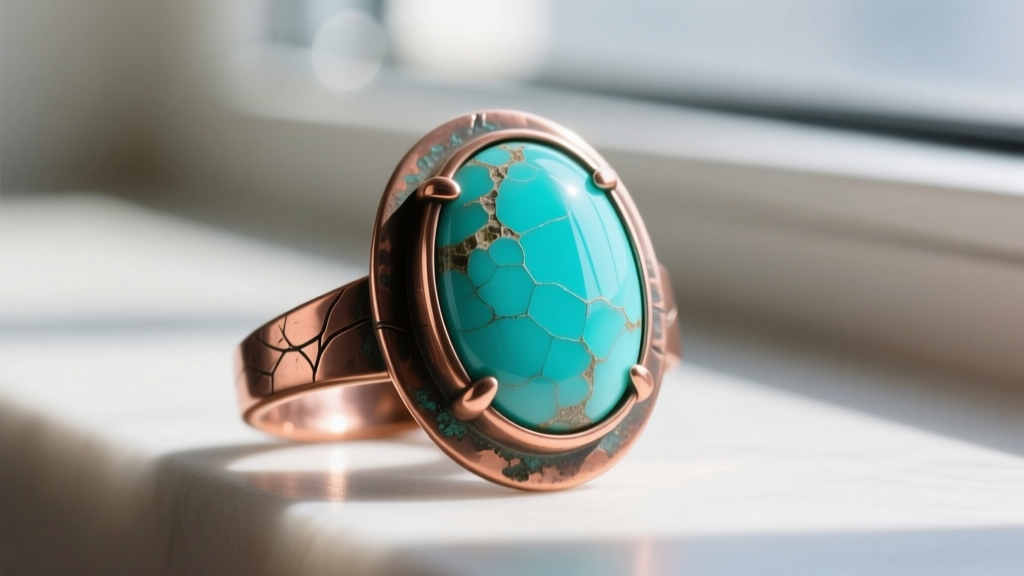
- Porous Organics and Minerals: Pearls, coral, turquoise, lapis lazuli, and opals are highly porous. Solvents will wick deep into the stone's matrix, causing irreversible clouding, color shifts, and structural weakening. Turquoise, in particular, will absorb the lacquer, resulting in permanent dark, mottled stains.
- Dyed Stones: Solvents will reactivate and bleed artificial dyes used in black onyx, agate, and low-grade jade, ruining both the stone and the surrounding metal setting.
Even on hard, non-porous stones like diamonds and sapphires, nail polish is a poor choice. The liquid tends to pool in the pavilion facets (the underside of the stone) and dry into a thick, cloudy glob of plastic that blocks light return, destroying the stone's brilliance and requiring tedious mechanical scraping to remove.
Comparison Chart: Nail Polish vs. Professional Sealants
If you must seal a piece of jewelry—such as a copper artisan ring or a piece of costume jewelry prone to rapid oxidation—you must use materials specifically engineered for metallurgical adhesion and UV stability. Below is a material comparison chart evaluating common sealants.
| Sealant Type | Base Chemistry | UV Resistance | Flexibility | Safe for Porous Gems | Cost per oz (Approx.) |
|---|---|---|---|---|---|
| Clear Nail Polish | Nitrocellulose & Solvents | Poor (Yellows/Degrades) | Brittle (Chips easily) | No (Solvents damage) | $0.50 - $1.00 |
| ProtectaClear | Copolymer Resin | Excellent (UV Stabilized) | High (Bends with metal) | Yes (When fully cured) | $8.00 - $12.00 |
| Renaissance Wax | Microcrystalline Wax | Good (Does not yellow) | N/A (Sacrificial layer) | Yes (Inert & safe) | $15.00 - $20.00 |
| Ceramic Nano-Coating | Silicon Dioxide (SiO2) | Exceptional | Moderate (Hard shell) | Yes (Solvent-free) | $25.00 - $40.00 |
As noted by the Canadian Conservation Institute, microcrystalline waxes (like Renaissance Wax) are the gold standard for museum-grade metal preservation because they are chemically inert, contain no harsh solvents, and can be safely reapplied without damaging underlying patinas or adjacent gemstones.
Safe Removal: Reversing the Damage
If you have acquired a vintage or secondhand piece that has been previously coated in clear fingernail polish on jewelry, removal requires extreme caution. The standard method for removing nail polish is acetone, but acetone is a highly aggressive solvent that will instantly melt acrylics, dissolve epoxy adhesives used in stone settings, and permanently cloud porous gemstones.
Follow this safe removal framework:
- Identify the Materials: Confirm there are no porous gems, glued-in stones, or organic materials (pearls, wood, resin) on the piece. If there are, do not use liquid solvents.
- Mechanical Removal (For Delicate Pieces): Use a soft wooden toothpick or a plastic spudger to gently flake away the brittle polish. Soaking the piece in warm, distilled water with a drop of pH-neutral dish soap can help lift the edges without chemical risk.
- Solvent Removal (For Metal-Only Pieces): If the piece is solid metal with no stones, use pure, cosmetic-grade acetone. Apply it with a cotton swab strictly to the metal, working in small sections. Immediately neutralize and wash the metal with mild soap and water to halt any solvent interaction with the metal's surface tension.
- Repolish: Once the lacquer is stripped, the metal will likely look dull or unevenly oxidized. Use a specialized jeweler's rouge or a treated polishing cloth to restore the uniform finish before applying a proper microcrystalline wax.
Final Verdict for Jewelry Care in 2026
The Bottom Line: Clear fingernail polish is a cosmetic product formulated for keratin (fingernails), not for inorganic metal alloys or delicate mineral structures. The temporary barrier it provides is vastly outweighed by the risks of trapped moisture corrosion, solvent-induced gemstone damage, and UV degradation.
To protect your jewelry from tarnish and skin reactions, invest in purpose-built jewelry sealants like copolymer resins or microcrystalline waxes. These materials are engineered to flex with thermal expansion, resist UV yellowing, and provide a breathable, chemically inert barrier that preserves both the metallurgical integrity and the gemological value of your pieces for decades to come.