Homemade Jewelry Cleaner DIY Kits: A Unique 2026 Gift Guide
Discover how to craft and gift a homemade jewelry cleaner kit in 2026. Includes safe DIY recipes, gemstone charts, and elegant packaging tips.

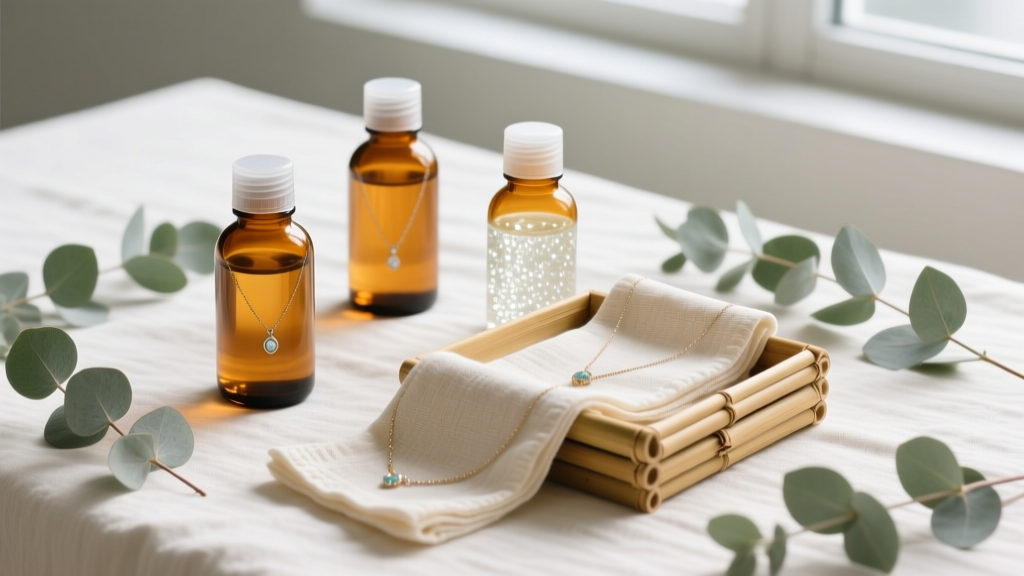
The 2026 Shift: Why Gifting Care Beats Gifting Clutter
In the landscape of modern gifting, the jewelry industry is experiencing a profound pivot. While presenting a loved one with a new necklace or ring remains a classic gesture, 2026 has ushered in a hyper-intentional trend: gifting the care of the jewelry they already own. As sustainability and mindful consumption take center stage, a beautifully curated homemade jewelry cleaner kit has emerged as the ultimate thoughtful, practical, and luxurious present. Whether you are assembling bridesmaid gifts, celebrating an eco-conscious partner, or creating a unique hostess present, a DIY cleaning kit bridges the gap between artisanal craftsmanship and everyday utility.
Unlike commercial chemical dips that often contain harsh ammonia or toxic thiourea, a well-formulated homemade alternative relies on gentle, biodegradable surfactants. But creating a kit worthy of being wrapped in a bow requires more than just mixing dish soap and water. It demands an understanding of metallurgy, gemstone porosity, and aesthetic packaging. This guide will walk you through the exact chemistry, recipes, and presentation strategies required to craft a professional-grade homemade jewelry cleaner kit from scratch.
The Chemistry of a Safe DIY Cleaning Solution
To create a product that feels premium and performs safely, you must understand the microscopic environment of fine jewelry. The most common mistake amateur DIYers make is using tap water. Municipal tap water contains dissolved solids, chloramines, and calcium carbonate. When tap water evaporates off a faceted diamond or sapphire, it leaves behind microscopic hard water spots that dull the stone's refractive index, making it appear cloudy.
Your base must always be 100% distilled water. Next, you need a surfactant to break down sebum, lotions, and environmental oils. Avoid standard dish detergents, which often contain degreasing agents and artificial dyes that can strip the protective patina from antique gold or oxidized silver. Instead, opt for a pH-neutral, unscented liquid castile soap (such as Dr. Bronner's Unscented Baby). Castile soap is made from saponified plant oils, making it incredibly gentle on precious metals while effectively lifting oils from gemstone settings.
The secret ingredient that elevates a homemade jewelry cleaner from 'kitchen experiment' to 'luxury gift' is USP-grade vegetable glycerin. Glycerin is a humectant. When added in micro-doses, it prevents the solution from drying too quickly, allowing the user to brush the setting without the liquid evaporating mid-scrub. Furthermore, it leaves a micro-thin, invisible protective layer on gold and platinum that temporarily slows down environmental tarnishing.
Gemstone Compatibility: The Mohs Scale & Porosity Matrix
Before you bottle your homemade jewelry cleaner, you must understand that no single solution is safe for every stone. Gemstones are ranked on the Mohs scale of hardness, but hardness (scratch resistance) is entirely different from toughness (break resistance) and porosity. According to the Gemological Institute of America (GIA), porous gems can absorb liquids, leading to irreversible internal damage, color shifting, or structural fracturing.
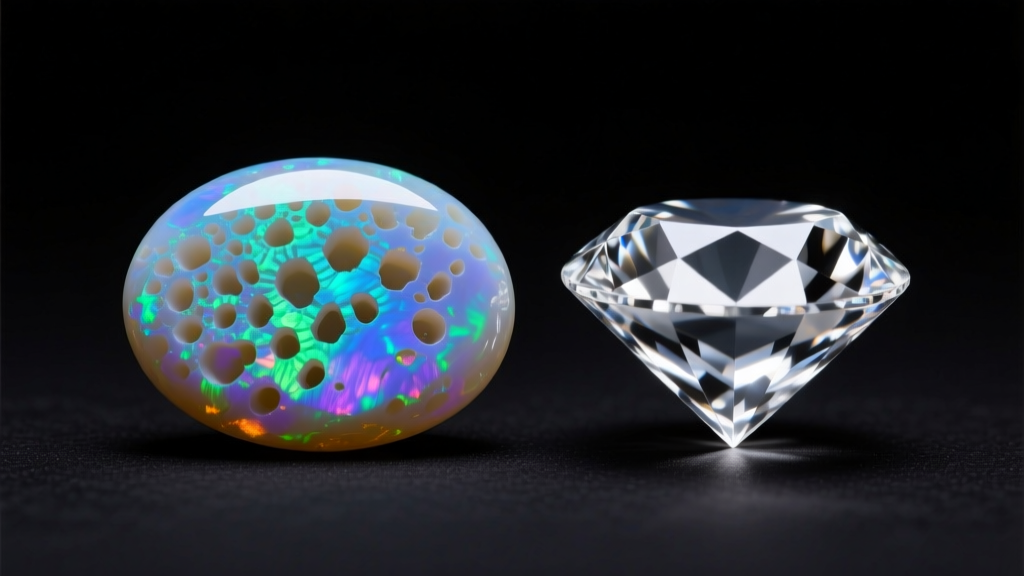
When gifting your kit, you must include a compatibility guide. Below is a quick-reference matrix to include on your gift tags:
| Gemstone | Mohs Hardness | Porosity Level | DIY Liquid Cleaner Safe? |
|---|---|---|---|
| Diamond | 10 | None | Yes (Safe for all mild recipes) |
| Sapphire / Ruby | 9 | None | Yes (Safe for all mild recipes) |
| Emerald | 7.5 - 8 | High (Fracture-filled) | No (Avoid liquids; use dry cloth) |
| Pearl | 2.5 - 3 | Extreme (Organic) | No (Wipe with damp cloth only) |
| Opal | 5.5 - 6.5 | High (Water content) | No (Dry wipe only to prevent crazing) |
| Turquoise | 5 - 6 | Extreme | No (Will absorb soap and discolor) |
As noted by the GIA's Pearl Care Guide, organic gems like pearls and coral are highly sensitive to even mild acids and alkalines. Your homemade jewelry cleaner kit should explicitly state that the liquid is for diamonds, sapphires, rubies, and plain metals only.
Three Curated Recipes for Specific Gift Recipients
Tailor your homemade jewelry cleaner to the specific wardrobe and lifestyle of the person you are gifting it to. Here are three distinct formulations:
1. The 'Eco-Bridal' Gentle Suds (For Diamond & Platinum Engagement Rings)
Brides and newlyweds need a daily-safe solution to keep their center stones sparkling through the haze of hand lotions and wedding planning stress.
- Base: 4 oz Distilled Water
- Surfactant: 4 drops Unscented Liquid Castile Soap
- Shine Agent: 1/2 tsp USP Vegetable Glycerin
- Tool: Extra-soft goat hair detailing brush (hard nylon bristles can micro-scratch 14k gold alloys).
2. The 'Groom's Heavy Duty' Degreaser (For Tungsten, Titanium, & Steel)
Men's wedding bands and everyday watches endure heavy contact with gym equipment, motor oils, and industrial grime. This slightly stronger formulation cuts through heavy grease without damaging non-porous alternative metals.
- Base: 4 oz Distilled Water
- Surfactant: 1 tsp Unscented Castile Soap
- Cutting Agent: 1 tsp Isopropyl Alcohol (90% or higher) to accelerate drying and cut heavy oils.
- Tool: Bamboo-handled agave fiber brush.
3. The 'Vintage Heirloom' Silver Paste (Strictly for Plain Sterling Silver)
For the antique lover, liquid cleaners often fail to remove heavy sulfide tarnish. Instead of a liquid, gift a dry paste that activates upon application. Warning: Never use this on oxidized (blackened) silver details or any gemstones.
- Base: 2 tbsp Baking Soda (Sodium Bicarbonate)
- Activator: 1 tbsp Distilled Water (mixed in a separate dropper bottle)
- Tool: 100% Cotton flannel polishing cloth.
Sourcing and Packaging: Elevating the DIY Aesthetic
The difference between a 'science experiment' and a 'luxury gift' lies entirely in the vessel and packaging. To ensure your homemade jewelry cleaner has a shelf life of 12 to 18 months, you must protect the saponified bonds in the castile soap from UV degradation.
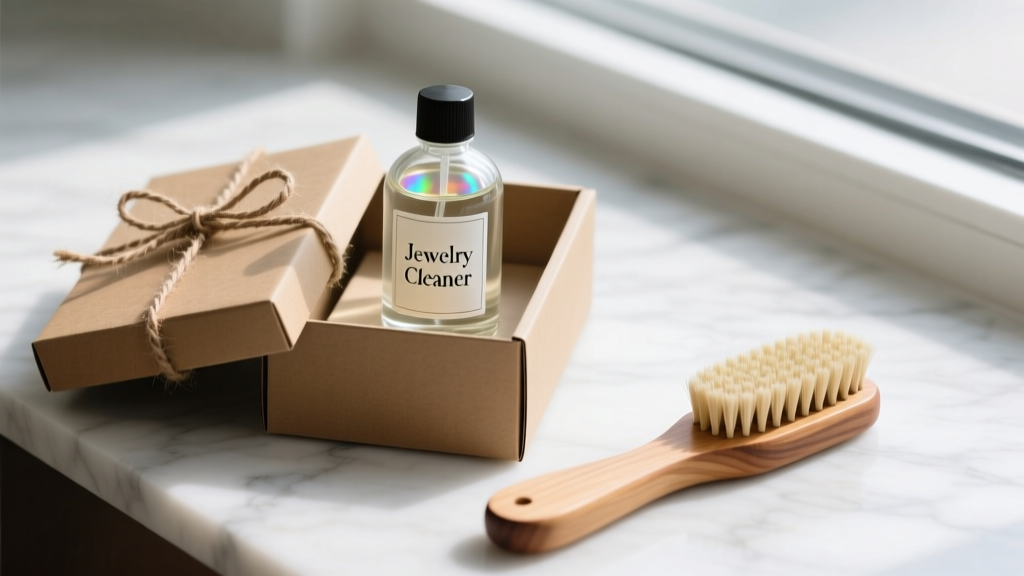
Source Boston Round Amber Glass Bottles (2 oz or 4 oz). Amber glass naturally filters out ultraviolet light. Pair the bottle with a high-quality spray mister or a glass dropper top, depending on the viscosity of your recipe. Avoid plastic bottles, as they leach micro-polymers over time and contradict the eco-friendly ethos of a DIY gift.
For the exterior packaging, utilize textured kraft paper boxes lined with unbleached cotton batting. Wrap the glass bottle and the accompanying brush in a sheet of raw, unbleached muslin fabric, securing it with a brass stamp and hemp twine. Include a small, stamped wooden tag that reads: 'Handcrafted Jewelry Care.'
The Crucial Insert Card: Educating Your Recipient
A beautiful kit becomes a liability if the recipient uses it on a porous opal or a fracture-filled emerald. Every homemade jewelry cleaner gift must include a beautifully printed, heavy-cardstock insert card detailing exactly how to use the product and, more importantly, when not to use it.
Usage Instructions: Spray generously onto the stone and setting. Allow to sit for 30 seconds to break down oils. Gently agitate the underside of the setting with the provided goat-hair brush. Rinse thoroughly under warm running water and pat dry with a lint-free microfiber cloth.
Safety Warning: This solution is formulated for Diamonds, Sapphires, Rubies, and solid Gold/Platinum. DO NOT use on Pearls, Opals, Emeralds, Turquoise, or any porous organic gems. When in doubt, use a dry cloth only.
Final Thoughts on Gifting Care
As we navigate through 2026, the most memorable gifts are those that demonstrate a deep understanding of the recipient's daily life and cherished possessions. A thoughtfully engineered homemade jewelry cleaner kit does exactly that. It honors the sentimental value of their jewelry, promotes sustainable care practices, and provides a luxurious, spa-like ritual they can enjoy at their vanity every single week. By mastering the chemistry, respecting the gemstones, and perfecting the presentation, you are not just giving a bottle of soap—you are giving the gift of lasting brilliance.


