Anti Tarnish Strips for Jewelry: 2026 Budget & Value Guide
Compare the best anti tarnish strips for jewelry in 2026. We analyze cost-per-use, material safety, and overall value to protect your silver and gold.

The Hidden Cost of Polishing: Why Prevention is the Ultimate Budget Hack
When evaluating jewelry care budgets, most collectors and everyday wearers focus on the upfront cost of ultrasonic cleaners, polishing compounds, or professional restoration services. However, the true financial drain lies in the microscopic loss of precious metal. Every time you use an abrasive polishing cloth or chemical dip to remove silver sulfide (the black tarnish on sterling silver), you are stripping away a microscopic layer of the metal itself. Over a decade, this cumulative abrasion can soften millgrain edges, blur vintage engravings, and degrade the structural integrity of delicate prongs. According to the Gemological Institute of America (GIA), minimizing mechanical polishing is the single best way to preserve the longevity, detail, and resale value of antique and contemporary silver alike.
This is where anti tarnish strips for jewelry transition from a luxury accessory to a mandatory budget investment. By neutralizing corrosive gases before they react with your metals, these strips eliminate the need for frequent polishing, saving you hundreds of dollars in professional restoration and replacement costs over the lifespan of your collection.
The Chemistry of Protection: How Anti Tarnish Strips Actually Work
To accurately assess the value of different products on the market, you must first understand their mechanism of action. Tarnish is primarily caused by hydrogen sulfide (H2S) and sulfur dioxide (SO2) in the ambient air reacting with the copper alloys in sterling silver (which is 92.5% silver and 7.5% copper). The Canadian Conservation Institute notes that sulfur gases are ubiquitous, originating from everything from atmospheric pollution and household cooking to the off-gassing of certain paints, rubbers, and woods in your home.
Commercial strips generally rely on one of two distinct technologies to combat this:
- Reactive Metal Salts: Pioneered by 3M, these strips contain proprietary copper or zinc salts that chemically bind with sulfur gases, neutralizing them before they reach your jewelry. They are highly effective, predictable, and feature visual indicators (turning dark brown or black) when saturated.
- Activated Carbon Adsorption: These strips use highly porous carbon matrices to trap volatile organic compounds (VOCs) and sulfur gases. They are often cheaper upfront but can release trapped gases if exposed to high heat, direct sunlight, or extreme humidity fluctuations.
2026 Brand Value Matrix: Cost-Per-Use Breakdown
Not all strips offer the same return on investment. Below is a comparative analysis of the leading anti tarnish strips for jewelry available in 2026, calculated on a cost-per-month basis for a standard enclosed jewelry box (approx. 1-2 cubic feet).
| Brand / Type | Approx Cost (per 50 strips) | Rated Lifespan | Cost Per Month | Best Use Case |
|---|---|---|---|---|
| 3M Anti-Tarnish Strips | $16.00 | 6 Months | $0.53 | High-value silver, airtight safes, long-term storage |
| Hagerty Silversmiths | $12.00 | 6 Months | $0.40 | Everyday jewelry boxes, frequent access |
| Generic Activated Carbon | $10.00 | 3 Months | $0.66 | Short-term travel pouches, display cases |
| ConserveO2 (Oxygen Absorbers) | $15.00 | Single Use | N/A | NOT for tarnish (prevents oxidation in food, not H2S) |
Expert Insight: Avoid oxygen absorbers (often mistakenly bought in bulk). Tarnish is a sulfide reaction, not an oxidation reaction. Oxygen absorbers will do absolutely nothing to stop silver from turning black in the presence of hydrogen sulfide.
Material Compatibility: What Strips Can (and Cannot) Protect
Sterling Silver, Copper, and Brass
Anti tarnish strips for jewelry are exceptionally effective for copper-bearing alloys. Sterling silver, rose gold (which contains high copper content), brass, and bronze will all see a dramatic reduction in surface corrosion. For these metals, the budget value is undeniable.
Porous Gemstones and Organics
It is critical to note that these strips do not protect against moisture-related degradation. Pearls, opals, turquoise, and coral require specific humidity levels (around 40-50% RH) to prevent cracking and crazing. While anti tarnish strips will not harm these organics, they do not replace the need for specialized humidity-control packets. Furthermore, strips will not prevent mechanical scratching; a diamond stored loose next to a silver ring will still scratch the metal, regardless of the atmospheric purity.
The DIY Myth: Chalk, Silica, and False Economies
A common budget hack circulating on social media involves using silica gel packets, white chalk, or activated charcoal briquettes as a substitute for commercial anti tarnish strips for jewelry. From a conservation standpoint, this is a false economy.
Silica gel is a desiccant; it controls relative humidity (RH). While high humidity accelerates the tarnishing process by creating a microscopic layer of moisture on the metal where gases can dissolve and react, moisture alone does not cause tarnish. If your jewelry box is in a room with high ambient H2S (from urban pollution or nearby industrial activity), silica gel will do nothing to stop the sulfur from reaching your silver. Similarly, standard white chalk absorbs moisture but lacks the chemical reactivity required to bind sulfur gases. Relying on these DIY methods often results in severe tarnish events, forcing the owner to spend far more on aggressive chemical dips or professional buffing than they would have spent on a $16 pack of commercial strips.
Maximizing Your Investment: The Airtight Imperative
The single biggest point of failure when using anti tarnish strips for jewelry is improper environmental sealing. These strips are designed to scrub a finite volume of air. If you place a strip in an open-concept jewelry armoire or a loosely closed drawer, the strip will attempt to scrub the sulfur from your entire bedroom, saturating and failing within a matter of days.
To maximize your budget and achieve the advertised 6-to-12-month lifespan, you must create a microclimate. Follow this decision framework for optimal storage:
- The Ziploc Method (Lowest Cost): Place your jewelry in a high-quality, sealable polyethylene bag. Add one anti tarnish strip, squeeze out the excess air, and seal. This creates a perfect microclimate and extends the strip's life up to 12 months.
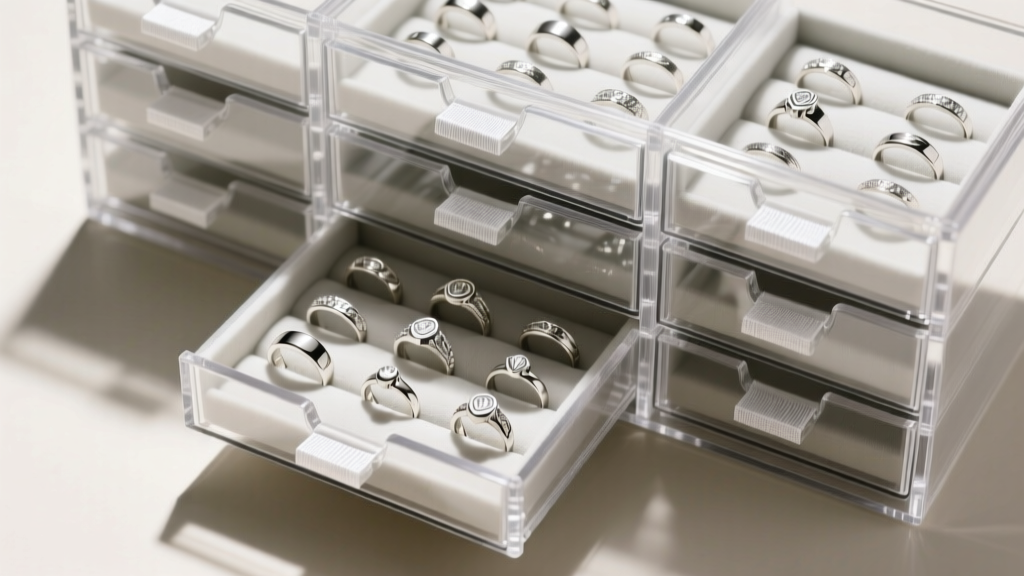
- The Acrylic Drawer Method (Medium Cost): If using stackable acrylic organizers, ensure the drawers have silicone gasket seals. Place one strip per drawer. Without gaskets, the continuous exchange of room air will exhaust the strip in under 4 weeks.
- The Safe Deposit Method (Highest Security): For long-term vault storage, wrap pieces in anti-tarnish flannel cloth, place them in an airtight Pelican case or sealed Tupperware container with two strips, and then lock it away.
The Verdict: Protecting Your Portfolio
When viewed through the lens of long-term asset protection, anti tarnish strips for jewelry are not just a cleaning supply; they are a vital preservation tool. At roughly $0.40 to $0.60 per month, they offer the highest ROI in jewelry care, preventing the irreversible loss of precious metals and the degradation of historical craftsmanship. By selecting the right chemical technology for your specific storage environment and ensuring an airtight seal, you can effectively eliminate polishing from your jewelry maintenance routine, keeping your collection pristine and your budget intact for years to come.


