How to Clean Jewelry Based on Metal and Gemstone Properties
Learn how to clean jewelry safely by understanding material properties. Compare metals and gemstones to avoid damage and restore brilliance.

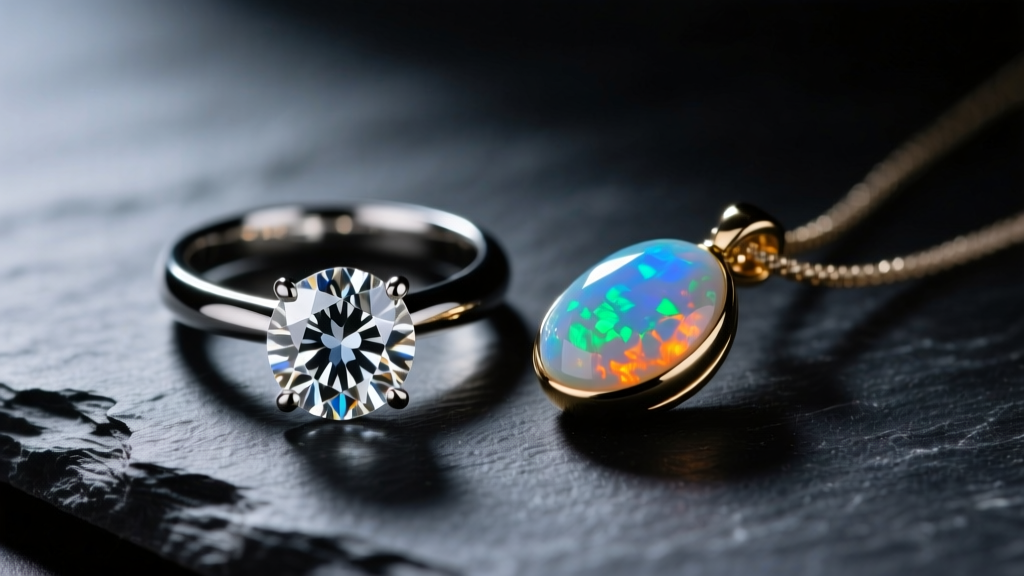
When searching for instructions on how to clean jewelry, most guides offer a one-size-fits-all approach: a bowl of warm water, a drop of dish soap, and a soft toothbrush. While this method works for some pieces, it can be catastrophic for others. True jewelry care is not about generic cleaning hacks; it is an exercise in applied material science. Understanding the porosity, chemical reactivity, and crystalline structure of your specific metals and gemstones is the only way to maintain their brilliance without causing irreversible damage.
In this comprehensive guide, we break down the metallurgical and gemological properties that dictate proper cleaning protocols, ensuring your collection remains pristine for generations.
The Science of Jewelry Cleaning: Why One Size Fails
Jewelry materials interact with their environment on a molecular level. Dirt, sebum, and cosmetic buildup are only part of the equation. The primary enemies of jewelry are chemical reactions (like oxidation and sulfidation) and structural vulnerabilities (like cleavage planes and inclusions). According to the Gemological Institute of America (GIA), improper cleaning is one of the leading causes of gemstone fracturing and metal degradation in consumer jewelry.
To determine how to clean jewelry safely, you must first categorize your pieces by their material properties: inert vs. reactive metals, and hard vs. porous gemstones.
Metal Porosity and Reactivity: A Cleaning Guide
Not all precious metals behave identically. The alloy composition of your jewelry dictates its chemical vulnerabilities.
Platinum and Palladium (The Inert Group)
Platinum (typically 95% pure in jewelry) and palladium are highly inert noble metals. They do not oxidize or tarnish in normal atmospheric conditions. Because they lack reactive alloy metals like copper, platinum is incredibly resilient. You can clean platinum using almost any commercial jewelry dip, ultrasonic cleaner, or steam cleaner without fear of chemical stripping. The only risk to platinum is physical scratching, as it develops a soft "patina" over time due to metal displacement rather than material loss.
Gold Alloys (14k, 18k, and 24k)
Pure 24k gold is entirely non-reactive but too soft for daily wear. Therefore, jewelers alloy it with metals like copper, silver, and zinc.
- 18k Gold (75% pure): Contains enough alloy to be durable but remains highly resistant to tarnish. Mild surfactants and warm distilled water are ideal.
- 14k Gold (58.5% pure): The higher copper content makes 14k gold susceptible to chlorine. Exposure to chlorinated pool water or harsh bleach-based cleaners creates copper chloride, leading to microscopic pitting and structural weakening. Never use bleach-based solutions when figuring out how to clean jewelry made of 14k gold.
Sterling Silver and the Sulfidation Myth
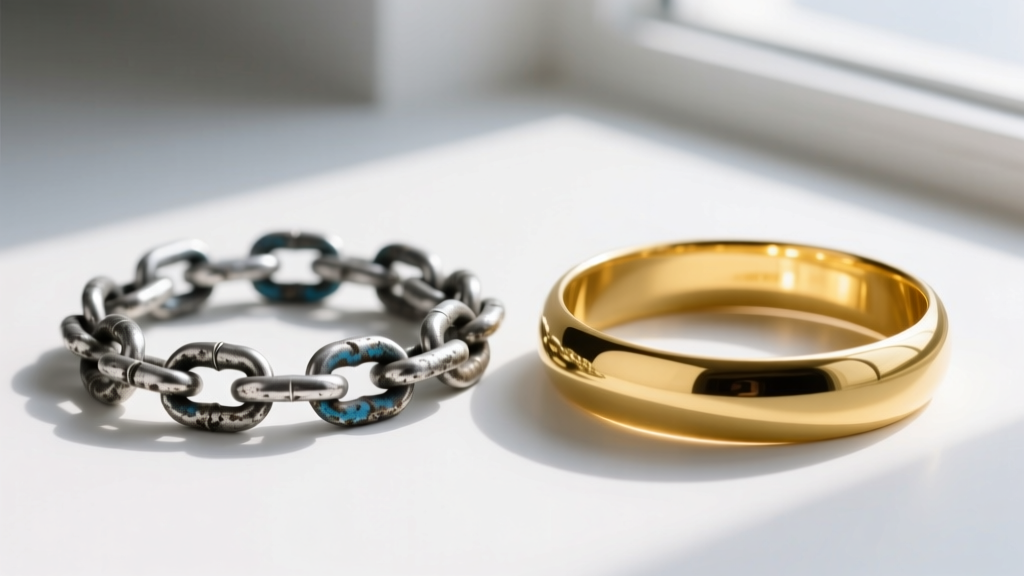
A common misconception is that silver tarnishes due to oxygen. In reality, silver reacts with hydrogen sulfide in the air to form silver sulfide ($Ag_2S$), which appears as a black or yellowish film. Because this is a surface-level chemical reaction, abrasive polishing cloths physically strip away a microscopic layer of silver along with the tarnish. For heavy sulfidation, a chemical reduction bath (using aluminum foil, boiling water, and baking soda) is vastly superior, as it reverses the chemical reaction without removing base metal.
Gemstone Hardness and the Mohs Scale
The Mohs scale of mineral hardness is critical for gemstone care, but it is often misunderstood. The scale is relative, not linear. A diamond (10) is not just twice as hard as a topaz (8); it is roughly 140 times harder. Furthermore, hardness measures scratch resistance, not toughness (resistance to breaking). When deciding how to clean jewelry with gemstones, you must consider both hardness and internal clarity.
| Gemstone | Mohs Hardness | Structural Vulnerability | Safe Cleaning Method |
|---|---|---|---|
| Diamond | 10 | Perfect cleavage planes (can chip if struck) | Ultrasonic, Steam, Mild Soap |
| Sapphire / Ruby | 9 | No cleavage, excellent toughness | Ultrasonic, Steam, Mild Soap |
| Emerald | 7.5 - 8 | Heavily included ("jardin"), usually oil-filled | Warm damp cloth ONLY |
| Opal | 5.5 - 6.5 | High water content (3-21%), prone to crazing | Dry microfiber cloth ONLY |
| Pearl (Organic) | 2.5 - 4.5 | Calcium carbonate (dissolves in mild acids) | Damp cloth, no chemicals |
The Danger Zone: Porous and Organic Gems
Organic gems and highly porous stones require a completely different paradigm. If you are researching how to clean jewelry featuring pearls, coral, turquoise, or opals, throw away the soapy water.
Pearls and Coral
Pearls are composed of calcium carbonate ($CaCO_3$) and conchiolin. They are highly sensitive to acids—even the mild acidity of human sweat or a splash of lemon juice can etch the nacre, leaving it dull and pitted. Never submerge pearls in water, as the liquid can degrade the silk thread they are strung on and cause the adhesive in the drill holes to fail. Wipe them gently with a damp, lint-free cloth after every wear.
Opals and Turquoise
Opals are non-crystalline silica containing up to 21% water. Submerging them in chemical baths or exposing them to the heat of a steam cleaner can cause "crazing"—a network of fine internal cracks that ruins the stone's play-of-color. Similarly, turquoise is a porous copper aluminum phosphate. It will absorb oils, soaps, and lotions, which can permanently alter its color from a vibrant sky blue to a muddy green.
Ultrasonic Cleaners: When to Use and When to Avoid
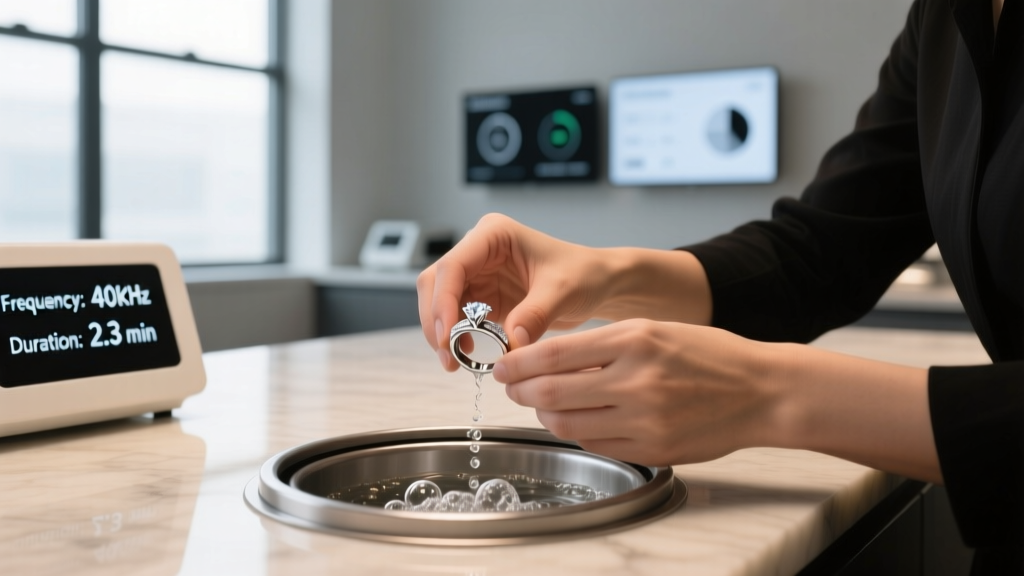
Ultrasonic cleaners use high-frequency sound waves (typically 40 to 45 kHz) to create microscopic vacuum bubbles in a liquid solution. When these bubbles collapse against the jewelry, they create localized shockwaves that blast away dirt—a process called cavitation.
Expert Warning: While cavitation is miraculous for extracting sebum from the pavilion of a diamond, it is violently destructive to fragile stones. The vibrations will shatter emeralds, strip the cedar oil from fracture-filled rubies, and vibrate the rhodium plating right off your white gold.
Safe for Ultrasonics: Diamonds, sapphires, rubies, platinum, and solid 18k/14k gold (without plated finishes or fragile tension settings).
Never use Ultrasonics for: Emeralds, opals, pearls, turquoise, lapis lazuli, tanzanite, or any gemstone that has been fracture-filled, dyed, or coated.
Step-by-Step Chemical-Free Cleaning Framework
For the vast majority of your jewelry (excluding the porous organics listed above), this framework provides the safest, most effective method to restore brilliance without relying on harsh commercial dips.
- Preparation: Fill a glass bowl with warm distilled water. (Tap water contains chlorine and hard minerals that can leave spots or react with alloys).
- Surfactant Addition: Add three drops of a pH-neutral, lotion-free dish soap (like original blue Dawn). Avoid soaps with moisturizers, which leave a filmy residue.
- Soaking: Submerge the jewelry for 15 to 20 minutes. This allows the surfactant to break the surface tension of oils trapped under the gemstone girdle.
- Agitation: Use an extra-soft baby toothbrush (not a standard adult brush, which can scratch high-polish gold). Gently brush the back of the gemstone (the pavilion), where light-blocking grease accumulates.
- Rinsing and Drying: Rinse under a gentle stream of lukewarm distilled water. Pat dry with a clean microfiber cloth. Never use paper towels, as their wood pulp fibers can cause micro-scratches on soft metals like 24k gold or silver.
Final Thoughts on Material-Specific Care
Learning how to clean jewelry properly requires shifting your mindset from a "cleaning" perspective to a "material preservation" perspective. By respecting the Mohs hardness of your gemstones, the alloy composition of your metals, and the porosity of organic materials, you can maintain the structural integrity and optical brilliance of your collection. When in doubt, consult the GIA Gem Encyclopedia for the specific properties of your stone, or take complex, multi-gemstone pieces to a certified bench jeweler for professional steam and ultrasonic servicing.


