Safe Home Remedies for Cleaning Jewelry by Metal Type
Discover safe home remedies for cleaning jewelry based on metal type. Learn which DIY solutions work for gold, silver, and platinum without causing damage.

The Science of DIY Jewelry Cleaning
When searching for home remedies for cleaning jewelry, the internet is flooded with conflicting advice. While some kitchen staples can safely restore brilliance, others can permanently ruin microscopic prongs, strip antique patinas, or fracture delicate gemstones. As a jewelry care specialist, I evaluate cleaning methods based on metallurgical properties and chemical reactivity. In 2026, with the rise of complex lab-grown diamond settings and proprietary alloy blends, understanding the exact chemical interaction between your cleaning agent and your jewelry's metal matrix is more critical than ever.
The effectiveness of any DIY solution depends on the metal's nobility and the gemstone's porosity. According to the Gemological Institute of America (GIA), the most common cause of jewelry damage at home is not dirt, but the improper use of abrasive or highly alkaline cleaning agents. This guide breaks down scientifically backed home remedies for cleaning jewelry, categorized by specific metal types and their unique failure modes.
Safe Home Remedies for Cleaning Jewelry: A Metal-by-Metal Guide
14K and 18K Gold: The Seltzer and pH-Neutral Soap Method
Gold alloys (14K is 58.5% pure gold; 18K is 75%) are relatively soft and highly susceptible to micro-scratching. The goal when cleaning gold is to lift sebum, lotion, and dead skin cells from under the gallery without dragging abrasive particles across the metal's surface.
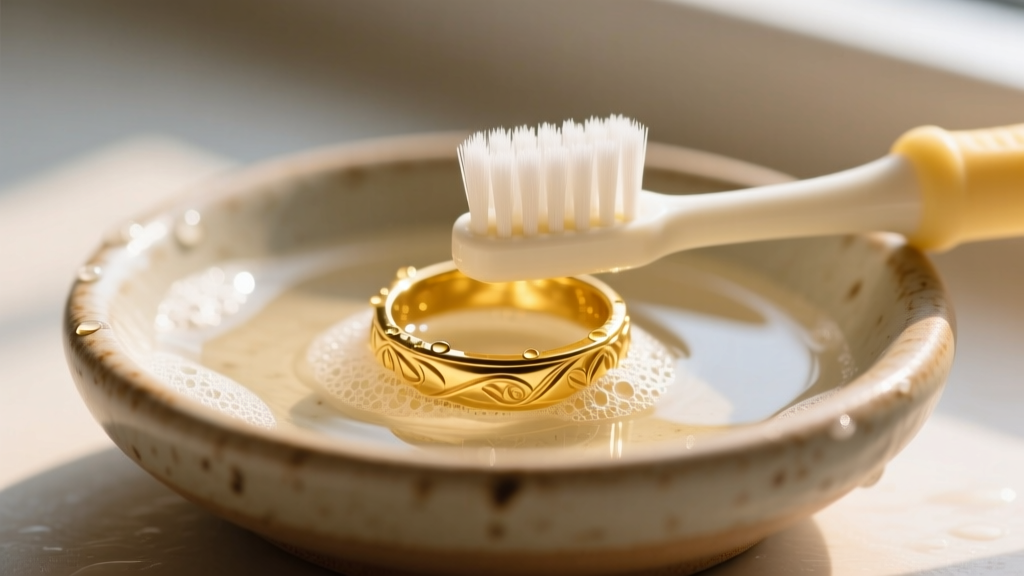
- The Recipe: Mix 1 cup of room-temperature seltzer water (the carbonation helps agitate and lift debris) with 3 drops of pH-neutral dish soap (like Dawn).
- The Technique: Soak the piece for exactly 15 minutes. Do not exceed this, as prolonged exposure to any surfactant can dull the polish on lower-karat alloys.
- The Agitation: Use a brand-new, ultra-soft baby toothbrush. Gently brush the back of the setting (the culet area) where light blockage occurs.
- The Rinse: Rinse under lukewarm distilled water. Tap water contains chlorine and hard minerals that can leave microscopic water spots on high-polish gold.
Sterling Silver: The Aluminum Foil Ion Exchange Reaction
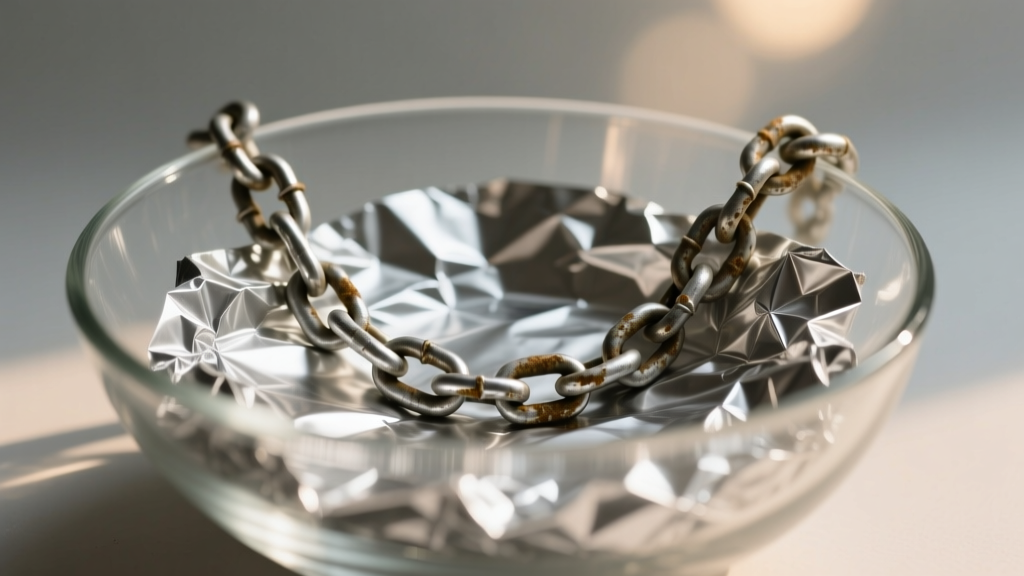
Sterling silver (92.5% silver, 7.5% copper) tarnishes due to a chemical reaction with hydrogen sulfide in the air, forming silver sulfide (Ag2S). Polishing cloths remove this layer by abrasion, which slowly wears away the silver. Instead, use a redox (reduction-oxidation) reaction to reverse the tarnish without removing any base metal.
- The Setup: Line a glass bowl with heavy-duty aluminum foil, shiny side up. Place your silver jewelry directly on the foil.
- The Catalyst: Add 2 tablespoons of baking soda (sodium bicarbonate) and 1 tablespoon of non-iodized salt.
- The Reaction: Pour boiling water (at least 190°F) over the jewelry. You will immediately smell a sulfur (rotten egg) odor as the silver sulfide is reduced back to pure silver, and the sulfide ions transfer to the aluminum foil.
- The Finish: Remove with wooden tongs after 5 minutes, rinse in distilled water, and buff dry with a microfiber cloth. Note: Never use this method on oxidized (intentionally blackened) silver, as it will strip the dark patina.
Platinum: Mild Ammonia for Dense Alloys
Platinum (typically 95% pure, alloyed with ruthenium or iridium) is incredibly dense and does not tarnish. However, it develops a 'patina'—a satin-like finish caused by microscopic scratches displacing the metal rather than removing it. While home remedies for cleaning jewelry cannot polish out platinum patina (that requires professional repolishing), you can safely remove oily buildup.
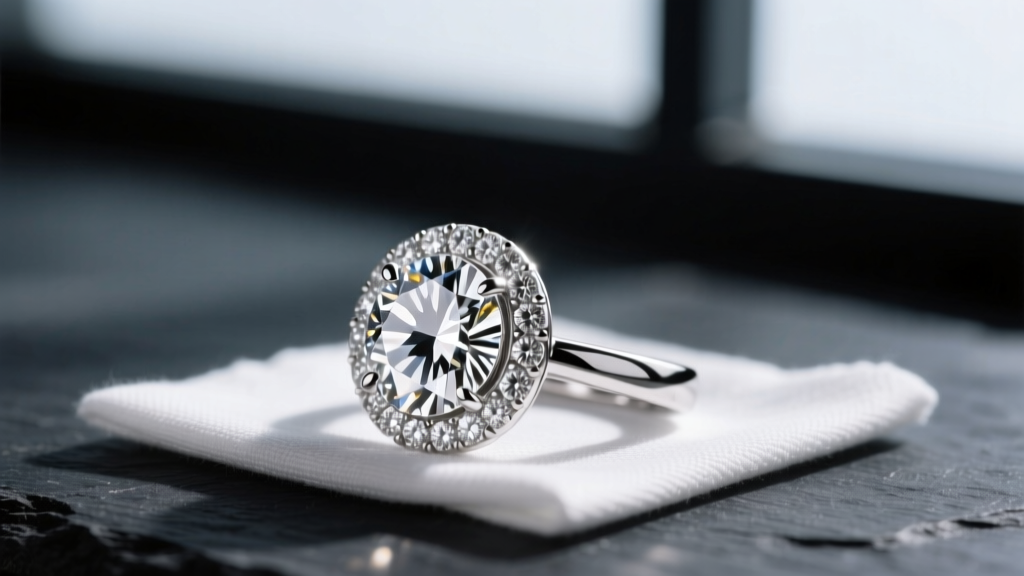
A solution of 1 part clear household ammonia to 6 parts warm water is highly effective for platinum. Soak for 20 minutes, brush gently, and rinse. Ammonia is safe for platinum and diamonds but will destroy porous gems, so this is strictly for solitaire or diamond-only platinum pieces.
Dangerous DIY Solutions You Must Avoid
Many viral cleaning hacks promote remedies that cause catastrophic, irreversible damage. The Jewelers of America strongly advises against using household cleaners that contain harsh abrasives or uncontrolled pH levels. Below is a breakdown of common remedies and their specific damage profiles.
| Home Remedy | Chemical/Physical Property | Damage Profile & Failure Mode |
|---|---|---|
| Whitening Toothpaste | High Relative Dentin Abrasivity (RDA > 100); contains hydrated silica. | Scratches 18K gold and platinum. Leaves microscopic grooves that trap future dirt, making the jewelry dull faster over time. |
| Chlorine Bleach | Strong oxidizing agent (Sodium hypochlorite). | Causes stress corrosion cracking in gold alloys. Will literally dissolve the solder joints holding prongs together, leading to stone loss. |
| Boiling Water | Extreme thermal shock (212°F). | Fractures heat-sensitive gems like opals, emeralds, and tanzanite. Can also melt the wax or resin used to fill natural emerald inclusions. |
| Baking Soda Paste | Alkaline (pH 9) with sharp, crystalline edges. | Acts like sandpaper on high-polish finishes. Safe only when dissolved in water for the silver ion-exchange method, never as a rubbing paste. |
Gemstone Compatibility Matrix
When utilizing home remedies for cleaning jewelry, the metal is only half the equation. Gemstones possess varying levels of hardness (Mohs scale) and structural integrity. A solution that is perfectly safe for a diamond can dissolve a pearl.
The 'Safe-Soak' Gems (Mohs 8.5 - 10)
Diamonds, rubies, and sapphires are highly durable and non-porous. They can withstand the seltzer/soap soak and the mild ammonia solution. However, if the sapphire has been fracture-filled with lead glass (common in lower-grade commercial stones), ammonia will etch the glass and ruin the stone.
The 'Wipe-Only' Gems (Mohs 7 - 8)
Amethyst, citrine, and topaz should not be subjected to prolonged soaking or ultrasonic vibrations. Clean these with a damp, soapy microfiber cloth and immediately dry them. Prolonged water exposure can weaken the adhesive in certain tension or bezel settings.
The 'Never-Soak' Organics and Porous Stones
Pearls, coral, opals, turquoise, and emeralds require specialized care. Pearls and coral are organic and highly sensitive to acids (even mild skin acidity). Opals contain up to 20% water; soaking them can cause crazing (internal cracking) as the water content fluctuates. Emeralds are almost universally treated with cedar oil or synthetic resins to mask natural fissures. Dish soap and ammonia will strip these oils, turning a vibrant green emerald into a cloudy, heavily included stone. For these gems, the only safe home remedy is gentle wiping with a dry, untreated jeweler's cloth.
Step-by-Step Maintenance Routine
To minimize the need for aggressive home remedies for cleaning jewelry, implement a proactive maintenance routine. Remove your jewelry before applying lotions, using hand sanitizers (the high alcohol content can degrade certain alloys and gem treatments), or doing household chores. Store silver in anti-tarnish bags infused with activated charcoal to absorb atmospheric sulfides. By controlling the environment and utilizing the correct, metal-specific DIY solutions outlined above, you can preserve the structural integrity and optical brilliance of your fine jewelry for decades.


