Weiman Fine Jewelry Cleaner: Material Safety & Properties Guide
Analyze the chemical properties of Weiman Fine Jewelry Cleaner and its safety across different metals, gemstones, and treatments in our material guide.

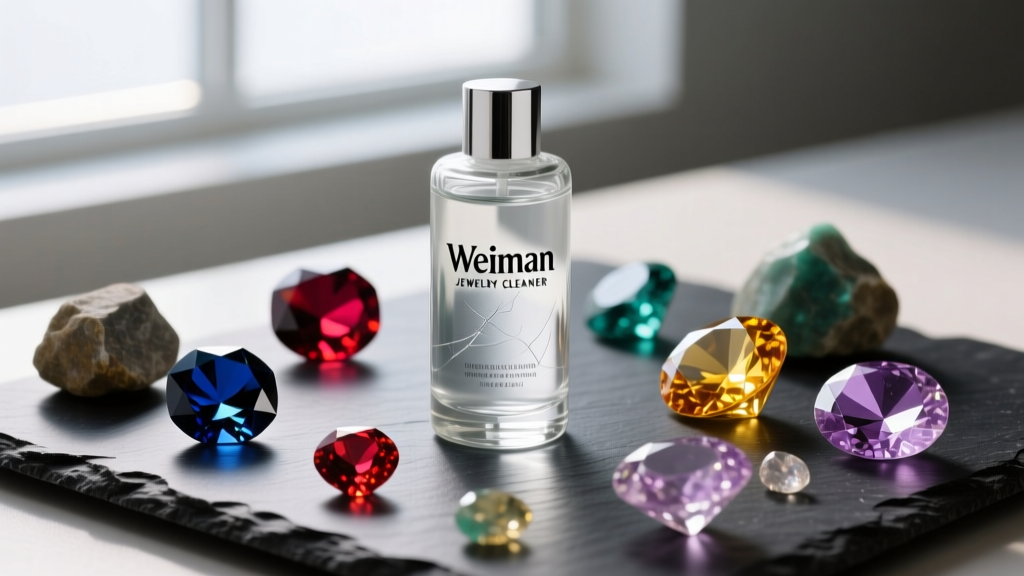
When maintaining a high-value jewelry collection, understanding the chemical interaction between cleaning agents and specific material properties is non-negotiable. Weiman Fine Jewelry Cleaner has long been a staple in household jewelry maintenance, but its efficacy and safety vary drastically depending on the Mohs hardness, porosity, and chemical treatments of the pieces you own. As of 2026, material science and gemological standards dictate that no single liquid solution is universally safe. This guide deconstructs the chemical profile of Weiman's formula and maps its compatibility against specific metals, gemstones, and structural treatments.
The Chemical Profile: What is Inside the Formula?
To evaluate Weiman Fine Jewelry Cleaner, we must first look past the marketing claims and examine its functional chemistry. The formula is fundamentally an aqueous solution relying on mild, non-ionic surfactants and chelating agents. Crucially, it is ammonia-free and maintains a slightly alkaline pH (typically between 7.5 and 8.2).
This pH level is highly significant for material safety. Acidic cleaners (pH below 6.0) will actively etch calcium carbonate-based materials like pearls and coral. Conversely, highly alkaline solutions (pH above 9.0) can degrade the porous matrix of turquoise and lapis lazuli. Weiman's neutral-to-slightly-alkaline profile makes it excellent for breaking down sebum, cosmetic lotions, and everyday environmental grease on hard, non-porous surfaces without triggering corrosive reactions in stable noble metals.
Material Compatibility Matrix
The following matrix outlines how Weiman's surfactant profile interacts with specific jewelry materials based on gemological data and chemical reactivity. Always cross-reference your piece's treatment status before submerging it.
| Material | Mohs Hardness | Weiman Safety Rating | Specific Risk Factor / Notes |
|---|---|---|---|
| Diamond (Untreated) | 10 | Highly Safe | Excellent for lifting grease from pavilion facets. |
| Emerald (Oil/Resin Treated) | 7.5 - 8 | Unsafe | Surfactants will strip cedar oil fillers, revealing fissures. |
| Pearl (Nacre) | 2.5 - 4.5 | Unsafe | Prolonged liquid exposure degrades nacre and weakens silk threads. |
| 18k Yellow Gold | N/A (Metal) | Highly Safe | No risk of oxidation or surface etching. |
| Sterling Silver (Tarnished) | N/A (Metal) | Moderate | Removes surface grease but will not reduce heavy silver sulfide tarnish. |
| Opal (Solid or Doublet) | 5.5 - 6.5 | Unsafe | Liquid can seep into micro-cracks or delaminate doublet glue layers. |
Hard Stones vs. Porous Gems: The Mohs Scale Reality
The Gemological Institute of America (GIA) consistently warns against submerging porous or heavily treated gems in liquid solutions. Weiman's surfactants are engineered to reduce the surface tension of water, allowing the liquid to penetrate microscopic crevices. For a flawless sapphire (Mohs 9), this is ideal—it flushes out trapped dirt from deep prong settings.
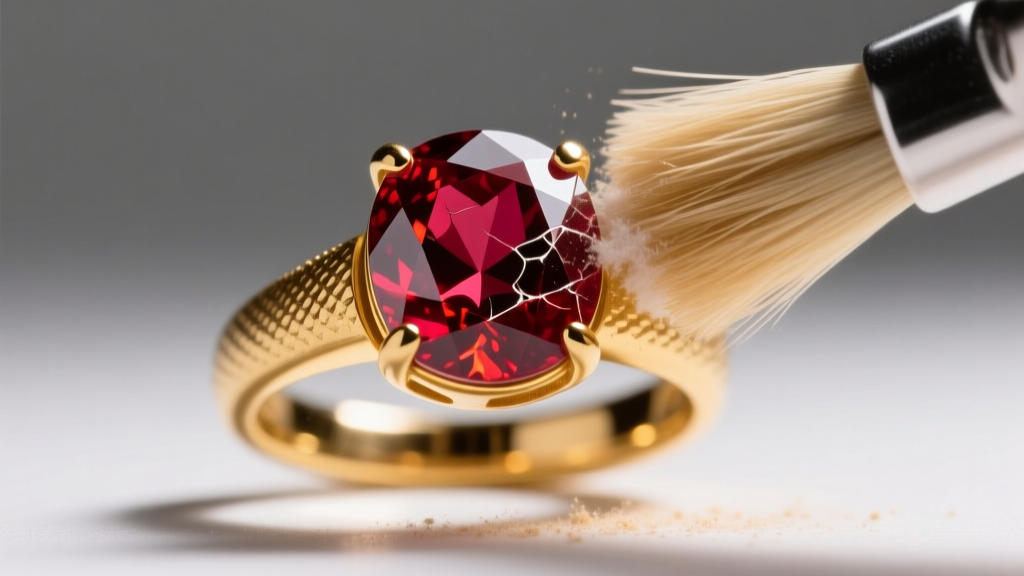
However, for fracture-filled rubies or oil-treated emeralds, this low surface tension is destructive. Over 90% of commercial emeralds are treated with cedar oil or synthetic polymers to mask natural fissures. Because Weiman's primary function is to emulsify and lift oils, submerging an emerald will actively draw the filler out of the stone, leaving it looking cloudy, fractured, and significantly less vibrant. For these materials, a dry, untreated microfiber cloth is the only safe option.
Metal Reactions: Gold, Platinum, and Silver Tarnish
Noble metals like platinum, 14k, 18k, and 22k gold are entirely impervious to Weiman's mild chemical profile. The cleaner will safely lift the dulling layer of dead skin cells and hand sanitizers that accumulate on the shank and undergallery of rings. However, the interaction with sterling silver and rhodium-plated white gold requires a more nuanced approach.
Why Sterling Silver Needs More Than a Liquid Dip
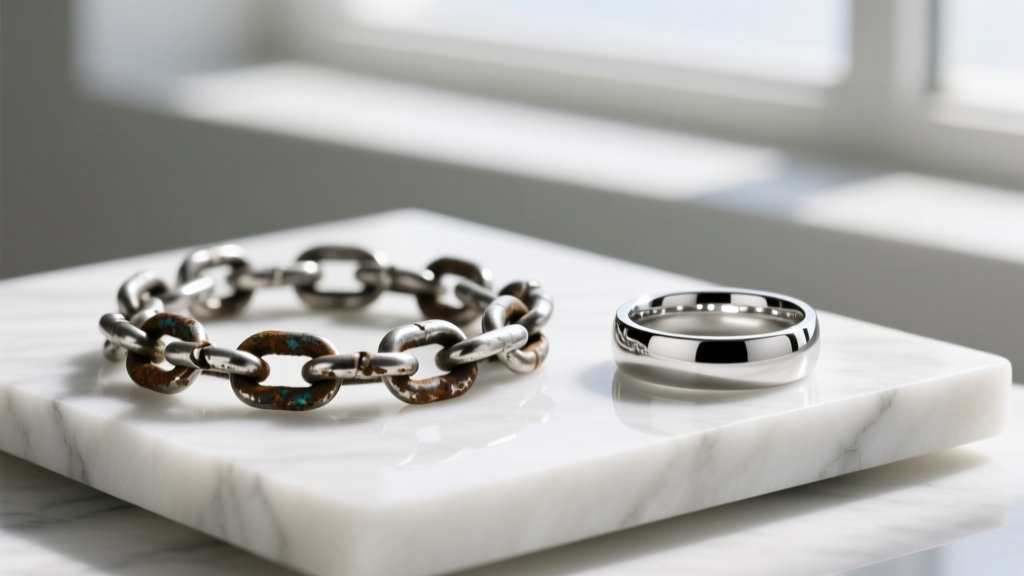
Sterling silver (92.5% silver, 7.5% copper alloy) tarnishes due to a chemical reaction with sulfur compounds in the air, forming silver sulfide. Weiman Fine Jewelry Cleaner is a degreaser, not a reducing agent. It will successfully remove the oily film sitting on top of the tarnish, but it will not reverse the oxidation. To remove silver sulfide, you need either a mechanical abrasive (a treated silver polishing cloth) or an electrochemical reduction bath (aluminum foil, boiling water, and baking soda). Using Weiman on heavily tarnished silver will simply result in clean, but still blackened, metal.
Rhodium Plating and White Gold
White gold achieves its bright, silvery appearance through a micron-thin plating of rhodium. As of 2026, standard commercial rhodium plating ranges from 0.5 to 1.0 microns. Weiman's liquid formula is chemically safe for rhodium and will not strip the plating. The danger lies in the mechanical application. The small brush included with the Weiman kit, if used with excessive pressure on a ring where the rhodium is already wearing thin (below 0.2 microns), can accelerate the physical abrasion, exposing the yellowish white gold underneath.
Property-Based Comparison: Weiman vs. Alternatives
How does Weiman's chemical approach compare to other popular jewelry cleaning methodologies? Understanding these property differences helps you build a comprehensive care kit.
- Weiman Liquid Dip (Surfactant-Based): Best for hard, untreated gems (diamonds, sapphires) and noble metals. Safely lifts organic oils and cosmetics without harsh fumes. Fails on tarnish and porous stones.
- Ultrasonic Cleaners (Cavitation-Based): Uses high-frequency sound waves to create microscopic vacuum bubbles that implode, blasting dirt from crevices. Highly effective for diamond pavé settings, but the localized heat and shockwaves can shatter emeralds, opals, and tanzanite, or shake loose stones from worn prongs.
- Ammonia-Based Cleaners (Alkaline Solvents): Extremely effective at cutting through heavy grease and restoring diamond brilliance. However, ammonia is highly corrosive to base metals, can degrade porous gems, and poses respiratory risks in poorly ventilated spaces.
- DIY Baking Soda Paste (Mild Abrasive): Excellent for mechanically scrubbing heavy tarnish off solid silver or gold chains. Completely unsuitable for polished gemstones, as the abrasive particles will scratch the surface of softer stones like turquoise, lapis, and even opals.
Step-by-Step Protocol for Safe Materials
If your piece passes the material safety matrix (e.g., a platinum ring set with untreated diamonds and sapphires), follow this protocol to maximize brilliance without risking structural damage:
- Pre-Inspection: Use a 10x jeweler's loupe to check that all prongs are flush against the gemstone girdle. Never submerge a piece with loose stones; the liquid can lubricate the setting and cause the stone to fall out.
- Dwell Time: Submerge the jewelry in the Weiman solution for no more than 3 to 5 minutes. Prolonged soaking is unnecessary for surfactants to break down sebum and can weaken the adhesive in certain multi-stone cluster settings.
- Gentle Agitation: Use a baby-soft toothbrush or the provided kit brush to gently sweep the pavilion (the underside) of the gemstones, where light-blocking grease accumulates.
- The Distilled Water Rinse: This is the most frequently skipped step. Rinsing with tap water leaves behind microscopic calcium and magnesium deposits (hard water spots) that dry into a cloudy film, negating the cleaning process. Always rinse with distilled water.
- Drying: Pat dry with a lint-free microfiber cloth. Avoid air-drying, as evaporation will leave streak marks on highly polished metal surfaces.
Final Verdict: When to Use Weiman and When to Avoid It
Weiman Fine Jewelry Cleaner remains a highly effective, low-risk degreaser for everyday maintenance of hard gemstones and noble metals. Its ammonia-free, pH-balanced profile makes it superior to harsh household alternatives for removing the organic films that dull diamond brilliance. However, it is not a universal panacea. It will not reduce silver tarnish, and its surfactant properties make it actively destructive to oil-treated emeralds, porous turquoise, and delicate organic gems like pearls and coral. By matching the cleaner's chemical properties to the specific material science of your jewelry, you ensure your collection remains structurally intact and optically brilliant for decades to come. For deeper insights into specific gemstone tolerances, always refer to the Weiman Official Product Data and gemological care standards.