How to Polish Jewelry: Technical Guide to Restoring Luster
Learn how to polish jewelry with our expert technical guide. Discover micron-level abrasion methods, rouge compounds, and metal-specific luster restoration.

The Metallurgy of Luster: Understanding Surface Abrasion
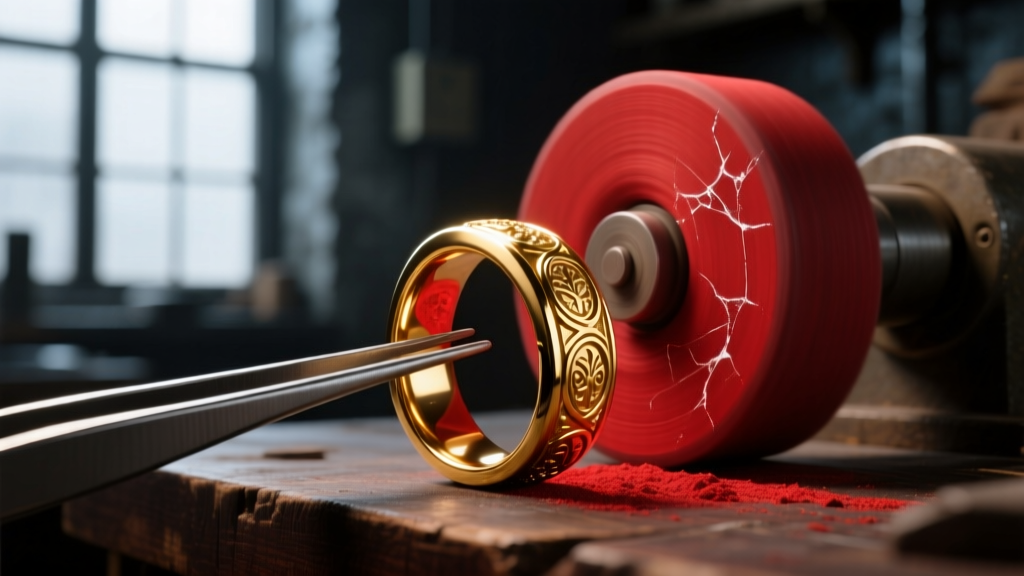
When professionals approach how to polish jewelry, they are not merely rubbing a surface; they are executing controlled micro-abrasion. Restoring a high-mirror finish requires removing microscopic layers of tarnished or scratched metal to reveal the pristine crystalline structure beneath. To do this effectively without compromising the structural integrity of the piece, one must understand the Vickers Hardness (HV) of the specific alloy being worked on.
For instance, sterling silver is relatively soft, typically measuring between 65 and 90 HV. This makes it highly susceptible to deep scratching but also very forgiving to polish. In contrast, 14k yellow gold sits at approximately 130 to 150 HV due to its copper and zinc alloying elements, requiring more aggressive initial cutting. Platinum 950, while measuring a similar 110 to 130 HV, behaves entirely differently due to its high density and malleability. Understanding these metallurgical baselines is the first step in selecting the correct abrasive compound and wheel density.
Abrasive Compounds: Matching Rouge to Metal Hardness
Polishing compounds, often referred to as rouges, consist of microscopic abrasive particles suspended in a wax or grease binder. The color of the compound universally dictates its grit size and intended application. Using a compound that is too coarse will result in 'orange peel'—a wavy, distorted surface reflection caused by uneven abrasion of the alloy's grain structure. Using one that is too fine will burnish the metal, trapping dirt and creating a false shine that quickly dulls.
| Compound Name | Color | Cut / Grit | Optimal Application |
|---|---|---|---|
| Tripoli | Brown | Medium Cut | Initial scratch removal on 14k/18k gold, brass, and copper. |
| White Diamond | White/Gray | Fine Cut | Pre-polish for platinum, white gold, and hard steels. |
| Red Rouge | Red | Extra Fine | Final mirror polish on high-karat gold and precious metals. |
| Zam | Green | Fine / Safe | Silver, turquoise, lapis lazuli, and soft porous stones. |
| Black Emery | Black | Coarse Cut | Heavy material removal, casting sprue leveling (not for final polish). |
According to bench jewelry guidelines documented by the Ganoksin Project, the binder in these compounds melts via the friction of the spinning wheel, carrying the abrasive particles across the metal surface. If the wheel speed (RPM) is too low, the wax will not melt, resulting in a clogged wheel and zero cutting action. If the RPM is too high, the wax burns off instantly, throwing abrasive dust into the air and glazing the metal.
Mechanical vs. Chemical Polishing: Failure Modes
The Danger of Over-Polishing Gold Alloys
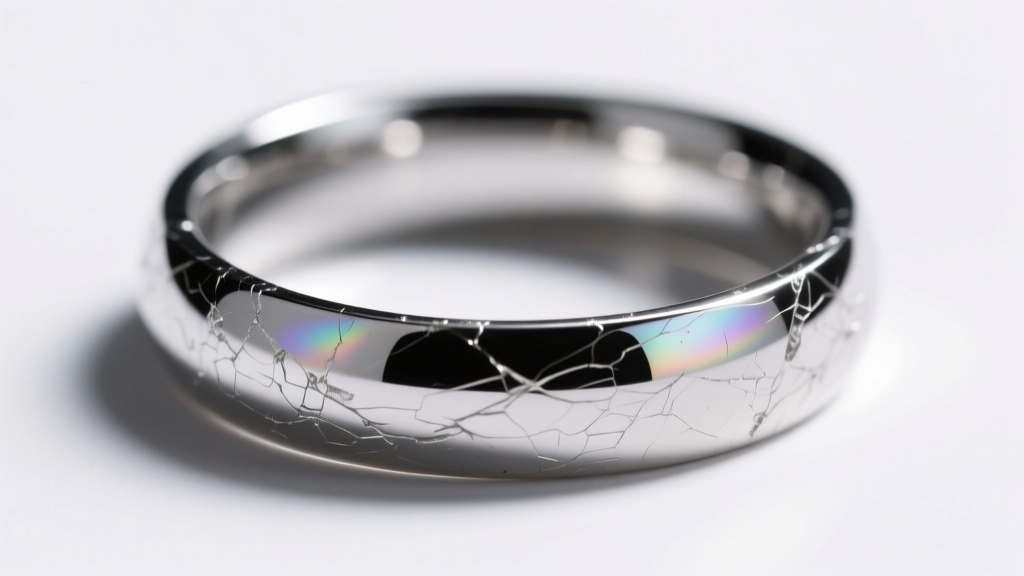
Mechanical polishing on gold alloys is a subtractive process. Every time a 14k gold ring is polished, a measurable amount of metal is physically ablated away. A standard bench motor running at 3450 RPM with a hard felt wheel and Tripoli compound can remove up to 0.05 millimeters of gold per minute of continuous contact. Over-polishing the shank of a ring can reduce its structural cross-section, leading to catastrophic shank failure (snapping) under normal wear. Furthermore, aggressive polishing rounds off the crisp edges of milgrain detailing and softens the geometric lines of step-cut bezels.
Platinum Displacement vs. Gold Removal
Platinum's unique molecular structure means it displaces rather than ablates. When a polishing wheel hits a scratch on a platinum band, the metal is pushed to the sides of the scratch rather than being removed as dust. This is why platinum develops a 'patina' of microscopic surface scratches over time. To achieve a true mirror finish on platinum, a master jeweler must first use a burnishing tool or a tungsten carbide scraper to flatten the displaced metal back into the scratch before applying White Diamond compound on a muslin wheel. Skipping this step results in a cloudy, gray finish that lacks true depth.
Gemstone Inclusions and Polish Sensitivity
Knowing how to polish jewelry safely requires strict awareness of gemological vulnerabilities. The friction generated by a 3450 RPM polishing wheel can raise the surface temperature of a gemstone to over 150°F in seconds, which is catastrophic for several popular stones.
- Emeralds: Nearly all commercial emeralds are fracture-filled with cedar oil or synthetic resins to improve clarity. The heat and chemical solvents in polishing compounds will boil out or dissolve these fillers, leaving the stone looking cloudy, white, and heavily fractured. Emeralds must be masked with thermal tape and polished only by hand.
- Opals: Containing between 3% and 21% water, opals are highly sensitive to thermal shock. Friction heat from mechanical polishing can cause 'crazing'—a network of internal cracks that destroys the stone's play-of-color and structural integrity.
- Tanzanite: With a Mohs hardness of 6.5 to 7 and perfect cleavage in one direction, tanzanite can easily chip or cleave if caught against the edge of a stiff muslin polishing wheel. The Gemological Institute of America (GIA) strictly advises against ultrasonic and aggressive mechanical polishing for tanzanite.
Step-by-Step Technical Polishing Protocol
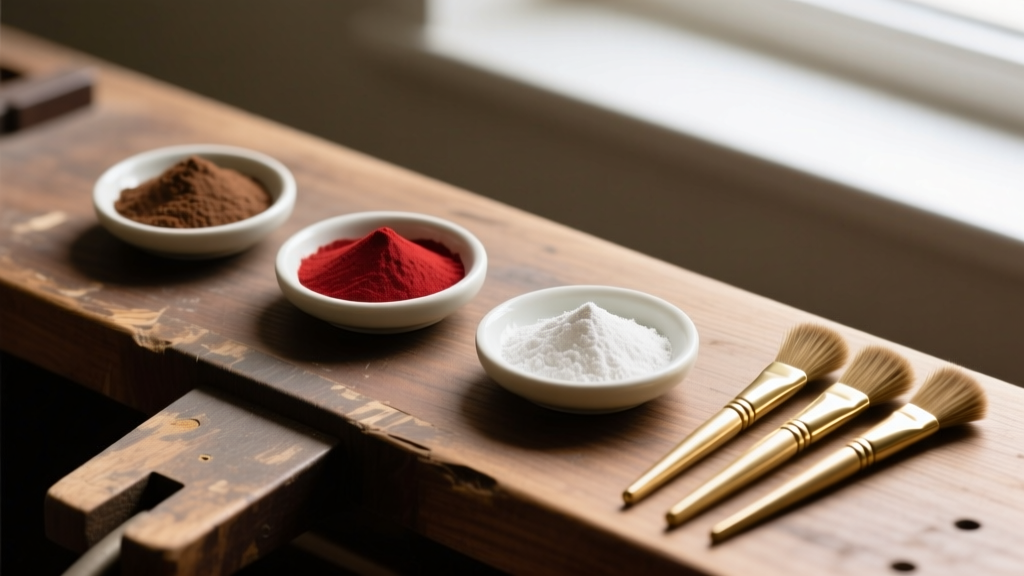
For the advanced hobbyist or apprentice jeweler looking to restore a solid gold or platinum piece without delicate inclusions, follow this strict bench protocol:
- Preparation and Degreasing: Ultrasonically clean the piece in a mild alkaline solution to remove skin oils and lotions. Any surface grit left on the jewelry will be dragged across the metal by the polishing wheel, creating deep, unintended gouges.
- Initial Cut (If Necessary): For deep scratches on 14k gold, mount a hard felt wheel on the left spindle of your bench motor. Apply Tripoli compound sparingly. Run the motor at 3450 RPM. Keep the piece moving continuously against the wheel's rotation (polishing from the 6 o'clock to 9 o'clock position) to prevent the wheel from catching and throwing the piece.
- Washout: You must completely remove the Tripoli wax before moving to a fine polish. Wash the piece in warm water with dish soap and a soft brush, or use steam. Mixing Tripoli and Red Rouge on the same wheel will contaminate the fine compound with coarse grit.
- Final Color Polish: Switch to a soft, unstitched muslin wheel on the right spindle. Apply Red Rouge (for gold/silver) or White Diamond (for platinum/white gold). Run at a slightly lower speed (1800 to 2500 RPM) to prevent burning the wax. Apply light pressure, letting the compound do the work.
- Final Ultrasonic Rinse: Remove the residual rouge wax using a heated ultrasonic cleaner with a specialized jewelry detergent, followed by a distilled water rinse and a hot air dry.
Expert Note on Rhodium Plating: Never attempt to mechanically polish white gold that is rhodium-plated. Rhodium is a microscopic surface layer (usually 0.75 to 1.0 microns thick). Polishing will instantly strip the plating, revealing the yellowish-white alloy beneath. White gold must be stripped of its old rhodium via reverse electrolysis, polished, and then re-plated in a fresh rhodium bath.
When to Delegate to a Master Jeweler
While understanding the technical science of how to polish jewelry is vital for collectors and enthusiasts, certain scenarios strictly require professional intervention. If a piece features antique filigree, tension-set gemstones, or severe structural wear (such as a paper-thin ring shank), DIY polishing will likely result in irreversible damage. Furthermore, laser-welded repairs and sizing joints often have different metallurgical properties than the surrounding metal; polishing these areas without expert technique will cause the joints to polish out faster, creating visible divots. For high-value horology and heirloom jewelry, always rely on a certified bench jeweler who utilizes variable-speed micromotors and specialized masking techniques to preserve both the metal's mass and the piece's historical integrity.


