Dawn Jewelry Cleaner Trend: Efficacy & Style Analysis
Is the viral Dawn jewelry cleaner method safe for your gems? We analyze the chemistry, trend data, and material compatibility for 2026.

The jewelry care landscape in 2026 has experienced a fascinating pivot. While high-end ultrasonic machines and ionic cleaners dominate the luxury market, the humble 'Dawn jewelry cleaner' method—utilizing Original Blue Dawn dish soap—has cemented itself as a dominant trend across social media, professional workshops, and estate jewelry houses. What began as a DIY life hack has evolved into a widely accepted, chemically sound protocol for degreasing precious metals and durable gemstones. But as with any viral trend, the line between effective science and damaging misuse is perilously thin.
As a style and trend radar platform, we are dissecting the anatomy of this movement. Why are master jewelers and everyday collectors alike reaching for a kitchen staple instead of commercial ammonia-based dips? Below, we break down the surfactant chemistry, material compatibility, and the precise protocol required to execute the Dawn jewelry cleaner method safely.
The Anatomy of a Viral Cleaning Trend
In the early 2020s, the jewelry cleaning market was saturated with expensive, heavily branded chemical solutions. However, the shift toward 'slow care' and accessible, transparent chemistry has reshaped consumer behavior. The Dawn jewelry cleaner trend gained massive traction on platforms like TikTok and Instagram, driven by satisfying 'restoration' videos where vintage, grime-coated rings were returned to their original brilliance using nothing but dish soap and a soft brush.
By 2026, this trend has transcended social media. Estate jewelry dealers frequently use Dawn to degrease vintage finds before photography, as it effectively removes decades of skin oils without the harsh oxidative risks associated with commercial silver dips. The appeal lies in its accessibility, low toxicity, and remarkable efficacy against the most common jewelry enemy: human sebum.
Surfactant Chemistry: How Dawn Lifts Sebum and Cosmetics
To understand why the Dawn jewelry cleaner method works, we must look at the molecular level. Diamonds and many other gemstones are lipophilic (oil-attracting) and hydrophobic (water-repelling). When you wear a ring, skin sebum, lotions, and hairsprays create a microscopic hydrophobic film over the stone, dulling its refractive index and sparkle.
Original Blue Dawn relies on anionic surfactants, primarily sodium lauryl sulfate (SLS) and sodium laureth sulfate (SLES). These molecules feature a hydrophilic (water-loving) head and a lipophilic (oil-loving) tail. When introduced to water, they form structures called micelles. The lipophilic tails attach to the sebum and cosmetic buildup on your jewelry, while the hydrophilic heads face outward, allowing the trapped oils to be suspended in water and rinsed away.
'Commercial ammonia cleaners are excellent for cutting grease, but they can cause long-term stress corrosion cracking in certain gold alloys and degrade the epoxy used in some cluster settings. Dawn operates at a near-neutral pH of around 7.0 to 8.5, making it an exceptionally safe degreaser for complex, multi-material vintage pieces.' — Bench Jeweler & Metallurgist Insights, 2025
Crucially, not all Dawn formulations are equal. Trend analysts and gemologists strongly advise using Original Blue Dawn. The 'Platinum' or 'Antibacterial' variants contain added enzymes, harsher degreasers, and moisturizing agents that can leave a filmy residue on gemstones or strip the temporary oils from treated stones.
Material Compatibility Matrix
The most critical failure point of the Dawn jewelry cleaner trend is the assumption that it is universally safe. While it is a phenomenal degreaser, it interacts very differently across the Mohs hardness scale and gemstone porosity spectrum. According to the Gemological Institute of America (GIA), understanding your specific gemstone's structural integrity is paramount before any soak.
| Material / Gemstone | Mohs Hardness | Dawn Compatibility | Risk Level & Expert Notes |
|---|---|---|---|
| 14k / 18k Yellow Gold | 2.5 - 3.0 | Excellent | Low. Safely removes oils. Will not remove tarnish or oxidation. |
| Platinum 950 | 4.0 - 4.5 | Excellent | Low. Ideal for restoring the high-polish luster obscured by sebum. |
| Diamond (Natural/Lab) | 10.0 | Excellent | None. Diamonds are highly lipophilic; Dawn restores light return perfectly. |
| Moissanite | 9.25 | Excellent | None. Highly durable and responsive to surfactant degreasing. |
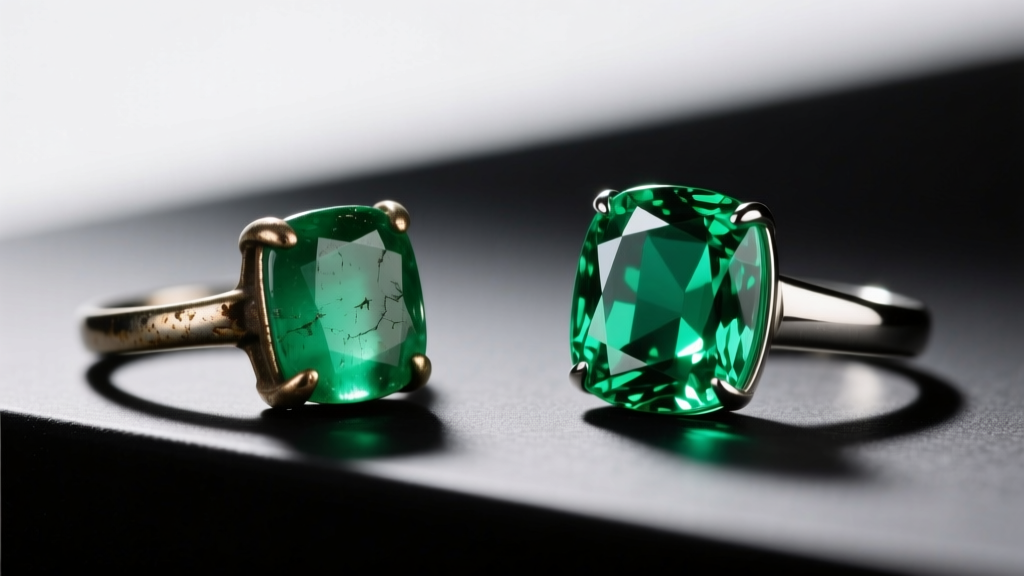
| Emerald (Oiled) | 7.5 - 8.0 | Poor | High. Dawn will strip the cedar oil used to mask natural fissures, causing a cloudy appearance. |
| Pearl (Nacre) | 2.5 - 3.0 | Dangerous | Severe. Surfactants can degrade the delicate conchiolin protein matrix of the nacre. |
| Opal (Hydrated Silica) | 5.5 - 6.5 | Dangerous | Severe. As noted in the GIA Opal Care Guide, prolonged soaking can cause crazing or cracking. |
The Protocol: Formulating the Perfect Dawn Soak
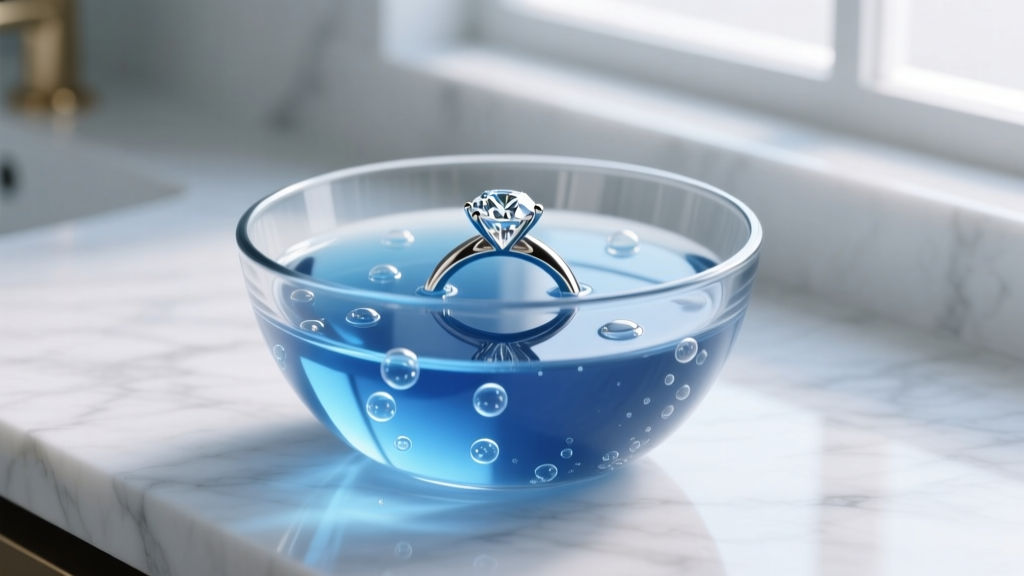
For durable stones (diamonds, sapphires, rubies) and solid precious metals, the Dawn jewelry cleaner method requires precision. Haphazardly dropping a ring into a sink full of hot, soapy water is a recipe for thermal shock and lost jewelry. Follow this exact protocol for optimal results:
1. The Solution Ratio
Use distilled or filtered water to prevent calcium and magnesium deposits (hard water spots) from clinging to the metal. Mix exactly 3 to 4 drops of Original Blue Dawn per 8 ounces (240ml) of water. Excessive soap creates a thick film that is difficult to rinse from tight pavé settings.
2. Temperature Control
Heat the water to between 95°F and 105°F (35°C - 40°C). This lukewarm temperature is warm enough to soften hardened sebum and cosmetic waxes, but cool enough to prevent thermal shock. Never use boiling water; rapid temperature changes can cause included gemstones (like emeralds or heavily fractured sapphires) to cleave along their internal fault lines.
3. Agitation and Mechanical Action
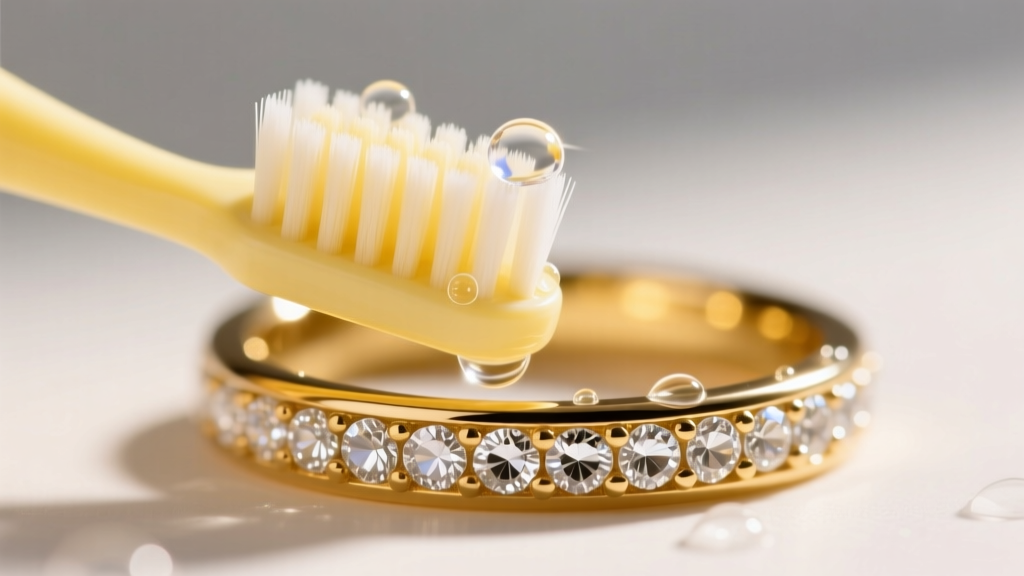
Allow the jewelry to soak for 15 to 20 minutes. After soaking, use an extra-soft baby toothbrush (featuring 0.1mm nylon bristles) to gently agitate the culet (bottom) of the gemstone and the gallery wire. Stiffer bristles can induce micro-scratches on high-karat gold and platinum.
4. The Rinse and Dry
Rinse thoroughly under a gentle stream of lukewarm distilled water. To dry, avoid paper towels, which consist of wood pulp fibers that can snag on prongs. Instead, use a lint-free microfiber cloth or, for intricate settings, a can of compressed air to blow water droplets out from beneath the stones.
The Limitations: When the Dawn Jewelry Cleaner Fails
It is vital to understand the boundaries of this trend. Dawn is a degreaser; it is not a chemical reducer, a tarnish remover, or a polishing agent. The most common consumer complaint regarding the Dawn jewelry cleaner method stems from a misunderstanding of its chemical purpose.
- Silver Tarnish: Dawn cannot remove silver sulfide (the black tarnish on sterling silver). Tarnish requires a chemical reduction process (like an aluminum foil and baking soda bath) or mechanical abrasion via a jeweler's rouge polishing cloth.
- Copper Oxidation: Rose gold alloys contain copper, which can develop a dark patina over time. Dawn will clean the surface oils but will not strip the copper oxidation.
- Hard Water Etching: If a gemstone has been repeatedly exposed to hard water, it may develop a permanent calcium etching. Surfactants cannot dissolve mineral deposits; this requires a professional ultrasonic cleaning or a mild, jeweler-approved acidic bath.
For a comprehensive overview of when to seek professional help versus utilizing home methods, the Brilliant Earth Jewelry Care education center offers excellent guidelines on recognizing permanent structural dullness versus simple surface grease.
2026 Trend Forecast: DIY Degreasing vs. Ultrasonic Tech
As we move deeper into 2026, the jewelry care market is not abandoning the Dawn method; rather, it is integrating it. The newest wave of at-home 45kHz ultrasonic cleaners is increasingly marketed to be used with a drop of Dawn dish soap rather than harsh chemical solvents. The ultrasonic cavitation process creates microscopic vacuum bubbles that implode against the jewelry, dislodging dirt from microscopic crevices that a toothbrush cannot reach. When paired with the lipophilic micelle action of Dawn, the result is a factory-level clean.
However, the golden rule of 2026 remains unchanged: Ultrasonics are for durable stones only. For your grandmother's vintage opal brooch or your fracture-filled emerald cocktail ring, the gentle, chemically neutral Dawn jewelry cleaner hand-soak remains the undisputed champion of safe, accessible, and effective jewelry maintenance.