How to Use Ultrasonic Cleaner for Jewelry: Budget & Value Guide
Discover how to use ultrasonic cleaner for jewelry on a budget. Compare machine costs, ROI, safe gemstones, and DIY vs commercial solutions.

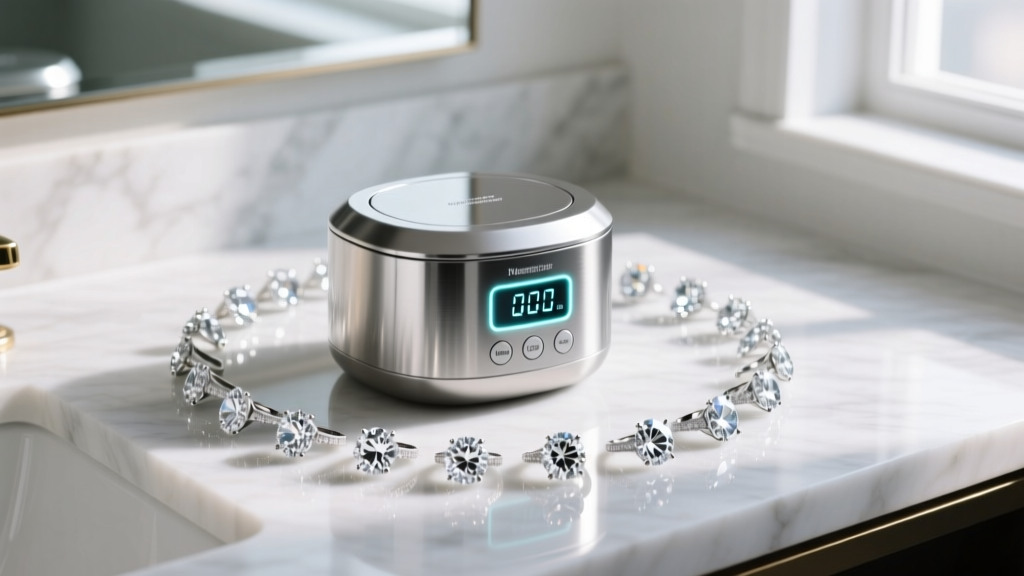
When it comes to maintaining the brilliance of your jewelry collection, the gap between professional servicing and at-home care has narrowed significantly. However, with entry-level machines starting at $30 and professional-grade units exceeding $500, understanding the true return on investment is critical. This guide breaks down the financial and practical realities of at-home ultrasonic cleaning, helping you determine if buying a machine makes financial sense and exactly how to use ultrasonic cleaner for jewelry without damaging your most prized assets.
The True Cost of Sparkle: Professional vs. At-Home Ultrasonic
Before diving into operation techniques, we must assess the value proposition. A typical jeweler charges between $5 and $15 for a basic ultrasonic cleaning and steam polish. If you have a modest collection of 10 pieces and clean them bi-monthly, you are spending up to $300 annually on professional cleanings.
| Cleaning Method | Upfront Cost | Cost Per Use | 3-Year Total Cost |
|---|---|---|---|
| Professional Jeweler | $0 | $10.00 | $600.00 (assuming bi-monthly) |
| Budget Ultrasonic ($35) | $35 | $0.05 (solution cost) | $71.00 |
| Premium Ultrasonic ($150) | $150 | $0.05 | $186.00 |
From a purely financial standpoint, a budget ultrasonic cleaner pays for itself within the first three months of regular use. However, the hidden costs lie in potential gemstone damage and premature machine failure if you purchase an underpowered unit or use it incorrectly.
How to Use Ultrasonic Cleaner for Jewelry Safely on a Budget
Budget machines (typically priced between $30 and $50) generally operate at a fixed 42 kHz frequency with 35 to 50 watts of power. While sufficient for everyday grime, they lack the 'sweep' frequency technology found in premium models, which prevents 'hot spots' of intense cavitation that can pit soft metals. To maximize the value and safety of a budget machine, follow this optimized protocol:
1. The Pre-Rinse and Basket Protocol
Never drop jewelry directly into the stainless steel tank. The intense high-frequency vibrations against the metal floor can scratch gold and platinum. Always use the provided plastic basket insert. Furthermore, rinse your jewelry under warm water first to remove loose surface debris; this prevents the ultrasonic waves from driving large dirt particles into the micropores of your metal settings.
2. Temperature and Timing Optimization
Budget machines do not have built-in heaters. Ultrasonic cavitation is most effective in water heated between 120°F and 140°F (49°C - 60°C). Pour warm tap water into the tank, but do not boil it, as extreme heat can warp the plastic basket and degrade the epoxy bonding the transducer to the tank floor. Limit cleaning cycles to 3 minutes. Running a cheap 35W machine for 15 minutes will overheat the internal circuitry and drastically shorten its lifespan.
Budget vs. Premium Machines: Where Should You Invest?
Not all ultrasonic cleaners are created equal. The market is flooded with generic, drop-shipped models that misrepresent their wattage and frequency. Here is a value assessment of the three primary market tiers:
- Tier 1: Budget (e.g., Magnasonic, generic brands | $30 - $45)
These operate at 42 kHz and roughly 35W. They are excellent for solid gold, platinum, and durable stones like diamonds and sapphires. The primary failure mode is transducer burnout after 12-18 months of heavy use. Value Verdict: High ROI for casual users with durable jewelry. - Tier 2: Mid-Range (e.g., iSonic P4810 | $70 - $110)
Offering 60W of power and a 42 kHz frequency, these units feature better sound insulation, heavy-duty stainless steel tanks, and dual-fuse protection. They clean 30% faster due to higher wattage density. Value Verdict: The sweet spot for enthusiasts and small collections. - Tier 3: Professional (e.g., Elmasonic, Sonicor | $300 - $800+)
These feature 'Sweep' technology (oscillating frequencies to eliminate hot spots), degassing functions, and dual-frequency options (e.g., 37/80 kHz). Value Verdict: Only necessary for bench jewelers or those cleaning highly intricate, fragile antique pieces.
Gemstone & Metal Risk Matrix: Protecting Your Investment
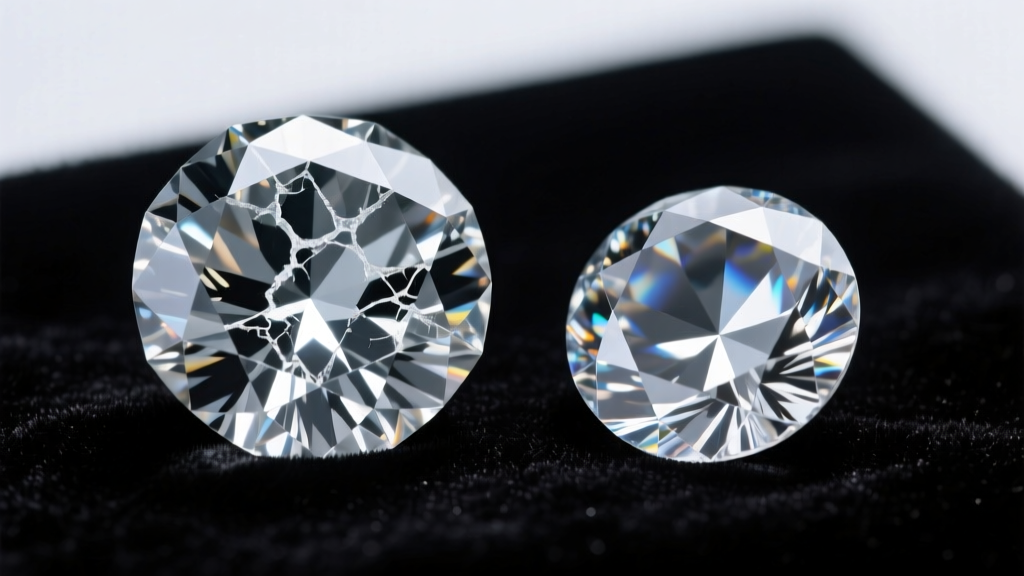
The fastest way to destroy the value of an ultrasonic cleaner is to use it on incompatible gemstones. The Gemological Institute of America (GIA) explicitly warns against using ultrasonics on fracture-filled diamonds, as the high-frequency vibrations can shatter the glass-like fillers used to mask internal flaws.
Similarly, organic gems and porous stones are strictly off-limits. According to GIA Emerald Care guidelines, most emeralds are treated with cedar oil to hide fissures; ultrasonic waves will boil this oil out, leaving the stone looking cloudy and heavily fractured.
| Safe for Ultrasonic | High Risk / Never Use |
|---|---|
| Diamonds (untreated) | Emeralds (oil/resin treated) |
| Sapphires & Rubies | Opals & Pearls (organic/porous) |
| Platinum & 14k/18k Gold | Turquoise, Lapis Lazuli, Malachite |
| Moesanite | Fracture-filled or laser-drilled diamonds |
The Pave Setting Danger
Even if the metal and stone are safe, the setting might not be. Ultrasonic cleaners are notorious for vibrating tiny melee diamonds out of pave and micro-pave settings. If your jewelry features stones smaller than 0.05 carats held by microscopic prongs, skip the ultrasonic and use a soft brush instead. The cost of resetting a lost diamond far outweighs the convenience of the machine.
DIY Solution Recipes vs. Commercial Concentrates
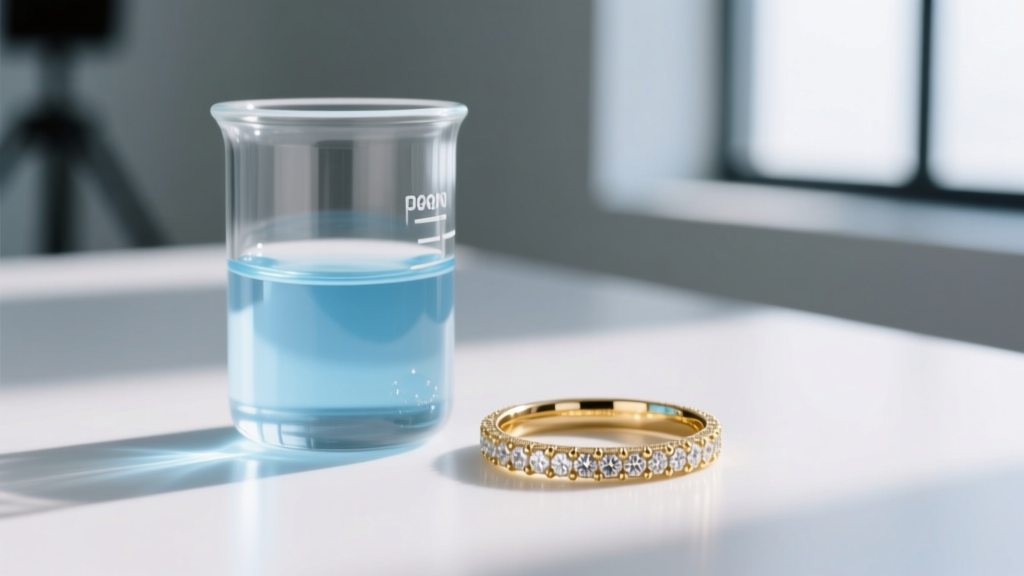
Another ongoing cost to consider is the cleaning fluid. Plain water does not break down the lipids and oils that trap dirt against the back of a gemstone's pavilion. You need a surfactant.
The Budget DIY Recipe
For everyday cleaning, a mixture of warm water, three drops of degreasing dish soap (like Dawn), and a single teaspoon of household ammonia works exceptionally well for diamond and gold jewelry. Warning: Never use ammonia on porous stones or silver, as it can cause rapid tarnishing or chemical etching. Cost per use: Less than $0.01.
Commercial Concentrates
Brands like Blitz or iSonic sell concentrated jewelry cleaning solutions for about $15 to $20 per 16oz bottle. Because you only need one capful per tank of water, a single bottle can yield up to 15 gallons of cleaning solution. Cost per use: Approximately $0.04. Commercial solutions are pH-balanced and contain anti-tarnish agents, making them the superior choice for mixed-metal collections that include sterling silver.
Final Verdict: Is the ROI Worth It?
Learning how to use ultrasonic cleaner for jewelry is one of the highest-ROI investments a jewelry lover can make, provided you respect the limitations of budget hardware. A $40 entry-level machine will easily save you hundreds of dollars in professional cleaning fees over a three-year period. However, true value is only realized when paired with strict adherence to gemstone safety protocols. By avoiding treated stones, respecting the 3-minute cycle limit, and using a high-quality surfactant, your budget ultrasonic cleaner will keep your collection brilliantly maintained without compromising its structural integrity.


