How Can You Clean Jewelry Safely: A Step-by-Step Gemstone Guide
Discover exactly how you can clean jewelry with porous and hard gemstones using our expert step-by-step guide, DIY ratios, and safety matrix.

The Science of Gemstone Porosity and Hardness
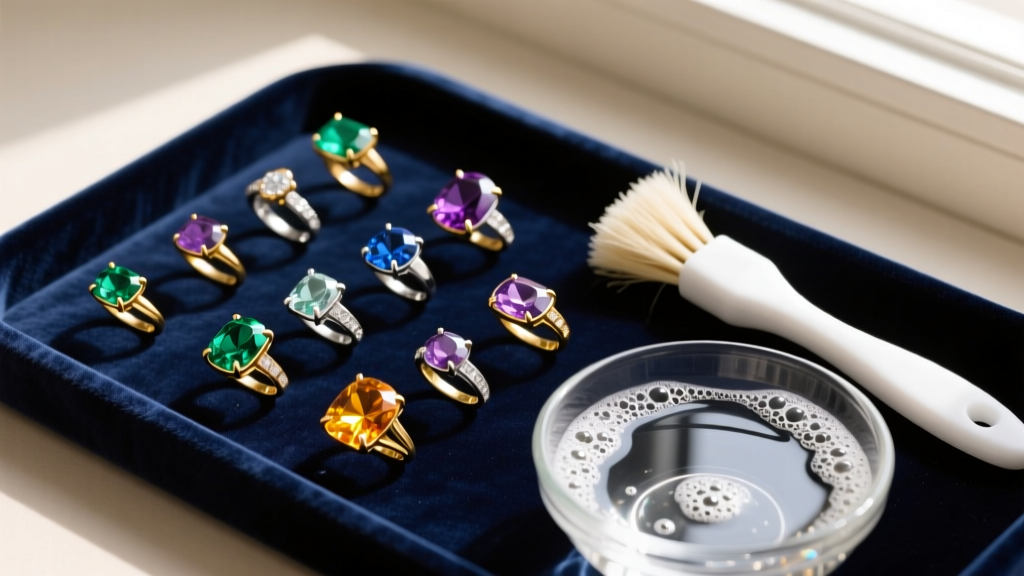
When you invest in fine jewelry, the immediate question is often: how can you clean jewelry without causing microscopic damage to the stones or metal settings? Many commercial jewelry cleaners contain harsh alkaline chemicals or ammonia that can strip the natural oils from porous gemstones or degrade fracture-filled treatments. To clean effectively, you must first understand the Mohs Hardness Scale and gemstone porosity.
Diamonds, sapphires, and rubies rank between 9 and 10 on the Mohs scale, making them highly resistant to scratching and safe for prolonged soaking. Conversely, organic gems like pearls (Mohs 2.5-4.5) and porous stones like turquoise (Mohs 5-6) act like microscopic sponges. Submerging them in liquid can lead to 'crazing' (internal cracking) or permanent discoloration. According to the Gemological Institute of America (GIA), understanding these structural differences is the foundational step in any jewelry care routine.
Step-by-Step: How Can You Clean Jewelry with Hard, Non-Porous Stones
For durable stones like diamonds, sapphires, and rubies set in platinum, 14k/18k gold, or sterling silver, a gentle DIY surfactant solution is vastly superior to abrasive commercial dips. Here is the exact protocol for restoring brilliance to hard gemstones.
The Preparation Phase
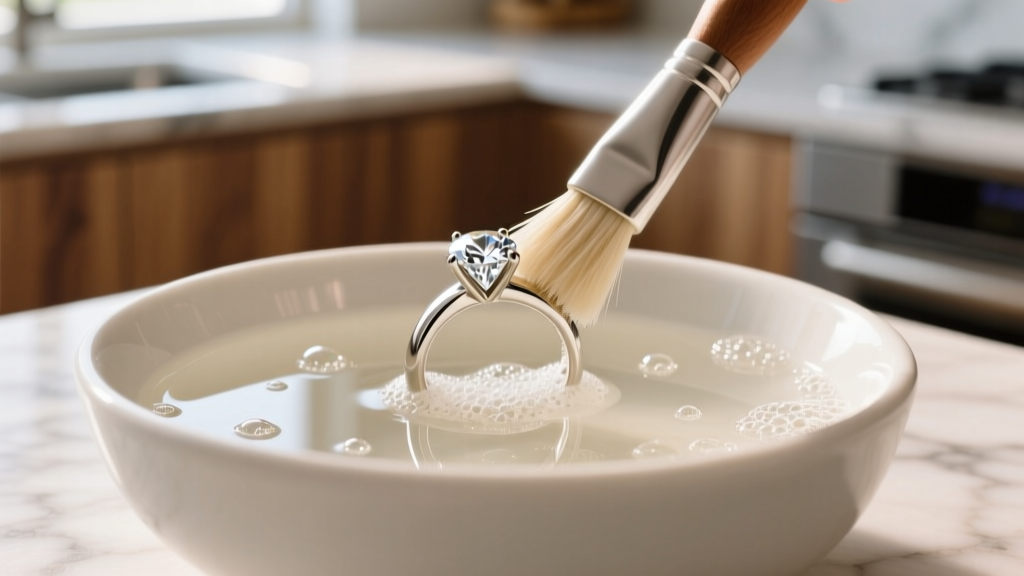
- The Solvent: Mix 1 cup of warm distilled water (tap water contains calcium and magnesium that leave hard water spots) with 3 to 4 drops of a pH-neutral, ammonia-free dish soap, such as original blue Dawn.
- The Agitator: Use an extra-soft baby toothbrush or a specialized jewelry brush with 0.05mm to 0.1mm bristles. Stiff bristles can scratch precious metal prongs and rhodium plating over time.
- The Catch Basin: Always clean over a silicone sink stopper or a small ceramic bowl. Dropping a ring down an open drain is the most common cause of jewelry loss during cleaning.
The Cleaning Execution
- Soak: Submerge the jewelry in the solution for exactly 15 to 20 minutes. This allows the surfactant to break down the sebum (skin oils) and cosmetic buildup trapped beneath the gemstone's pavilion (the bottom facets).
- Agitate: Gently brush the back of the stone and the prong settings using light, circular motions. Do not scrub the metal shank aggressively, as this will create micro-scratches in gold.
- Rinse: Rinse thoroughly under a gentle stream of lukewarm distilled water.
Step-by-Step: How Can You Clean Jewelry with Delicate, Porous Stones
If you are wondering how can you clean jewelry featuring opals, pearls, emeralds, or turquoise, you must abandon the soaking method entirely. These stones require a 'dry-to-damp' surface cleaning approach to preserve their structural integrity and optical phenomena.
Pearls and Organic Gems
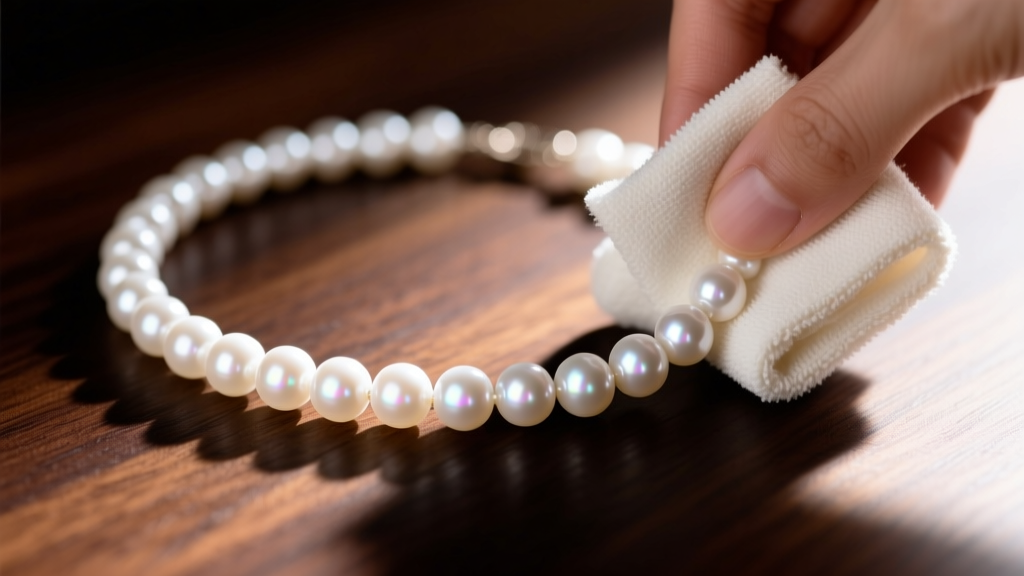
Pearls are highly sensitive to acids and alkalines. Never use ultrasonic cleaners or steamers on pearl necklaces, as the high-frequency vibrations will shatter the nacre, and the heat will melt the silk thread used for knotting. Instead, wipe the pearls after every wear with an untreated, lint-free microfiber chamois cloth. If they are visibly soiled, dampen the cloth slightly with distilled water and wipe each pearl individually, avoiding the drill holes.
Emeralds and Fracture-Filled Stones
Over 90% of commercial emeralds are treated with cedar oil or synthetic resins to mask natural fissures. Soaking an emerald in soapy water or exposing it to mild heat will draw the oil out of the fractures, causing the stone to suddenly look cloudy and heavily included. To clean emerald jewelry, use a dry, ultra-soft makeup brush to dust the pavilion, and gently polish the crown (top) with a dry microfiber cloth. The Jewelers of America strongly advises against using any liquid cleaners on oil-treated emeralds.
The Ultrasonic Cleaner Trap: What to Avoid
Consumer-grade ultrasonic cleaners operate at frequencies typically around 40,000 Hz (40 kHz). While the cavitation bubbles generated at this frequency are excellent for blasting dirt out of diamond pavilions, they are catastrophic for certain materials. The microscopic shockwaves can easily shatter tanzanite, crack opals, and shake loose stones from tension settings or pave bands. Unless your jewelry consists exclusively of untreated diamonds or sapphires in secure bezel or prong settings, avoid at-home ultrasonic machines.
Gemstone Cleaning Safety Matrix
Use the following reference table to determine the safest cleaning methodology for your specific jewelry pieces.
| Gemstone Type | Mohs Hardness | Porosity / Treatments | Safe Cleaning Method | Strictly Avoid |
|---|---|---|---|---|
| Diamond | 10 | Non-porous | Warm soapy soak, soft brush | Chlorine bleach |
| Sapphire / Ruby | 9 | Non-porous (mostly) | Warm soapy soak, soft brush | Harsh acid dips |
| Emerald | 7.5 - 8 | Highly fractured, oil-treated | Dry dusting, damp cloth wipe | Soaking, ultrasonic, steam |
| Opal | 5.5 - 6.5 | Contains 3-21% water | Dry microfiber cloth only | Water immersion, heat |
| Pearl | 2.5 - 4.5 | Organic, highly porous | Wipe with damp chamois | Ultrasonic, ammonia, acids |
| Turquoise | 5 - 6 | Porous, often stabilized | Dry polishing cloth | Soapy water, chemicals |
Drying and Storage Protocols
Knowing how can you clean jewelry is only half the battle; proper drying and storage prevent post-cleaning damage. After rinsing hard stones, do not let them air dry, as this leaves water spots. Instead, use a can of compressed air (held at least 6 inches away) to blow water out from under the settings, followed by a gentle pat-down with a 100% cotton flour-sack towel. Avoid paper towels or tissues, as the wood pulp fibers can leave microscopic scratches on polished gold and platinum.
Once completely dry, store your pieces individually in acid-free tissue paper or soft flannel pouches. Diamonds and sapphires can easily scratch softer metals and gemstones if they are tossed together in a communal jewelry box. By following these material-specific, step-by-step protocols, you will maintain the optical brilliance and structural integrity of your jewelry for decades to come.


