How Do You Make Jewelry Cleaner at Home Without Ruining Gems?
Learn how do you make jewelry cleaner at home safely. Troubleshoot DIY failures, protect delicate gems, and master metal-specific formulas.

When your favorite pieces lose their luster, the immediate impulse is to head to the kitchen pantry. But if you are asking yourself, how do you make jewelry cleaner that actually works without causing irreversible damage, you have likely already experienced the heartbreak of a DIY disaster. Cloudy diamonds, etched pearls, and white chalky residue on gold are the hallmarks of poorly formulated homemade solutions. As a jewelry conservation specialist, I see countless pieces ruined by well-meaning owners who treat all metals and gemstones with the same harsh chemical approach.
This troubleshooting guide moves beyond generic internet hacks. We will break down the exact chemistry of DIY cleaners, troubleshoot common homemade cleaning failures, and provide precise, material-specific formulas to restore your jewelry safely.
The Hidden Dangers of Generic DIY Jewelry Cleaners
The most common DIY jewelry cleaner involves a mixture of baking soda (sodium bicarbonate) and white vinegar (acetic acid). While this fizzy reaction is excellent for unclogging drains, it is a nightmare for jewelry. Baking soda has a pH of around 9 (alkaline), while vinegar sits at a pH of 2.5 (highly acidic).
When you expose porous, calcium-based organic gemstones to these extremes, the results are catastrophic. Pearls, coral, and amber will literally dissolve or suffer severe surface etching when exposed to acids. Furthermore, baking soda is a mild abrasive with a Mohs hardness of about 2.5. While it won't scratch a diamond (Mohs 10), it will easily leave micro-scratches on high-polish gold, silver, and softer stones like turquoise or opal, permanently dulling their mirror finish.
How Do You Make Jewelry Cleaner for Specific Problem Metals?
To formulate a safe cleaner, you must isolate the metal and the specific type of tarnish or oxidation you are dealing with. Here is how to troubleshoot heavy metal tarnish using targeted chemistry.
Heavy Tarnish on Sterling Silver: The Electrochemical Method
Silver sulfide (tarnish) cannot be safely scrubbed off without removing microscopic layers of silver. Instead, use an electrochemical ion exchange. According to the Smithsonian Institution's conservation guidelines, this method reverses the chemical reaction that caused the tarnish.
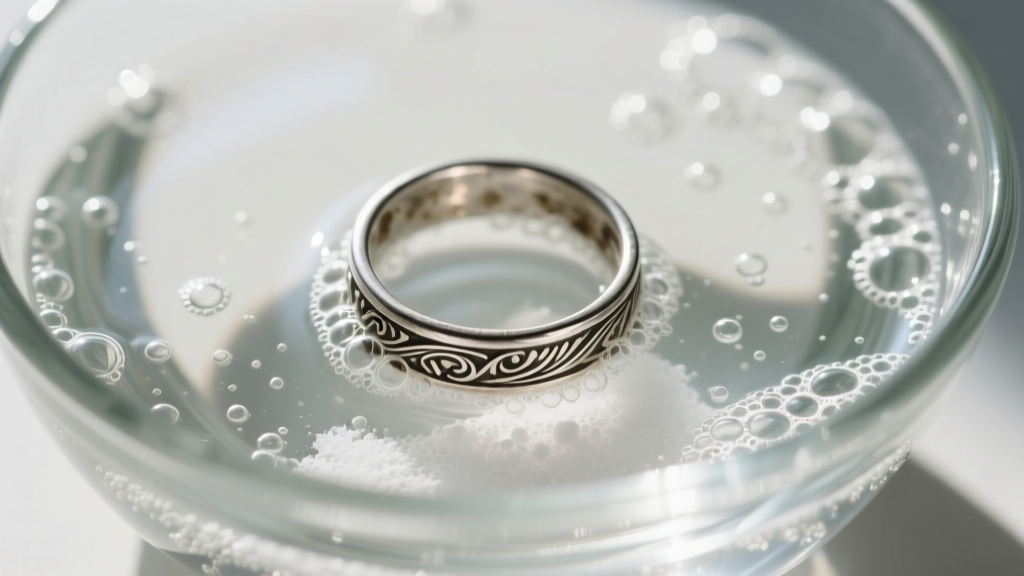
- Line a glass bowl with aluminum foil (shiny side up).
- Place the tarnished sterling silver in direct contact with the foil.
- Add 1 tablespoon of baking soda and 1 tablespoon of non-iodized salt per cup of water.
- Pour boiling water (180°F/82°C) over the piece until submerged.
- Wait exactly 3 to 5 minutes. The sulfur bonds to the aluminum, leaving pure silver behind.
- Rinse immediately with distilled water and dry with a microfiber cloth.
Troubleshooting: If the silver smells like rotten eggs afterward, the sulfur transfer was incomplete. Repeat the process with fresh foil and solution.
Oxidized Brass and Copper: The Lemon-Salt Paste
Brass and copper develop a dark, stubborn oxidation layer that soap cannot penetrate. Because these are base metals and not typically set with delicate stones, you can use a mild acid. Mix 1 tablespoon of lemon juice with enough fine sea salt to create a thick paste. Apply with a cotton swab, let it sit for no more than 60 seconds, and rinse thoroughly with distilled water. Never use this on gold-plated brass, as the acid will strip the plating.
Troubleshooting Gemstone Disasters: What to Avoid
The Gemological Institute of America (GIA) emphasizes that gemstone porosity and hardness dictate cleaning protocols. Before mixing any DIY solution, consult this troubleshooting matrix to prevent irreversible damage.
| Gemstone | Mohs Hardness | Porosity & Sensitivity | DIY Cleaner Reaction | Safe DIY Alternative |
|---|---|---|---|---|
| Diamond | 10 | Low porosity, oleophilic (attracts oil) | Dish soap leaves cloudy film if not rinsed properly | Warm distilled water + 1 drop of ammonia-free detergent |
| Opal | 5.5 - 6.5 | High water content (up to 20%), sensitive to heat | Hot water or alcohol causes crazing (cracking) | Damp microfiber cloth only; never submerge |
| Pearl | 2.5 - 4.5 | Calcium carbonate, highly porous | Vinegar or lemon juice dissolves the nacre layer | Wipe with a cloth dampened with pure mineral oil |
| Emerald | 7.5 - 8 | Heavily included, usually oil-treated | Ultrasonics or harsh soaps strip cedar oil fillers | Lukewarm water and a baby-soft toothbrush only |
Troubleshooting Common DIY Cleaning Failures
Even when you follow a recipe, things can go wrong. Here is how to troubleshoot the most frequent DIY jewelry cleaning failures.
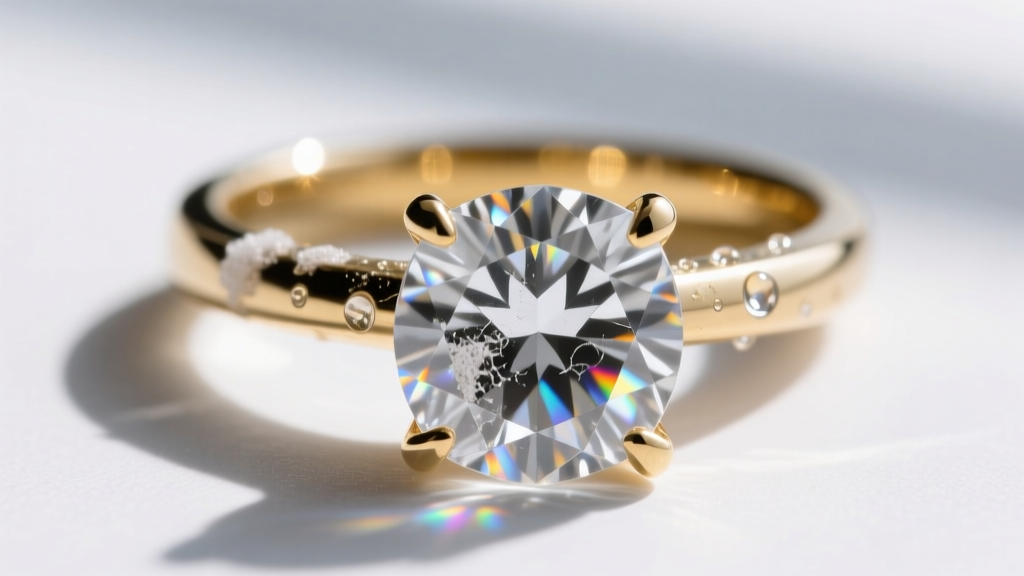
Problem: White Chalky Residue on Gold
The Cause: You used baking soda and tap water. The alkaline baking soda reacted with the calcium and magnesium in hard tap water, precipitating calcium carbonate directly onto the gold's surface.
The Fix: Do not scrub. Submerge the piece in a 50/50 mixture of distilled water and 91% isopropyl alcohol for 10 minutes. The alcohol breaks the surface tension, while the distilled water lacks the minerals to leave further deposits. Gently agitate and blow dry with a hair dryer on the cool setting.
Problem: Diamond Looks Cloudy After Dish Soap
The Cause: Diamonds are lipophilic, meaning they naturally attract and hold onto oils and fats. Standard dish soaps often contain conditioning agents or thickeners that trap a microscopic film of soap scum under the pavilion (the bottom cone of the diamond), blocking light return and making the stone look milky.
The Fix: Skip the dish soap. Mix one cup of warm distilled water with a single drop of mild, lotion-free castile soap. Use a baby toothbrush (which has ultra-soft bristles that won't scratch the precious metal prongs) to gently sweep the underside of the stone. Rinse with 91% isopropyl alcohol to instantly evaporate the water without leaving hard water spots.
How Do You Make Jewelry Cleaner for Delicate Organics?
Organic materials like pearls, amber, tortoiseshell, and ivory require an entirely different paradigm. They are not cleaned; they are conditioned.
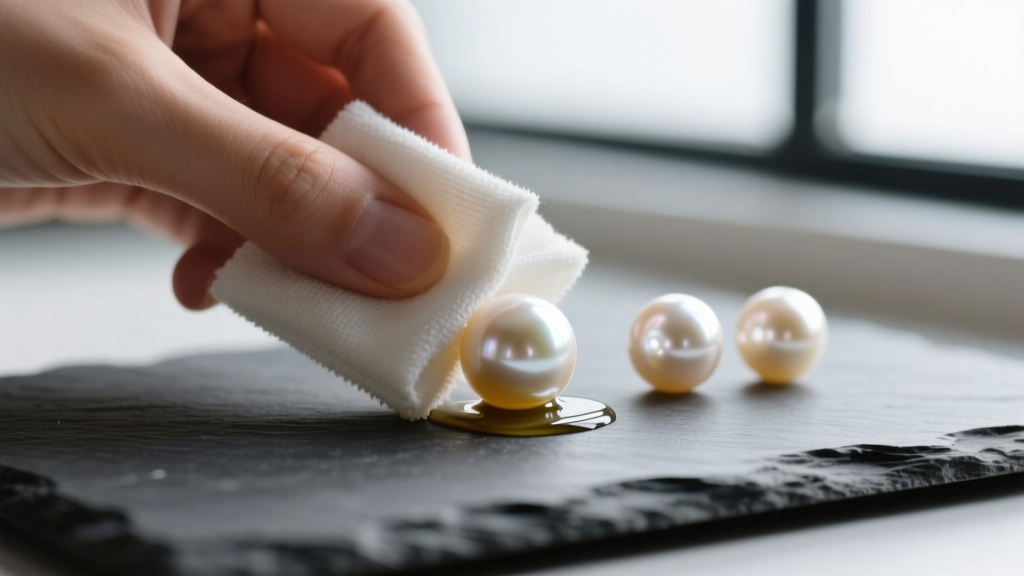
To make a safe maintenance solution for a strand of Akoya pearls or an amber pendant, you need food-grade mineral oil or pure jojoba oil. These oils are inert, meaning they will not oxidize or turn rancid over time like olive or vegetable oils.
- Place a single drop of mineral oil onto a clean, lint-free microfiber cloth.
- Gently buff the surface of the organic gemstone to lift body oils and environmental pollutants.
- Use a dry section of the cloth to buff away any excess oil.
Crucial Troubleshooting Tip: Never submerge knotted pearl necklaces in any liquid. The silk thread will absorb the moisture, stretch, and eventually rot, leading to a catastrophic strand break.
When to Abandon DIY and Seek Professional Help
Knowing when to stop is just as important as knowing how do you make jewelry cleaner at home. You must abandon DIY methods and seek a professional jeweler equipped with an ultrasonic cleaner and steam polishing if:
- Pavé Settings are Loose: If you notice any movement in small melee diamonds, DIY soaking can cause the stones to fall out and be lost down the drain.
- Heavy Scratches on Precious Metal: No liquid cleaner can remove physical scratches from 14k or 18k gold. This requires professional mechanical polishing with a jeweler's rouge wheel.
- Fracture-Filled Stones: If your ruby or emerald has been fracture-filled with glass or resin, even mild temperature changes in a DIY bath can cause the filler to cloud or leak.
By understanding the specific chemical interactions between your cleaning agents and your jewelry's materials, you can safely restore your collection's brilliance without relying on harsh, commercially available chemicals or risky internet hacks.


