Jewelry Polishing Cloth for Scratches: A Micron-Level Technical Guide
Discover how a jewelry polishing cloth for scratches works at the micron level. Learn metal removal rates, abrasive grades, and safe techniques.

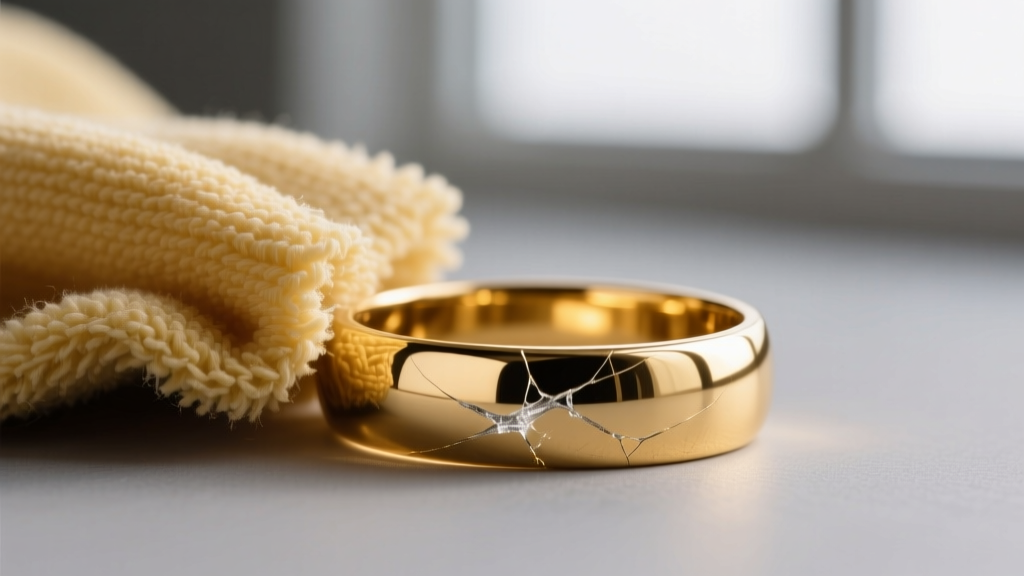
When consumers search for a jewelry polishing cloth for scratches, they often imagine a magical fabric that fills in gouges and restores metal to its original state. As a metallurgical reality, no cloth can 'fill' a scratch. Instead, these specialized textiles act as micro-abrasive tools that systematically remove the surrounding metal peaks until they are level with the scratch valleys. Understanding the physics, chemical compounds, and removal rates of these cloths is critical for both preserving the structural integrity of your jewelry and achieving a flawless finish.
The Physics of Polishing: Abrasion vs. Filling
A scratch on a metal surface is essentially a localized valley surrounded by displaced peaks of metal. When you rub a jewelry polishing cloth for scratches across the surface, the embedded abrasive particles act as microscopic cutting tools. According to the Gemological Institute of America (GIA), polishing does not add material; it subtracts it. The goal is to abrade the surrounding high points down to the depth of the deepest scratch. This means every polishing session results in a measurable, albeit microscopic, loss of metal mass. For solid 14k or 18k gold, this is generally acceptable. For delicate wirework or plated jewelry, it can be catastrophic.
Abrasive Compounds Embedded in Polishing Cloths
High-quality polishing cloths (such as those manufactured by Sunshine or Town Talk) are impregnated with specific jeweler's rouges and metal polishes. The color of the cloth often dictates the chemical compound and its intended use. According to metallurgical supply data from Rio Grande, matching the abrasive hardness to the metal's hardness is essential to prevent embedding particles or causing deeper micro-marring.
| Compound Color | Chemical Base | Mohs Hardness | Abrasive Micron Size | Best Suited For |
|---|---|---|---|---|
| Red Rouge | Iron Oxide (Fe2O3) | 5.0 - 5.5 | 1.0 - 3.0 µm | 24k, 22k, 18k Gold, Pure Silver |
| Green Rouge | Chromium Oxide (Cr2O3) | 8.5 | 0.5 - 1.5 µm | Platinum, Palladium, White Gold |
| Blue Rouge | Aluminum Oxide (Al2O3) | 9.0 | 2.0 - 5.0 µm | Stainless Steel, Titanium, Cobalt |
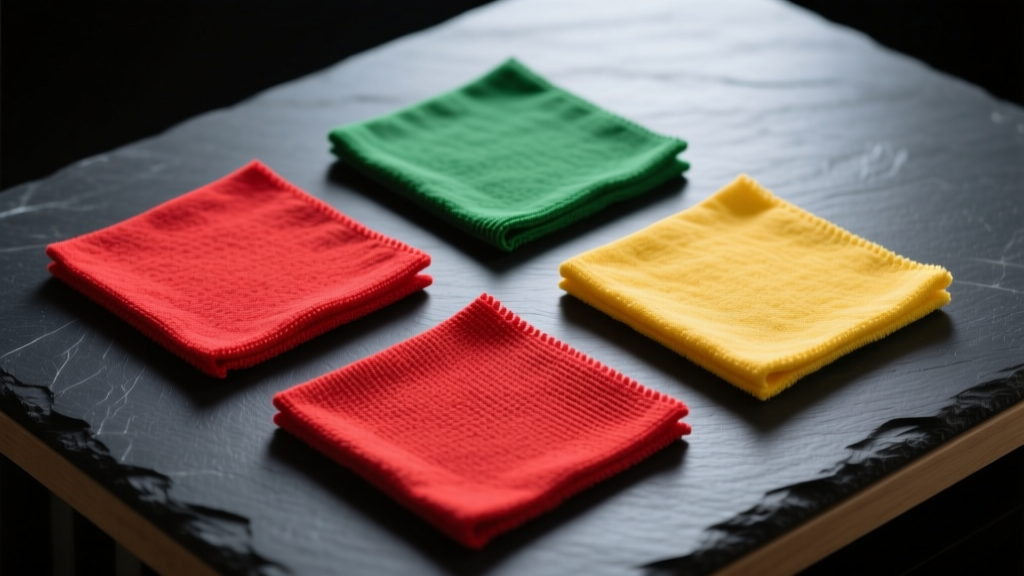
Using a blue rouge cloth on high-karat gold will result in aggressive, uncontrolled metal removal, while using a red rouge cloth on platinum will yield virtually no scratch removal due to the Mohs hardness discrepancy.
Metal Hardness and Micron Removal Rates
To understand how much metal a jewelry polishing cloth for scratches actually removes, we must look at the Vickers Hardness (HV) scale. Pure 24k gold sits at roughly 25 HV, making it incredibly soft. Standard 14k gold alloys are work-hardened to approximately 180 HV, while platinum alloys range from 110 HV to 150 HV but possess high density and malleability.
Expert Insight: A standard treated microfiber polishing cloth, applied with moderate hand pressure (roughly 2-3 PSI), removes between 0.5 to 1.5 microns (µm) of metal per minute of continuous friction on 14k gold. On platinum, the removal rate drops to less than 0.2 µm per minute due to the metal's high tensile strength and density.
This data highlights a major risk for jewelry makers: over-polishing 20-gauge or 22-gauge ear wires and jump rings. A 20-gauge wire is approximately 812 microns thick. Aggressive daily use of a polishing cloth can reduce the cross-sectional thickness of thin wire components by 5% to 10% over a few years, leading to structural failure and snapping.
The Danger Zone: Plated and Rhodium-Finished Jewelry
The most common mistake consumers make is using a jewelry polishing cloth for scratches on plated items. Gold vermeil, by FTC definition, requires a minimum of 2.5 microns of gold over sterling silver. Standard electroplated fashion jewelry often features a gold layer of less than 0.5 microns. White gold jewelry is almost universally plated with rhodium to achieve a bright, silvery-white finish. Rhodium plating is typically only 0.75 to 1.5 microns thick.
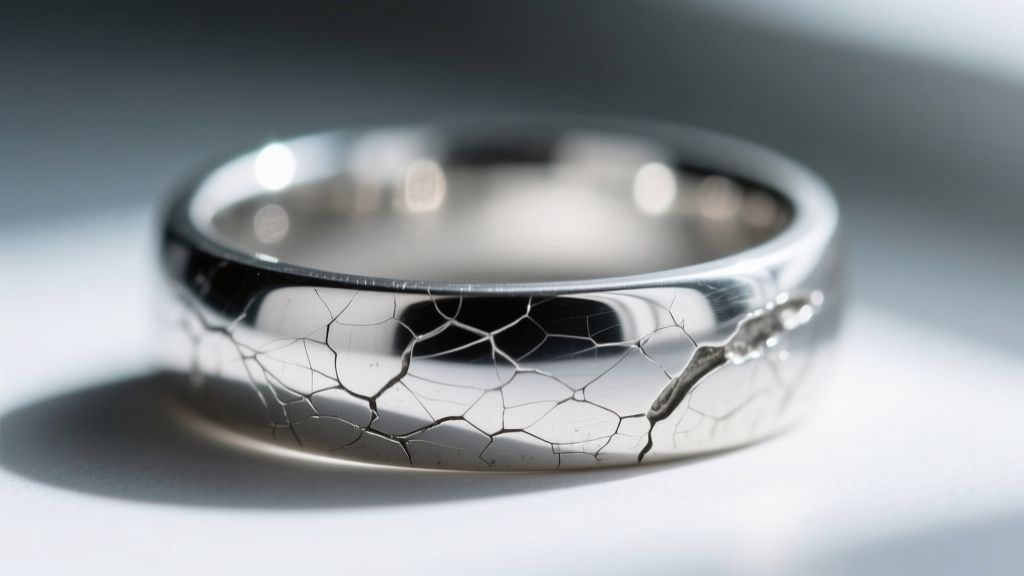
Because a polishing cloth removes up to 1.5 µm of material per minute, rubbing a rhodium-plated white gold ring with an abrasive cloth will strip the plating entirely in less than 60 seconds. Once the rhodium is gone, you are left with the naturally yellowish-grey tint of the underlying white gold alloy. If your white gold ring looks yellowish after using a polishing cloth, you have not 'cleaned' it; you have mechanically stripped its finish. Re-rhodium plating at a professional jeweler typically costs between $60 and $120, far exceeding the $8 to $15 cost of the cloth that caused the damage.
Step-by-Step Technical Protocol for Scratch Removal
If you have confirmed your piece is solid, unplated metal and you are ready to address surface scratches, follow this professional protocol to ensure an even finish:
- Ultrasonic Degreasing: Never polish dirty jewelry. Surface dust contains silica (Mohs 7), which is harder than gold and silver. Rubbing a dirty ring with a cloth will grind silica into the metal, creating new scratches. Clean the piece in an ultrasonic cleaner with a mild alkaline solution first.
- Loupe Inspection: Use a 10x jeweler's loupe to assess scratch depth. If a scratch catches your fingernail deeply, it is likely over 50 µm deep.
- Cross-Hatch Application: Do not rub in circles. Circular rubbing creates visible, swirling micro-marring. Rub the cloth in a straight line, then rotate the piece 90 degrees and rub perpendicular to the first pass. This cross-hatch technique ensures you are leveling the peaks evenly.
- Secondary Wipe: Use the clean, untreated outer layer of a dual-sided cloth to buff away the residual metallic oxide sludge (the black or grey residue left on the fabric).
When to Abandon the Cloth and Seek Professional Refinishing
A jewelry polishing cloth for scratches is strictly a maintenance tool for micro-abrasions (under 20 µm deep). It is not a substitute for professional bench work. You must abandon the cloth and seek a professional jeweler if:
- The scratch is palpable: If your fingernail catches and 'clicks' when running across the scratch, it is too deep for a cloth. Attempting to polish it out by hand will result in uneven metal removal, creating a visible divot or 'orange peel' effect on the surface.
- The piece features laser engraving or milgrain: Hand polishing will round off the sharp edges of milgrain detailing and soften the contrast of laser-engraved hallmarks.
- The jewelry has a matte, satin, or sandblasted finish: Polishing cloths are designed to create a high-polish, mirror finish. Using one on a matte ring will create shiny, uneven patches, ruining the intended texture.
Professional refinishing utilizes variable-speed polishing motors with stitched muslin wheels, tripoli compounds for aggressive cutting, and specialized masking techniques to protect gemstones and engravings. While a professional polish costs between $45 and $150 depending on the complexity of the piece, it guarantees uniform metal removal and preserves the original geometry of the jewelry. For daily maintenance and light scuffs, however, a chemically treated microfiber cloth remains an indispensable, cost-effective tool in any serious jewelry care arsenal.


