Sonic Jewelry Cleaner Guide: Frequencies, Cavitation & Gem Safety
Master your sonic jewelry cleaner with our expert guide on kHz frequencies, cavitation physics, surfactant chemistry, and gemstone fracture mechanics.

While consumer marketing often uses the terms interchangeably, a true sonic jewelry cleaner operates on the principles of high-frequency acoustic cavitation. Unlike manual brushing or chemical soaking, sonic and ultrasonic cleaning relies on the violent implosion of microscopic vacuum bubbles to dislodge sub-micron particulate matter from intricate metalwork and gemstone settings. However, this immense localized energy is a double-edged sword. Without a precise understanding of frequency modulation, fluid dynamics, and gemstone fracture mechanics, operators risk catastrophic damage to high-value pieces. This expert deep dive explores the technical parameters that separate professional-grade sonic cleaning from destructive guesswork.
The Physics of Cavitation: How Sonic Waves Clean
When high-frequency sound waves (typically between 20 kHz and 130 kHz) propagate through a liquid medium, they create alternating cycles of compression and rarefaction. During the rarefaction (low-pressure) cycle, the liquid is literally torn apart, forming microscopic vacuum bubbles. During the subsequent compression cycle, these bubbles collapse inward at supersonic speeds. This phenomenon, known as cavitation, generates localized shockwaves and micro-jets of liquid traveling at over 400 km/h, alongside transient temperatures exceeding 5,000 Kelvin. In the context of a sonic jewelry cleaner, these micro-jets act as millions of microscopic scrub brushes, penetrating crevices as small as 0.5 millimeters to blast away sebum, polishing compound residue, and environmental grime.
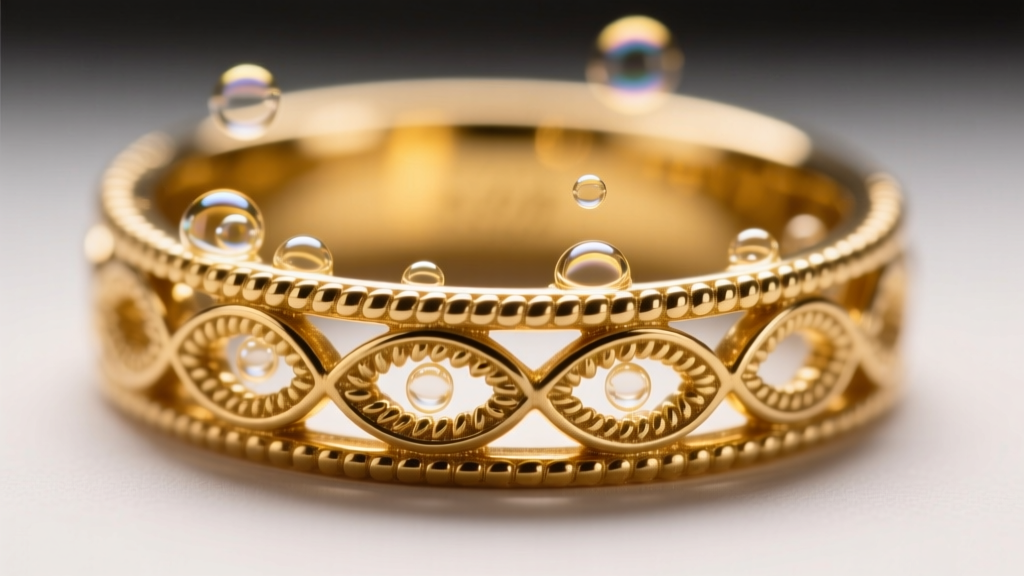
The size and energy of these cavitation bubbles are inversely proportional to the frequency of the sonic waves. Lower frequencies generate larger, more energetic bubbles that implode with greater mechanical force. Higher frequencies produce smaller, denser clouds of bubbles that implode with less individual force but offer superior penetration into micro-pave and filigree settings without risking stone displacement.
Frequency Selection Matrix: Matching kHz to Metal and Stone
Selecting the correct frequency is the most critical variable in ultrasonic and sonic cleaning. Professional laboratories utilize multi-frequency or 'sweep' technology to prevent standing waves (dead zones) and ensure uniform cleaning. Below is a technical matrix for frequency selection based on jewelry architecture.
| Frequency (kHz) | Bubble Size & Energy | Optimal Applications | Materials to Avoid |
|---|---|---|---|
| 35 - 40 kHz | Large, High-Energy Implosion | Heavy grime removal, plain gold/silver bands, watch bracelets (without movement), casting tree cleanup. | Micro-pave, fracture-filled gems, soft organics (pearls, coral). |
| 60 - 80 kHz | Medium, Balanced Energy | Standard diamond solitaires, sapphire/ruby eternity bands, intricate platinum filigree. | Emeralds, opals, tanzanite, enamel work. |
| 120+ kHz (Sweep) | Small, Low-Energy, High Density | Micro-pave diamond halos, delicate antique settings, porous gemstones requiring mild agitation. | None (safest tier), though heavily included stones still require caution. |
Gemstone Fracture Mechanics: What Shatters and Why
A common and dangerous misconception is that the Mohs hardness scale dictates sonic safety. Hardness measures scratch resistance, not toughness (resistance to breaking) or structural stability. A sonic jewelry cleaner can easily shatter a 10/10 Mohs diamond if it possesses a significant internal feather or cleavage plane aligned with the acoustic shockwaves.
The Emerald and Oil-Filled Ruby Problem
Nearly all commercial emeralds are treated with cedar oil or synthetic resins (like Opticon) to mask surface-reaching fractures and improve clarity. When submerged in a sonic cleaner—especially one with an active heating element—the acoustic agitation and thermal expansion cause these fillers to liquefy and leach out of the stone. The result is a sudden, dramatic drop in clarity and the exposure of a fragile, highly fractured internal structure. According to the Gemological Institute of America (GIA), ultrasonic cleaners should never be used on oil-treated emeralds or fracture-filled rubies, as the cavitation shockwaves can physically widen existing fissures, leading to total stone failure.
Cleavage and Thermal Shock Risks
Gemstones with perfect cleavage planes, such as tanzanite, topaz, and moonstone, are highly susceptible to sonic cleavage. The micro-jets generated during cavitation can strike a cleavage plane at the exact angle required to split the crystal lattice. Furthermore, opals contain up to 20% water within their silica structure. The rapid localized heating and pressure changes inside a sonic tank can cause 'crazing'—a network of internal micro-fractures that destroys the stone's play-of-color and structural integrity.
"Never trust a sonic cleaner with a stone you haven't examined under 10x magnification. A surface-reaching feather in a diamond is a ticking time bomb when exposed to 40kHz cavitation shockwaves." — Master Gemologist Appraiser Protocol
Fluid Dynamics: Surfactants, Degassing, and Temperature
The liquid medium in your sonic jewelry cleaner is just as important as the acoustic generator. Using plain tap water severely limits cleaning efficacy due to dissolved gases and high surface tension.
The Necessity of Degassing
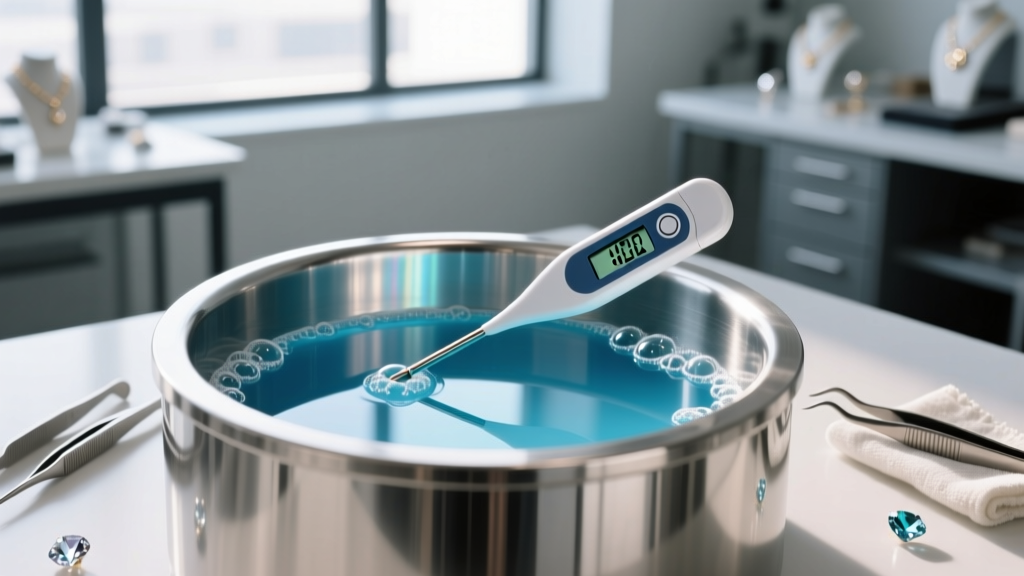
Tap water contains dissolved oxygen and nitrogen. When sonic waves are introduced, these dissolved gases migrate into the cavitation bubbles, acting as a pneumatic cushion that absorbs the energy of the implosion. This drastically reduces the mechanical scrubbing force. Professional jewelers 'degas' their sonic tanks by running the machine empty (or with the cleaning solution) for 5 to 10 minutes before introducing jewelry. This expels dissolved gases, ensuring the vacuum bubbles implode with maximum kinetic force.
Surfactant Chemistry
Water's natural surface tension prevents it from penetrating the microscopic gaps between a gemstone's pavilion and the metal prong. Adding a specialized, non-ionic surfactant (such as Elma Tec Clean A4 or a mild alkaline jewelry concentrate) lowers the surface tension, allowing the fluid to wet the metal completely and carry away suspended lipids and sebum. Avoid ammonia-based household cleaners; while effective on plain gold, ammonia will permanently etch and degrade porous organic gems like pearls, tortoiseshell, and ivory.
Thermal Thresholds
Cavitation is highly temperature-dependent. The optimal fluid temperature for a sonic jewelry cleaner is between 50°C and 60°C (122°F - 140°F). At this range, the vapor pressure of the liquid is ideal for forceful implosion. If the fluid exceeds 65°C, the vapor pressure inside the cavitation bubble rises too high, cushioning the collapse and effectively neutralizing the cleaning power while simultaneously risking thermal shock to sensitive gemstones.
Metal Alloy Passivation and Tarnish Limitations
While sonic waves are exceptional at removing physical debris, they are fundamentally limited in their ability to reverse chemical oxidation without the correct catalytic fluids.
The Sterling Silver Misconception
Silver sulfide (tarnish) is a chemical bond, not a surface debris. A standard sonic jewelry cleaner filled with water and mild dish soap will not remove heavy black tarnish from sterling silver; it will only clean the dirt sitting on top of the tarnish. To remove oxidation via sonic agitation, the fluid must contain a mild reducing agent or be paired with an electrolytic aluminum-foil bath. However, prolonged sonic exposure to alkaline silver dips can strip the protective rhodium plating off white gold and anti-tarnish coatings off modern silver alloys.
Titanium and Platinum Resilience
Aerospace-grade titanium (Ti-6Al-4V) and 950 platinum are incredibly resilient to cavitation erosion. In fact, high-frequency (80kHz+) sonic cleaning is the industry standard for preparing titanium body jewelry for autoclave sterilization, as it effectively removes biofilms from the microscopic surface porosity of the metal without degrading the passivation layer. Platinum's high density makes it immune to the micro-jetting that can occasionally cause 'frosting' (micro-pitting) on softer 14k gold alloys if left in a 40kHz tank for excessive durations.
Final Protocol for Safe Sonic Operation
To leverage the power of a sonic jewelry cleaner safely, adhere to this standardized laboratory protocol:
- Inspect: Examine all stones under 10x magnification for surface-reaching fractures, loose prongs, or signs of oil/resin filling.
- Degas: Fill the tank with distilled water and a few drops of non-ionic surfactant. Run for 10 minutes to expel dissolved O2.
- Heat: Bring the solution to 50°C. Never exceed 60°C.
- Suspend: Use a wire mesh basket or suspend the piece via a nylon line. Never let jewelry rest directly on the stainless steel tank floor, as this disrupts the transducer's acoustic wave propagation and can scratch the metal.
- Limit Time: Restrict cleaning cycles to 3–5 minutes. Prolonged exposure offers diminishing returns and increases the risk of metal fatigue or stone loosening.
By respecting the physics of cavitation and the specific material science of your jewelry, a sonic cleaner transitions from a risky novelty into an indispensable, laboratory-grade maintenance tool. For more specific guidance on delicate stones, always consult the GIA's comprehensive gemstone care guidelines before introducing a new piece to acoustic agitation.


