How to Polish Jewelry Based on Metal Hardness and Properties
Learn how to polish jewelry safely by understanding metal properties. Compare Vickers hardness, tarnish rates, and best methods for gold, platinum, and silver.

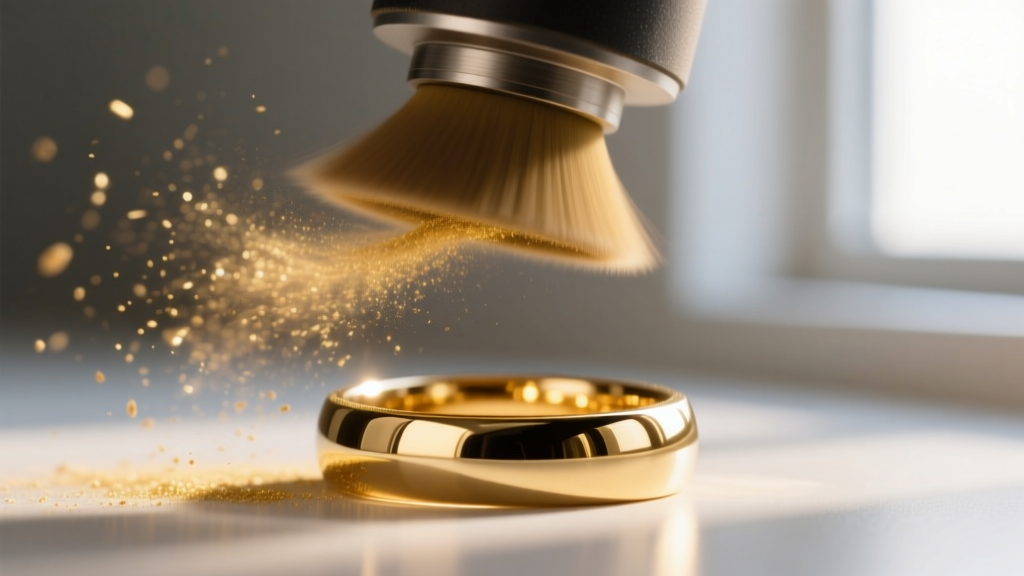
When you set out to polish jewelry, the instinct is often to grab a generic cloth and start rubbing. However, treating all metals the same is a fast track to ruined finishes, stripped plating, and irreversible material loss. As a fundamental rule of metallurgy, the method you use to polish jewelry must be dictated by the specific physical properties of the metal in question. Factors like Vickers hardness (HV), crystal structure, and alloy composition determine whether a metal will respond to gentle burnishing or require aggressive abrasive cutting.
In this comprehensive guide, we break down the material science behind jewelry metals, providing a data-driven framework to help you polish jewelry safely and effectively without compromising its structural integrity or value.
The Metallurgy of Polishing: Abrasion vs. Burnishing
Before applying any compound or cloth, it is critical to understand the two primary mechanisms of polishing: abrasion and burnishing.
- Abrasive Polishing: This method removes a microscopic layer of metal to level out scratches. It utilizes compounds like bobbing compound (tripoli) or diamond paste. While effective for deep scratches, excessive abrasive polishing on soft metals like 22k gold or high-purity silver will result in significant weight loss and blurred edges over time.
- Burnishing: Instead of removing metal, burnishing compresses and smooths the surface crystals. This is achieved using soft materials like treated microfiber, chamois, or a jeweler's agate burnisher. Burnishing is the preferred method for maintaining a mirror finish on softer metals without sacrificing carat weight.
According to the Gemological Institute of America (GIA), understanding the difference between these two processes is essential for preserving the longevity of precious metal jewelry, especially pieces with intricate milgrain or hand-engraved details that can be easily erased by aggressive abrasion.
Material Comparison: Hardness and Polishing Profiles
The Vickers Hardness (HV) scale measures a material's resistance to permanent indentation. In jewelry, a higher HV means the metal is more resistant to scratching, but it also dictates the type of polishing compound required. Below is a comparative analysis of common jewelry metals.
| Metal / Alloy | Vickers Hardness (HV) | Tarnish Susceptibility | Recommended Polishing Method | Material Loss Risk |
|---|---|---|---|---|
| 14k Yellow Gold | ~135 HV | Low | Red Rouge (Iron Oxide), Soft Cloth | Moderate |
| 18k Yellow Gold | ~125 HV | Low | Burnishing, Mild Soap, Red Rouge | High |
| 950 Platinum | ~110 HV (High Density) | None | Bobbing Compound, White Rouge | Low (Displaces) |
| Sterling Silver (925) | ~65 HV | High | Zam Compound, Anti-Tarnish Cloth | Very High |
| Tungsten Carbide | ~1500 HV | None | Diamond Paste (Professional Only) | Negligible |
Gold and Platinum: Navigating Precious Metal Nuances
Gold and platinum are the cornerstones of fine jewelry, yet their metallurgical behaviors during polishing are vastly different.
The Karat Conundrum: 14k vs. 18k Gold
Pure 24k gold is far too soft for daily wear (approx. 25 HV). To increase durability, it is alloyed with metals like copper, silver, and zinc. 14k gold (58.5% pure gold) is significantly harder than 18k gold (75% pure gold). When you polish jewelry made of 18k gold, you must use extremely fine abrasives like red rouge (iron oxide). Using a coarse compound like tripoli on 18k gold will gouge the surface and rapidly degrade the prongs holding your gemstones. Conversely, 14k gold can withstand slightly more aggressive pre-polishing to remove daily wear scratches before finishing with rouge.
Platinum's Unique Displacement Property
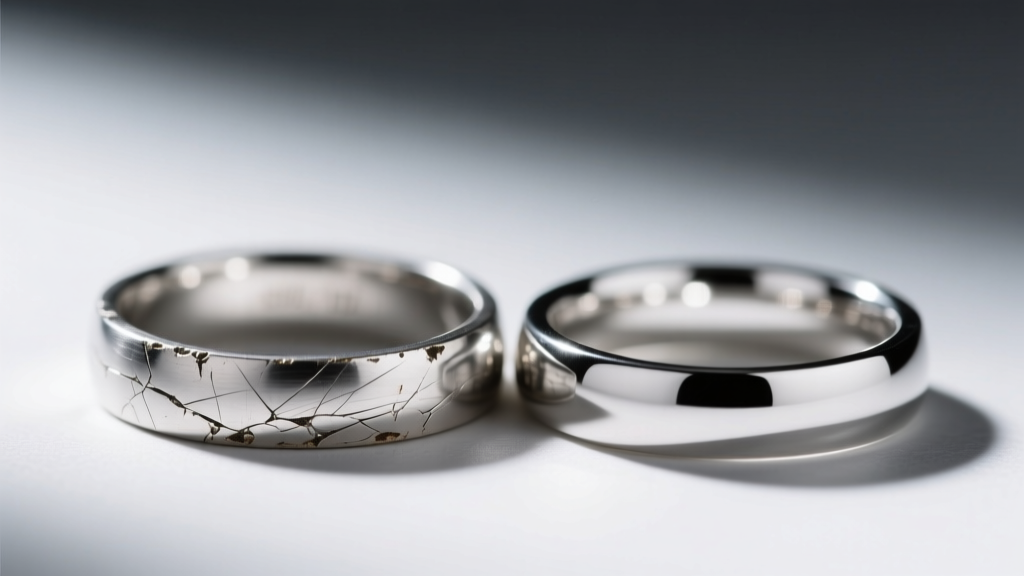
Platinum presents a fascinating metallurgical paradox. While its Vickers hardness (~110 HV) is technically lower than 14k gold, its density and tensile strength are vastly superior. When platinum scratches, the metal is not lost; it is merely displaced, creating a dull, frosted appearance known as a 'patina.'
Because of this displacement property, you can polish jewelry made of platinum much more aggressively over its lifetime without fear of thinning the band or weakening the prongs. Professional jewelers typically use a cutting compound (bobbing compound) followed by a fine white rouge (aluminum oxide) to restore platinum's mirror finish. For at-home maintenance, simply rubbing the piece with a soft, untreated microfiber cloth is often enough to burnish the displaced metal back into a high shine.
Silver and Alternative Metals: Tarnish and Extreme Hardness
Silver and modern alternative metals require entirely different approaches, driven by chemical reactivity and extreme hardness scales.
Sterling Silver: Battling Copper Oxidation
Sterling silver is an alloy of 92.5% silver and 7.5% copper. It is the copper content that makes sterling silver highly susceptible to tarnishing (silver sulfide and copper oxide formation) and gives it a relatively low hardness of ~65 HV.
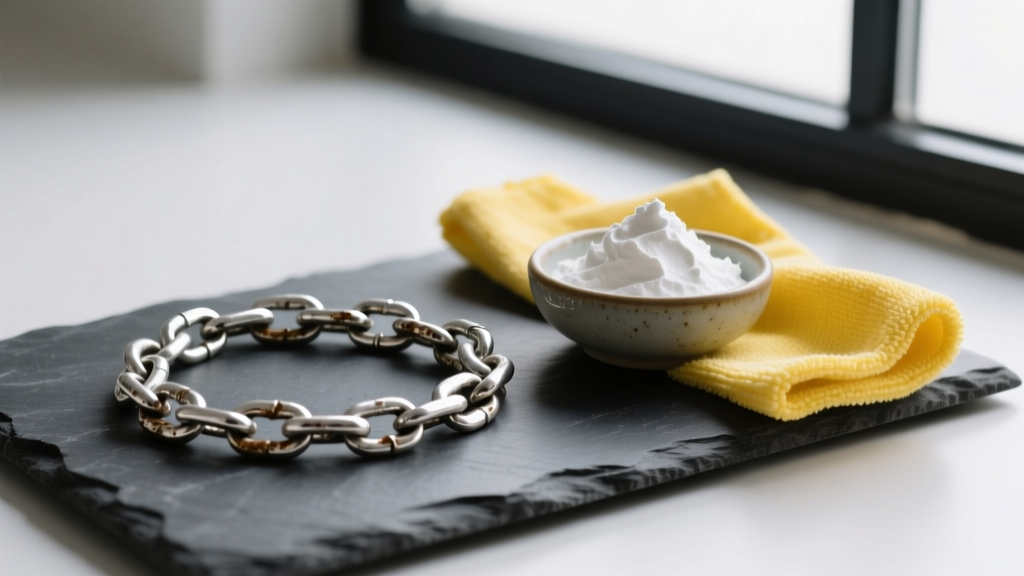
When you polish jewelry made of sterling silver, your primary goal is often tarnish removal rather than scratch removal. Avoid liquid silver dips, which use harsh thiourea chemicals that strip the metal and leave a porous, matte surface that tarnishes even faster. Instead, use a treated jeweler's cloth impregnated with micro-abrasives and anti-tarnish agents. For heavier tarnish, a paste of baking soda and water applied with a soft-bristled toothbrush can gently lift oxidation, though this should be followed by a thorough rinse and immediate drying to prevent water spots.
Titanium and Tungsten Carbide: The Untouchables
Alternative metals like titanium and tungsten carbide have revolutionized the men's wedding band market due to their extreme scratch resistance. Tungsten carbide boasts a Vickers hardness of roughly 1500 HV—nearly ten times harder than 18k gold.
Because of this extreme hardness, you cannot polish jewelry made of tungsten or titanium using traditional jeweler's rouges or cotton buffing wheels. The cotton will simply burn, and the rouge will do nothing. Scratches on tungsten can only be removed using specialized diamond-impregnated compounds and rigid polishing setups, a process strictly reserved for professional lapidaries. If a tungsten ring becomes heavily damaged, it cannot be polished out; it must be replaced.
The Decision Framework: How to Polish Jewelry Safely at Home
To ensure you are treating your pieces correctly, follow this step-by-step decision framework before you polish jewelry at home:
- Identify the Metal and Plating: Check for hallmarks (e.g., 750, 925, PT950). If the piece is gold-plated or rhodium-plated (common on white gold), avoid all abrasive pastes. Use only a mild dish soap solution and a microfiber cloth to prevent stripping the micron-thin plating.
- Assess the Gemstones: Never use ultrasonic cleaners or harsh chemical polishes on porous stones like pearls, opals, turquoise, or emeralds. Mask these stones with tape or avoid the area entirely when applying polishing compounds.
- Select the Right Compound: Match the abrasive to the metal's hardness. Use Zam (a mild, wax-based compound) for silver and soft golds; use Red Rouge for high-karat gold finishing; use White Rouge for platinum and white gold.
- Execute with Directional Strokes: When hand-polishing, move the cloth in straight, unidirectional strokes rather than tight circles. This prevents the creation of microscopic swirl marks that catch light and make the metal look cloudy.
Expert Insight: According to Jewelers of America, consumers should limit aggressive at-home polishing to once or twice a year. Daily maintenance should rely strictly on gentle burnishing with a clean, untreated flannel or microfiber cloth to preserve the metal's mass and structural integrity over decades of wear.
Understanding the material science behind your jewelry transforms maintenance from a guessing game into a precise, preservation-focused practice. By respecting the Vickers hardness, alloy composition, and unique displacement properties of your metals, you ensure that every time you polish jewelry, you are enhancing its beauty without compromising its future.


