Super Sonic Jewelry Cleaner Guide: Safe Gemstone Care
Learn how to safely use a super sonic jewelry cleaner. Discover which gems and metals withstand high-frequency cavitation and which to avoid.

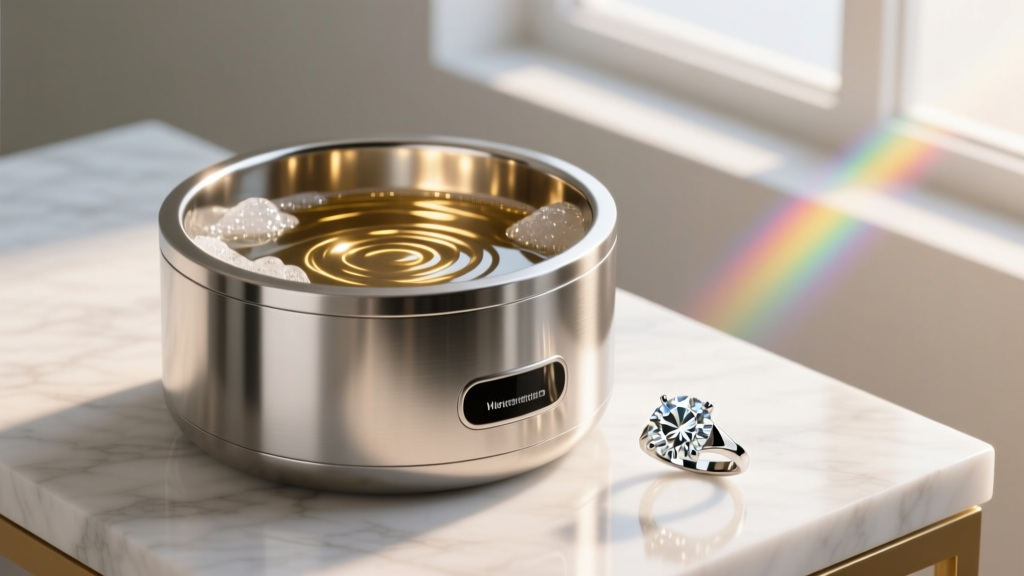
When searching for the most efficient way to restore brilliance to your favorite pieces, you have likely encountered the term super sonic jewelry cleaner. While consumers often use "super sonic" and "ultrasonic" interchangeably, understanding the actual mechanics of these devices is the difference between restoring a diamond's fire and completely destroying a fragile gemstone. High-frequency cleaning is a staple in professional jewelry workshops, but bringing this technology to your home requires a strict adherence to material science and gemology.
In this comprehensive guide, we will break down the exact physics of acoustic cavitation, provide a definitive safety matrix for various metals and gemstones, and outline a professional-grade cleaning protocol that ensures your jewelry remains pristine without suffering microscopic structural damage.
The Physics of Cavitation: True Transducers vs. Vibrating Motors
To safely use a super sonic jewelry cleaner, you must first verify that you actually own one. The market is currently flooded with inexpensive, battery-operated devices labeled as "super sonic" or "ultrasonic" that merely utilize an eccentric rotating mass (ERM) vibration motor. These motors shake the jewelry at roughly 120Hz to 200Hz. While this mechanical shaking can dislodge loose surface dust, it does absolutely nothing to clean the microscopic pavilion facets or the tight spaces beneath a prong setting.
A true high-frequency cleaner relies on piezoelectric transducers bonded to the base of a stainless steel tank. When an alternating electrical current is applied, these transducers expand and contract rapidly, emitting sound waves typically between 40,000 Hz and 45,000 Hz (40-45 kHz). As these waves travel through the liquid, they create alternating high-pressure and low-pressure cycles. During the low-pressure phase, millions of microscopic vacuum bubbles form. When the high-pressure phase hits, these bubbles violently implode—a process known as cavitation. It is the localized shockwave from these implosions that blasts away sebum, dead skin cells, and cosmetic residues from your jewelry.
According to the GIA Gem Encyclopedia, understanding how these microscopic shockwaves interact with the crystalline lattice of different gemstones is critical, as the sheer force of cavitation can exploit natural cleavage planes or fracture inclusions in vulnerable stones.
The Definitive Gemstone & Metal Safety Matrix
Not all materials can survive the violent implosions of a 45kHz cleaning bath. Below is a structural compatibility matrix detailing which materials are safe, which require conditional care, and which must never be submerged.
| Material | Super Sonic Safety | Specific Risk Factor & Failure Mode |
|---|---|---|
| Diamond (Natural/Lab) | Safe | None, unless fracture-filled or heavily included. |
| Sapphire & Ruby | Safe | Untreated stones are safe. Heat-treated is usually fine. |
| Platinum & 14k/18k Gold | Safe | Extremely durable; ideal for acoustic cleaning. |
| Clarity-Enhanced Diamond | NEVER | Lead-glass fillings will cloud, melt, or shatter. |
| Emerald | NEVER | Cedar oil/resin fillings are stripped, ruining clarity. |
| Opal & Pearl | NEVER | Porous structure causes crazing and nacre dissolution. |
| Tanzanite & Topaz | NEVER | Perfect cleavage planes will split under shockwaves. |
| Sterling Silver | Conditional | Safe for 3 mins max; prolonged exposure accelerates tarnish. |
Always consult the FTC Jewelry Guides and your specific gemstone certification to verify if your stone has undergone clarity enhancement or fracture filling before introducing it to any acoustic bath.
The Professional 4-Step Cleaning Protocol
If your jewelry has passed the safety matrix above, follow this exact protocol to achieve a professional-level clean without compromising the integrity of your settings.
Step 1: The 10x Loupe Pre-Inspection
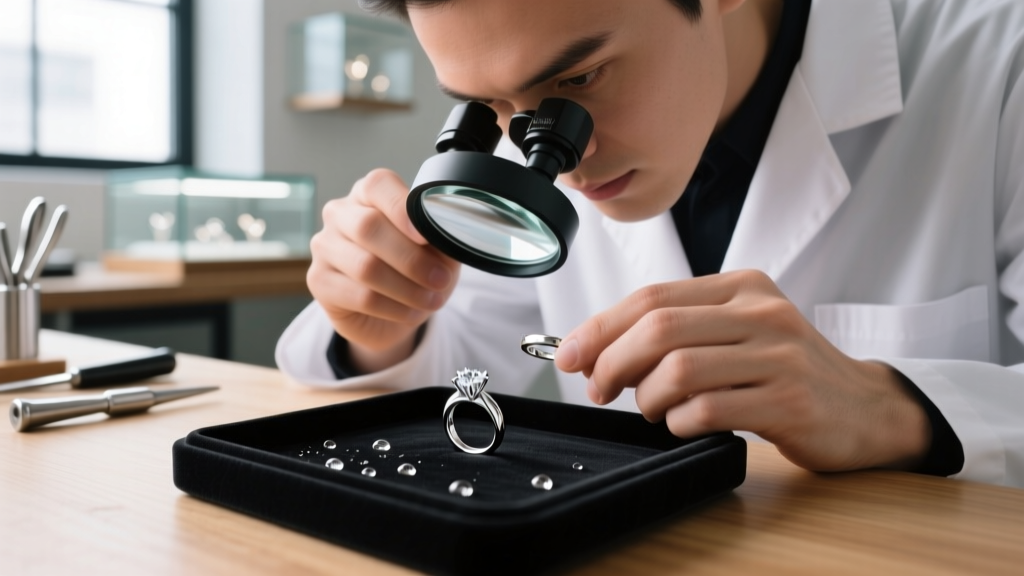
Never place a piece of jewelry into a super sonic jewelry cleaner without first inspecting it under a 10x triplet loupe. Cavitation shockwaves are notorious for vibrating loose stones right out of their settings. Check for lifted prongs, worn V-prongs on princess cuts, and any visible wobbling of the center stone. If a stone is already loose, the acoustic vibrations will guarantee it falls out into the tank, where it can be scratched by the stainless steel floor or other pieces.
Step 2: Solution Chemistry and Temperature
Tap water contains dissolved minerals like calcium and magnesium that can leave microscopic hard-water spots on your gemstones as they dry. Always use distilled water. Add exactly one drop of a pH-neutral, ammonia-free dish soap (such as original Dawn). Avoid harsh chemical jewelry dips or ammonia-based cleaners in the tank, as the heat generated by the transducers can cause these chemicals to off-gas or aggressively attack porous alloys. The water should be at room temperature; never use hot water, as thermal expansion combined with acoustic shock can fracture stones.
Step 3: The 3-Minute Rule
Run the cleaner for a maximum of three minutes. If the jewelry is heavily soiled with lotion or sebum, let it rest for two minutes, then run a second three-minute cycle. Running a cleaner for 15 to 20 minutes continuously does not clean better; instead, it work-hardens certain gold alloys, degrades the rhodium plating on white gold, and unnecessarily stresses the prongs holding your gems.
Step 4: Rinsing and Drying
Remove the jewelry using the provided plastic basket—never use metal tweezers, which can scratch gold and platinum. Rinse thoroughly under a gentle stream of distilled water to remove suspended grime and soap residue. Pat dry with a lint-free microfiber cloth, and use a hair dryer on the "cool" setting to blow water out from behind the gemstone's pavilion.
Troubleshooting Common Super Sonic Issues
Why Did My Silver Turn Black?
A common complaint among home users is that sterling silver emerges from the super sonic jewelry cleaner with a black or gray film. This is not dirt; it is accelerated oxidation. If your tap water has a high sulfur or mineral content, the cavitation process essentially forces a rapid galvanic reaction on the silver's surface. Always use distilled water for silver, and limit the cleaning cycle to 90 seconds. If blackening occurs, it can be safely removed using a specialized silver polishing cloth, but it highlights the importance of proper solution chemistry.
The Danger to Hollow and Lightweight Jewelry
Modern jewelry manufacturing often utilizes hollow-core techniques to create voluminous pieces at a lower gold weight. A 14k hollow rope chain that is 4mm thick might weigh less than 5 grams. The structural walls of these chains are incredibly thin. The localized pressure from cavitation implosions can actually cause micro-dents, warping, or even structural collapse in hollow jewelry. If a piece feels suspiciously light for its size, clean it manually with a soft brush instead.
Machine Maintenance and Descaling
Your super sonic jewelry cleaner requires its own maintenance routine to ensure the piezoelectric transducers continue to function at peak efficiency. Over time, mineral deposits from tap water or residue from soap can build up on the interior stainless steel walls. This scale acts as an acoustic dampener, absorbing the sound waves and drastically reducing the cavitation effect in the liquid.
Once a month, fill the tank with a 50/50 mixture of distilled water and white vinegar. Run the machine for a single five-minute cycle without any jewelry inside. The mild acetic acid will dissolve the calcium carbonate scale. Empty the tank, rinse it thoroughly with clean distilled water, and dry the interior with a soft cloth. Always store the machine completely dry and unplugged to prevent moisture from degrading the electronic components beneath the tank.
By respecting the physics of acoustic cavitation and adhering to strict material compatibility guidelines, your super sonic jewelry cleaner will remain an invaluable tool in your maintenance arsenal, keeping your diamonds brilliant and your precious metals flawlessly polished for years to come.


