Troubleshooting Your Jewelry Cleaner Machine: Fix Cloudy Gems
Is your jewelry cleaner machine leaving pieces cloudy or damaging stones? Learn expert troubleshooting steps to fix ultrasonic issues safely.

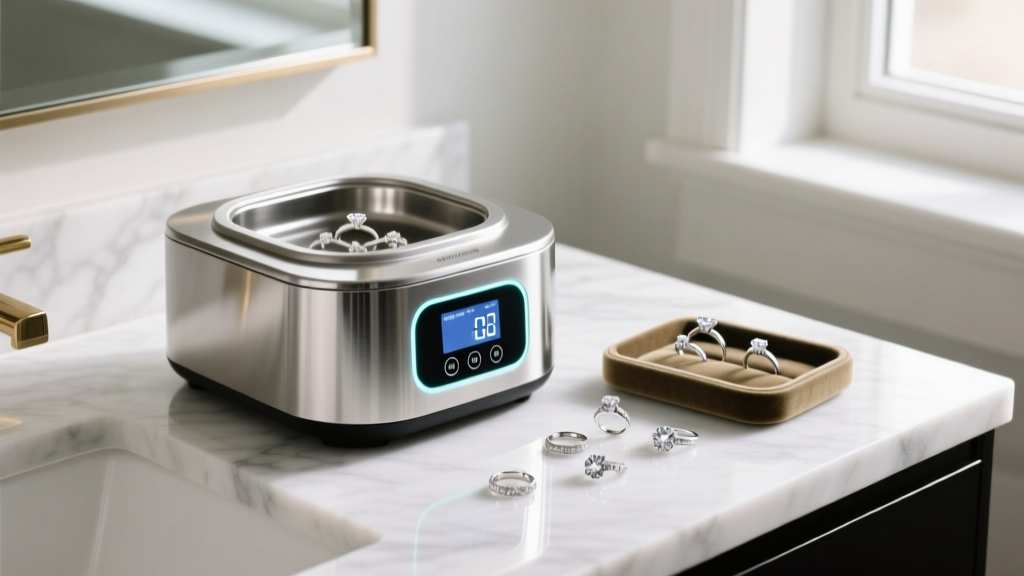
Why Your Ultrasonic Cleaner is Failing Your Jewelry
Ultrasonic technology remains the gold standard for restoring brilliance to precious metals and diamonds. However, a modern jewelry cleaner machine is not a magic wand; it is a precision instrument that relies on high-frequency sound waves to create microscopic cavitation bubbles. When these bubbles collapse, they generate localized shockwaves that dislodge dirt, sebum, and cosmetic buildup. But what happens when your machine leaves diamonds looking cloudy, fails to power on, or worse, fractures a prized gemstone?
Troubleshooting an ultrasonic unit requires understanding both the electromechanical components of the device and the material science of your jewelry. In this comprehensive 2026 troubleshooting guide, we will diagnose the most common failures associated with home and commercial jewelry cleaner machines, providing actionable, expert-level solutions to restore both your device and your gems.
Diagnosing Weak Cavitation: The Aluminum Foil Test
The most common complaint regarding older or defective units is a lack of cleaning power. You might hear the high-pitched hum of the transducer, but the jewelry remains dirty. This usually indicates transducer degradation or a failure in the generator's frequency tuning. To verify if your machine is actually producing cavitation, perform the industry-standard aluminum foil test.
How to Perform the Foil Test
- Fill the stainless steel tank with room-temperature tap water up to the maximum fill line.
- Cut a 3x3 inch square of standard household aluminum foil.
- Submerge the foil vertically into the center of the tank, holding it steady or suspending it with a wooden clothespin.
- Run the machine for exactly 60 seconds (or 3 minutes for low-wattage vintage models).
- Remove the foil and inspect it against a light source.
The Diagnosis: A properly functioning 40-45 kHz jewelry cleaner machine will produce a uniform pattern of tiny pinholes and slight etching across the submerged portion of the foil. If the foil is completely pristine, or if the pitting is isolated to only one corner, your transducers are failing, the internal wiring has corroded, or the adhesive bonding the transducer to the steel tank has delaminated. In these cases, the unit must be replaced, as internal transducer repair is rarely cost-effective for consumer models.
The Hard Water Problem: Fixing Cloudy Diamond Residue
If your machine is functioning perfectly but your diamonds and white sapphires are emerging with a stubborn, milky-white film, you are experiencing a chemical issue, not a mechanical one. Diamonds are highly hydrophobic (water-repelling) and lipophilic (oil-attracting). When you use tap water in an ultrasonic tank, the heat generated by the transducers accelerates evaporation and forces dissolved minerals—primarily calcium carbonate and magnesium—to bond directly to the diamond's surface.
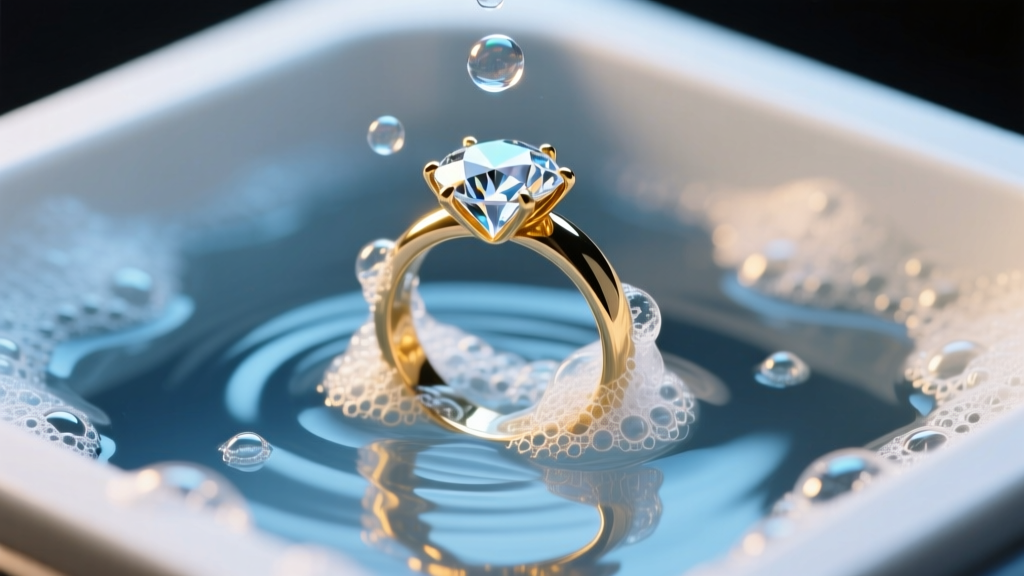
Solution: Optimizing Your Solvent Chemistry
To eliminate cloudy residue, you must reduce the Total Dissolved Solids (TDS) in your cleaning solution to near zero and introduce a surfactant to break the water's surface tension. According to the Gemological Institute of America (GIA), proper solution chemistry is just as critical as the ultrasonic frequency itself.
| Water Type | Average TDS Level | Result on Diamonds | Recommended Surfactant Additive |
|---|---|---|---|
| Hard Tap Water | 150 - 300+ ppm | Heavy, baked-on cloudy residue | None (Avoid using entirely) |
| Filtered Pitcher Water | 50 - 120 ppm | Mild spotting upon air drying | 1 drop of ammonia-free dish soap |
| Distilled Water | 0 - 5 ppm | Flawless, streak-free brilliance | 1 drop of Dawn Ultra or ultrasonic concentrate |
Pro-Tip: Never use harsh detergents, bleach, or chlorine-based cleaners in your tank. These chemicals can cause irreversible pitting in porous metals like 14k rose gold (due to its copper content) and will rapidly degrade the stainless steel lining of your machine's tank, leading to micro-fractures and eventual leaking.
Gemstone Fractures: When Ultrasonic Waves Cause Damage
Perhaps the most devastating troubleshooting scenario is retrieving a cracked or shattered gemstone from the tank. The collapse of cavitation bubbles generates microscopic pockets of extreme pressure (up to 1,000 atmospheres) and localized heat. While the bulk liquid remains cool, these micro-shockwaves are violent enough to shatter vulnerable stones or strip away artificial clarity enhancements.
The Danger of Fracture-Filled and Treated Stones
Many emeralds on the market are treated with cedar oil or synthetic resins to mask natural fissures. The Jewelers of America explicitly warns against ultrasonic cleaning for emeralds, as the cavitation waves will forcefully eject the oil from the fissures, leaving the stone looking heavily included, opaque, and significantly devalued. Similarly, fracture-filled diamonds (treated with lead-glass) will cloud and crack under ultrasonic stress.
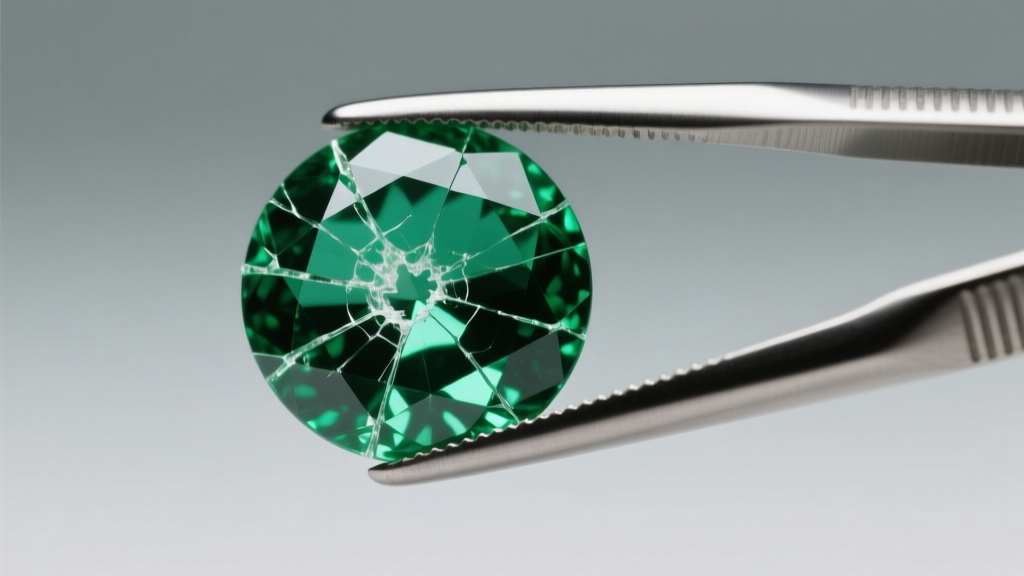
Quick Reference: Ultrasonic Gemstone Safety Matrix
- Completely Safe: Diamonds (unfilled), Rubies, Sapphires, Cubic Zirconia, Moissanite, Platinum, 14k/18k Yellow and White Gold.
- High Risk (Never Ultrasonic Clean): Emeralds, Opals, Pearls, Coral, Tanzanite, Moonstone, Lapis Lazuli, Turquoise, Amber, and any gemstone with visible surface-reaching fractures.
- Proceed with Caution: Morganite and Aquamarine (safe only if completely free of inclusions; otherwise, risk of cleavage plane splitting).
Expert Insight: If you are unsure whether a diamond has been fracture-filled or laser-drilled, do not place it in a jewelry cleaner machine. Have it inspected by a certified gemologist first. The Federal Trade Commission (FTC) Jewelry Guides require disclosure of fracture-filling, but vintage or secondhand pieces often lack this vital documentation.
Digital Error Codes and Overheating Protocols
Modern 2026 models of jewelry cleaner machines frequently feature digital displays and onboard microprocessors. If your unit displays an "E1" or "E2" error code, or simply shuts off after two minutes, it is likely triggering an internal thermal protection mechanism.
Ultrasonic transducers generate significant heat as a byproduct of converting electrical energy into acoustic waves. If the tank is run without water (a "dry run"), the transducers will overheat in seconds, potentially melting the internal epoxy bond. Always ensure the liquid level meets the "MIN" line before activating the cycle. Furthermore, avoid chaining multiple 5-minute cycles back-to-back. Allow the machine a 10-minute cool-down period between cycles to preserve the lifespan of the piezoelectric ceramic transducers.
Preventative Maintenance for Longevity
To ensure your jewelry cleaner machine operates at peak efficiency for years, adopt these maintenance habits:
- Never use the tank as a soaking vessel. Do not leave water or chemical solutions sitting in the tank overnight. Prolonged exposure to moisture and surfactants promotes galvanic corrosion on the stainless steel welds.
- Use a secondary beaker for harsh chemicals. If you must use a specialized solvent (like an ammoniated horological cleaning solution for watch parts), place the solvent in a glass beaker, and submerge the beaker into a tank filled with plain water. This "indirect cleaning" method protects the steel tank from chemical degradation while still transmitting the ultrasonic waves.
- Keep the exterior dry. Wipe down the control panel and power cord after every use. Moisture ingress into the digital keypad is the leading cause of logic board failure in consumer-grade ultrasonic units.
By understanding the physics of cavitation and the chemistry of your cleaning solutions, you can transform your jewelry cleaner machine from a potential hazard into an indispensable tool for maintaining your collection's brilliance.