What Can You Use to Clean Jewelry? A Budget & Value Guide
Discover what can you use to clean jewelry on a budget. We compare DIY, commercial, and ultrasonic methods for the best value, safety, and ROI.

The True Cost of Jewelry Maintenance: Breaking Down the Options
When deciding what can you use to clean jewelry, the market is flooded with options ranging from free pantry staples to $150 professional ultrasonic machines. But as a budget-conscious collector, the real question isn't just about what works—it's about what offers the highest return on investment (ROI) without compromising the structural integrity of your pieces. According to the Gemological Institute of America (GIA), improper cleaning is one of the leading causes of micro-abrasions and gemstone damage. In this comprehensive value assessment, we break down the cost-per-clean, material safety, and long-term value of every major jewelry cleaning method available today.
Tier 1: Zero-Cost DIY Pantry Solutions (Value Rating: ★★★★★)
For everyday maintenance of durable metals and hard gemstones, your kitchen already holds the most cost-effective solutions. The cost-per-clean here is practically zero, making the ROI unmatched.
Mild Dish Soap & Warm Water
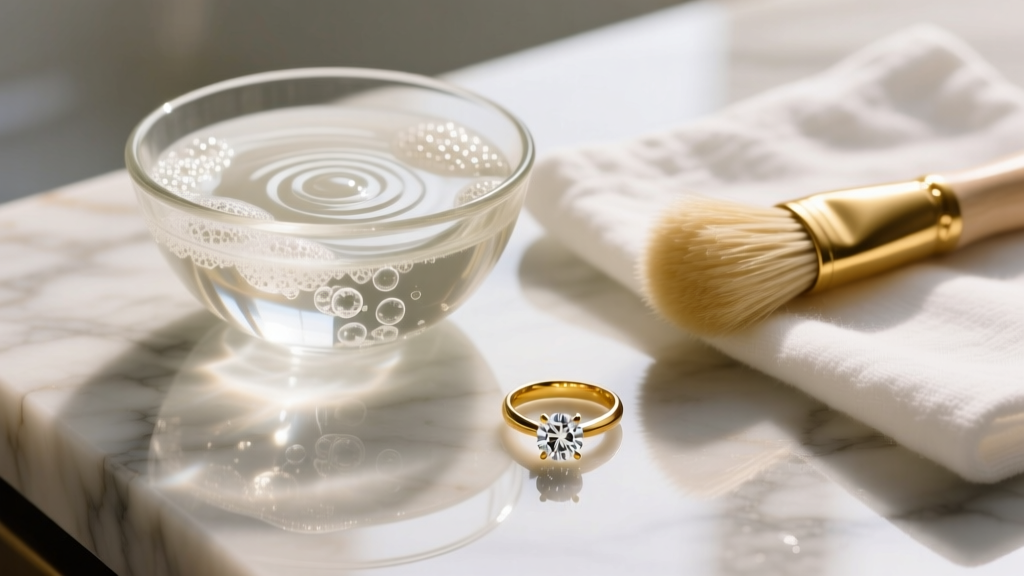
The gold standard for budget cleaning is a few drops of pH-neutral dish soap (like Dawn Ultra) mixed with lukewarm water (85°F to 95°F). Cost per clean: $0.01. This solution effectively breaks down the sebum, lotions, and dead skin cells that accumulate behind diamond settings. Use a baby toothbrush with ultra-soft bristles to gently agitate the pavilion (back) of the stone. Never use boiling water, as extreme thermal shifts can fracture heat-treated gems like tanzanite or cause synthetic moissanite to temporarily cloud.
The Baking Soda Paste (Warning: Abrasion Risks)
Many budget guides recommend baking soda and aluminum foil for silver tarnish. While the electrochemical reaction effectively strips silver sulfide, baking soda has a Mohs hardness of 2.5. Because pure gold and silver also sit around 2.5 to 3 on the Mohs scale, vigorous scrubbing with baking soda will induce micro-scratches on high-polish finishes. Value Verdict: Use it only on heavily oxidized, matte-finish, or antique silver pieces where patina removal is the goal, never on mirrored surfaces or soft gems like pearls and turquoise.
Tier 2: Commercial Cleaners & Polishing Cloths (Value Rating: ★★★★☆)
When DIY isn't enough for heavy tarnish or you need a quick wipe-down on the go, commercial solutions step in. The key to maximizing value here is calculating the cost-per-ounce and the lifespan of the product.
| Brand / Product | Avg. Price | Volume / Count | Cost Per Clean | Best For |
|---|---|---|---|---|
| Connoisseurs Dazzle Drops | $9.99 | 10 Pods (makes 10 tubs) | ~$0.05 | Diamonds, Platinum, White Gold |
| Hagerty Jewel Clean | $8.50 | 8 fl oz liquid | ~$0.15 | Gold, Silver, Hard Gemstones |
| Sunshine Polishing Cloths | $6.00 | 2 Large Cloths | ~$0.02 | Silver Tarnish, Raw Brass |
As noted by Blue Nile's jewelry care experts, commercial liquid dips often contain mild ammonia. While excellent for dissolving grease on diamonds, ammonia will strip the rhodium plating off white gold over time, forcing you to pay $50-$100 for re-plating. Always check the ingredient list before dipping white gold or porous stones like opals and emeralds.
Tier 3: Ultrasonic Cleaners (Value Rating: ★★★☆☆)
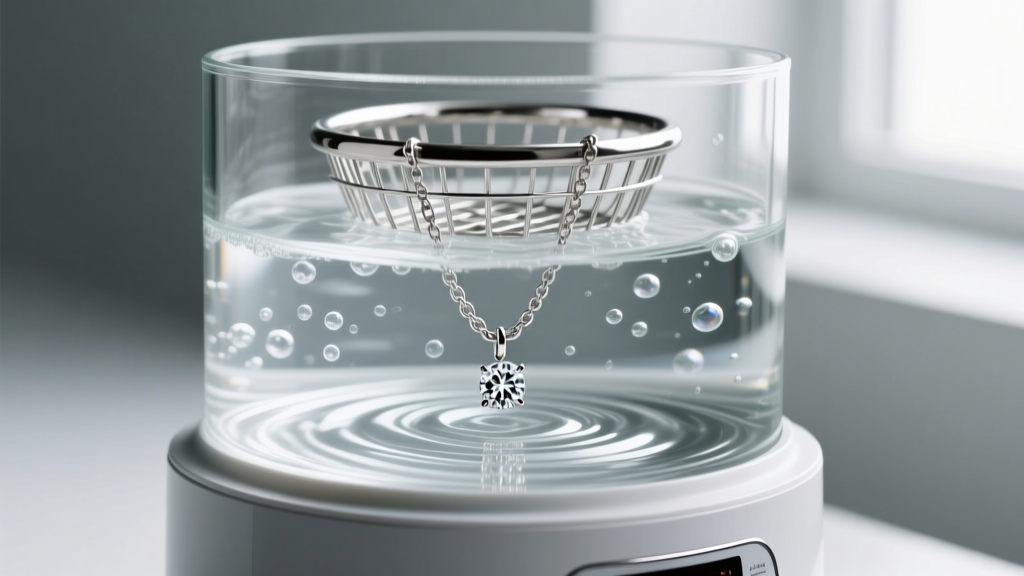
Budget ultrasonic cleaners (typically priced between $35 and $50 on retail sites) use high-frequency sound waves (usually 40-45 kHz) to create microscopic cavitation bubbles in water. When these bubbles collapse against the jewelry, they blast away microscopic dirt from deep within prong settings and chain links.
When the $40 Investment Makes Sense
If you wear a diamond solitaire or a complex pave-set ring daily, an ultrasonic cleaner pays for itself after just two uses compared to professional cleaning fees. However, the value proposition plummets if you own delicate gemstones. The intense vibrations will shatter fracture-filled diamonds, leach the cedar oil out of emeralds (leaving them cloudy and fractured), and cause the water content in opals to craze. For a mixed jewelry wardrobe, the ROI is moderate; for a strictly diamond-and-platinum wardrobe, the ROI is exceptional.
Expert Tip: Never use tap water in an ultrasonic cleaner if you have hard water. The mineral deposits will bake onto your jewelry during the cavitation process. Always use distilled water mixed with a drop of dish soap to maximize the machine's value and protect your gems.
Tier 4: Professional Jewelry Cleaning (Value Rating: ★★☆☆☆)
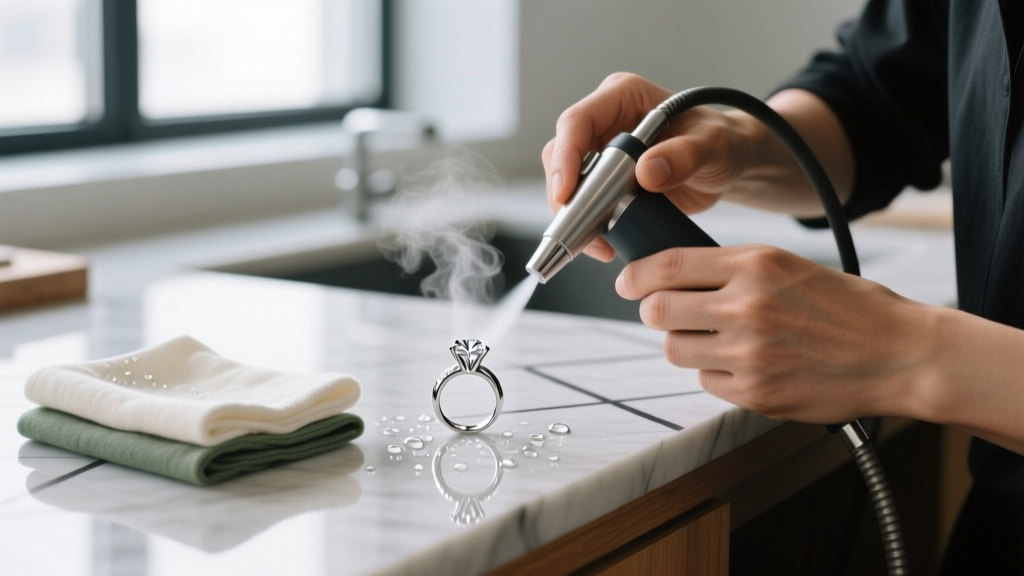
Walking into a local jeweler for a professional clean and steam polish typically costs between $25 and $50 per visit, though many jewelers offer this service for free if you purchased the piece from them. While the upfront cost is the highest, the value lies in the complimentary inspection. A professional will check for loose prongs, worn gallery wires, and bent clasps—issues that DIY and ultrasonic methods cannot fix. However, as a purely cleaning mechanism, paying $40 to remove everyday sebum is a poor allocation of your budget.
The Ultimate Value Matrix: Matching Method to Material
To ensure you aren't wasting money on products that damage your specific pieces, use this decision matrix to match your jewelry material to the most budget-friendly, safe cleaning method.
| Jewelry Material | Best Budget Method | Methods to Avoid (High Cost of Damage) |
|---|---|---|
| Diamonds & Platinum | Ultrasonic (42kHz) + Dish Soap | Chlorine bleach (pits platinum alloys) |
| 14k/18k Yellow Gold | Dish Soap + Baby Toothbrush | Baking soda paste (causes micro-scratches) |
| Rhodium-Plated White Gold | Mild Dish Soap Only | Ammonia dips, Ultrasonic (strips plating) |
| Sterling Silver (High Polish) | Sunshine Polishing Cloth | Toothpaste, Baking Soda (abrasive) |
| Emeralds, Opals & Pearls | Damp Microfiber Cloth Wipe | Ultrasonic, Steam, Chemical Dips |
Expert Verdict: Maximizing Your Cleaning ROI
So, what can you use to clean jewelry when balancing a strict budget with the need for pristine, undamaged pieces? The undisputed champion of value is the humble combination of pH-neutral dish soap, distilled warm water, and a $2 baby toothbrush. This zero-cost method safely cleans 90% of fine jewelry on the market. Reserve your budget for a high-quality treated polishing cloth (like Sunshine) for silver maintenance, and consider an entry-level ultrasonic cleaner only if your collection heavily features durable diamonds and platinum. By avoiding abrasive DIY myths and harsh chemical dips, you protect both your wallet and the long-term structural integrity of your most cherished accessories.