What to Clean Jewelry With: The Ultimate Tool Buying Guide
Discover exactly what to clean jewelry with. Our buying guide covers ultrasonic cleaners, steamers, and polishing cloths for every metal and gemstone.

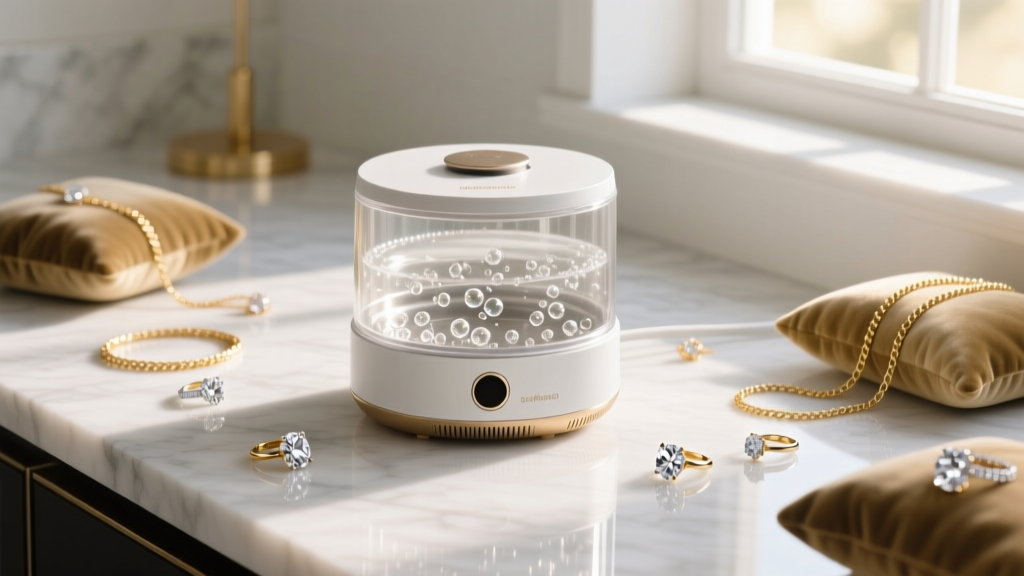
Deciding what to clean jewelry with is one of the most critical maintenance choices a collector or daily wearer can make. The wrong tool can fracture a clarity-enhanced diamond, strip the rhodium plating off white gold, or cause micro-pitting in porous gemstones. Conversely, the right equipment restores optical brilliance and prolongs the structural integrity of your pieces. This comprehensive buying guide strips away marketing fluff to examine the technical specifications, material compatibilities, and failure modes of modern jewelry cleaning tools.
The Science of Jewelry Cleaning: Why Tool Selection Matters
Jewelry cleaning is fundamentally about removing sebum, cosmetic buildup, and environmental tarnish without exceeding the physical or chemical tolerance of the materials. Metals and gemstones react differently to mechanical vibration, thermal shock, and chemical solvents. For instance, the Mohs hardness scale dictates scratch resistance, but it is a material's toughness (resistance to breaking) and stability (resistance to heat and chemicals) that dictate which cleaning tools are safe. Understanding these physical properties is the first step in building an effective, safe cleaning arsenal.
Ultrasonic Cleaners: Cavitation Technology Explained
Ultrasonic cleaners use high-frequency sound waves to create microscopic vacuum bubbles in a liquid solution. When these bubbles collapse against the jewelry—a process called cavitation—they generate localized temperatures up to 5,000 Kelvin and intense micro-jets that blast dirt from microscopic crevices. However, not all ultrasonic cleaners are built equally, and buying the wrong frequency can destroy delicate jewelry.
Frequency and Transducer Quality
The market is flooded with cheap, 40kHz (kilohertz) ultrasonic cleaners. While 40kHz is excellent for heavy grime on solid gold or platinum bands, the larger cavitation bubbles it produces can actually shake loose melee diamonds from poorly crafted pave settings. For fine jewelry, you must look for sweep-frequency technology or machines operating at 80kHz to 120kHz. Higher frequencies produce smaller, gentler bubbles that safely clean intricate filigree and micro-pave settings without compromising the prongs.
Tank Material and Basket Design
Avoid ultrasonic cleaners with plastic tanks or suspended transducers. You need a tank made of SUS304 or SUS316 stainless steel to ensure proper acoustic transmission and prevent chemical corrosion from cleaning solutions. Furthermore, never drop jewelry directly onto the steel floor of the tank; the vibration can scratch the metal. Always use a suspended ABS plastic or silicone-lined basket.
Gemstone Safety Matrix for Ultrasonics
Before purchasing an ultrasonic unit, cross-reference your collection with this safety matrix. The Gemological Institute of America (GIA) strongly warns against using ultrasonics on organic gems or heavily included stones.
| Gemstone / Material | Ultrasonic Safety | Failure Mode / Risk |
|---|---|---|
| Diamond (Untreated) | Safe (80kHz+) | Prong loosening if 40kHz is used on pave. |
| Emerald (Oil/Fracture-Filled) | NEVER | Cavitation strips cedar oil, revealing fractures. |
| Tanzanite / Topaz | NEVER | Perfect cleavage planes can cause internal shattering. |
| Opal / Pearl / Coral | NEVER | Porous structure absorbs liquid; heat causes cracking. |
| Sapphire / Ruby | Safe (with caution) | Heat-treated stones are generally safe; lattice-diffused are not. |
Steam Cleaners: When to Invest in Professional-Grade Tech
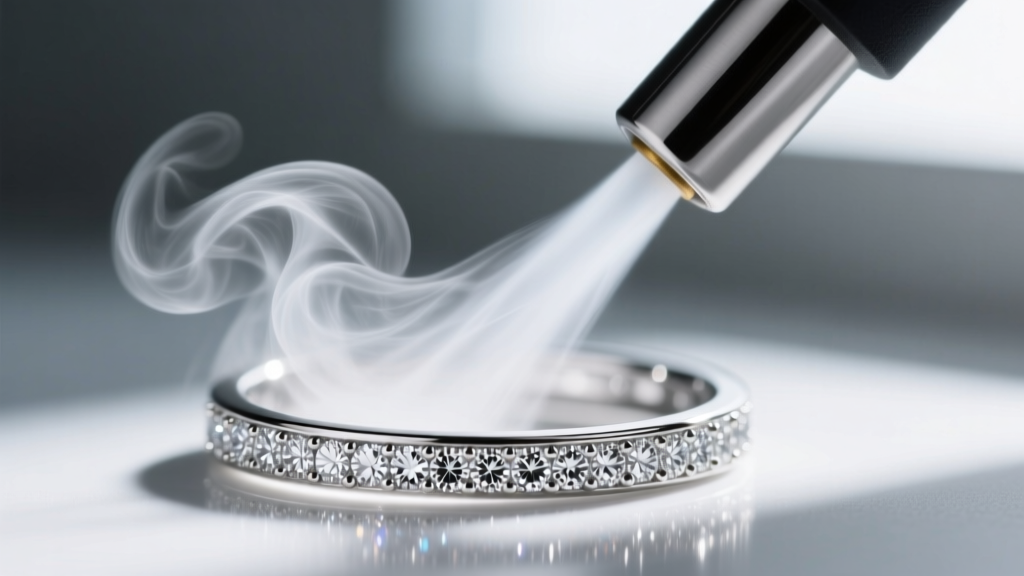
Steam cleaners are the secret weapon of professional jewelers for achieving that final, streak-free optical brilliance. They work by forcing pressurized, superheated steam through a microscopic nozzle, physically blowing away the last remnants of oily film that ultrasonics leave behind. If you are considering a steam cleaner, you must understand the relationship between pressure, temperature, and gemstone safety.
Pressure Ratings: Consumer vs. Professional
Consumer-grade steam cleaners typically operate between 40 to 50 PSI (pounds per square inch). While safe for most solid pieces, they often lack the thermal energy to instantly vaporize heavy lotion buildup. Professional bench steamers operate at 100 to 120 PSI. However, high-pressure steam poses a severe mechanical risk: a 120 PSI jet directed at a poorly set 1mm melee diamond can literally blow the stone out of its bezel or prong setting. When buying, look for units with adjustable pressure valves or interchangeable nozzle tips (pinpoint vs. wide-fan) to modulate the force applied to the jewelry.
Thermal Shock and the 2026 Safety Standards
Modern steamers heat water to roughly 250°F (121°C). This sudden thermal shock is catastrophic for temperature-sensitive gems like opals, emeralds, and tanzanite, which can fracture instantly. Always inspect your jewelry under a 10x jeweler's loupe for internal tension lines before steaming. For a deeper understanding of thermal limitations in gemology, refer to the Federal Trade Commission's Jewelry Guides, which outline industry standards for gemstone durability and treatment disclosures.
Polishing Cloths and Chemical Dips: The Daily Maintenance Arsenal
Not every cleaning session requires heavy machinery. For daily maintenance and tarnish removal, specialized cloths and chemical solutions are essential. However, the chemistry of these products requires strict adherence to material compatibility.
Microfiber vs. Treated Cotton
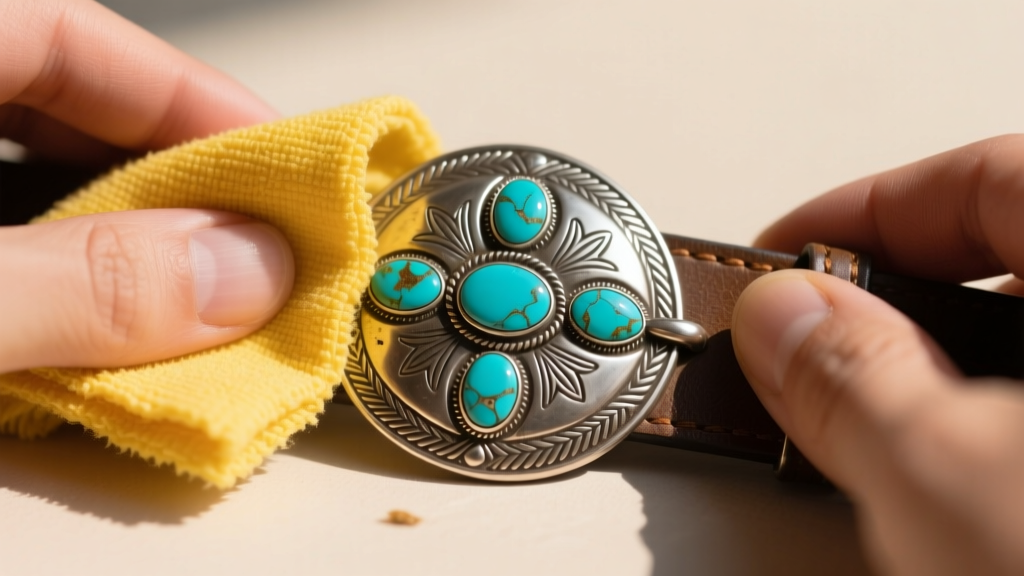
Standard microfiber cloths are excellent for wiping away fingerprints and sebum from diamonds and sapphires. Their split-fiber structure mechanically traps oils without the need for liquid solvents. However, microfiber does nothing for silver sulfide (tarnish). For tarnished silver, gold, or copper alloys, you must purchase chemically treated polishing cloths (such as the industry-standard Sunshine cloths). These cloths are impregnated with microscopic jewelers' rouge (iron oxide) and mild anti-tarnish agents. Crucial buying tip: Never wash a treated polishing cloth, as this strips the active tarnish-removing compounds.
The Danger of Chemical Silver Dips
Liquid silver dips are highly controversial in the gemological community. Most commercial dips rely on thiourea, a powerful chemical reducer that strips tarnish in seconds. While effective on plain silver chains, thiourea is highly toxic and can cause irreversible micro-pitting on the surface of the silver over repeated uses. More importantly, if a silver piece contains porous gemstones (like turquoise, malachite, or lapis lazuli), the liquid will be absorbed into the stone's matrix, causing permanent color alteration and structural degradation. Buy liquid dips only for plain, un-stoned silver chains, and always neutralize the piece with a baking soda and water bath immediately after dipping.
Decision Framework: Matching the Tool to Your Collection
To finalize your purchasing decision, map your specific jewelry collection to the appropriate tool category:
- The Diamond & Platinum Collector: Invest in an 80kHz ultrasonic cleaner with sweep-frequency technology and a 50 PSI consumer steam cleaner. This combination safely removes sebum from pavilion facets and restores optical brilliance without risking stone loss.
- The Vintage & Antique Enthusiast: Avoid ultrasonics entirely. The vibrations can fracture old European cut diamonds and degrade fragile enamel work. Purchase high-quality treated polishing cloths, a soft-bristled baby toothbrush, and a mild, phosphate-free dish soap (like Dawn) for gentle, manual agitation.
- The Silver & Southwest Jewelry Wearer: Skip the liquid dips. Buy a multi-pack of chemically treated polishing cloths and a specialized, non-abrasive silver foam. This preserves the intentional oxidation (patina) in stamped or cast crevices while only polishing the high-relief surfaces.
Expert Tip: Regardless of the tools you buy, always clean your jewelry over a closed sink drain or a rubber-lined tray. The most common cause of jewelry loss during cleaning is not chemical damage, but a loose stone falling down an open drain during the rinsing process.
Ultimately, knowing what to clean jewelry with is about matching the mechanical and chemical properties of your tools to the physical limitations of your gems and metals. By investing in the correct frequencies, pressures, and polishing compounds, you ensure your collection remains structurally sound and optically flawless for generations.


