Why Does Jewelry Tarnish? A Budget and Value Metal Guide
Discover why does jewelry tarnish and how it impacts your wallet. We break down the hidden costs of plated, vermeil, and solid metals for smart buyers.

The Hidden Economics of Metal Oxidation
When consumers ask, why does jewelry tarnish, they are usually looking for a scientific explanation. But as a jewelry appraiser and style consultant, I look at tarnish through a different lens: financial depreciation. Tarnish is not just a chemical annoyance; it is the primary indicator of a metal's intrinsic value and a hidden tax on your jewelry budget. Understanding the metallurgy behind oxidation is the first step in transitioning from a cycle of endless, cheap replacements to building a curated, high-value collection.
At its core, tarnish is a surface-level chemical reaction. Pure gold (24k) and pure platinum are virtually inert, meaning they do not react with oxygen or sulfur in the environment. However, pure gold is far too soft for daily wear—it will bend and scratch if you simply grip a steering wheel. Therefore, jewelers alloy pure gold with metals like copper, zinc, and silver to create durable 14k (58.3% gold) or 18k (75% gold) pieces. It is these alloy metals that introduce the potential for tarnish, and the ratio of these alloys dictates both the upfront price and the long-term maintenance cost of your jewelry.
The Chemistry of the "Tarnish Tax"
To evaluate the true cost of jewelry, we must examine the base metals used in budget-friendly pieces. The vast majority of fashion jewelry under the $50 mark is crafted from brass (an alloy of copper and zinc) or nickel, and subsequently flash-plated with a microscopic layer of gold or silver.
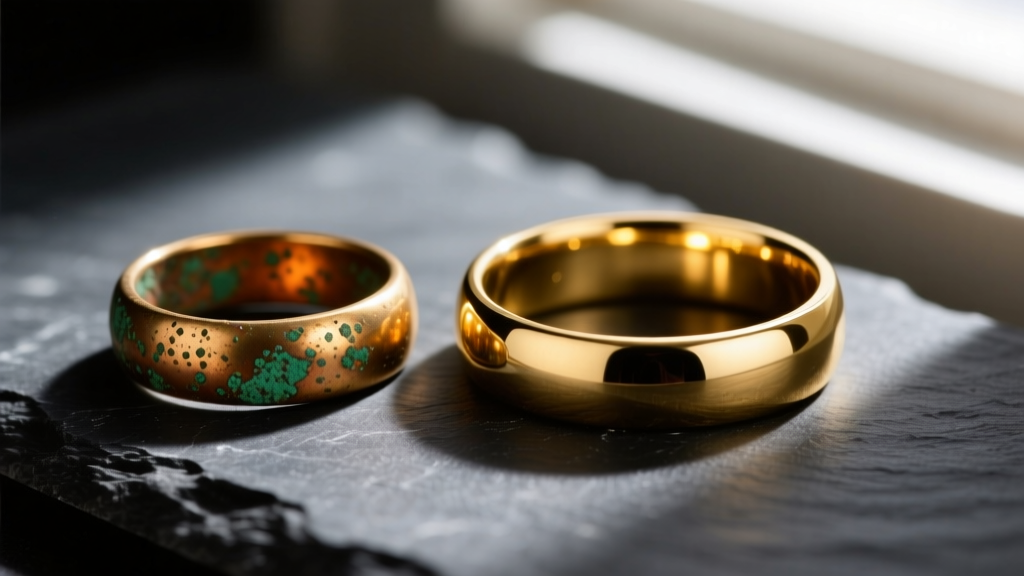
When the plating inevitably wears away through friction and exposure to the lactic acid in your sweat, the underlying copper is exposed. Copper reacts rapidly with oxygen and moisture to form copper oxide, which manifests as a dark, greenish-black patina that transfers directly onto your skin. This isn't an allergic reaction; it is a fundamental chemical failure of the material.
Conversely, sterling silver (stamped 925) consists of 92.5% pure silver and 7.5% copper. According to the Gemological Institute of America (GIA), silver does not tarnish from oxygen; rather, it reacts with hydrogen sulfide in the atmosphere to form silver sulfide. While sterling silver requires periodic polishing, the metal itself is solid throughout. A tarnished $60 sterling silver ring can be restored to factory condition with an $8 impregnated polishing cloth, whereas a $30 gold-plated brass ring with worn-off plating is destined for the landfill.
Cost vs. Lifespan: The Metal Tier Breakdown
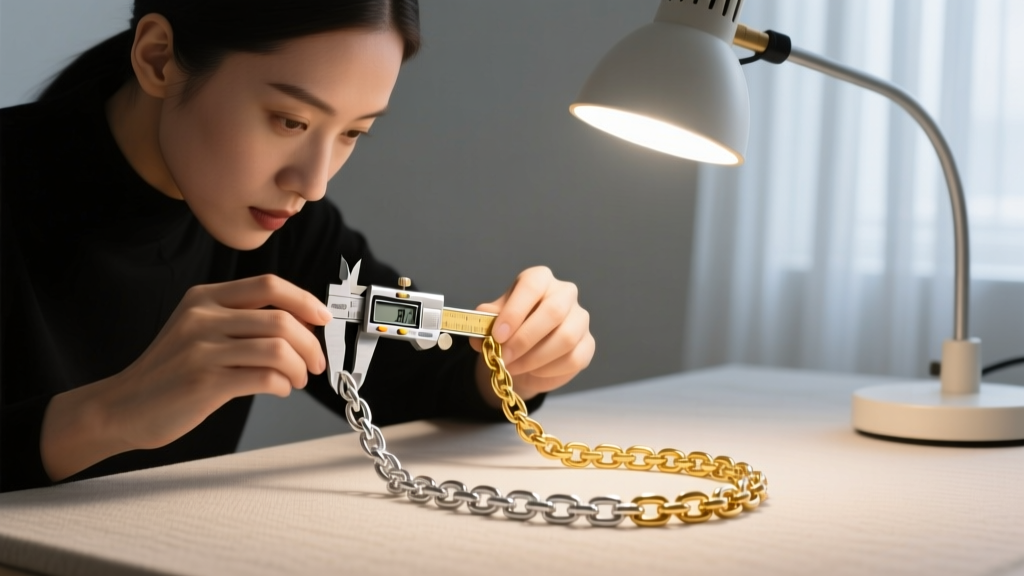
To illustrate the long-term financial impact of metal selection, I have compiled a cost-analysis matrix based on average market pricing and a 5-year ownership horizon for a standard everyday ring or chain.
| Metal Category | Base Material | Avg. Upfront Cost | 5-Year Maintenance | End-of-Life Value |
|---|---|---|---|---|
| Fashion / Flash Plated | Brass, Nickel, or Steel | $20 - $45 | $150+ (Replacing every 6-8 months) | $0 (Landfill) |
| Gold Vermeil | Sterling Silver (925) | $80 - $160 | $0 - $40 (Polishing base metal) | Melt value of silver ($15-$30) |
| Solid 14k Gold | 58.3% Gold, 41.7% Alloy | $250 - $600 | $0 (Soap and water cleaning) | High (Melt + Secondary Market) |
| Platinum | 95% Platinum, 5% Ruthenium | $800 - $1,500+ | $100+ (Optional repolishing) | Very High (Generational Asset) |
Decoding FTC Guidelines: The Vermeil Loophole
When shopping the mid-tier budget ($80–$200), consumers frequently encounter the term "Gold Vermeil." But not all vermeil is created equal, and misunderstanding this term is where budget-conscious buyers lose the most money.
The Federal Trade Commission (FTC) Jewelry Guides strictly dictate that for a piece to be legally marketed as vermeil in the United States, it must meet two criteria:
- The base must be solid sterling silver (925).
- The gold plating must be at least 10k purity and a minimum of 2.5 microns thick.
Many overseas manufacturers and fast-fashion brands bypass this by selling "gold plated sterling silver" that is only 0.5 microns thick. At 0.5 microns, the gold layer will wear through to the silver base within three to six months of daily friction. While the silver won't turn your finger green, it will oxidize and require constant polishing. Always demand the exact micron thickness from the retailer before purchasing vermeil. If they cannot provide a spec sheet verifying 2.5µm, you are overpaying for standard flash plating on a silver base.
The White Gold Maintenance Trap
It is crucial to address a common misconception regarding white gold. Many buyers assume that because white gold is a precious metal, it is maintenance-free. In reality, white gold is created by alloying yellow gold with white metals like nickel, palladium, or manganese. However, the resulting alloy still retains a faint yellowish-gray hue.
To achieve the brilliant, mirror-like chrome finish consumers expect, white gold is electroplated with rhodium, a rare and incredibly hard platinum-group metal. Rhodium does not tarnish, but it does wear off. Depending on your skin's pH and friction levels, a white gold ring will require a "rhodium dip" every 12 to 24 months. At a typical jeweler's bench, this service costs between $60 and $120 per session. Over a decade, a $500 white gold ring may accrue $400 in maintenance fees. If your goal is zero-maintenance, tarnish-free jewelry on a budget, yellow gold or platinum are vastly superior financial choices.
Strategic Budget Allocation: Building a Tarnish-Free Capsule
If your total annual jewelry budget is $500, spending it on ten $50 plated pieces guarantees a tarnished, degraded collection by the following year. The most financially sound strategy is the "Core Capsule" approach.
1. Invest in High-Friction Zones
Rings and bracelets endure constant contact with water, lotions, door handles, and keyboards. These items must be solid 14k gold, 18k gold, or platinum. The upfront cost is higher, but the cost-per-wear drops to pennies over a lifetime, and they will never succumb to structural tarnish.
2. Compromise on Low-Friction Zones
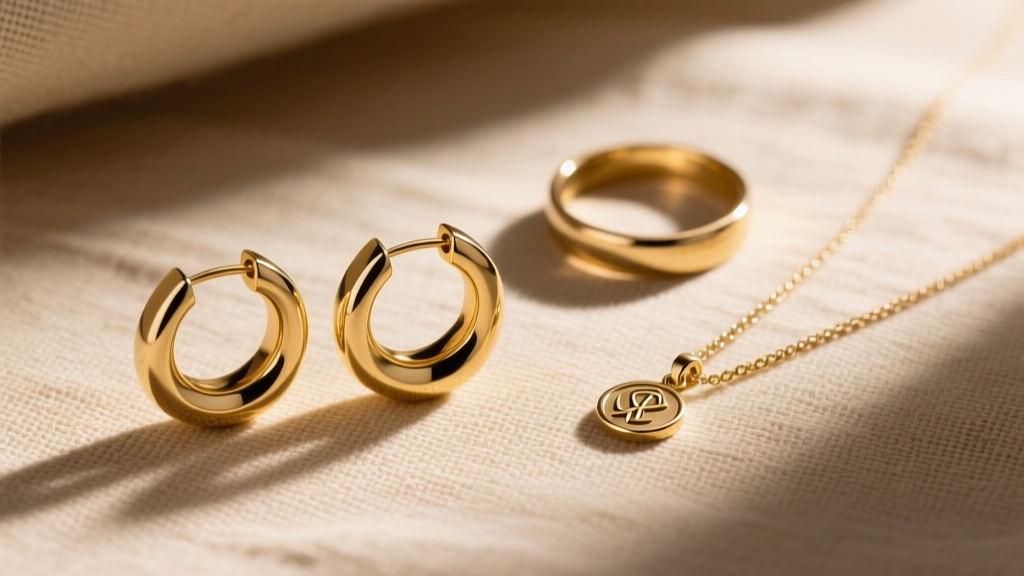
Earrings (specifically studs or small hoops) and delicate pendants that rest on the collarbone experience minimal friction and are rarely exposed to harsh chemicals. These are the safest places to stretch your budget with high-quality, 2.5-micron gold vermeil. Because the base is sterling silver, even if the gold eventually wears away after five years, the piece remains structurally sound and hypoallergenic.
3. Avoid Brass and Copper Entirely
No matter how beautiful the design or how low the price, avoid any jewelry where brass or copper is listed as the base metal. The structural degradation of these metals when exposed to human sweat is rapid and irreversible. The money spent on brass jewelry is essentially a rental fee for a few weeks of wear.
"A piece of jewelry is only as valuable as its base metal. Plating is merely a temporary cosmetic illusion. When advising clients on estate value, we discard heavily tarnished plated brass by the pound, but we weigh and appraise solid 14k gold by the gram." — Independent Jewelry Appraiser
Final Thoughts on Value Retention
Ultimately, asking why does jewelry tarnish is the gateway to becoming a smarter, more intentional consumer. Tarnish is the physical manifestation of cheap metallurgy. By understanding the chemical realities of copper oxidation, the strict FTC definitions of vermeil, and the hidden rhodium costs of white gold, you can insulate your wallet from the "tarnish tax." Shift your budget away from the endless cycle of replacing degraded fashion jewelry, and redirect those funds toward solid, inert metals that will retain their beauty—and their financial value—for decades to come.


