Electronic Jewelry Cleaner Tech: Ultrasonic vs Ionic Deep Dive
Explore the technical mechanics of an electronic jewelry cleaner. Compare ultrasonic cavitation and ionic tech for safe, deep gemstone and metal care.

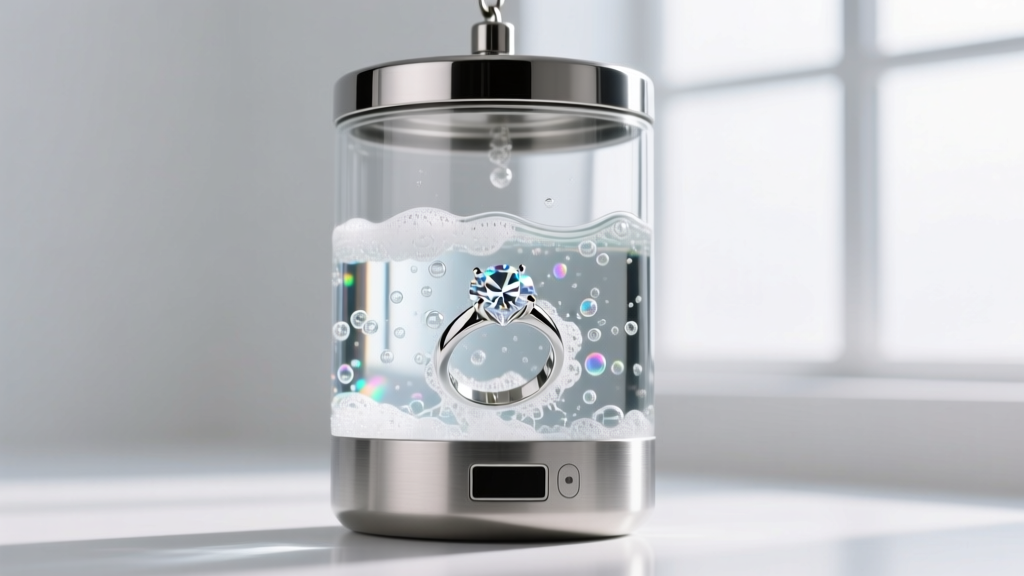
The Physics of Clean: How Electronic Jewelry Cleaners Work
When evaluating an electronic jewelry cleaner, it is critical to understand that not all devices utilize the same mechanism of action. The market is dominated by two distinct technologies: ultrasonic cavitation and ionic (electrolytic) reduction. While both are marketed as 'electronic cleaners,' their underlying physics, target soils, and material safety profiles are vastly different. For jewelers, gemologists, and serious collectors, understanding these technical distinctions is the difference between restoring a piece to its original luster and causing catastrophic, irreversible damage to a gemstone's crystalline structure.
Ultrasonic cleaners operate on the principle of acoustic cavitation. A piezoelectric transducer (typically made of Lead Zirconate Titanate, or PZT ceramics) bonded to the base of a stainless steel tank converts high-frequency electrical energy into mechanical sound waves. These waves propagate through the liquid medium, creating alternating cycles of compression and rarefaction. During the rarefaction cycle, microscopic vacuum bubbles form; during the compression cycle, they violently implode. This implosion generates localized temperatures exceeding 5,000 Kelvin and pressures of up to 20,000 psi, effectively blasting sebum, polishing compound, and environmental dirt from the microscopic crevices of a ring's pavilion.
Ultrasonic Frequency Breakdown & Material Safety
The frequency of the ultrasonic waves—measured in kilohertz (kHz)—dictates the size of the cavitation bubbles and the intensity of their implosion. Lower frequencies produce larger, more aggressive bubbles, while higher frequencies generate smaller, gentler bubbles that can penetrate tighter microscopic spaces without damaging delicate surfaces.
| Frequency Range | Cavitation Profile | Recommended Applications | Material Warnings |
|---|---|---|---|
| 20 kHz - 28 kHz | Highly aggressive, large bubbles | Heavy industrial degreasing, raw casting cleanup | Will scratch high-polish gold and damage all gemstones |
| 35 kHz - 45 kHz | Standard jewelry grade, balanced | Diamonds, sapphires, rubies, platinum, 14k/18k gold | Unsafe for emeralds, opals, pearls, and fracture-filled stones |
| 60 kHz - 80 kHz | Gentle, micro-bubbles | Intricate filigree, micro-pave settings, soft metals | Still unsafe for highly included or organic gems |
| 100 kHz+ | Ultra-gentle, high penetration | Delicate aerospace components, precision optics | Rarely used in standard jewelry due to longer cycle times |
For general jewelry maintenance, the 40 kHz to 45 kHz range remains the industry standard. However, modern 2026 models increasingly feature sweep-frequency technology. Instead of emitting a static 42 kHz tone, the generator modulates the frequency slightly (e.g., ±2 kHz) thousands of times per second. This prevents the formation of standing waves and 'dead zones' within the tank, ensuring uniform cleaning coverage across complex geometries like basket settings and channel-set bands.
The Danger Zone: Gemstones That Cannot Handle Cavitation
A common misconception is that the Mohs hardness scale determines a gemstone's safety in an ultrasonic bath. In reality, tenacity (resistance to breaking and cleavage) and internal inclusions are the true limiting factors. Even a diamond, which sits at a 10 on the Mohs scale, possesses perfect cleavage planes. If a diamond has a surface-reaching feather or a laser-drilled fracture, the shockwaves from cavitation can cause the stone to cleave or shatter entirely.
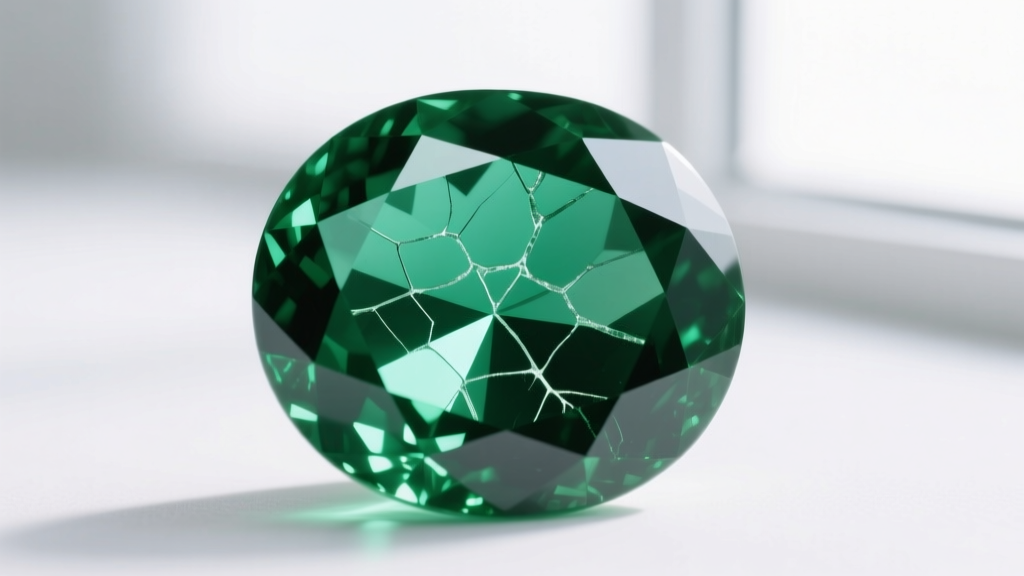
Emeralds present an even more complex technical challenge. As noted by the Gemological Institute of America (GIA), the vast majority of commercial emeralds are fracture-filled with cedar oil, Opticon, or synthetic resins to mask internal fissures and improve clarity. The localized heat and violent micro-jets generated by an electronic jewelry cleaner will melt, dissolve, or dislodge these fillers, leaving the emerald looking cloudy, heavily included, and significantly devalued. Similarly, organic gems like pearls, coral, and amber are highly porous and chemically sensitive; ultrasonic waves will literally strip their nacre and polish layers.
Expert Rule of Thumb: If a gemstone is routinely treated with oils, waxes, or fracture-fillers (Emerald, Jadeite, Opal, Turquoise, Lapis Lazuli), it must never be subjected to ultrasonic cavitation or heated cleaning solutions.
Ionic Cleaners: The Electrochemical Alternative
While ultrasonic cleaners excel at removing physical soils (dirt, oils, lotions), they do not remove chemical tarnish. This is where ionic electronic cleaners come into play. Ionic cleaners utilize an electrolytic reduction process to reverse the oxidation of silver.
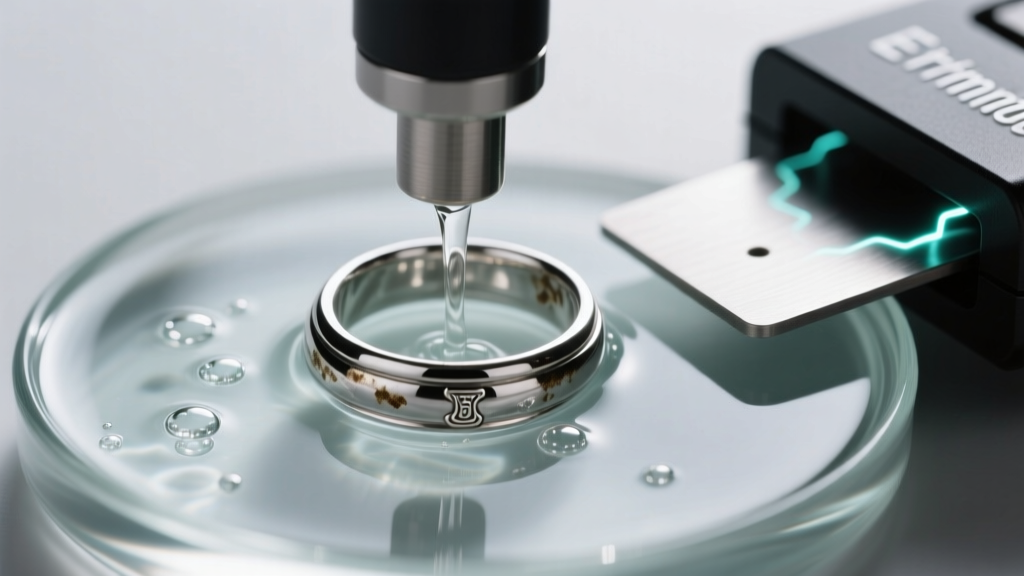
The device consists of a conductive base plate (often aluminum or stainless steel), a specialized electrolyte solution (typically warm water mixed with sodium carbonate or a proprietary ionic salt), and a low-voltage direct current (DC) power supply. When the tarnished silver jewelry touches the conductive plate in the solution, a redox reaction occurs. The silver sulfide (tarnish) on the jewelry is reduced back to elemental silver, while the sulfur ions migrate through the electrolyte to the sacrificial anode plate. The GIA Gem Care guidelines acknowledge electrolytic reduction as a highly effective, non-abrasive method for removing heavy tarnish from sterling silver and Argentium silver without removing microscopic layers of the base metal, unlike traditional polishing cloths or abrasive dips.
Limitations: Ionic cleaners do not remove sebum, skin cells, or environmental grime. They are strictly for tarnish removal. For a complete restoration, a piece must often be cleaned ultrasonically first (if gem-safe), rinsed, and then treated ionically for tarnish, followed by a final distilled water rinse.
Buying Guide: Technical Specs to Demand in 2026
When procuring an electronic jewelry cleaner for professional or high-end personal use, consumer-grade plastic units are insufficient. Demand the following technical specifications:
- Tank Material & Thickness: The tank must be stamped SUS304 or SUS316L stainless steel. SUS316L offers superior resistance to pitting from alkaline cleaning agents. The steel thickness should be a minimum of 0.8mm to 1.1mm to prevent acoustic dampening and transducer burnout.
- Degas Function: Freshly drawn tap water contains dissolved oxygen and carbon dioxide, which act as a cushion during bubble implosion, severely weakening the cavitation effect. A dedicated 'Degas' button runs the unit at a lower power or pulsed cycle to drive off dissolved gases, increasing cleaning efficiency by up to 40%.
- Heating Element Wattage: Cavitation is most efficient between 50°C and 60°C (122°F - 140°F). Ensure the unit has a dedicated ceramic heating element with at least 100W to 150W of power to maintain thermal stability during extended 10-minute cycles.
- Transducer Isolation: High-end units utilize epoxy-bonded transducers with acoustic dampening feet to prevent high-frequency vibrations from transferring to the countertop, which can cause microscopic migration of delicate stones in their settings.
Formulating the Right Ultrasonic Solution
Water alone is a poor ultrasonic medium due to its high surface tension. To maximize the implosion energy and suspend dislodged soils, a surfactant must be introduced. While mild dish soap (like Dawn) is a common DIY substitute, professional gemological labs utilize specialized alkaline or neutral pH surfactants.
Ammonia-based solutions are excellent for cutting through heavy grease on diamonds and platinum, but they will cause stress-corrosion cracking in certain copper alloys and can degrade the rhodium plating on white gold if left for prolonged cycles. For mixed-metal jewelry or pieces with porous secondary stones (like turquoise accents on a silver cuff), a neutral pH (7.0) enzymatic cleaner is mandatory. Always follow an ultrasonic cycle with a thorough rinse in distilled or deionized water to prevent mineral spotting, and use a high-pressure air syringe to blow water out from behind the pavilion facets before final polishing with a microfiber cloth. For comprehensive care protocols on specific stones, refer to the GIA Diamond Care Guide to ensure your chemical and mechanical methods align with gemological best practices.


