Mastering Beading Needles for Jewelry Making: Sizes & Steel
Discover the technical specs of beading needles for jewelry making. Learn about sizes 10-15, steel grades, and matching needles to thread and beads.

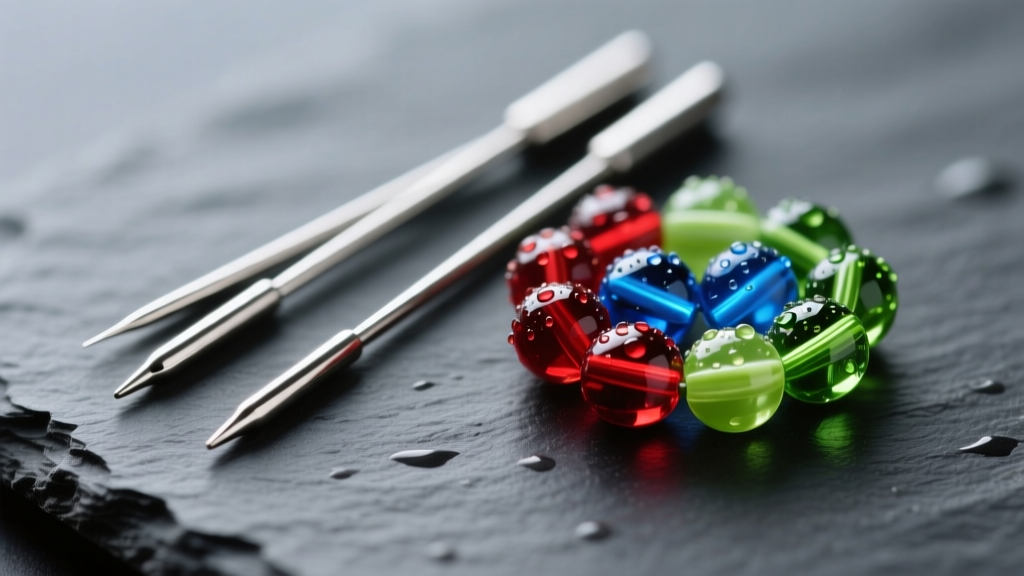
In the intricate world of beadweaving and micro-jewelry fabrication, the needle is not merely a conduit for thread; it is the primary transfer tool of kinetic energy. Selecting the correct beading needles for jewelry making requires a deep understanding of metallurgy, inverse gauge sizing, and the precise tolerances of modern glass and crystal beads. While a casual crafter might grab any needle that appears thin enough, a professional jewelry maker knows that a mismatch of just 0.002 inches can result in shattered beads, frayed polyethylene threads, or catastrophic structural failure in a right-angle weave.
This expert deep dive explores the technical specifications, material sciences, and practical applications of professional-grade beading needles, ensuring your next piece of jewelry is both structurally sound and flawlessly executed.
The Anatomy of a Professional Beading Needle
Unlike standard sewing needles, which feature a bulbous eye and a tapered shaft, high-quality English beading needles are drawn from a single, continuous wire of steel. The defining characteristic of an English beading needle is that its eye is pierced and flattened so that its outer diameter never exceeds the diameter of the shaft. This uniform cylindrical profile is non-negotiable when working with precision-cut beads like Miyuki Delicas or Toho Treasures, where the internal hole diameter is a strict 1.5mm to 1.6mm.
If the eye bulges even fractionally, it will catch on the interior glass coating of the bead, causing micro-fractures that eventually lead to bead breakage under the tension of the thread. Furthermore, the point of a premium beading needle is not sharply tapered like an embroidery needle; it features a slightly rounded, polished tip designed to glide past existing threads within a bead hole without piercing or splitting them during multi-pass stitches like peyote or herringbone.
Decoding Needle Sizes: The Inverse Gauge System
Beading needles for jewelry making utilize an inverse sizing system: the higher the number, the thinner the needle. Understanding this scale is critical for matching your needle to both your bead hole and your chosen thread weight.
| Needle Size | Approx. Shaft Diameter | Optimal Thread Match | Bead Compatibility |
|---|---|---|---|
| Size 10 | 0.018' (0.46mm) | Size D/F Nylon, 8lb Fireline | 8/0 to 6/0 Seed Beads, Pearls |
| Size 12 | 0.015' (0.38mm) | Size B/D Nylon, 6lb Fireline | 11/0 to 8/0 Seed Beads, Crystals |
| Size 13 | 0.013' (0.33mm) | Size A/B Nylon, 4lb Fireline | 15/0 to 11/0 Seed Beads |
| Size 15 | 0.010' (0.25mm) | Size 00/A Nylon, Micro Threads | 15/0 Charlottes, Micro Beads |
The most versatile workhorse in a professional's kit is the Size 12. It possesses enough rigidity to push through dense clusters of 11/0 seed beads while remaining thin enough to accommodate two passes of a 6lb test braided polyethylene thread (like Fireline) inside a standard 1.6mm bead hole.
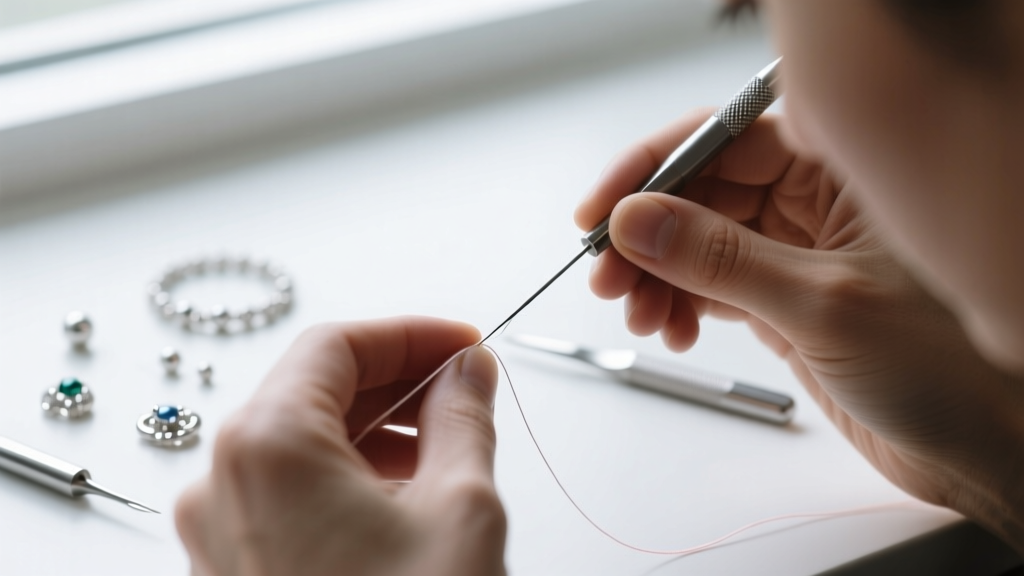
Metallurgy Matters: Carbon Steel vs. Japanese Stainless
The performance of beading needles for jewelry making is dictated by their metallurgical composition. Historically, needles were crafted from high-carbon steel. Brands like John James popularized gold-plated eyes on carbon steel shafts to resist corrosion from the natural oils in a jeweler's hands. Carbon steel is highly flexible; it will bend dramatically before breaking, which provides tactile feedback to the maker before catastrophic failure.
However, the modern standard for elite beadweavers is Japanese stainless steel, championed by manufacturers like Tulip Hiroshima. These needles are forged from a proprietary stainless alloy that is significantly harder than carbon steel. The advantages are threefold:
- Corrosion Resistance: They will not rust or tarnish, eliminating the risk of iron oxide staining expensive silk or nylon threads.
- Edge Retention: The polished tip retains its smooth, rounded geometry hundreds of passes longer than carbon steel, reducing bead-hole abrasion.
- Rigidity: The increased yield strength allows for easier penetration through tight bead clusters without the needle bowing or buckling under thumb pressure.
Failure Modes: Why Needles Snap and How to Prevent It
The trade-off for the hardness of Japanese stainless steel is a lower tolerance for lateral shear stress. If a Size 13 or 15 stainless needle is bent past its yield point, it will not bend back; it will snap cleanly. This phenomenon, known as fatigue failure, occurs when a needle is forced laterally against the inside of a glass bead during a tight turn. To prevent this, experts recommend rotating the bead rather than forcing the needle, and retiring Size 15 needles after a single complex project to avoid mid-project shattering.
Specialty Needles: Beyond the Standard English Needle
While the English needle dominates beadweaving, other structural designs are required for specific jewelry-making scenarios:
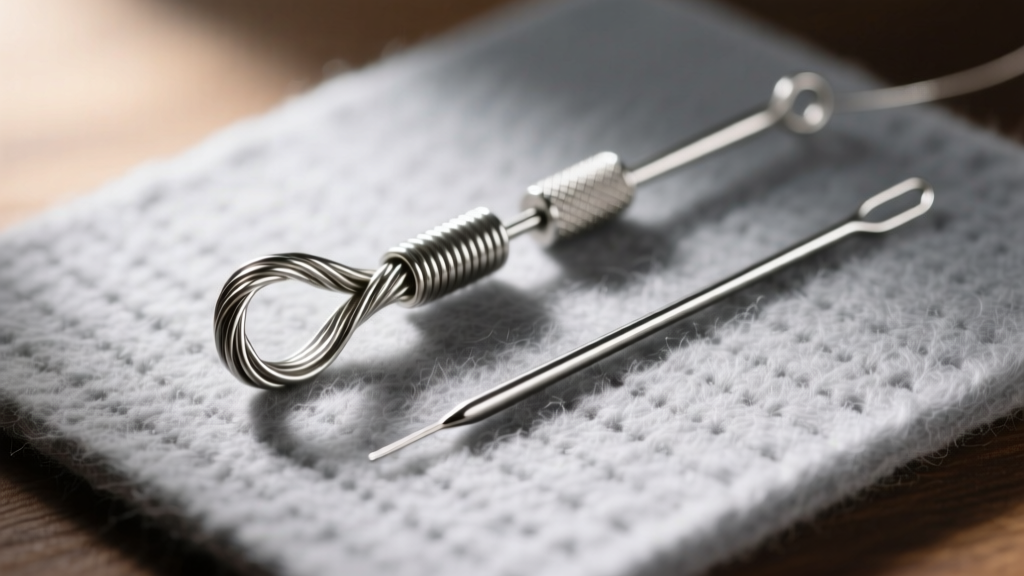
- Twisted Wire (Collapsible Eye): Formed from a single loop of flexible wire twisted upon itself. These are essential for stringing heavy gemstones, freshwater pearls with irregular drill holes, and large-holed lampwork beads. The eye collapses to pass through the bead, but they cannot be used for multi-pass beadweaving as the wire loop will catch on previous thread passes.
- Big Eye Needles: Featuring a flexible, elongated eye that spans nearly half the shaft's length. These are utilized for threading thick cords, leather, or elastic through large-holed beads where a standard eye would create too much friction.
- Sharp Beading Needles: Shorter than English needles (usually 1.5 to 2 inches long), these provide maximum control for fringe work, picot edges, and intricate right-angle weave units where a long shaft would become unwieldy.
Expert Troubleshooting: Thread Fraying and Bead Clogs
Even with the correct size and material, jewelers frequently encounter two technical failures: thread fraying at the eye and bead clogs.
'If your Fireline is fraying precisely at the needle eye, you are experiencing micro-burring. The manufacturing stamping process can leave microscopic sharp edges on the interior of the eye. Running a piece of 1000-grit sandpaper or a specialized needle-file through the eye once before use will polish the interior channel and double your thread's lifespan.' — Master Beadweaver Technical Note
Bead clogs occur when the cumulative diameter of the needle plus multiple thread passes exceeds the bead's internal tolerance. For example, passing a Size 12 needle (0.015') and two strands of Size D Nymo (0.012' x 2 = 0.024') equals a total diameter of 0.039'. While this mathematically fits inside a 1.6mm (0.063') Delica hole, the friction coefficient of the waxed nylon against the glass creates a mechanical lock. To resolve this without snapping the needle, apply a micro-droplet of synthetic thread conditioner (like Thread Heaven or micro-crystalline wax) to the thread bundle to reduce surface friction, or step down to a braided polyethylene thread which has a much smoother, non-stick surface profile.
Conclusion
Treating beading needles for jewelry making as disposable, generic tools is a hallmark of amateur work. By understanding the inverse gauge system, respecting the metallurgical differences between carbon and stainless steel, and calculating the exact spatial tolerances of your thread-and-needle bundle, you elevate your craft from simple assembly to precision engineering. Invest in high-grade Japanese stainless needles, match them meticulously to your bead hole tolerances, and your jewelry will possess the structural integrity required to last generations.


