Beginner Jewelry Making: The 2026 Tool & Wire Buying Guide
Discover the ultimate beginner jewelry making buying guide for 2026. Learn which pliers, wire gauges, and alloys to invest in for professional results.

Why Your First Tool Purchase Dictates Your Success
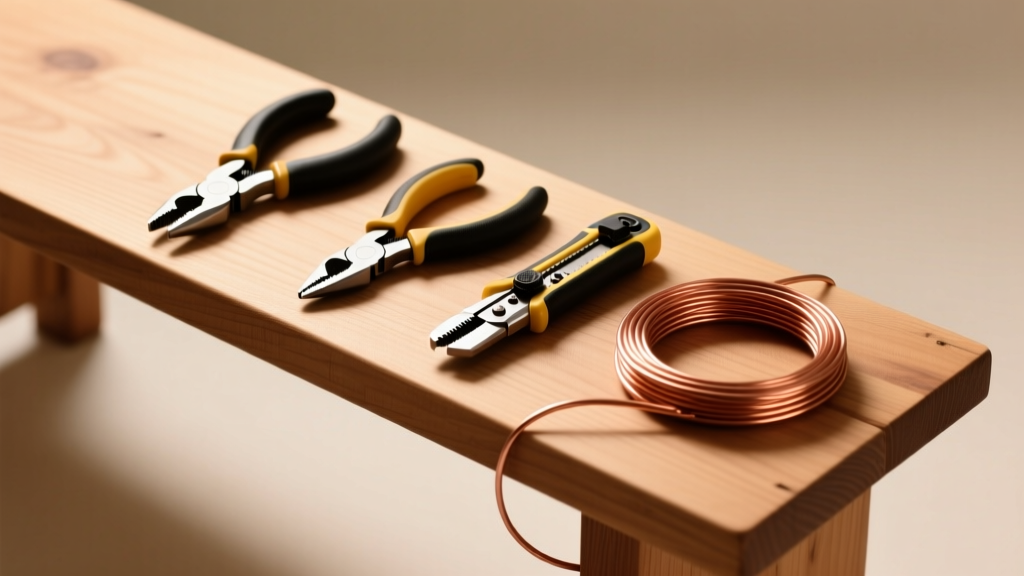
Stepping into the world of wire wrapping and beading is thrilling, but the barrier to entry is often littered with bent wire, marred finishes, and hand fatigue. The reality of beginner jewelry making is that your initial equipment choices will either accelerate your skill development or create frustrating roadblocks that lead to abandoned projects. Cheap, big-box craft store tools often feature misaligned jaws, serrated teeth that gouge soft metals, and stiff springs that cause carpal tunnel-like symptoms after just an hour of work.
This 2026 buying guide strips away the fluff and focuses strictly on the metallurgy, mechanics, and ergonomics you need to evaluate before purchasing your first bench kit. Whether you are weaving intricate Viking knit or forming structural ear wires, understanding the exact specifications of your tools and materials is the difference between amateur crafts and professional-grade jewelry.
The Core Pliers Trio: What to Look For
A functional wire-wrapping bench requires three distinct plier shapes. However, the joint construction and jaw finish are far more critical than the shape itself. Always look for box joints rather than lap joints. A box joint interlocks the two halves of the plier, eliminating lateral wobble and ensuring the tips meet perfectly flush every single time.
Chain-Nose & Flat-Nose Pliers
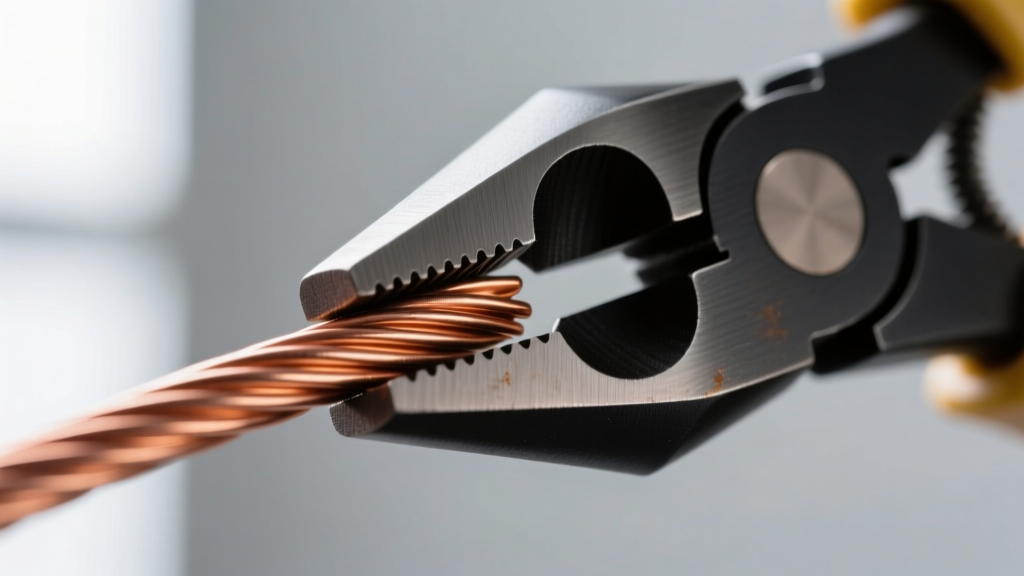
Chain-nose pliers feature a tapered, semi-round interior jaw that tapers to a fine point, ideal for reaching into tight wire wraps and closing jump rings. Flat-nose pliers offer a wide, uniform gripping surface perfect for making sharp 90-degree bends. Crucial buying rule: Never buy chain-nose pliers with serrated (toothed) jaws for wire work. Serrations are designed for gripping stubborn jump rings in chainmaille, but they will permanently scar and weaken soft wire. Look for brands like Wubbers or Lindstrom that offer polished, smooth steel jaws or interchangeable nylon jaw inserts to protect work-hardened metals.
Flush Cutters: The Bevel Matters
A flush cutter is not just a miniature pair of scissors. High-quality flush cutters feature one flat blade and one beveled blade. When you make a cut, the flat side leaves a perfectly flush edge on your workpiece, while the beveled side leaves a sharp 'pinch' on the scrap wire. If you buy symmetrical double-bevel cutters, you will always be left with a sharp, jagged burr on your jewelry that requires extensive filing. Look for micro-shears from Tronex or Beadalon's premium line that specify a single-sided flush cut.
Round-Nose Pliers for Consistent Loops
Round-nose pliers are used exclusively for forming loops, jump rings, and ear wires. The primary failure mode in beginner jewelry making is creating teardrop-shaped loops instead of perfect circles. This happens when the plier jaws are too short or lack taper. Seek out extra-long round-nose pliers with graduated tapers, allowing you to mark the jaws with a Sharpie to ensure every loop you form is the exact same diameter.
Wire Metallurgy for Beginners: Gauge, Temper, and Alloy
Understanding wire requires fluency in three distinct metrics: gauge (thickness), temper (hardness), and alloy (material composition). According to the technical resources at Rio Grande, the American Wire Gauge (AWG) system is inverse; the higher the number, the thinner the wire. A 20-gauge wire (0.81mm) is the undisputed workhorse for structural wire wrapping, while 24-gauge (0.51mm) and 26-gauge (0.40mm) are reserved for delicate weaving and binding.
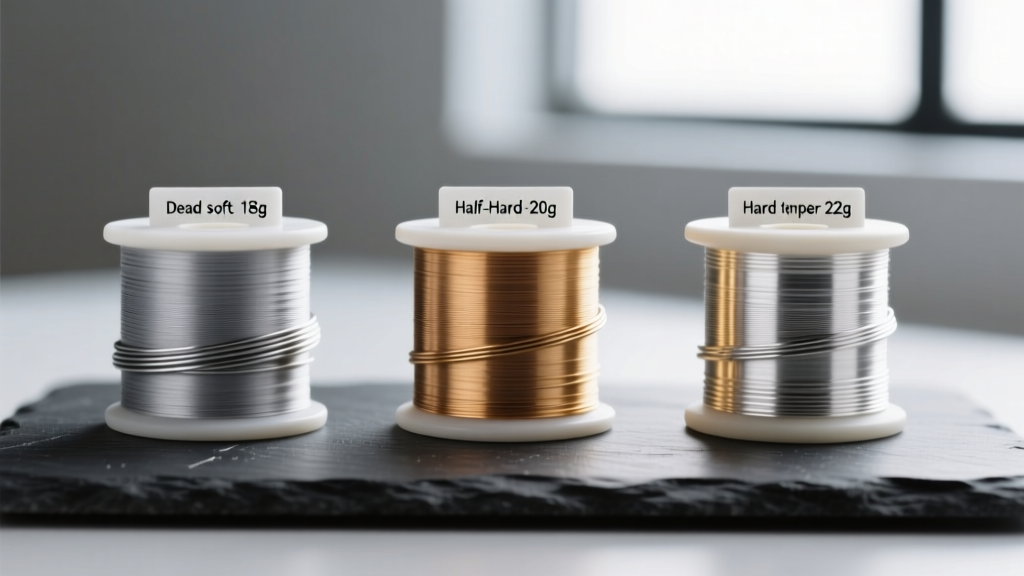
Temper dictates how the wire behaves under stress. As detailed in the Halstead Bead educational archives, temper is controlled by the annealing process:
- Dead Soft: Fully annealed. Bends like butter, ideal for tight weaves, sculptural wrapping, and weaving. It work-hardens as you manipulate it.
- Half-Hard: Partially annealed. Offers resistance and 'spring-back.' Mandatory for making ear wires, clasps, and structural jump rings that need to hold their shape under tension.
- Full-Hard / Spring: Extremely stiff. Rarely used by beginners except for specific heavy-duty clasp mechanisms or pin stems.
| AWG Size | Diameter (mm) | Recommended Temper | Primary Use Case |
|---|---|---|---|
| 18 Gauge | 1.02mm | Half-Hard | Heavy clasps, thick jump rings, bangle frames |
| 20 Gauge | 0.81mm | Dead Soft / Half-Hard | Standard wire wrapping, ear wires, structural frames |
| 22 Gauge | 0.64mm | Dead Soft | Lighter wrapping, threading through most gemstone beads |
| 24 Gauge | 0.51mm | Dead Soft | Wire weaving, coiling, securing cabochons |
| 26 Gauge | 0.40mm | Dead Soft | Fine micro-weaving, knitting, delicate binding |
Material Alloys: What to Practice On vs. What to Sell
Do not practice complex weaves on expensive sterling silver. Your 2026 starter kit should include a mix of practice metals and final-production alloys.
Practice Metals: Bare copper and brass are your best friends. Copper is incredibly forgiving, inexpensive, and mimics the work-hardening rate of sterling silver perfectly. However, it oxidizes rapidly and can turn skin green, making it unsuitable for final retail pieces unless heavily sealed.
Production Metals: When transitioning to final pieces, upgrade to Argentium Sterling Silver. Unlike traditional 925 sterling, Argentium contains germanium, making it highly tarnish-resistant and capable of fusing to itself without solder. For gold tones, invest in 14/20 Gold-Filled wire (which contains 5% solid gold by weight) rather than gold-plated wire, which will flake and expose base metals after minimal bending.
Budget vs. Investment: 2026 Pricing Breakdown
Building a professional bench is an investment, but you do not need to buy the most expensive tools on day one. Here is a realistic framework for allocating your budget:
"Spend 80% of your tool budget on your flush cutters and chain-nose pliers. These are the tools that touch the wire 90% of the time. You can compromise on the price of your round-nose pliers and mandrels."
- The Budget Tier ($40 - $60): Brands like Beadalon and EuroTool offer functional lap-joint pliers and decent flush cutters. Expect to replace the flush cutters every 6 months as the blades dull and begin pinching the wire instead of shearing it.
- The Mid-Tier ($80 - $130): Wubbers and Lindstrom offer box-joint construction, ergonomic dual-spring mechanisms, and polished jaws. These tools will last for years and significantly reduce hand fatigue.
- The Pro Tier ($200+): Tronex and Swanstrom feature aerospace-grade steel, perfectly lapped flush blades, and ergonomic cushion grips. Buy these only once you are selling your work and spending 4+ hours a day at the bench.
Common Beginner Purchasing Mistakes to Avoid
When sourcing supplies for beginner jewelry making, avoid these costly pitfalls:
- Buying 'Craft Wire' in the Jewelry Aisle: Spools labeled simply as 'craft wire' are often aluminum or tin-plated iron. They lack the tensile strength of copper or silver and will snap unpredictably when work-hardened.
- Ignoring the Spring Mechanism: Avoid pliers that require a rubber O-ring to keep the handles open. Look for internal leaf springs or dual-spring mechanisms that provide smooth, consistent resistance.
- Overbuying Beads Before Mastering Wire: Beginners often spend hundreds on gemstone beads before learning how to securely wire-wrap a briolette. Buy cheap glass or synthetic beads to practice your tension and wrapping techniques first.
Final Verdict: Building Your 2026 Starter Bench
Success in beginner jewelry making relies on precision, not brute force. By investing in box-joint chain-nose pliers, single-bevel flush cutters, and a dedicated supply of dead-soft copper wire for practice, you eliminate the mechanical frustrations that cause most hobbyists to quit. Start with 20-gauge and 24-gauge bare copper to master your tension, weave structures, and loop formations. Once your muscle memory is established, transition to Argentium sterling or gold-filled wires to create durable, professional-grade pieces ready for the market.

